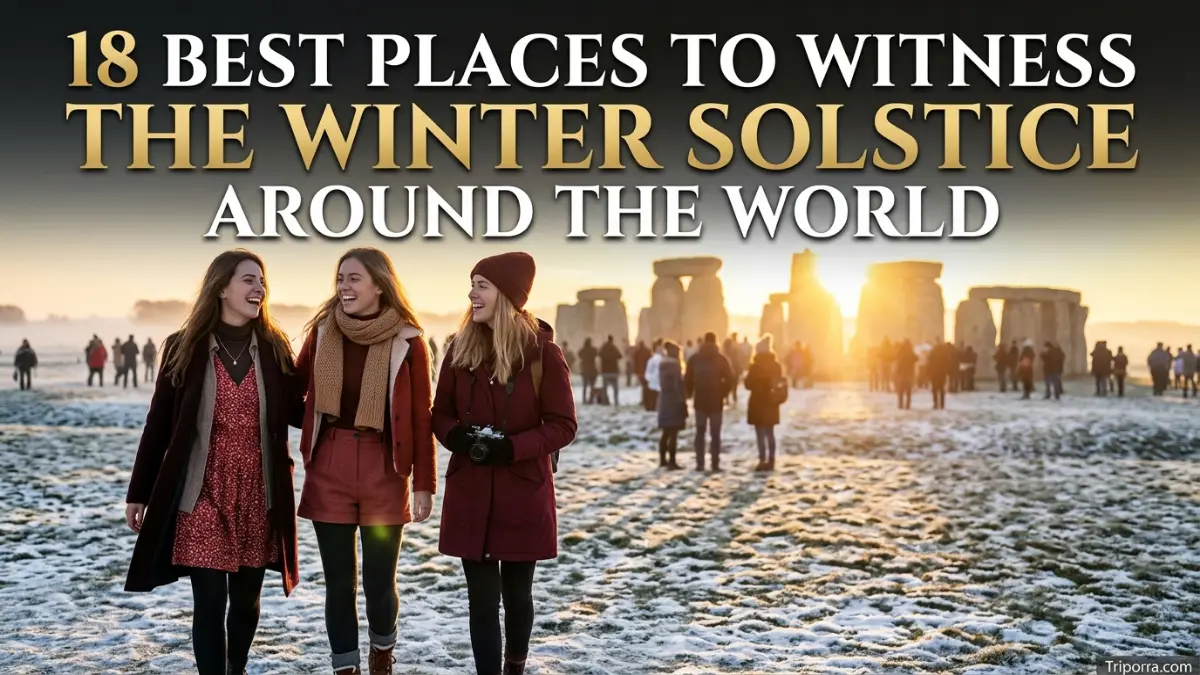
The winter solstice is the shortest day and longest night of the year in the Northern Hemisphere. Some of the best places to witness it include Stonehenge in England, Newgrange in Ireland, Maeshowe in Scotland, and Fairbanks in Alaska. These places offer ancient solar sites, local celebrations, and views of the winter sky.
Introduction
The winter solstice takes place every year in December in the Northern Hemisphere. It marks the shortest day and longest night of the year. Many people celebrate this day through local customs, festivals, and visits to ancient sites.
Some places are famous for their connection to the Sun. For example, sunlight enters the inner chamber of Newgrange in Ireland around the winter solstice. Stonehenge in England is also known for its connection to the setting Sun. In northern places such as Norway and Alaska, visitors can experience very short days or even polar night.
The 18 best places to witness the winter solstice include ancient monuments, Arctic towns, and cities with long-standing seasonal traditions. Each destination offers a different way to mark this special day.
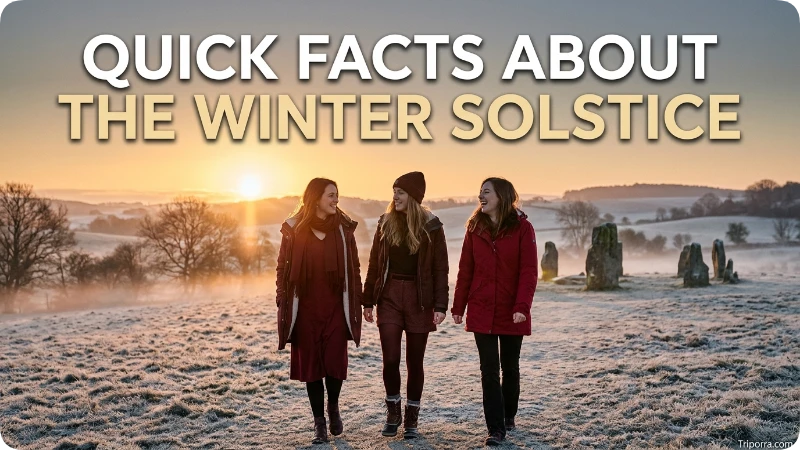
Quick Facts About the Winter Solstice
| Fact | Information |
|---|---|
| Event | Winter Solstice |
| Northern Hemisphere Date (2026) | December 21 |
| Southern Hemisphere Date (2026) | June 21 |
| Main Event | Shortest day and longest night in the Northern Hemisphere |
| Main Cause | Earth’s 23.5-degree axial tilt |
| Famous Ancient Site | Stonehenge, England |
| Famous Sunrise Alignment | Newgrange, Ireland |
| Popular Arctic Destination | Tromsø, Norway |
| Popular U.S. Destination | Fairbanks, Alaska |
| Southern Hemisphere Example | Cusco, Peru |
What Is the Winter Solstice?
The winter solstice happens when one half of Earth tilts farthest away from the Sun. In the Northern Hemisphere, this happens in December. On this day, the Sun follows its shortest path across the sky, so daylight hours are at their lowest.
After the winter solstice, the days slowly become longer. However, the coldest part of winter often comes later because land and water take time to warm up.
The Southern Hemisphere has the opposite season. Its winter solstice takes place in June, when countries such as Australia, Chile, and Argentina have their shortest days.
People in many parts of the world mark the solstice with festivals, family gatherings, and visits to ancient sites.
18 Best Places to Witness the Winter Solstice Around the World
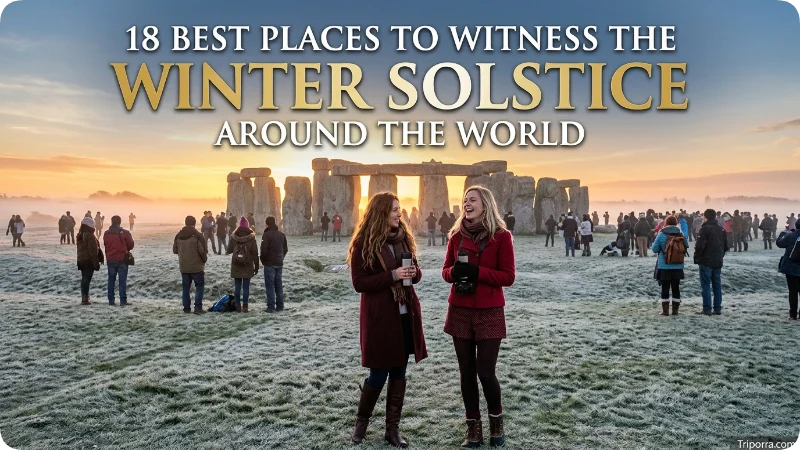
The following destinations offer different ways to experience the winter solstice. Some have ancient structures linked to the Sun, while others are known for their winter celebrations or long periods of darkness.
Ancient Places With Winter Solstice Sun Alignments
Several ancient sites were built with the Sun’s movement in mind. Their layouts show how early communities followed the changing seasons.
1. Stonehenge, Wiltshire, England
Location: Wiltshire, southwestern England
Coordinates: Approximately 51.1789° N, 1.8262° W
Stonehenge is one of the most famous places to witness the winter solstice. It is an ancient stone circle on Salisbury Plain in Wiltshire, England.
The site has a main alignment with the winter solstice sunset. Around December 21, the setting Sun appears along the direction of this alignment. This connection makes Stonehenge an important place for people interested in ancient astronomy.
Every year, people gather at Stonehenge to mark the shortest day. The event attracts visitors, photographers, and people who follow old seasonal traditions.
English Heritage manages the site and shares information about special solstice access. Visitors should check the official website before planning their visit.
Why visit: Stonehenge is a well-known place to see the winter solstice and learn about its connection to the Sun.
2. Newgrange, County Meath, Ireland
Location: County Meath, eastern Ireland
Coordinates: Approximately 53.6947° N, 6.4750° W
Newgrange is an ancient passage tomb in County Meath, Ireland. It was built around 3200 BC, making it older than Stonehenge and the Great Pyramid of Giza.
The site is famous for its winter solstice sunrise. A small opening above the entrance allows sunlight to enter the passage and reach the inner chamber.
The light can fill the chamber for about 17 minutes around sunrise. This happens during the winter solstice period and shows how carefully the builders planned the structure.
Access to the inner chamber during this event is limited. Heritage Ireland runs a yearly lottery for people who want to see the sunrise from inside.
Why visit: Newgrange offers a rare chance to see how an ancient building connects with the winter solstice sunrise.
3. Dowth, County Meath, Ireland
Location: County Meath, Ireland
Coordinates: Approximately 53.710° N, 6.445° W
Dowth is another ancient passage tomb in the Brú na Bóinne area of Ireland. It is close to Newgrange and is part of the same important archaeological landscape.
Dowth has a connection with the winter solstice sunset. Sunlight can enter one of its chambers around the end of the year.
This makes Dowth different from Newgrange, which is famous for its sunrise alignment. Together, the two sites show how ancient people studied the Sun at different times of the day.
Visitors can explore the surrounding landscape and learn about the area’s ancient monuments.
Why visit: Dowth is a good place to learn about the connection between ancient Irish monuments and the winter solstice sunset.
4. Maeshowe, Orkney Islands, Scotland
Location: Mainland, Orkney, Scotland
Coordinates: Approximately 58.996° N, 3.188° W
Maeshowe is an ancient tomb on the Orkney Islands, north of mainland Scotland. It was built around 5,000 years ago and is one of the area’s best-known ancient sites.
The entrance passage faces the direction of the midwinter sunset. Around the winter solstice, sunlight can travel through the passage and reach the inner chamber.
The tomb also has Viking runes carved into its walls. These markings were added many years after the structure was built.
Visitors can explore Maeshowe through guided visits. It is best to check opening times and access rules before traveling.
Why visit: Maeshowe is a good choice for people who want to see an ancient tomb linked to the winter solstice sunset.
5. Goseck Circle, Germany
Location: Goseck, Saxony-Anhalt, Germany
Coordinates: Approximately 51.200° N, 11.862° E
Goseck Circle is an ancient circular site in eastern Germany. It dates back to around 4900 BC and is often linked to early solar observation.
The site has a circular shape with openings in its outer walls. These openings line up with the winter solstice sunrise and sunset.
The structure that visitors see today is a reconstruction of the original site. It helps explain how people in prehistoric times followed the Sun and marked changes in the seasons.
Goseck is smaller and less famous than Stonehenge, but it has an important place in the study of ancient astronomy.
Why visit: Goseck Circle is a good destination for learning how early communities followed the Sun’s movement.
6. Mnajdra Temples, Malta
Location: Southern coast of Malta
Coordinates: Approximately 35.827° N, 14.437° E
The Mnajdra Temples are ancient stone buildings on the southern coast of Malta. They stand above the Mediterranean Sea and are part of Malta’s prehistoric temple sites.
The temples have openings that allow sunlight to enter at certain times of the year. These alignments are linked to the solstices and equinoxes.
During the winter solstice, sunlight enters parts of the temple in a way that shows how its builders understood the Sun’s yearly movement.
The site also offers views of the sea and the nearby rocky coast.
Why visit: Mnajdra is a good place to explore ancient buildings and their connection to the changing seasons.
7. Karnak Temple, Luxor, Egypt
Location: Luxor, southern Egypt
Coordinates: Approximately 25.7188° N, 32.6573° E
Karnak Temple is one of the largest ancient temple complexes in Egypt. It is located in Luxor, on the eastern side of the Nile River.
The temple complex was built over many centuries. It includes large courtyards, stone gateways, and the famous Great Hypostyle Hall, which has 134 large columns.
The main axis of the Amun-Re temple is associated with the winter solstice sunrise. This makes Karnak an interesting place for visitors who want to learn about ancient Egyptian beliefs and the Sun.
The site is also close to other important places in Luxor, including Luxor Temple and the Valley of the Kings across the Nile.
Why visit: Karnak combines ancient Egyptian architecture with an interesting connection to the winter Sun.
8. Temple of Heaven, Beijing, China
Location: Southern Beijing, China
Coordinates: Approximately 39.8822° N, 116.4066° E
The Temple of Heaven is a famous historic site in Beijing, China. It is known for its connection to traditional Chinese beliefs and winter solstice ceremonies.
In the past, Chinese emperors visited the temple to perform ceremonies during the winter solstice. They prayed for good harvests and asked for the well-being of the country.
The Circular Mound Altar was an important part of these ceremonies. It was used for rituals that honored Heaven.
Today, visitors can explore the temple grounds and learn about these old traditions. The winter solstice is also linked to Dongzhi, a traditional Chinese festival celebrated with family meals and seasonal foods.
Why visit: The Temple of Heaven offers a chance to learn about China’s old winter solstice traditions.
9. Cahokia Mounds, Illinois, USA
Location: Collinsville, Illinois, United States
Coordinates: Approximately 38.655° N, 90.062° W
Cahokia Mounds is an important archaeological site near Collinsville, Illinois. It is close to St. Louis, Missouri, across the Mississippi River.
One of its main features is Woodhenge, a circle of wooden posts. The structure helps explain how ancient communities may have followed the Sun and marked seasonal changes.
The site has hosted winter solstice sunrise events. However, visitors should check the event schedule before traveling because programs can change from year to year.
Cahokia also has large earthen mounds that show the size and importance of the community that once lived there.
Why visit: Cahokia is a useful place to learn about ancient North American communities and their interest in the Sun.
Best Arctic Places to Experience the Winter Solstice
Some northern places have very little daylight during December. Others experience polar night, when the Sun stays below the horizon. These destinations offer a different way to experience the winter solstice.
10. Tromsø, Norway
Location: Northern Norway
Coordinates: Approximately 69.6492° N, 18.9553° E
Tromsø is a city in northern Norway, north of the Arctic Circle. It is one of the best places to experience the winter season in the Arctic.
Around the winter solstice, Tromsø experiences polar night. This means the Sun stays below the horizon throughout the day. However, the sky is not completely dark all the time. Visitors can often see blue and pink light around midday.
Tromsø is also a popular place to see the northern lights. The long winter nights give visitors more time to look for them. However, clear skies and suitable conditions are needed.
Why visit: Tromsø is a good choice for people who want to experience polar night and see the northern lights.
11. Utqiaġvik, Alaska, USA
Location: North Slope Borough, northern Alaska, United States
Coordinates: Approximately 71.2906° N, 156.7886° W
Utqiaġvik is the northernmost city in the United States. It is located on the coast of northern Alaska, near the Arctic Ocean.
The city experiences a long period of polar night every winter. Around the winter solstice, the Sun does not rise above the horizon. Instead, the area receives a short period of twilight during the middle of the day.
Utqiaġvik is also home to the Iñupiat people, who have lived in the Arctic region for generations. Visitors can learn about their culture and the challenges of life in such a cold place.
There is no road connecting Utqiaġvik to the rest of Alaska. Most visitors arrive by plane, so it is important to plan travel in advance.
Why visit: Utqiaġvik offers a chance to experience the winter solstice in one of the northernmost communities in the United States.
12. Longyearbyen, Svalbard, Norway
Location: Svalbard archipelago, Norway
Coordinates: Approximately 78.2232° N, 15.6469° E
Longyearbyen is one of the northernmost permanent settlements in the world. It is located on Spitsbergen Island in the Svalbard archipelago.
The town experiences a long polar night during winter. Around the winter solstice, the Sun remains below the horizon, and the area receives very little natural light.
Visitors can see snow-covered mountains, frozen landscapes, and the dark Arctic sky. The town is also known for northern lights viewing during the winter months.
Longyearbyen is a remote destination, and winter weather can make travel difficult. Visitors should follow local safety advice, especially when exploring areas outside the town.
Why visit: Longyearbyen is a good destination for experiencing the long winter darkness of the Arctic.
13. Fairbanks, Alaska, USA
Location: Interior Alaska, United States
Coordinates: Approximately 64.8378° N, 147.7164° W
Fairbanks is a city in the interior of Alaska. It is a popular destination for people who want to experience the Alaskan winter.
Around December 21, Fairbanks receives only a few hours of daylight. The short day makes the winter solstice an important event for the local community.
The city has hosted winter solstice celebrations with fireworks, music, and other activities. These events give residents and visitors a chance to mark the return of longer days.
Fairbanks is also known for its northern lights viewing opportunities. Visitors can look for the aurora during clear winter nights.
Why visit: Fairbanks is a good place to celebrate the winter solstice and experience a traditional Alaskan winter.
14. Anchorage, Alaska, USA
Location: Southcentral Alaska, United States
Coordinates: Approximately 61.2181° N, 149.9003° W
Anchorage is the largest city in Alaska. It is located in the southern part of the state, between the Chugach Mountains and Cook Inlet.
The city receives only a few hours of daylight around the winter solstice. This makes December an important time for local winter celebrations.
Anchorage has hosted winter solstice events with music, ice skating, seasonal lights, and family activities. Cuddy Family Midtown Park is one of the places associated with local celebrations.
Unlike remote Arctic towns, Anchorage offers a larger city with more travel services and public facilities. Visitors can also enjoy views of the nearby mountains and winter landscapes.
Why visit: Anchorage is a good choice for families who want to enjoy winter solstice activities in an accessible Alaskan city.
Best Places to Experience Winter Solstice Traditions
The winter solstice is important in many cultures. Some communities celebrate it with special foods, family gatherings, and traditional events. These destinations offer a chance to learn about those customs.
15. Kyoto, Japan
Location: Kyoto Prefecture, Japan
Coordinates: Approximately 35.0116° N, 135.7681° E
Kyoto is a historic city in Japan with many temples, shrines, and traditional customs. It is a good place to learn about the Japanese winter solstice tradition known as Toji.
Toji marks the shortest day of the year. Many people follow the custom of taking a warm bath with yuzu citrus fruits. Some families also eat kabocha squash during this time.
These traditions are linked to health and good fortune during the cold winter months.
Visitors can explore Kyoto’s historic areas and learn how local people mark the changing seasons. These customs are also followed in other parts of Japan.
Why visit: Kyoto offers a simple way to learn about Japanese winter solstice customs and seasonal traditions.
16. Tehran, Iran
Location: Tehran Province, Iran
Coordinates: Approximately 35.6892° N, 51.3890° E
Tehran is the capital of Iran and an important place to experience Yalda Night. This traditional celebration takes place on the longest night of the year.
Families and friends gather to share food, tell stories, read poetry, and spend time together. Pomegranates and watermelons are common foods during the celebration.
Yalda Night marks the end of autumn and the start of winter. It also represents the return of longer days after the longest night.
The tradition is not limited to Tehran. People in different parts of Iran and Afghanistan also celebrate it.
Why visit: Tehran offers an opportunity to experience Yalda Night and learn about an old Persian winter tradition.
17. Chichicastenango, Guatemala
Location: El Quiché Department, Guatemala
Coordinates: Approximately 14.9447° N, 91.1111° W
Chichicastenango is a town in the El Quiché Department of Guatemala. It is known for its traditional markets, local culture, and December celebrations.
One of its main events is the Santo Tomás Festival, which takes place in December. The festival includes music, dancing, religious events, and traditional performances.
One of the best-known activities is the flying pole dance. Performers climb a tall pole and slowly descend using ropes.
The Santo Tomás Festival is not a direct winter solstice celebration. However, it takes place during the same season and offers visitors a chance to experience local traditions.
Why visit: Chichicastenango is a good choice for people interested in traditional festivals and local culture.
18. Cusco, Peru
Location: Cusco Region, southeastern Peru
Coordinates: Approximately 13.5319° S, 71.9675° W
Cusco is a historic city in southeastern Peru. It was once the capital of the Inca Empire and remains an important place for learning about Inca culture.
Cusco is different from the other destinations on this list because it is in the Southern Hemisphere. Its winter solstice takes place in June, not December.
The city is known for Inti Raymi, also called the Festival of the Sun. This celebration takes place on June 24 and honors the Sun, which was an important part of Inca beliefs.
The main modern ceremony takes place at Sacsayhuamán, an ancient site above Cusco. Visitors can watch traditional performances and learn about the region’s past.
Why visit: Cusco is a good place to experience the Southern Hemisphere winter season and learn about the Inca connection with the Sun.
Which Winter Solstice Destination Should You Visit?
The best place depends on what you want to see and experience. Some destinations are known for ancient monuments, while others offer local celebrations or Arctic landscapes.
Your Interest
Best Destination
Country
Famous ancient stone circle
Stonehenge
England
Winter solstice sunrise
Newgrange
Ireland
Winter solstice sunset
Maeshowe
Scotland
Ancient solar site
Goseck Circle
Germany
Ancient Egyptian temple
Karnak
Egypt
Polar night
Tromsø
Norway
Extended winter darkness
Longyearbyen
Norway
Arctic experience in the USA
Utqiaġvik
USA
Winter solstice festival
Fairbanks
USA
Family winter activities
Anchorage
USA
Japanese winter traditions
Kyoto
Japan
Yalda Night
Tehran
Iran
Southern Hemisphere winter solstice
Cusco
Peru
If you want to see an ancient monument, Stonehenge and Newgrange are good choices. If you want to experience polar night, consider Tromsø or Longyearbyen.
For cultural celebrations, Kyoto, Tehran, and Cusco offer different traditions linked to the winter season.
How to Plan a Winter Solstice Trip
A winter solstice trip needs some planning. Many destinations have cold weather, short daylight hours, or special entry rules.
Check the Winter Solstice Date
The winter solstice does not happen at the same time everywhere. In 2026, it takes place on December 21 in the Northern Hemisphere.
The Southern Hemisphere has its winter solstice in June. Check the local date and time before planning your trip.
Check Entry Rules for Ancient Sites
Some places have special rules during the winter solstice.
For example:
- Newgrange uses a lottery for access to its inner chamber during the solstice.
- Stonehenge announces special arrangements for its solstice gathering.
- Maeshowe has set visiting times.
- Cahokia may organize special seasonal events.
Check official websites for the latest information before traveling.
Prepare for Cold Weather
Places such as Alaska, Norway, Scotland, and Ireland can be very cold during December.
Pack suitable clothing, including:
- A warm winter jacket
- Gloves and a hat
- Thermal clothing
- Waterproof shoes
- Warm socks
If you are visiting an Arctic destination, follow local safety advice.
Check the Weather Before Viewing the Sun
Clouds, rain, snow, and fog can block the sunrise or sunset. Even at famous solar sites, clear weather is not guaranteed.
If seeing a particular alignment is important to you, consider staying for more than one day.
Frequently Asked Questions
1. Where is the best place to witness the winter solstice?
Stonehenge in England is one of the best-known places to witness the winter solstice. Its main alignment faces the midwinter sunset. Newgrange in Ireland is another popular choice because sunlight enters its inner chamber around the solstice.
2. What are the best places to see the winter solstice?
Some of the best places include Stonehenge, Newgrange, Maeshowe, Goseck Circle, Karnak Temple, Tromsø, Fairbanks, and Longyearbyen. These destinations offer ancient sites, winter celebrations, and Arctic views.
3. When is the winter solstice in 2026?
The Northern Hemisphere winter solstice takes place on December 21, 2026. It marks the shortest day and longest night of the year in the Northern Hemisphere.
4. Why is Stonehenge famous for the winter solstice?
Stonehenge is famous because its main stone alignment faces the winter solstice sunset. People gather at the site each year to watch the event and mark the shortest day.
5. Can you see the northern lights during the winter solstice?
Yes. You may see the northern lights in places such as Tromsø, Fairbanks, and Longyearbyen. However, sightings depend on weather, cloud cover, and solar activity.
6. What is the best place in the USA to celebrate the winter solstice?
Fairbanks and Anchorage in Alaska are good places to celebrate the winter solstice. Both cities have hosted local events and offer a chance to experience the short winter days.
7. Where can you experience polar night during the winter solstice?
Tromsø in Norway, Utqiaġvik in Alaska, and Longyearbyen in Svalbard are popular places to experience polar night. During this period, the Sun stays below the horizon.
8. Why is Newgrange important during the winter solstice?
Newgrange is important because sunlight enters its passage through a small opening above the entrance. The light reaches the inner chamber around sunrise during the winter solstice period.
9. Is the winter solstice the same in both hemispheres?
No. The Northern Hemisphere has its winter solstice in December, while the Southern Hemisphere has its winter solstice in June. This happens because Earth’s two hemispheres have opposite seasons.
10. What is Yalda Night?
Yalda Night is a traditional celebration in Iran and Afghanistan. Families gather on the longest night of the year to share food, read poetry, and spend time together.
11. Can you visit Stonehenge during the winter solstice?
Yes. Stonehenge has special access arrangements for the winter solstice. However, opening times and entry rules can change, so visitors should check the official English Heritage website before visiting.
12. What happens after the winter solstice?
After the winter solstice, daylight hours slowly increase in the Northern Hemisphere. The days become longer as the region moves toward spring.
Conclusion
The 18 best places to witness the winter solstice offer different ways to experience the shortest day of the year. Stonehenge and Newgrange are known for their connection to the Sun, while Tromsø and Longyearbyen offer views of the Arctic winter. Fairbanks and Anchorage are also good choices for winter celebrations in the United States.
For cultural traditions, Kyoto and Tehran are worth considering. Cusco in Peru offers a different experience because its winter solstice takes place in June.
Whether you want to visit an ancient monument, experience polar night, or join a local celebration, these destinations offer a chance to learn about the winter solstice and its importance around the world.

About Leo Sterling
Leo Sterling is a geography and travel writer at Triporra.com who believes understanding a place starts with knowing exactly where it is. He turns geographic details on countries, regions, islands, and cities into clear, engaging content for everyday readers.
For Leo, a good location article does more than mark a spot on a map. It shows what borders a place, which region it belongs to, and how it connects to the world around it—an approach reflected in guides like where is Anguilla, where solid research meets a simple, conversational style.
Whether readers are planning a trip, studying, or just curious, Leo’s goal is the same: deliver accurate, easy-to-understand information without unnecessary complexity.
Areas of Focus: Geography | Countries & Regions | Caribbean Islands | Travel Destinations | Location Research | “Where Is?” Content