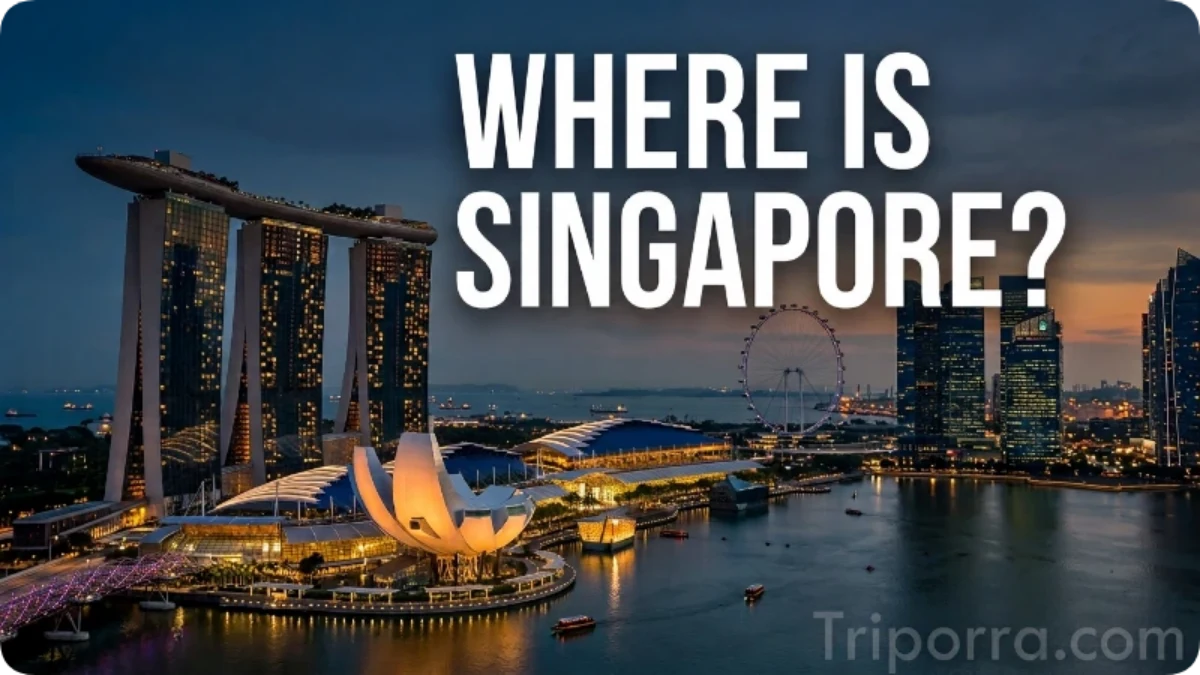
Singapore is a small but highly developed island nation in Southeast Asia, located at the southern tip of the Malay Peninsula. Despite its size, it is a global leader in trade, finance, aviation, technology, and tourism due to its strategic location along major shipping routes.
Officially known as the Republic of Singapore, it is an independent city-state, meaning the country and its capital are the same. Many travelers know Singapore for its clean streets, modern skyline, multicultural society, efficient public transportation, and iconic attractions like Marina Bay Sands, Gardens by the Bay, and Changi Airport.
This guide explains where Singapore is located, why its location is important, and covers its geography, history, climate, top attractions, and essential travel information.
Featured Snippet Answer
Singapore is an independent island country and city-state in Southeast Asia. It lies just south of Malaysia and north of Indonesia, separated by the Straits of Johor and the Singapore Strait. Officially called the Republic of Singapore, it is famous for its strategic location, modern skyline, Changi Airport, multicultural society, and one of the world’s busiest seaports.
Where Is Singapore Located?
Singapore lies in Southeast Asia, one of the world’s fastest-growing regions. The country sits just one degree north of the Equator, giving it a warm tropical climate throughout the year.
Its location places it between two neighboring countries:
- Malaysia lies directly north.
- Indonesia lies to the south across the Singapore Strait.
Singapore stands at one of the world’s most important maritime crossroads. Ships traveling between Europe, the Middle East, Africa, and East Asia often pass through nearby waters. This strategic position has helped Singapore become one of the world’s leading trading and shipping centers.
Although Singapore covers only about 719 square kilometers (278 square miles), its location has allowed it to develop into a global business and transportation hub.
Unlike many countries, Singapore has no states or provinces. Instead, the national government manages the entire country.
Quick Facts About Singapore
| Feature | Details |
|---|---|
| Official Name | Republic of Singapore |
| Country Type | Independent island country and city-state |
| Region | Southeast Asia |
| Continent | Asia |
| Population | About 6.1 million |
| Capital | Singapore |
| Time Zone | Singapore Standard Time (UTC +8) |
| Currency | Singapore Dollar (SGD) |
| Official Languages | English, Malay, Mandarin, Tamil |
| National Language | Malay |
| Area | About 719 sq km |
| Nearest Countries | Malaysia and Indonesia |
Singapore on the Map
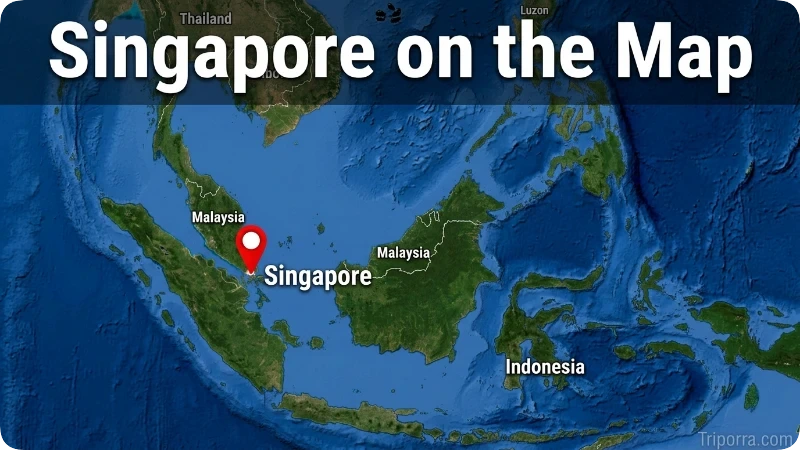
Finding Singapore on a map is easy once you know where to look.
Start with the continent of Asia. Move toward Southeast Asia until you reach the Malay Peninsula. At the southern tip of the peninsula, you will find Singapore sitting just below the Malaysian state of Johor.
A narrow waterway called the Straits of Johor separates Singapore from Malaysia. The Singapore Strait lies to the south and separates Singapore from Indonesia’s Riau Islands.
Singapore also sits close to the Strait of Malacca, one of the busiest shipping routes on Earth. Every year, thousands of cargo ships carry goods through these waters, making Singapore one of the world’s busiest ports.
Because of this location, Singapore has grown into an important center for international trade, aviation, finance, logistics, and tourism.
Which Continent Is Singapore In?
Singapore is part of the continent of Asia.
More specifically, it belongs to Southeast Asia, a region that includes:
- Malaysia
- Indonesia
- Thailand
- Vietnam
- Cambodia
- Laos
- Myanmar
- Brunei
- Philippines
- Timor-Leste
Southeast Asia connects the Pacific Ocean with the Indian Ocean, making it one of the world’s most important regions for international trade and travel.
Singapore’s location near the Equator gives it warm temperatures, high humidity, and frequent rainfall throughout the year.
Which Countries Border Singapore?
Singapore shares no land borders in the traditional sense because it is an island nation. However, it has two very close neighbors.
Malaysia
Malaysia lies directly north of Singapore. The two countries connect through the Woodlands Causeway and the Tuas Second Link, allowing people and vehicles to travel between them every day.
Johor Bahru, located in the Malaysian state of Johor, is the nearest major city to Singapore.
Indonesia
Indonesia lies south of Singapore across the Singapore Strait.
Several Indonesian islands, including Batam and Bintan, sit only a short ferry ride away. Many tourists visit these islands for beaches, resorts, and weekend vacations.
Is Singapore a Country or a City?
One of the most common questions people ask is whether Singapore is a country or simply a city.
The answer is both.
It is an independent sovereign country and also a city-state. This means the country’s main city forms almost the entire nation.
Unlike countries such as the United States, Australia, or India, It does not have multiple states or provinces with separate governments.
Instead, one national government manages the entire country.
This unique political system makes it one of only a few city-states in the modern world.
Which Region Does Singapore Belong To?
Itbelongs to the Southeast Asian region.
It is also one of the ten member countries of the Association of Southeast Asian Nations (ASEAN). Through ASEAN, Singapore works closely with neighboring countries to promote economic growth, regional security, tourism, education, and trade.
Although Its functions as one city, government agencies divide it into planning regions for development purposes. These include:
- Central Region
- East Region
- North Region
- North-East Region
- West Region
These regions help organize housing, transportation, business districts, schools, parks, and future development projects. However, they are administrative planning areas rather than separate states.
Singapore’s unique combination of strategic location, efficient governance, and strong infrastructure has helped transform it into one of the world’s leading financial and commercial centers despite its small size.
How Does Singapore Compare to Nearby Countries?
It is much smaller than both Malaysia and Indonesia, but it ranks among the world’s most developed countries. While Malaysia and Indonesia have vast land areas, mountains, forests, and thousands of towns, Singapore covers less than 730 square kilometers. Even with its limited land, it has built a modern economy, efficient transportation system, and world-class infrastructure.
Malaysia offers large rural landscapes, national parks, beaches, and highlands. Indonesia stretches across more than 17,000 islands and features volcanoes, rainforests, and diverse cultures. Singapore, on the other hand, focuses on urban living, business, technology, and tourism.
Despite its size, It attracts millions of international visitors every year because it offers excellent public transportation, high safety standards, clean streets, and many attractions within a compact area.
Singapore vs. Malaysia
Singapore and Malaysia share close historical, economic, and cultural ties.
Malaysia is much larger and consists of several states, while Singapore operates as a single city-state. Travelers often visit both destinations during one trip because crossing the border is relatively easy through the Woodlands Causeway or Tuas Second Link.
Malaysia generally has lower living costs, while Singapore offers more modern infrastructure and one of the world’s strongest financial sectors.
Singapore vs. Indonesia
Indonesia is the world’s largest archipelago, with thousands of islands spread across Southeast Asia. It has tropical rainforests, volcanoes, beaches, and many different ethnic groups.
IIt lies just north of Indonesia’s Riau Islands, including Batam and Bintan. These islands are popular weekend destinations for both tourists and Singapore residents because they are only a short ferry ride away.
Although Indonesia has a much larger population and land area, Singapore has become one of Asia’s leading financial, technology, and shipping centers.
How to Reach Singapore
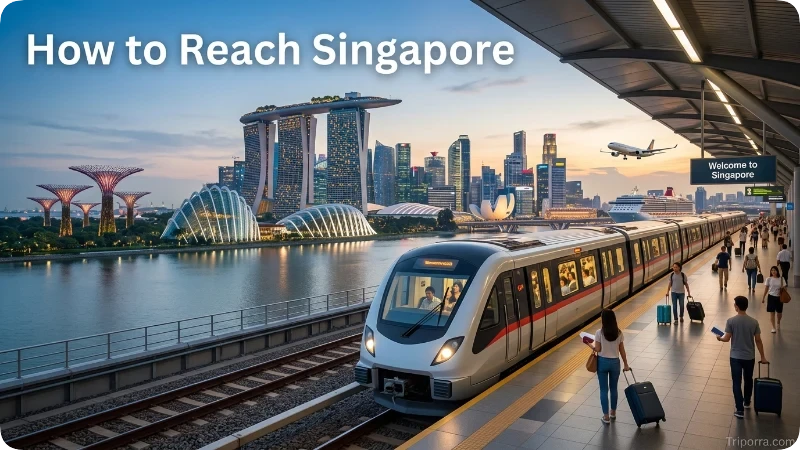
It is one of the easiest countries in Asia to reach thanks to its excellent transportation network.
By Air
Most international travelers arrive through Singapore Changi Airport, one of the world’s highest-rated airports.
Changi Airport serves hundreds of destinations across Asia, Europe, North America, Australia, Africa, and the Middle East. Beyond air travel, the airport features shopping centers, indoor gardens, entertainment areas, hotels, restaurants, and the famous Jewel Changi complex.
Travelers can reach downtown Singapore quickly by MRT, taxi, bus, or private transport.
By Road
It shares two road links with Malaysia:
- Woodlands Causeway
- Tuas Second Link
Thousands of commuters cross these borders every day for work, business, tourism, and shopping.
By Sea
Several ferry services connect Singapore with nearby Indonesian islands, including Batam and Bintan.
Large international cruise ships also stop at Singapore because of its strategic location.
Why Is Singapore Famous?
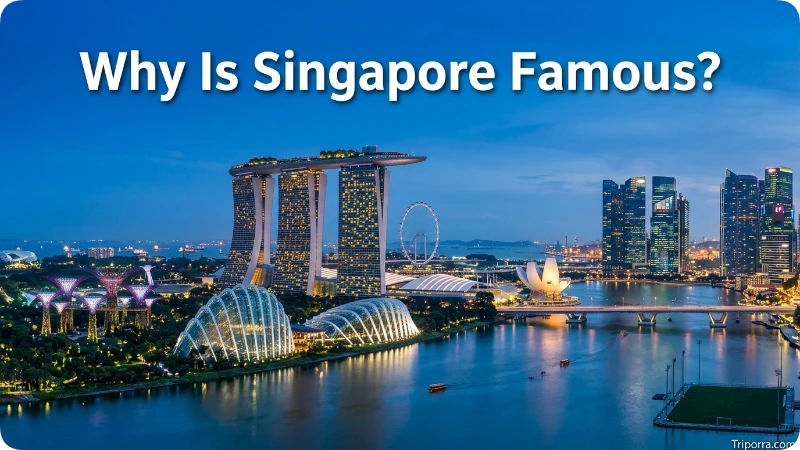
It has earned a global reputation for combining modern technology with cultural diversity.
Some of its most famous attractions include:
- Marina Bay Sands
- Gardens by the Bay
- Merlion Park
- Changi Airport
- Sentosa Island
- Universal Studios Singapore
- Singapore Botanic Gardens
Visitors also enjoy neighborhoods such as Chinatown, Little India, and Kampong Gelam, where they experience the country’s rich multicultural heritage.
Food is another major attraction. Singapore’s famous hawker centers serve affordable local dishes such as:
- Hainanese Chicken Rice
- Chili Crab
- Laksa
- Satay
- Roti Prata
- Nasi Lemak
- Char Kway Teow
- Kaya Toast
Many travelers consider Singapore one of the world’s best food destinations.
Singapore’s Economy and Global Importance
This country has one of the strongest economies in Asia despite its small size.
Its strategic location has helped it become a global center for:
- International trade
- Banking and finance
- Shipping
- Aviation
- Technology
- Manufacturing
- Biotechnology
The Port of Singapore ranks among the busiest container ports in the world. Every day, thousands of ships transport goods through nearby shipping lanes.
The country also hosts regional headquarters for many multinational companies, making it one of Asia’s leading business hubs.
Strong education, political stability, efficient government services, and modern infrastructure continue to attract businesses and investors from around the world.
History of Singapore
Singapore’s location has shaped its history for centuries.
Long before modern skyscrapers appeared, traders used the island as an important stop along regional maritime trade routes. Historical records refer to the island as Temasek, an early trading settlement that connected merchants from different parts of Asia.
British Colonial Period
Modern This country began in 1819, when British official Sir Stamford Raffles established a trading post on the island.
Its excellent natural harbor and strategic location allowed trade to expand rapidly. Over time, Singapore developed into one of Britain’s most valuable ports in Asia.
World War II
During World War II, Japanese forces occupied This country from 1942 to 1945.
The occupation brought severe hardship to local residents and remains one of the most significant chapters in Singapore’s history.
Independence
After the war, Singapore gradually gained self-government.
In 1963, This country joined the newly formed Federation of Malaysia. However, political and economic disagreements led to separation.
On 9 August 1965, Singapore became an independent sovereign nation.
Although the country lacked natural resources, its leaders focused on education, industrial development, trade, and economic planning. Over the following decades, Singapore transformed into one of the world’s most prosperous nations.
Government and Political System
This country is a parliamentary republic with a President serving as the Head of State and a Prime Minister serving as the Head of Government.
The country follows a stable political system supported by efficient public administration and strong legal institutions.
Government agencies place significant emphasis on education, healthcare, housing, transportation, environmental sustainability, and economic development.
This long-term planning has played a major role in Singapore’s success.
Climate and Weather in Singapore
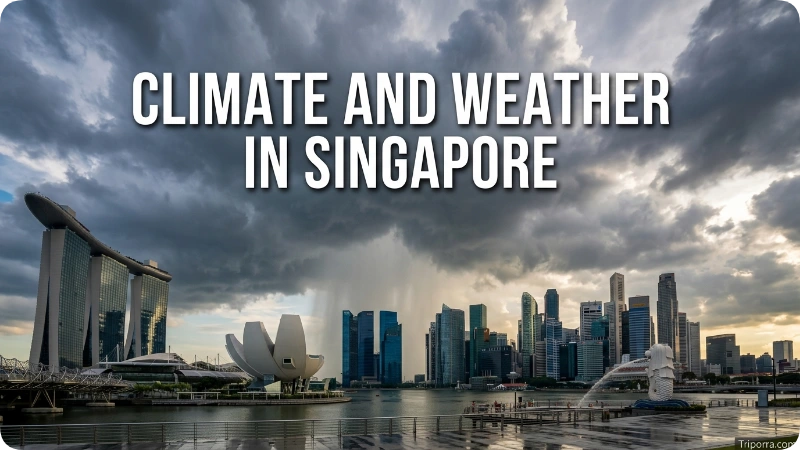
This country has a tropical rainforest climate because it lies almost directly on the Equator. Unlike countries with four distinct seasons, Singapore stays warm and humid throughout the year. Temperatures usually range between 25°C (77°F) and 31°C (88°F), although they can occasionally rise a little higher during particularly hot days.
Rainfall is common in every month. Most showers last for a short time before sunshine returns, but heavier rain can occur during the northeast monsoon season from November to January.
Humidity remains high year-round, so visitors should wear lightweight clothing, stay hydrated, and carry a small umbrella or rain jacket.
Average Weather
| Season | Weather |
|---|---|
| January–March | Warm with occasional rain |
| April–June | Hot and humid |
| July–September | Warm with scattered showers |
| October–December | Wetter due to monsoon season |
Even though this country receives frequent rain, the weather rarely disrupts travel because public transportation and indoor attractions remain easily accessible.
Top Tourist Attractions in Singapore
This country offers a wide variety of attractions despite its small size. Visitors can explore futuristic architecture, beautiful gardens, cultural neighborhoods, museums, beaches, and family-friendly entertainment.
Marina Bay Sands
Marina Bay Sands is Singapore’s most recognizable landmark. The three-tower hotel features a rooftop SkyPark that offers breathtaking views of the city skyline. The area also includes luxury shopping, restaurants, museums, and entertainment venues.
Gardens by the Bay
Located beside Marina Bay, Gardens by the Bay showcases giant Supertrees, indoor conservatories, walking trails, and spectacular evening light shows. It has become one of Singapore’s most photographed attractions.
Merlion Park
The Merlion, a statue with a lion’s head and a fish’s body, symbolizes Singapore’s history as a fishing village and its growth into the “Lion City.” Visitors often stop here for photos with Marina Bay in the background.
Sentosa Island
Sentosa is Singapore’s entertainment island. Popular attractions include:
- Universal Studios Singapore
- Adventure Cove Waterpark
- S.E.A. Aquarium
- Siloso Beach
- SkyHelix Sentosa
- Resorts World Singapore
Families often spend an entire day exploring Sentosa.
Singapore Botanic Gardens
The Singapore Botanic Gardens became the country’s first UNESCO World Heritage Site in 2015. Visitors enjoy tropical plants, walking trails, lakes, and the famous National Orchid Garden.
Chinatown
Chinatown combines traditional Chinese heritage with modern shopping and dining. Visitors can explore temples, heritage buildings, souvenir shops, and local food markets.
Little India
Little India offers colorful streets, Hindu temples, flower markets, and authentic South Asian cuisine. It remains one of Singapore’s most vibrant cultural districts.
Kampong Gelam
Known for Sultan Mosque, Kampong Gelam reflects Singapore’s Malay and Arab heritage. Trendy cafés, boutique shops, and colorful murals now blend with its historic atmosphere.
Nature and Outdoor Activities
Although Singapore is highly urbanized, it protects many green spaces and nature reserves.
Popular outdoor destinations include:
- MacRitchie Reservoir
- Pulau Ubin
- East Coast Park
- Southern Ridges
- Bukit Timah Nature Reserve
- Sungei Buloh Wetland Reserve
These locations allow visitors to hike, cycle, kayak, watch wildlife, or simply relax away from the busy city center.
Best Time to Visit Singapore
You can visit Singapore at any time of the year because temperatures remain fairly consistent.
Many travelers prefer February through April, when rainfall tends to be slightly lower and sightseeing becomes more comfortable.
If you enjoy festivals, shopping, and holiday decorations, December offers exciting events despite the higher chance of rain.
Best Times Based on Your Interests
- Sightseeing: February to April
- Shopping: June and December
- Family vacations: June to August
- Cultural festivals: January, February, and November
- Budget travel: April, May, and September
Whenever you visit, expect warm temperatures and occasional tropical showers.
Common Misconceptions About Singapore
Many people misunderstand Singapore because of its unique status as a city-state.
Is Singapore Part of China?
No.
Singapore is an independent country in Southeast Asia. Although most residents have Chinese ancestry, Singapore has its own government, constitution, currency, passport, and national identity.
Is Singapore Part of Malaysia?
No.
Singapore joined Malaysia in 1963 but became an independent nation on 9 August 1965.
Is Singapore Just One City?
Singapore is both a country and a city-state. It includes residential towns, business districts, industrial areas, offshore islands, parks, nature reserves, airports, and ports.
Does Singapore Have States?
No.
The country has no states or provinces. Government agencies divide it into planning regions only for administrative and development purposes.
Places to Visit Near Singapore
Singapore’s location makes it an excellent starting point for exploring Southeast Asia.
Johor Bahru, Malaysia
Located just across the border, Johor Bahru offers shopping malls, theme parks, local restaurants, and cultural attractions.
Batam, Indonesia
Batam is one of the closest Indonesian islands. Visitors often travel there for beaches, golf courses, seafood, and spa resorts.
Bintan, Indonesia
Bintan attracts travelers with luxury resorts, white-sand beaches, water sports, and golf courses.
Kuala Lumpur, Malaysia
Malaysia’s capital sits only a short flight or several hours’ drive from Singapore. It features the Petronas Twin Towers, Batu Caves, and vibrant shopping districts.
FAQs
Where is Singapore located?
Singapore is located in Southeast Asia at the southern tip of the Malay Peninsula. It lies between Malaysia and Indonesia.
Is Singapore a country?
Yes. Singapore is an independent sovereign country officially known as the Republic of Singapore.
Which continent is Singapore in?
Singapore is part of Asia, specifically Southeast Asia.
What is the capital of Singapore?
Singapore itself is the capital because it is a city-state.
What language do people speak in Singapore?
Singapore has four official languages:
- English
- Malay
- Mandarin
- Tamil
English serves as the main language for education, business, and government.
What currency does Singapore use?
Singapore uses the Singapore Dollar
Is Singapore expensive?
Hotels and attractions can cost more than those in many neighboring countries. However, visitors can save money by using public transportation and eating at local hawker centers.
Is Singapore safe for tourists?
Yes. Singapore consistently ranks among the safest countries in the world. Low crime rates, reliable public transportation, and clean public spaces make it an excellent destination for families, solo travelers, and first-time visitors.
Do I need a car in Singapore?
No. Most visitors rely on the MRT, buses, taxis, and ride-hailing services because the public transportation system covers nearly every major attraction.
Conclusion
Although one of the world’s smallest countries, Singapore has a global influence far beyond its size. Located at the southern tip of the Malay Peninsula between Malaysia and Indonesia, it occupies a strategic position that has made it a leader in trade, finance, aviation, technology, and tourism.
Singapore is known for its modern skyline, multicultural society, efficient transport, and iconic attractions. Visitors can explore Marina Bay, enjoy hawker food, visit stunning gardens, and experience vibrant cultural neighborhoods. Its compact size makes sightseeing convenient, even on a short trip.
Singapore’s strategic location, innovation, and cultural diversity continue to attract millions of tourists, students, professionals, and investors each year. It demonstrates that a country’s success depends not only on its size but also on its vision, innovation, and global connectivity, making it one of the world’s most remarkable destinations.
About Leo Sterling
Leo Sterling is a geography and travel writer at Triporra.com who believes understanding a place starts with knowing exactly where it is. He turns geographic details on countries, regions, islands, and cities into clear, engaging content for everyday readers.
For Leo, a good location article does more than mark a spot on a map. It shows what borders a place, which region it belongs to, and how it connects to the world around it—an approach reflected in guides like where is Anguilla, where solid research meets a simple, conversational style.
Whether readers are planning a trip, studying, or just curious, Leo’s goal is the same: deliver accurate, easy-to-understand information without unnecessary complexity.
Areas of Focus: Geography | Countries & Regions | Caribbean Islands | Travel Destinations | Location Research | “Where Is?” Content