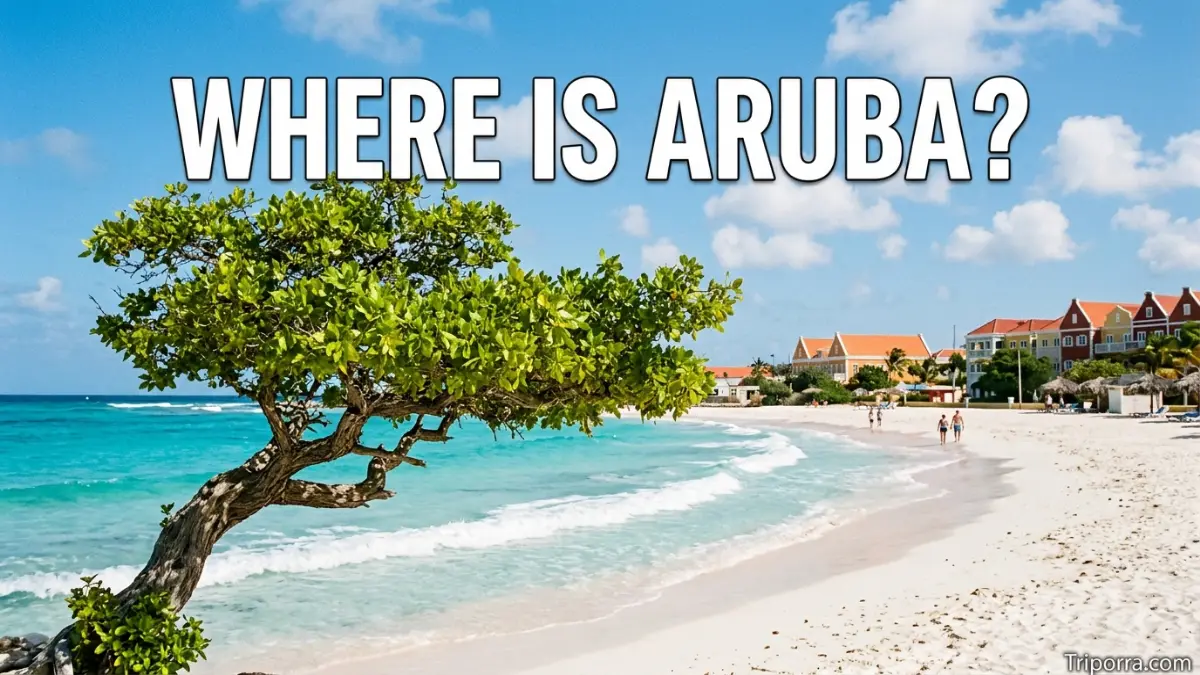
Where is Aruba? Aruba is a small island country in the southern Caribbean Sea, just north of Venezuela. It is one of the four countries in the Kingdom of the Netherlands, along with the Netherlands, Curaçao, and Sint Maarten.
Aruba matters because it is one of the Caribbean’s best-known vacation islands, famous for white-sand beaches, dry sunny weather, colorful Dutch-Caribbean culture, and easy international access.
Featured Snippet Answer:
Aruba is located in the southern Caribbean Sea, about 15 miles north of Venezuela. Officially called the Country of Aruba, it is a self-governing country within the Kingdom of the Netherlands. It is known for Eagle Beach, Palm Beach, Oranjestad, desert-like scenery, and year-round warm weather.
___________________________________________________________________________
Where Is Aruba Located?
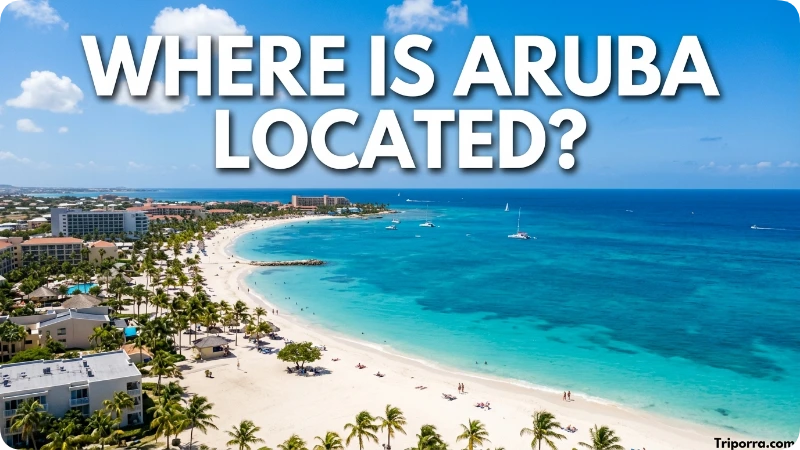
Aruba is in the Caribbean, near the northern coast of South America. More exactly, it sits in the southern Caribbean Sea, west of Curaçao and north of Venezuela. It is part of the Lesser Antilles and is often grouped with Bonaire and Curaçao as the “ABC islands.”
Although Aruba feels like a classic Caribbean beach destination, it is geographically close to South America. On clear days, parts of Venezuela can sometimes be seen from the island’s southeastern side.
Quick FactDetailOfficial NameCountry of ArubaCountry StatusConstituent country within the Kingdom of the NetherlandsRegionSouthern Caribbean, Lesser AntillesCapitalOranjestadPopulationAbout 109,435 by end of Q2 2025Time ZoneAtlantic Standard Time, UTC−4CoordinatesApprox. 12.5°N, 70.0°WNearby PlacesVenezuela, Curaçao, BonaireKnown ForBeaches, tourism, dry climate, Oranjestad, Arikok National ParkOfficial LanguagesDutch and PapiamentoCurrencyAruban florin
Aruba’s Central Bureau of Statistics reported a population of 109,435 by the end of the second quarter of 2025.
___________________________________________________________________________
Aruba on the Map
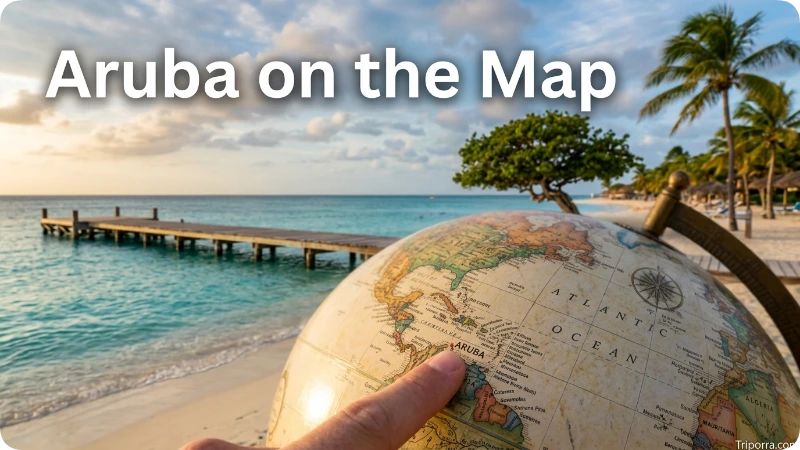
Picture the Caribbean Sea as a long arc of islands stretching from near Florida down toward South America. Aruba sits near the lower edge of that arc, close to Venezuela rather than far north near the Bahamas.
The island is small and narrow. Aruba is about 19.6 miles long and 6 miles wide, with a total area of about 70 square miles.
The west and southwest coasts are where many famous beaches and resorts are found. Palm Beach and Eagle Beach sit on this calmer side. The north and east coasts are rougher, windier, and more rugged, with rocky shorelines, caves, natural pools, and desert scenery.
___________________________________________________________________________
Which Region Does Aruba Belong To?
Aruba belongs politically to the Kingdom of the Netherlands. It is not a province of the European Netherlands. Instead, it has its own government and parliament, while defense and foreign policy are handled at the kingdom level.
Regionally, Aruba is part of the Dutch Caribbean and the ABC islands. These are Aruba, Bonaire, and Curaçao. Unlike Bonaire, Aruba is not a special municipality of the Netherlands. It is a country within the kingdom.
This is why travelers may hear Aruba described in different ways: a Caribbean island, a Dutch Caribbean country, an island country, or part of the Kingdom of the Netherlands. All are correct when used carefully.
___________________________________________________________________________
How Does Aruba Compare to Nearby Places?
Aruba is smaller than Curaçao but more heavily associated with beach tourism. Curaçao has a larger urban feel around Willemstad, while Aruba is often chosen for easy beach vacations, resort stays, and reliable sunshine.
Compared with Bonaire, Aruba is busier and more developed for mainstream tourism. Bonaire is especially popular for diving and nature-focused travel. Aruba has diving too, but many visitors come for beaches, nightlife, family resorts, water sports, shopping, and short island tours.
Compared with Venezuela, Aruba is very different politically and culturally. Venezuela is a large South American country, while Aruba is a small Dutch Caribbean island country.
___________________________________________________________________________
How to Reach Aruba
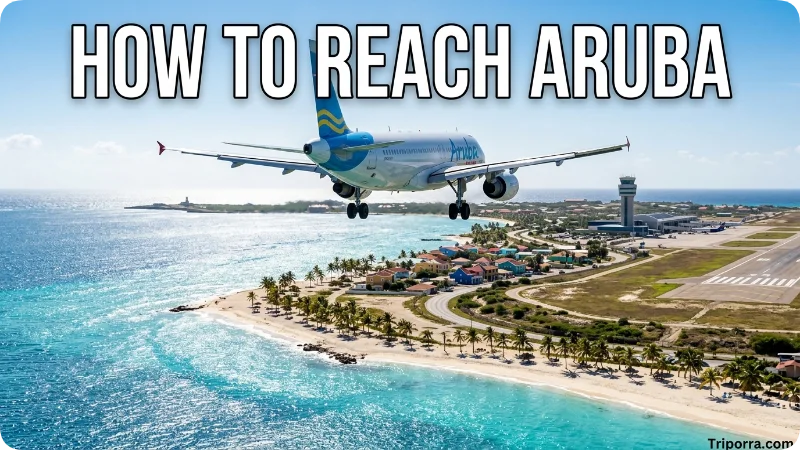
Most international visitors arrive by air at Queen Beatrix International Airport near Oranjestad. The Aruba Airport Authority manages Queen Beatrix International Airport, the island’s main gateway.
Flights commonly connect Aruba with the United States, Canada, the Netherlands, nearby Caribbean islands, and parts of Latin America. Many cruise travelers also arrive through Oranjestad’s cruise port.
Getting around the island is simple compared with larger destinations. Taxis, rental cars, tour buses, hotel shuttles, and local buses are available. Driving from the airport to Palm Beach often takes around 15–25 minutes, depending on traffic.
There is no rail system in Aruba. Travel is mainly by road.
___________________________________________________________________________
Why Is Aruba Famous?
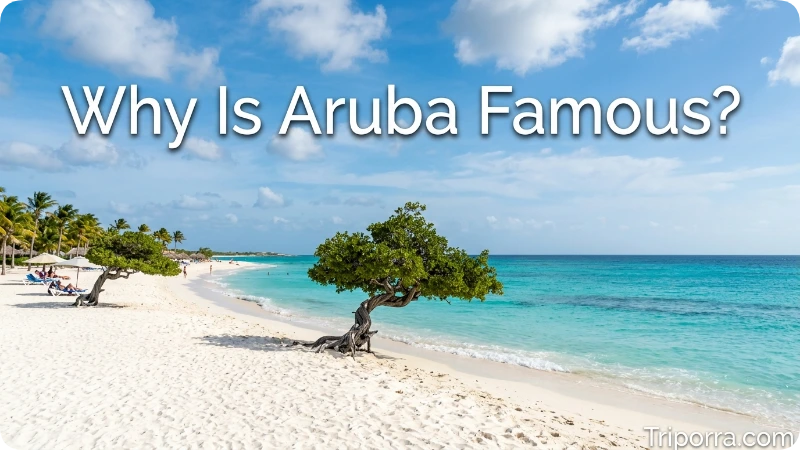
Aruba is famous for beaches, sunshine, and a relaxed island atmosphere. Eagle Beach and Palm Beach are two of its best-known coastal areas. The official tourism site describes Aruba as small, safe, and modern, with beaches, hikes, coves, and local food experiences.
The island is also known for:
Clear blue water White-sand beaches Trade winds Colorful buildings in Oranjestad Dutch and Caribbean cultural mix Arikok National Park Divi-divi and fofoti trees shaped by wind Snorkeling, sailing, and sunset cruises
Tourism is central to Aruba’s economy. UNESCO’s IOCARIBE page notes that Aruba’s economy is primarily centered around tourism, with services and a small oil industry also playing roles.
___________________________________________________________________________
History of Aruba
Aruba’s early history includes Indigenous Caquetío/Arawak presence, European colonization, and later Dutch control. Over time, the island developed a mixed cultural identity shaped by Indigenous, Dutch, Spanish, African, Caribbean, and Latin American influences.
A major modern turning point came on January 1, 1986, when Aruba gained separate country status within the Kingdom of the Netherlands after leaving the Netherlands Antilles.
The oil industry once played a major role, especially around San Nicolas. Later, tourism became the island’s main economic engine. Today, Aruba is widely known as a stable, visitor-friendly Caribbean destination with strong links to both Europe and the Americas.
___________________________________________________________________________
Climate and Weather

Aruba has a warm, dry climate. It receives much less rain than many Caribbean islands and is known for steady sunshine and cooling trade winds.
The official tourism site says Aruba has three main weather seasons: rainy season from October to December, dry season from January to April, and windy season from May to October.
Average temperatures stay warm all year. Aruba’s tourism site gives an average annual temperature of about 82°F.
Aruba is also south of the main hurricane belt, so direct hurricane hits are rare, though storms elsewhere in the Caribbean can still affect weather.
___________________________________________________________________________
Things to See and Do Nearby

Aruba is small, so many attractions are reachable in a short drive.
Top places and activities include:
Eagle Beach for soft sand and calm water Palm Beach for resorts, restaurants, and nightlife Oranjestad for shopping, colorful architecture, and cruise access Arikok National Park for desert scenery, caves, cliffs, and hiking Baby Beach for shallow water near San Nicolas California Lighthouse for sunset views Natural Pool for rugged coastal adventure Alto Vista Chapel for a quiet cultural stop San Nicolas for murals and local art
Travelers who want relaxation usually stay around Palm Beach or Eagle Beach. Visitors who enjoy rugged landscapes should spend time on the north coast and in Arikok National Park.
___________________________________________________________________________
Best Time to Visit
The best time to visit depends on your budget and travel style. Aruba’s official tourism site says February to August is generally a good period, while December to April is the most popular time for dry, sunny weather.
December to April is peak season. Expect higher hotel prices and more visitors.
May to August can be a smart middle option. Weather remains warm, and crowds may be lower than winter.
September to November is often quieter and can be more affordable, though there may be more heat and occasional showers.
For beach weather, Aruba is reliable most of the year.
___________________________________________________________________________
Common Misconceptions
Some people think Aruba is part of the Netherlands in the same way Amsterdam is. That is not correct. Aruba is part of the Kingdom of the Netherlands, but it is a self-governing Caribbean country.
Another common confusion is thinking Aruba is in Europe because of its Dutch connection. Geographically, it is in the Caribbean, close to South America.
Travelers also mix up Aruba with Curaçao and Bonaire. People group these three islands together as the ABC Islands, but each one has its own unique character.
In reality, its landscape is dry, rocky, sunny, and desert-like in many areas.
___________________________________________________________________________
Places Related to Aruba
Travelers who search for Aruba often also search for:
Curaçao Bonaire Oranjestad Palm Beach Eagle Beach San Nicolas Venezuela Dutch Caribbean Lesser Antilles ABC islands
Curaçao and Bonaire are the closest “sister islands” in the ABC group. They are good comparisons if you are planning a wider Caribbean trip.
___________________________________________________________________________
What Else Do People Want to Know?
Aruba offers an easy and welcoming experience for first-time visitors. People commonly speak English in tourist areas, while many residents also use Papiamento, Dutch, and Spanish.
Costs can be higher than in some Caribbean destinations, especially near resorts. Budget travelers can save by visiting in the quieter season, staying outside the main resort strip, using local restaurants, and booking tours early.
The island is family-friendly, but it also suits couples, cruise travelers, solo visitors, and water-sports fans. For culture, spend time in Oranjestad and San Nicolas instead of staying only at the beach.
___________________________________________________________________________
FAQs
Is Aruba a country?
Yes. Aruba is a constituent country within the Kingdom of the Netherlands. It has internal self-government but remains part of the wider kingdom.
Is Aruba in the Caribbean?
Yes. Aruba is in the southern Caribbean Sea, close to Venezuela.
What country owns Aruba?
No other country owns Aruba. It is a self-governing country within the Kingdom of the Netherlands.
What is the capital of Aruba?
The capital is Oranjestad.
What language do people speak in Aruba?
The official languages are Dutch and Papiamento. People also use English and Spanish widely, especially in the tourism industry.
What currency is used in Aruba?
The currency is the Aruban florin. Tourists can use U.S. dollars in many tourist areas.
Is Aruba near Venezuela?
Yes. Aruba is about 15 miles north of Venezuela.
Is Aruba expensive?
Aruba can be expensive in resort areas, especially during peak season. Travelers can lower costs by visiting off-season, comparing hotels, and eating at local spots.
Does Aruba get hurricanes?
Direct hurricane hits are rare because Aruba lies south of the main hurricane belt, but regional storms can still bring wind or rain.
Why Is Aruba Famous?
Travelers know Aruba for its beautiful beaches, year-round sunshine, luxury resorts, exciting water sports, colorful capital city of Oranjestad, and vibrant Dutch-Caribbean culture.
___________________________________________________________________________
Conclusion: Where Aruba Is and Why It Matters
Aruba is a small island country in the southern Caribbean Sea, close to Venezuela and part of the Kingdom of the Netherlands. Its location gives it warm weather, dry landscapes, beautiful beaches, and easy access from the Americas and Europe.
For travelers, Aruba is practical, scenic, and easy to explore. For geography learners, it is a clear example of how a place can be Caribbean in location, Dutch in political connection, and culturally unique in daily life.

Elena Rostova bridges the gap between premium hospitality and authentic local experiences. Armed with a background in luxury hospitality management and a passion for fine architecture, she spent years evaluating elite resorts before transitioning into travel journalism. Elena heads the luxury and boutique travel vertical on Triporra.com. Her meticulous guides strip away the guesswork from high-end travel, showcasing unique five-star escapes, fine regional dining, and bespoke private tours that elevate a standard vacation into an unforgettable journey.