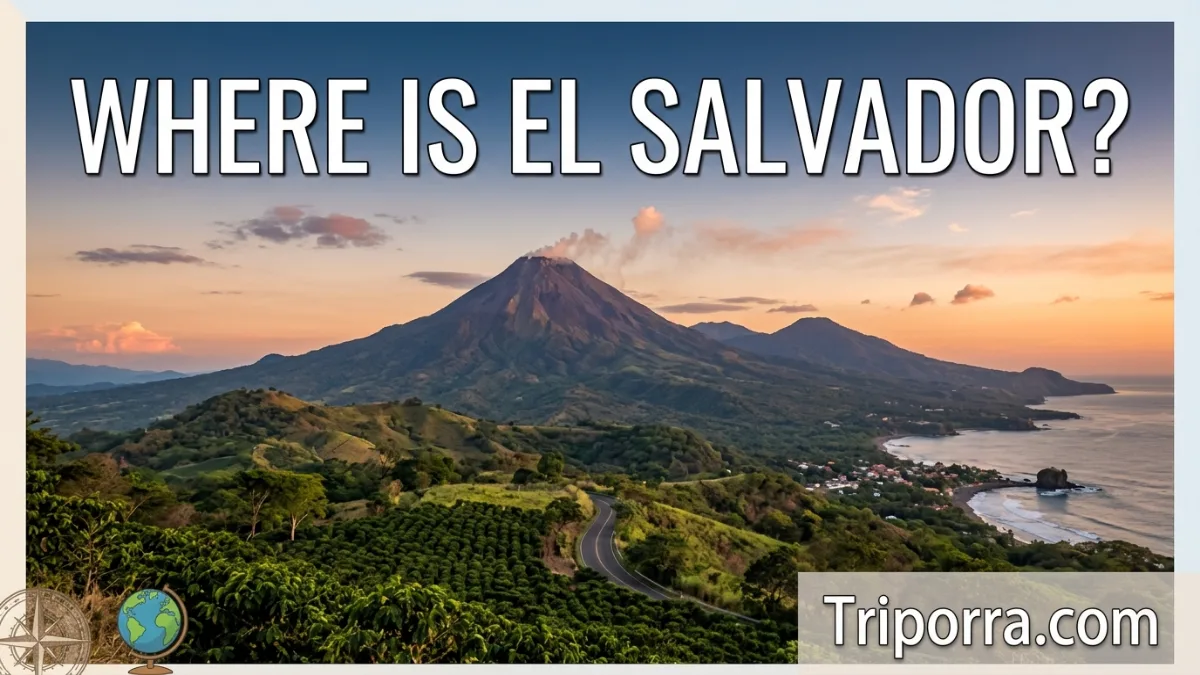
It is a sovereign country located in Central America, along the Pacific Ocean. It lies between Guatemala to the west and Honduras to the north and east. Although it is the smallest country in mainland Central America, it plays an important role in the region because of its history, culture, economy, and growing tourism industry.
People often search for where it is because of its beautiful beaches, volcanoes, coffee-growing regions, and its status as the first country to adopt Bitcoin as legal tender.
Featured Snippet Answer
It is located in Central America on the Pacific coast. It borders Guatemala to the west and Honduras to the north and east. The country covers approximately 21,000 square kilometers and is known for its volcanoes, surfing destinations, coffee production, and historic cities. Its capital and largest city is San Salvador.
Where Is El Salvador Located?
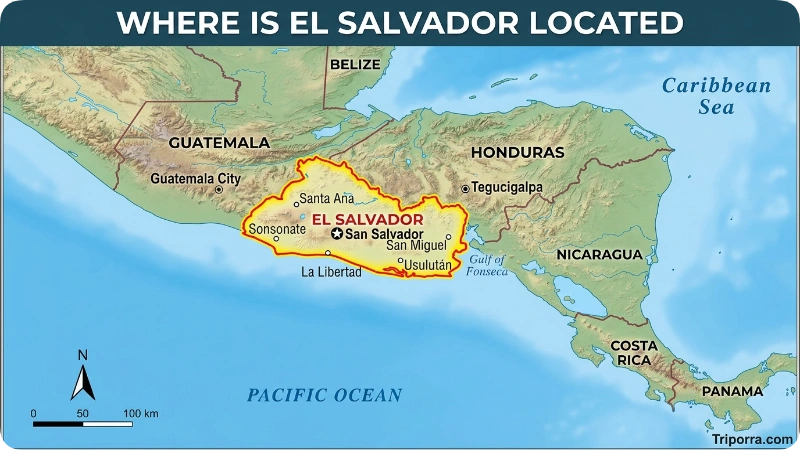
It is situated in the southern part of North America’s Central American region. It occupies a narrow strip of land along the Pacific Ocean and does not have a Caribbean coastline, unlike several neighboring countries.
Many people wonder whether El Salvador is in South America. It is not. El Salvador is located in Central America, which is considered part of the North American continent. Although it lies south of Mexico, it is geographically part of North America rather than South America.
Administrative Hierarchy
LevelNameCountryEl SalvadorRegionCentral AmericaContinentNorth AmericaCapital CitySan SalvadorDepartments14 DepartmentsLargest CitySan Salvador
The country sits between latitudes approximately 13°N and 14.5°N, placing it firmly within the tropical zone.
Quick Facts.
| Fact | Details |
|---|---|
| Official Name | Republic of El Salvador |
| Country | El Salvador |
| Region | Central America |
| Capital | San Salvador |
| Population | Approximately 6 Million+ |
| Time Zone | UTC−6 |
| Coordinates | Approximately 13.7° N, 89.2° W |
| Nearby Major Cities | San Salvador, Santa Ana, San Miguel |
| Known For | Volcanoes, Surfing, Coffee Production, Bitcoin Adoption |
| Official Language | Spanish |
| Currency | United States Dollar (USD) and Bitcoin |
| Government Type | Presidential Republic |
| Continent | North America |
| Bordering Countries | Guatemala and Honduras |
| Coastline | Pacific Ocean |
| Highest Point | Cerro El Pital (2,730 m / 8,957 ft) |
| Nickname | Land of Volcanoes |
El Salvador on the Map
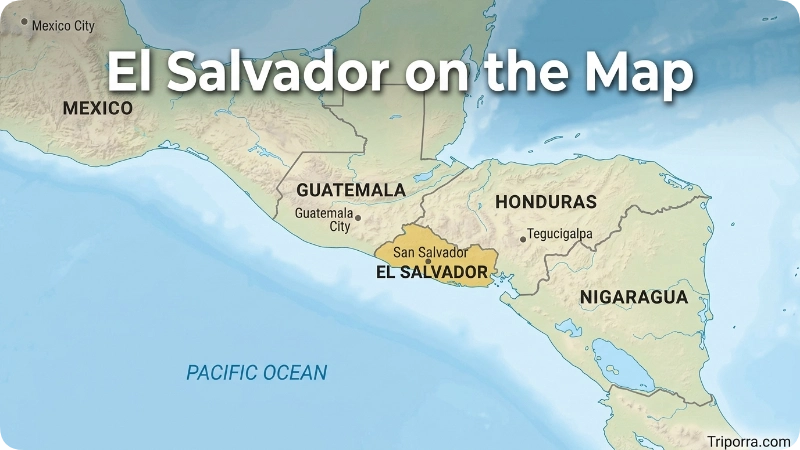
Imagine Central America as a land bridge connecting North America and South America. It sits along the Pacific side of that bridge.
To visualize its location:
- Guatemala lies directly west.
- Honduras borders much of the northern and eastern sides.
- The Pacific Ocean stretches along the southern coast.
- Nicaragua is nearby but does not directly border El Salvador.
- Mexico is northwest of the region through Guatemala.
The country’s Pacific coastline extends for more than 300 kilometers, giving it access to important ports and world-famous surf spots.
A traveler driving from Guatemala City to San Salvador can usually reach El Salvador in about four to five hours, depending on traffic and border conditions.
Which Region Does El Salvador Belong To?
It belongs to the Central American region, one of the most geographically diverse areas in the Americas.
Central America includes:
- Belize
- Guatemala
- Honduras
- El Salvador
- Nicaragua
- Costa Rica
- Panama
Within El Salvador itself, the country is divided into 14 administrative departments. These departments are grouped into western, central, and eastern regions for planning and development purposes.
San Salvador serves as the political, financial, and cultural center of the nation.
How Does El Salvador Compare to Nearby Places?
It is the smallest mainland country in Central America, yet it has one of the highest population densities in the region.
El Salvador Compared to Guatemala
- Guatemala is much larger.
- Guatemala has more indigenous languages.
- El Salvador has a smaller territory but a dense population.
Compared with Honduras
- Honduras has a larger land area.
- El Salvador is more compact and easier to travel across.
El Salvador vs. Costa Rica
- Costa Rica attracts more international eco-tourists.
- El Salvador is generally less crowded and often more affordable.
Compared with Nicaragua
- Nicaragua has larger lakes and more land.
- El Salvador offers easier access between major destinations because of its compact size.
One advantage of El Salvador is convenience. Travelers can often cross the country in just a few hours by road.
How to Reach El Salvador
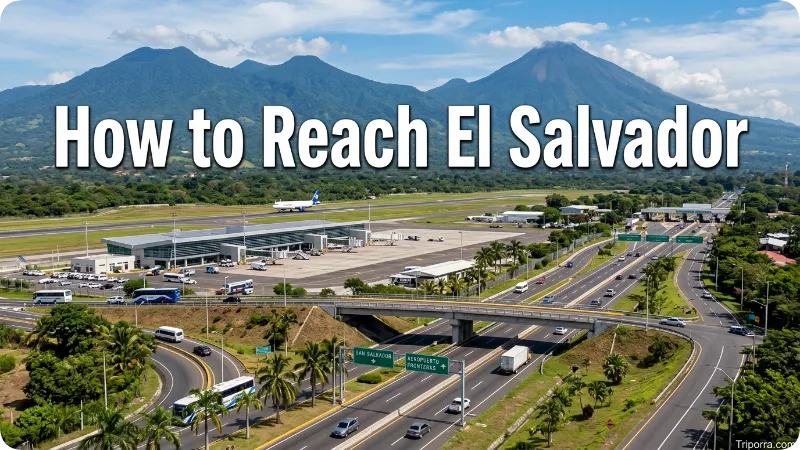
Getting to El Salvador is relatively straightforward thanks to modern transportation links.
By Air
The primary international gateway is:
El Salvador International Airport (SAL)
- Located near San Salvador
- Handles flights from North America, South America, and Europe
Major airlines connect the country to cities such as:
- Miami
- Houston
- Los Angeles
- New York
- Madrid
- Mexico City
By Road
Travelers can enter from:
- Guatemala
- Honduras
Several border crossings operate daily for tourists and commercial traffic.
By Bus
Long-distance bus companies connect El Salvador with neighboring Central American countries.
By Sea
The Pacific coastline contains ports used for trade and some tourism activities.
Why Is El Salvador Famous?
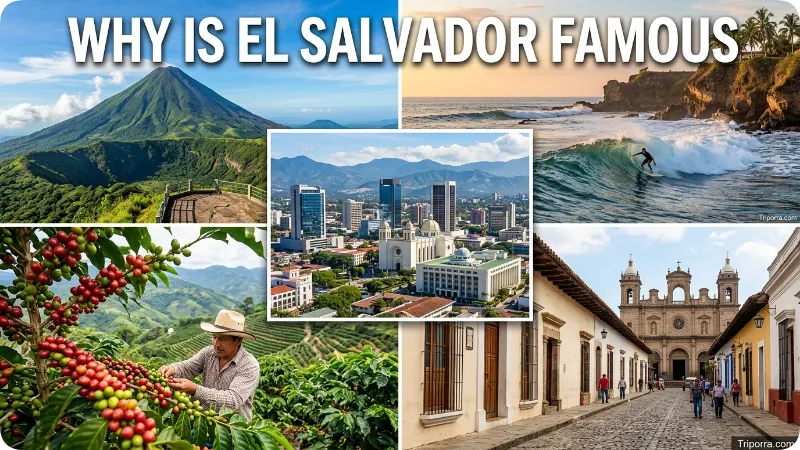
It is known for a variety of reasons.
Volcanoes
The country contains more than 20 volcanoes, several of which remain active.
Popular volcanoes include:
- Santa Ana Volcano
- Izalco Volcano
- San Salvador Volcano
Surfing
Many surfers consider El Salvador one of the best surfing destinations in Central America.
Famous beaches include:
- El Tunco
- El Zonte
- Punta Roca
Coffee
Coffee production has shaped the country’s economy and culture for generations.
Bitcoin
It gained global attention in 2021 when it became the first country to adopt Bitcoin as legal tender.
Natural Beauty
The nation combines mountains, lakes, forests, and coastline within a relatively small area.
History of El Salvador
The history of El Salvador stretches back thousands of years.
Pre-Columbian Era
Before European arrival, the region was inhabited by indigenous peoples, including the Pipil and Lenca.
Spanish Colonization
Spain incorporated the territory into its colonial empire during the 16th century.
Independence
It became independent from Spain in 1821 as part of the broader Central American independence movement.
Federal Republic Period
After independence, it joined the Federal Republic of Central America before eventually becoming a separate nation.
Twentieth Century
The country experienced periods of political instability, military rule, and economic change.
Civil War
A civil war took place from 1980 to 1992, significantly affecting the population and economy.
Modern Era
Since the peace agreements of 1992, El Salvador has continued developing its institutions, infrastructure, and tourism industry.
Climate and Weather
It has a tropical climate with relatively consistent temperatures throughout the year.
Dry Season
- November to April
- Generally sunny conditions
- Popular period for tourism
Rainy Season
- May to October
- Frequent afternoon rainfall
- Lush green landscapes
Temperature
Coastal regions tend to be warmer, while mountain areas experience cooler temperatures.
Average temperatures often range between:
- 20°C to 32°C (68°F to 90°F)
Travel Implications
The dry season is often preferred for beach trips, hiking, and sightseeing.
Things to See and Do Nearby
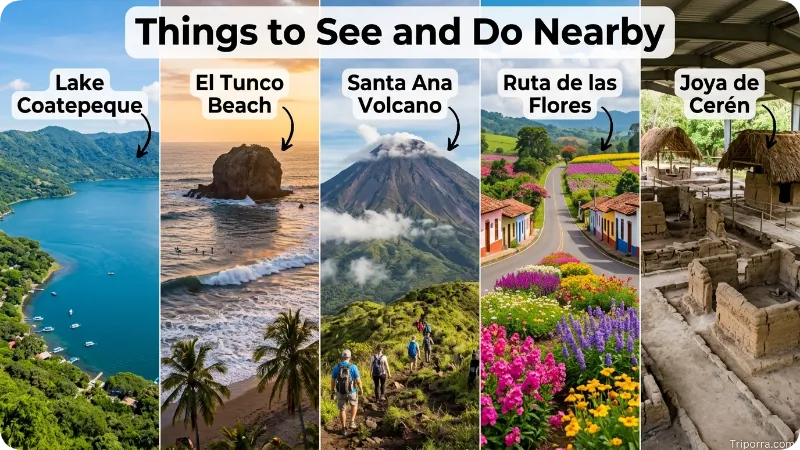
Visitors have many attractions to explore throughout El Salvador.Is El Salvador in Mexico?
No. El Salvador is an independent country in Central America and is not part of Mexico. Although both countries share Spanish as their official language, Guatemala lies between Mexico and El Salvador, so they do not share a direct border.
San Salvador
The capital city offers:
- Museums
- Historic churches
- Modern shopping centers
- Cultural attractions
Santa Ana
Known for:
- Colonial architecture
- Volcano access
- Coffee plantations
Lake Coatepeque
One of the country’s most beautiful volcanic lakes.
El Tunco
A popular beach town known for surfing and nightlife.
Ruta de las Flores
A scenic route connecting charming towns, coffee farms, and local markets.
Joya de Cerén
A UNESCO World Heritage Site sometimes called the “Pompeii of the Americas.”
Best Time to Visit
Peak Season
December to April
Advantages:
- Dry weather
- Excellent beach conditions
- Ideal for outdoor activities
Shoulder Season
May and November
Advantages:
- Smaller crowds
- Pleasant landscapes
- Good travel value
Off-Season
June to October
Advantages:
- Lower accommodation costs
- Green scenery
Potential drawback:
- Increased rainfall
For most travelers, January through March provides some of the most comfortable conditions.
Common Misconceptions
El Salvador Is an Island
This is incorrect. El Salvador is a mainland country in Central America.
It Borders the Caribbean Sea
Unlike Honduras and other regional neighbors, El Salvador only has a Pacific coastline.
The Country Is Entirely Covered by Volcanoes
Volcanoes are important features, but the landscape also includes valleys, lakes, forests, agricultural land, and urban areas.
It Is Difficult to Travel Around
Because of its compact size, many destinations can be reached within a few hours.
Places Related to El Salvador
People researching El Salvador often search for these nearby destinations:
Guatemala
Located west of El Salvador and known for Mayan heritage and volcanic landscapes.
Honduras
Borders El Salvador and contains Caribbean and Pacific coastlines.
Nicaragua
Found southeast of Honduras and famous for lakes and volcanoes.
Costa Rica
Known for biodiversity and ecotourism.
Panama
Home to the Panama Canal and a major international transportation hub.
What Else Do People Want to Know?
Is El Salvador Safe for Tourists?
Safety conditions vary by location and can change over time. Visitors should review current government travel advisories and follow local guidance.
Is El Salvador Expensive?
Compared with many North American and European destinations, El Salvador is often considered affordable.
What Language Is Spoken?
Spanish is the official language.
Can You Use US Dollars?
Yes. The United States Dollar is widely used throughout the country.
Is It Easy to Travel Around?
The country’s compact size makes domestic travel relatively convenient.
What Is Local Food Like?
Popular dishes include:
- Pupusas
- Tamales
- Yuca dishes
- Seafood specialties
FAQs
Where is El Salvador located in the world?
It is located in Central America on the Pacific coast, between Guatemala and Honduras. It is part of the North American continent.
What currency is used in El Salvador?
It officially uses the United States Dollar (USD), and Bitcoin is also recognized as legal tender.
Where is El Salvador on the world map?
On the world map, it appears in Central America along the Pacific Ocean, between Guatemala and Honduras.
Is El Salvador in Mexico?
No, it is not in Mexico. It is an independent country in Central America, separated from Mexico by Guatemala.
What language is spoken in El Salvador?
Spanish is the official and most widely spoken language in it .
Is El Salvador safe?
Safety varies by location, so travelers should check current travel advisories and follow local guidance before visiting.
Is El Salvador in South America?
No,it is not in South America. It is located in Central America, which is part of North America.
What is the population of El Salvador?
It has a population of approximately 6.3 million people, making it one of the most densely populated countries in Central America.
Is El Salvador good for surfing?
Yes. The country is internationally recognized for high-quality surf breaks.
What is the best month to visit El Salvador?
January, February, and March are among the most popular months because of dry and sunny weather.
Conclusion
It is a Central American country located between Guatemala and Honduras on the Pacific coast. Despite being the smallest mainland nation in the region, it offers an impressive mix of volcanoes, beaches, cultural heritage, coffee-growing landscapes, and modern attractions. Its convenient size allows travelers to explore mountains, lakes, colonial towns, and surf destinations within a short distance, making it one of the most accessible and fascinating destinations in Central America.

Silas Vance is a geography enthusiast, travel researcher, and location-focused content writer dedicated to helping readers better understand the world around them on triporra.com. He specializes in creating informative guides about cities, countries, islands, landmarks, universities, and other notable destinations. His work combines geographic accuracy, historical context, and practical insights to answer location-based questions in a simple and engaging way.