Cabo is in Baja California Sur, Mexico, at the southern tip of the Baja California Peninsula. When people ask, “Where is Cabo?” they usually mean Cabo San Lucas or the Los Cabos region. It sits where the Pacific Ocean meets the Sea of Cortez (Gulf of California).
Cabo is not a country, island, or separate state. It is part of Mexico. Cabo San Lucas is a coastal resort city within the Los Cabos municipality, which also includes San José del Cabo and the resort corridor connecting the two cities.
The region is famous for El Arco at Land’s End, beautiful beaches, luxury resorts, sport fishing, whale watching, golf courses, nightlife, and its unique mix of desert landscapes and coastline. It is one of Mexico’s best-known tourist destinations and a meeting point of two major bodies of water.
Quick Facts About Cabo
| Fact | Details |
|---|---|
| Common Name | Cabo |
| Official Destination | Cabo San Lucas |
| Wider Region | Los Cabos |
| Country | Mexico |
| State | Baja California Sur |
| Continent | North America |
| Region | Southern Baja California Peninsula |
| Geographic Type | Coastal city and resort region |
| Coordinates (Cabo San Lucas) | 22.8905° N, 109.9167° W |
| Municipality | Los Cabos |
| Municipal Seat | San José del Cabo |
| Largest City | Cabo San Lucas |
| Population (2020 Census) | 351,111 (Los Cabos Municipality) |
| Area | Approximately 3,750.90 km² |
| Main Airport | Los Cabos International Airport (SJD) |
| Nearby Cities | San José del Cabo, Todos Santos, La Paz |
| Nearby Waters | Pacific Ocean and Sea of Cortez |
| Famous Landmark | El Arco at Land’s End |
| Best Known For | Beaches, luxury resorts, sport fishing, whale watching, desert landscapes, and tourism |
Where Is Cabo Located Exactly?
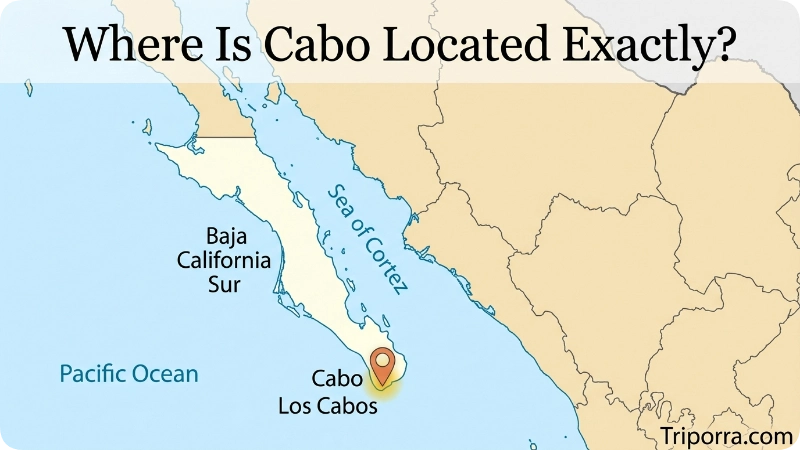
It is located in northwestern Mexico, in the state of Baja California Sur. It sits at the bottom end of the long Baja California Peninsula, a narrow strip of land that stretches south from the United States border into the Pacific Ocean.
On a map, the Baja California Peninsula looks like a long finger pointing downward along Mexico’s west coast. It is found near the very end of that finger. Cabo San Lucas is on the southwestern tip, while San José del Cabo lies northeast of Cabo San Lucas. Together, these places form the main urban and tourism area known as Los Cabos.
It is surrounded by water and desert. To the west and south is the Pacific Ocean. To the east is the Sea of Cortez, also called the Gulf of California. The Sea of Cortez separates the Baja California Peninsula from mainland Mexico. This special geographic location gives Cabo its dramatic landscape, where rocky cliffs, sandy beaches, blue water, dry desert, and mountain ranges appear close together.
It is far from Mexico City and other central Mexican cities. It is also not on Mexico’s Caribbean coast. This means it should not be confused with Cancún, Tulum, Playa del Carmen, or Cozumel, which are on the opposite side of Mexico near the Caribbean Sea. It is on the Pacific side of the country.
Where Is Cabo on a World Map?
On a world map, it is in the Western Hemisphere, in North America, on the western side of Mexico. To find it, look for Mexico below the United States. Then look toward the northwest of Mexico, where the Baja California Peninsula extends southward between the Pacific Ocean and the Gulf of California.
It is near the southern end of that peninsula. It is much closer to the western United States than many other Mexican resort regions. For example, flights from cities such as Los Angeles, San Diego, Phoenix, Dallas, Houston, and Denver often reach Los Cabos faster than flights to Mexico’s Caribbean coast.
Its world map location also explains its popularity with travelers from the United States and Canada. It is warm, coastal, and easy to reach by air from many North American cities. At the same time, it feels geographically unique because it combines desert, mountain, and ocean scenery in one compact region.
Where Is Cabo on a Map of Mexico?
On a map of Mexico, it appears at the far southern tip of Baja California Sur. Baja California Sur is the southern state of the Baja California Peninsula. The northern state is called Baja California, while the southern state is Baja California Sur.
It is not near Mexico City, Guadalajara, Monterrey, or Cancún. It is in a more isolated peninsula region. The state capital, La Paz, is northwest of Los Cabos. The artsy town of Todos Santos is also northwest of Cabo San Lucas, along the Pacific side. The community of Cabo Pulmo is northeast of San José del Cabo, along the East Cape and Sea of Cortez side.
The municipality of Los Cabos borders the municipality of La Paz to the north. Its southern and coastal edges face the ocean. This gives Los Cabos a strong coastal identity and makes tourism, fishing, boating, and beach activities central to its economy and culture.
Visitors looking at a Los Cabos map will see Cabo San Lucas at the southwestern tip of the municipality and San José del Cabo to the northeast. The Tourist Corridor connects the two cities, while major attractions such as El Arco, Medano Beach, Cabo Pulmo, Todos Santos, and Los Cabos International Airport are located throughout the region.
Cabo, Cabo San Lucas, and Los Cabos: What Is the Difference?
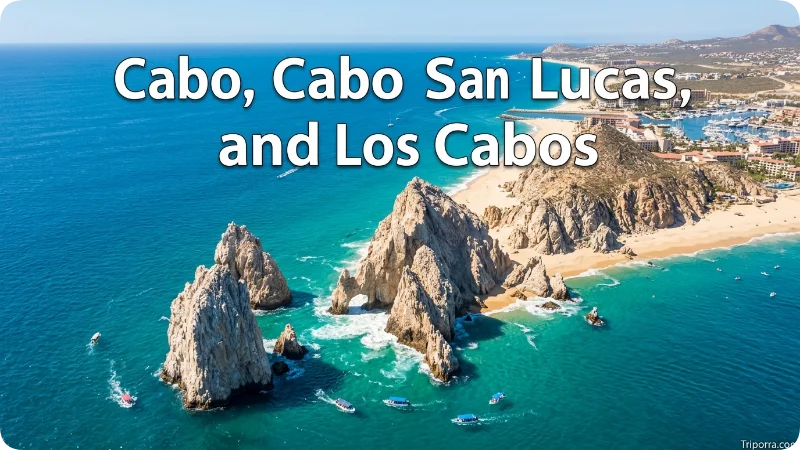
Many people use the word Cabo in a casual way, but it can mean slightly different things.
Cabo San Lucas
Cabo San Lucas is the lively resort city at the southern tip of the Baja California Peninsula. It is the place most people picture when they hear “Cabo.” Cabo San Lucas is famous for its marina, nightlife, beach clubs, water tours, fishing trips, and the natural rock arch known as El Arco.
San José del Cabo
San José del Cabo is the historic and cultural city northeast of Cabo San Lucas. It is the municipal seat of Los Cabos. San José del Cabo has a quieter feel, with a historic center, art galleries, restaurants, colonial-style buildings, and the Mission of San José del Cabo “Añuití,” which became important in the 1730s.
Los Cabos
Los Cabos is the municipality and wider travel region that includes Cabo San Lucas, San José del Cabo, and the coastal resort corridor between them. This corridor contains many hotels, resorts, golf courses, beaches, restaurants, and residential developments. The Baja California Sur strategic tourism report describes the region’s tourism activity as centered mainly on the San José del Cabo–Cabo San Lucas corridor, with beaches, scenery, sport fishing, hotel infrastructure, and nautical activities as key attractions.
In simple words, Cabo San Lucas is one city, San José del Cabo is another city, and Los Cabos is the wider region that includes both.
Geographic Setting of Cabo
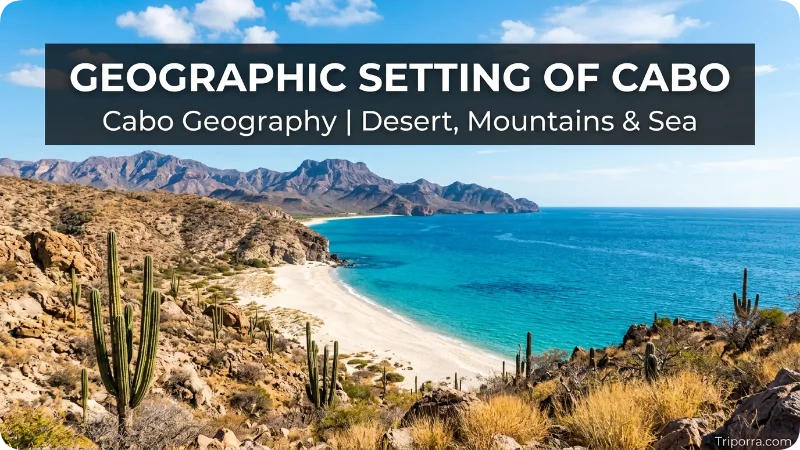
Cabo’s geographic location is one of the main reasons it is so famous. It sits where land, desert, mountains, and sea come together. The landscape is not tropical rainforest like parts of southern Mexico. Instead, it has a dry, desert-like setting with cactus-covered hills, rugged rocks, sandy beaches, and clear blue water.
The most famous geographic feature is Land’s End, the rocky area at the southern tip of Cabo San Lucas. This is where visitors see El Arco, sea cliffs, rock formations, sea lion colonies, and the meeting area between the Pacific Ocean and the Sea of Cortez. The official Los Cabos tourism site highlights Land’s End and The Arch of Cabo San Lucas among the region’s main places to visit.
The nearby Sierra de la Laguna mountain range adds another layer to Cabo’s geography. This mountain region sits between Los Cabos and La Paz and is important for ecosystems and water resources. UNESCO describes the Sierra La Laguna Biosphere Reserve as covering 112,436 hectares and serving as a major water catchment and recharge area for the southern peninsula.
Climate and Weather in Cabo
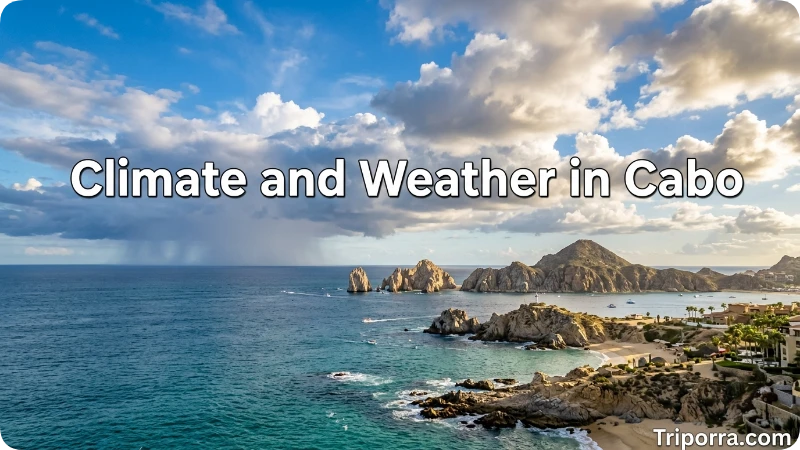
It has a warm, mostly dry climate. It is sunny for much of the year, with hot summers, mild winters, and a desert-coastal feel. Because it is near both the Pacific Ocean and the Sea of Cortez, weather can change slightly depending on the side of the peninsula and the time of year.
Winter and spring are popular because the weather is warm but usually more comfortable than the hottest summer months. Autumn can also be pleasant. The Los Cabos tourism board notes that October and November bring temperatures back into the low 80s Fahrenheit, creating good conditions for festivals and fishing tournaments.
Summer can be hot and humid, especially from July through September. This is also the period when tropical weather systems can affect the region, so travelers often check weather conditions before planning outdoor activities. Even then, many visitors still come for warm water, resort stays, fishing, and quieter travel periods.
The best time depends on the purpose of the trip. For beach weather and outdoor sightseeing, many visitors prefer November through April. For whale watching, December through April is the main season, with January to March often considered especially good. The official Los Cabos whale watching guide says whales can be observed during their seasonal movement from December through April.
Landscape, Terrain, and Natural Features
Cabo’s landscape is one of the most distinctive in Mexico. It is not only a beach destination. It is a desert-meets-sea region with rugged cliffs, dry hills, mountain backdrops, sandy bays, rocky coves, and marine habitats.
The coastline includes both calm and rough waters. Some beaches, especially along the Sea of Cortez side, are better for swimming and snorkeling. Other beaches, especially on exposed Pacific-facing stretches, can have strong waves and dangerous currents. Visitors should always pay attention to beach flags and local safety signs.
The land around it includes desert plants such as cacti, shrubs, and drought-resistant vegetation. Inland areas include arroyos, dry riverbeds, ranch lands, and mountain trails. The Sierra de la Laguna area has more varied ecosystems because elevation changes bring cooler temperatures and more moisture.
Marine life is another major natural feature. The waters around Los Cabos are known for whales, dolphins, sea lions, rays, tropical fish, marlin, and other species. It Pulmo National Park, northeast of San José del Cabo, is especially important because it protects a coral reef system in the Gulf of California. Mexico’s National Commission of Natural Protected Areas describes Cabo Pulmo National Park as a nationally and internationally important protected area because it contains the only coral reef system in the Gulf of California.
Brief History of Cabo
Cabo’s history began long before modern resorts. Indigenous peoples lived in the southern Baja region before European contact. The area’s early communities adapted to a dry landscape by relying on marine resources, desert plants, and seasonal water sources.
Spanish exploration and mission activity later shaped the region. San José del Cabo became especially important because of its mission history and water source near the estuary. The Mission of San José del Cabo “Añuití” emerged in the 1730s and became part of the region’s colonial identity.
For a long time, it was a small coastal settlement connected to fishing, ships, and later tuna-related activity. It did not become a large international resort overnight. The region’s tourism identity grew during the 20th century as roads, airports, hotels, fishing tournaments, and resort infrastructure developed.
Tourism then became the main economic engine. The Baja California Sur strategic report states that Los Cabos’ productive vocation is tourism, especially through the San José del Cabo–Cabo San Lucas corridor, based on beaches, scenery, sport fishing, hotel infrastructure, and nautical activities. Today, it combines older mission history, fishing culture, Mexican coastal life, luxury resort development, and international travel.
Why Is Cabo Famous?
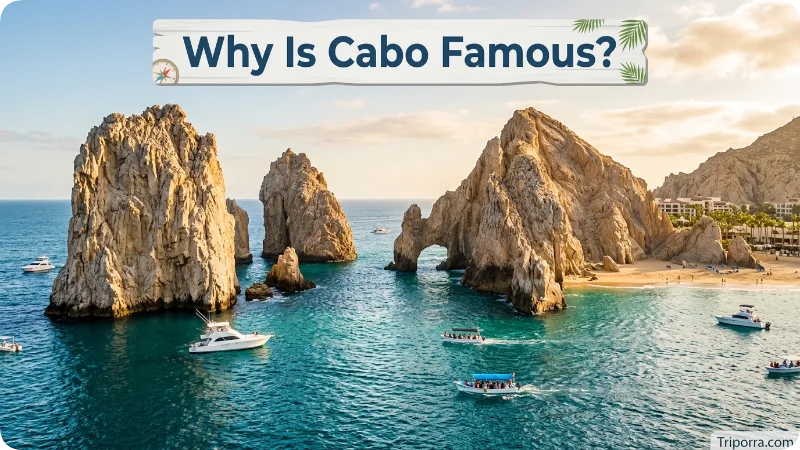
It is famous because it offers a rare combination of dramatic scenery, warm weather, ocean activities, and resort comfort. It is one of Mexico’s best-known travel destinations and is especially popular with visitors from the United States, Canada, and other parts of the world.
The most famous symbol of it is El Arco, a natural rock arch at Land’s End. Visitors often reach it by boat from the Cabo San Lucas marina. The arch appears in travel photos, postcards, hotel ads, and tourism campaigns because it represents the meeting of stone, sea, and sky.
It is also famous for sport fishing. The region has long attracted anglers looking for marlin, dorado, tuna, and other species. Fishing tournaments are part of Cabo’s travel identity.
Beaches are another major reason people visit. Popular beach areas include Medano Beach, Chileno Bay, Santa Maria Bay, Palmilla Beach, and Lover’s Beach. Some are better for swimming, some for snorkeling, and others for views.
It is also known for whale watching, especially during the winter season. Gray whales and humpback whales migrate through the region, and boat tours allow visitors to see them from a safe distance.
Luxury resorts, golf courses, spas, restaurants, nightlife, desert tours, boat trips, and art walks also make it famous. The region is not only about beaches; it is also a travel destination with culture, food, nature, adventure, and relaxation.
Many visitors also choose Cabo because it offers something for almost every type of traveler. Couples come for luxury resorts and oceanfront sunsets, families enjoy beaches and boat tours, while adventure seekers visit for scuba diving, snorkeling, ATV rides, deep-sea fishing, and seasonal whale watching.
Cabo has also become a favorite destination for celebrities and luxury travelers thanks to its high-end resorts, private villas, championship golf courses, and fine dining. At the same time, budget-conscious visitors can still find affordable hotels, local restaurants, and public beaches, making the region appealing to a wide range of travelers.
Why Is Cabo So Popular Right Now?
Cabo continues to grow in popularity because it is easy to reach from many cities in the United States and Canada, offers warm weather throughout most of the year, and combines beaches, luxury resorts, outdoor adventures, and vibrant nightlife in one destination.
Social media has also helped increase Cabo’s popularity. Photos of El Arco, beachfront resorts, whale watching tours, and desert landscapes regularly appear on Instagram, TikTok, and travel blogs. Many travelers also choose Cabo for destination weddings, family vacations, golf trips, fishing tournaments, and luxury getaways.
Another reason for its popularity is that visitors can experience both relaxation and adventure. In a single trip, travelers can enjoy beaches, snorkeling, hiking, desert ATV tours, world-class dining, shopping, and cultural attractions around San José del Cabo.
Major Attractions in Cabo
El Arco and Land’s End
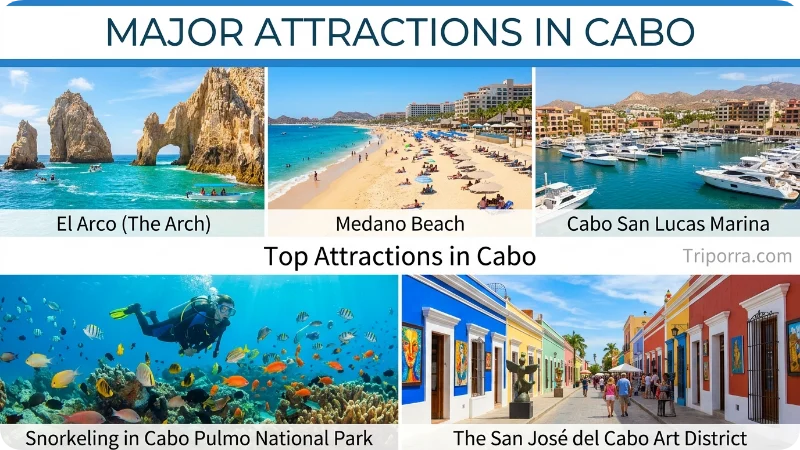
El Arco is the most iconic attraction in Cabo. This natural rock arch stands near the southern tip of Cabo San Lucas. Boat tours often pass by the arch, sea lion rocks, Lover’s Beach, and nearby cliffs. It is one of the most photographed landmarks in Mexico.
Lover’s Beach and Divorce Beach
Lover’s Beach is near Land’s End and is usually reached by boat. It faces calmer water on the Sea of Cortez side. Divorce Beach is on the Pacific side and is known for stronger waves and rougher swimming conditions. Together, they show how different Cabo’s two coastlines can feel even when they are close together.
Medano Beach
Medano Beach is one of the most active beaches in Cabo San Lucas. It has restaurants, water sports, beach clubs, and views toward Land’s End. It is also one of the better-known swimmable beach areas in Cabo San Lucas.
Cabo San Lucas Marina
The marina is the center of boat tours, fishing trips, sunset cruises, restaurants, and shopping in Cabo San Lucas. Many visitors begin their water activities here.
San José del Cabo Historic Center
It offers a more cultural experience. Its historic center has galleries, restaurants, shops, and colonial-style streets. The Thursday Art Walk, held in season, is one of the best ways to enjoy the local arts scene. The official tourism board describes San José del Cabo’s preserved architecture, art district, and weekly Art Walk from November through June.
Cabo Pulmo National Park
Cabo Pulmo is northeast of San José del Cabo on the East Cape. It is a protected marine area known for snorkeling, diving, reef life, and ecotourism. CONANP identifies Cabo Pulmo as an important protected area because of its coral reef system in the Gulf of California.
Sierra de la Laguna
The Sierra de la Laguna area is important for hiking, nature, waterfalls, and regional ecosystems. It is a mountain and biosphere reserve region between Los Cabos and La Paz, and UNESCO notes its role in water catchment for southern Baja California Sur.
Todos Santos
Todos Santos is not inside it , but it is a popular day trip from Los Cabos. It lies northwest of Cabo San Lucas and is known for art, historic buildings, boutique hotels, surfing nearby, and a slower coastal-town atmosphere.
Things to Do in Cabo
It offers many activities for different kinds of travelers.
Beach lovers can relax at Medano Beach, Chileno Bay, Santa Maria Bay, or Palmilla Beach. Snorkelers often choose calmer bays with clearer water. Adventure travelers can book boat tours, kayaking, paddleboarding, scuba diving, ATV rides, camel rides, zip-lining, hiking, or off-road desert tours.
Food travelers can explore seafood restaurants, taco spots, marina dining, farm-to-table restaurants near San José del Cabo, and Mexican regional flavors. Culture lovers can visit San José del Cabo’s art galleries and historic center.
Nature lovers can take whale watching tours in season, visit Cabo Pulmo, explore the East Cape, or hike in areas connected to the Sierra de la Laguna. Golfers can choose from coastal courses with ocean and desert views. The Baja California Sur strategic report notes that Los Cabos has been recognized for golf and listed 18 golf courses in the municipality in its 2020 strategic tourism information.
Nightlife is strongest in Cabo San Lucas, especially around the marina and downtown areas. San José del Cabo is better for quieter evenings, art, dining, and local culture.
How to Get to Cabo
The easiest way to get to Cabo is by flying into Los Cabos International Airport, commonly known by the airport code SJD. The airport is near San José del Cabo and serves the wider Los Cabos region. Grupo Aeroportuario del Pacífico lists Los Cabos International Airport as located about 11 kilometers from San José del Cabo.
From the airport, travelers can reach San José del Cabo more quickly than Cabo San Lucas. It is farther southwest, usually reached by shuttle, taxi, private transfer, rental car, or pre-booked transportation. Travel time depends on traffic, hotel location, and the route.
Drivers can also reach it by using Mexican Federal Highway 1, the Transpeninsular Highway, which runs along the Baja California Peninsula. This road connects northern Baja with La Paz, San José del Cabo, and Cabo San Lucas. The drive from the U.S. border is long and requires planning, but it is popular with road-trip travelers.
Cruise passengers may also visit Cabo San Lucas. Cruise ships usually anchor offshore, and smaller boats carry passengers to the marina area because Cabo San Lucas does not have the same kind of large dock setup as some other cruise ports.
Transportation Around Cabo
Transportation in it depends on where a traveler stays. The region is spread out, especially between Cabo San Lucas, the Tourist Corridor, and San José del Cabo.
Hotel shuttles and private transfers are common for airport transportation. Taxis are available, but prices can be higher than in some other parts of Mexico. Rental cars are useful for travelers planning to visit multiple beaches, Todos Santos, Cabo Pulmo, the East Cape, or rural areas.
The main road between Cabo San Lucas and San José del Cabo is the Transpeninsular Highway. It runs through the resort corridor and connects many hotels, beaches, golf courses, restaurants, and shopping areas.
Visitors staying only in downtown Cabo San Lucas may walk to the marina, restaurants, beach areas, and nightlife. Visitors staying at large resorts may rely more on shuttles, taxis, or arranged tours.
Is Cabo Expensive?
Cabo is generally considered one of the more expensive destinations in Mexico, especially around luxury resorts, beachfront hotels, and popular tourist areas. Prices for accommodations, restaurants, and activities are often higher than in many other Mexican beach destinations.
However, Cabo can fit different budgets. Travelers who stay in smaller hotels, eat at local restaurants, use public beaches, and book activities in advance can often enjoy the region at a lower cost. Luxury travelers, on the other hand, have access to upscale resorts, private villas, fine dining, golf courses, and premium excursions that can significantly increase trip expenses.
Overall, Cabo offers options for both budget-conscious travelers and visitors seeking a luxury vacation.
Most visitors experience Cabo without major problems, especially when staying in established tourist areas such as Cabo San Lucas, San José del Cabo, and the Tourist Corridor. Like any popular destination, travelers should remain aware of their surroundings, avoid isolated areas late at night, keep valuables secure, and follow local safety advice. Using licensed transportation and following beach warning flags also helps make a visit safer.
Best Time to Visit Cabo
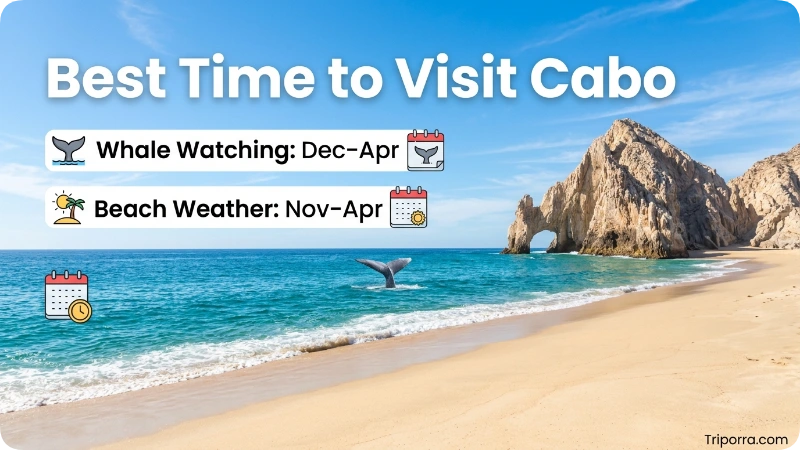
The best time to visit it depends on what kind of trip you want.
For comfortable weather, many travelers prefer November through April. These months usually bring warm days, cooler evenings, and lower humidity than summer. This is also a popular time for beach vacations, golf, outdoor dining, and sightseeing.
For whale watching, December through April is the main season. The Los Cabos tourism board identifies this period as the seasonal window when whales can be observed off the coast.
For fewer crowds and warm water, May, June, October, and November can be good shoulder-season months. October and November are especially attractive for many visitors because the weather begins to cool from summer heat.
For surfing, summer can be important in some Sea of Cortez surf areas. The Los Cabos tourism board notes that summer marks the start of surf season on the Sea of Cortez, with warm water and steady swells.
Late summer and early fall can be hotter and more humid. Travelers during this period should watch local weather reports, especially during tropical storm season.
Culture, Food, and Local Life in Cabo
Cabo’s culture is shaped by Mexican traditions, Baja coastal life, fishing history, tourism, migration, and international influence. Because Los Cabos has grown quickly, it includes long-time local families, workers from other Mexican states, foreign residents, seasonal visitors, and international travelers.
It offers the strongest sense of historic town culture, with its plaza, mission area, galleries, and old streets. It feels more energetic and tourism-focused, with marina life, nightlife, boat tours, and beach activity. The resort corridor between them is more hotel-centered.
Food in it reflects the sea and the desert. Seafood is important, especially fish tacos, shrimp, ceviche, clams, marlin, and grilled fish. Mexican dishes such as tacos, chilaquiles, mole, tamales, and enchiladas are also common. Modern restaurants in Los Cabos include fine dining, farm-to-table kitchens, international menus, and casual local eateries.
Cabo’s economy depends strongly on tourism, but the region also has connections to fishing, agriculture, construction, real estate, and services. The strategic report for Los Cabos identifies tourism as the municipality’s main productive vocation, with beaches, scenery, sport fishing, hotel infrastructure, and nautical activities as major foundations.
Interesting Facts About Cabo
- It is not one single official destination name; it usually means Cabo San Lucas or the wider Los Cabos region.
- It is located at the southern end of the Baja California Peninsula, not on mainland Mexico.
- Los Cabos includes both Cabo San Lucas and San José del Cabo.
- The Pacific Ocean and Sea of Cortez meet near the Land’s End area.
- El Arco is the most famous natural landmark in Cabo.
- Los Cabos had 351,111 inhabitants in the 2020 INEGI Census.
- San José del Cabo is the municipal seat, while Cabo San Lucas is the best-known resort city.
- Cabo Pulmo protects a rare coral reef system in the Gulf of California.
- The region has desert, mountain, beach, and marine ecosystems close together.
- Whale watching is seasonal, mainly from December through April.
- The main airport is Los Cabos International Airport, not “Cabo San Lucas Airport” for most international travelers.
- It is often compared with Cancún, but the two destinations are on opposite sides of Mexico and have very different landscapes.
Cabo Compared With Nearby and Similar Places
How Cabo Differs From San José del Cabo
Cabo San Lucas is more active, modern, and nightlife-focused. San José del Cabo is quieter, more historic, and more cultural. Visitors often stay in one and visit the other.
Cabo vs Los Cabos
Cabo usually means Cabo San Lucas in casual travel language. Los Cabos is the larger municipality and travel region that includes Cabo San Lucas, San José del Cabo, and the corridor between them.
Cabo vs Cancún
Cabo is in Baja California Sur on the Pacific side of Mexico. Cancún is in Quintana Roo on the Caribbean side. Cabo has desert landscapes, rock formations, fishing, and dramatic coastlines. Cancún has flatter terrain, Caribbean beaches, nearby Mayan ruins, and turquoise Caribbean water.
Cabo vs La Paz
La Paz is the capital of Baja California Sur and lies northwest of Los Cabos. It has a calmer city feel, a long waterfront, access to Espíritu Santo Island, and a more local atmosphere. Cabo is more resort-focused and internationally known for tourism.
Cabo vs Puerto Vallarta
Both Cabo and Puerto Vallarta are on Mexico’s Pacific side, but their geography is different. Puerto Vallarta sits on mainland Mexico by Banderas Bay, with greener hills and a more tropical feel. Cabo is drier, more desert-like, and located on the Baja Peninsula.
FAQs
Where is Cabo located?
Cabo is located in Baja California Sur, Mexico, at the southern tip of the Baja California Peninsula. Most people use the name Cabo to refer to Cabo San Lucas or the wider Los Cabos region.
Is Cabo in Mexico or California?
Cabo is in Mexico. It is in the Mexican state of Baja California Sur. It is not in the U.S. state of California, although it is on the Baja California Peninsula.
Is Cabo the same as Cabo San Lucas?
In casual travel language, yes, many people say Cabo when they mean Cabo San Lucas. However, Cabo can also refer to the wider Los Cabos area, which includes San José del Cabo and the resort corridor.
What do people mean when they say they are going to Cabo?
When people say they are going to Cabo, they usually mean Cabo San Lucas or the Los Cabos region in Baja California Sur, Mexico. In everyday conversation, “Cabo” is commonly used as a short name for this popular vacation destination, which includes Cabo San Lucas, San José del Cabo, and the resort corridor connecting the two.
Is Los Cabos the same as Cabo?
Los Cabos is the wider municipality and travel region. Cabo usually refers to Cabo San Lucas, but many travelers use Cabo and Los Cabos almost interchangeably.
What country is Cabo in?
Cabo is in Mexico, in the state of Baja California Sur.
Is Cabo its own country?
No. Cabo is not its own country. It is part of Mexico, located in the state of Baja California Sur. The name “Cabo” usually refers to Cabo San Lucas or the wider Los Cabos region rather than an independent place.
What ocean is Cabo on?
Cabo is beside both the Pacific Ocean and the Sea of Cortez. The Pacific is on the west and south side, while the Sea of Cortez is on the east side of the peninsula.
Where is Cabo on the map?
Cabo is at the bottom tip of the Baja California Peninsula in northwestern Mexico. On a map, look south of California and follow the long peninsula down to its southern end.
What is Cabo famous for?
Cabo is famous for El Arco, Land’s End, beaches, sport fishing, whale watching, luxury resorts, golf, nightlife, and desert-meets-ocean scenery.
What airport do you fly into for Cabo?
Most travelers fly into Los Cabos International Airport, also known as SJD. It is near San José del Cabo and serves both San José del Cabo and Cabo San Lucas.
Is Cabo safe for swimming?
Some Cabo beaches are swimmable, but not all. Beaches on exposed Pacific-facing areas can have strong waves and currents. Visitors should follow local signs, flags, and lifeguard guidance.
Why is Cabo San Lucas sometimes described as dangerous?
Most visitors experience Cabo San Lucas without major issues, especially in tourist areas. The city is sometimes described as dangerous because news reports about crime in parts of Mexico can create concern. Travelers can reduce risks by staying in well-known tourist areas, using licensed transportation, avoiding isolated places at night, and following local safety guidance.
Is Cabo safe right now?
Cabo remains one of Mexico’s most visited tourist destinations, and millions of travelers visit each year. Most trips are completed without serious problems, particularly in popular tourist areas. Travelers should always check current government travel advisories, monitor local weather conditions, and follow guidance from local authorities before and during their trip.
What is the best time to visit Cabo?
November through April is popular for comfortable weather. December through April is best for whale watching, while May, June, October, and November can be good shoulder-season months.
How far is San José del Cabo from Cabo San Lucas?
San José del Cabo is northeast of Cabo San Lucas, and the two are connected by the resort corridor. Travel time depends on traffic and exact hotel location, but the drive usually takes around 30 to 45 minutes.
Conclusion
Cabo is located in Baja California Sur, Mexico, at the southern tip of the Baja California Peninsula. In most travel searches, Cabo means Cabo San Lucas, but it can also refer to the wider Los Cabos region, which includes San José del Cabo and the resort corridor between the two cities.
Geographically, Cabo is special because it sits where the Pacific Ocean, the Sea of Cortez, desert terrain, rocky cliffs, beaches, and mountain landscapes come together. Its most famous landmark is El Arco at Land’s End, but the region is also known for whale watching, sport fishing, luxury resorts, golf, snorkeling, cultural districts, and protected natural areas such as Cabo Pulmo.
In simple terms, Cabo is one of Mexico’s most recognizable coastal travel destinations: a desert-and-ocean region at the end of Baja California Sur, famous for its scenery, tourism, culture, and unforgettable location on the map.

Silas Vance is a geography enthusiast, travel researcher, and location-focused content writer dedicated to helping readers better understand the world around them on triporra.com. He specializes in creating informative guides about cities, countries, islands, landmarks, universities, and other notable destinations. His work combines geographic accuracy, historical context, and practical insights to answer location-based questions in a simple and engaging way.