It is a beautiful country located in Central Europe, at the crossroads of the Alps, the Mediterranean, the Balkans, and the Pannonian Plain. It lies between Italy, Austria, Hungary, and Croatia, making it one of Europe’s most strategically positioned nations. Although relatively small in size, it is known for its stunning mountains, crystal-clear lakes, charming cities, rich cultural heritage, and breathtaking natural landscapes.
For travelers, students, and geography enthusiasts asking “Where is Slovenia?”, the simple answer is that it is situated in the heart of Europe, bordering the Adriatic Sea and connecting Western and Southeastern Europe.
This comprehensive guide explores Slovenia’s exact location, geography, history, culture, economy, tourism attractions, transportation systems, and much more.
Slovenia Quick Facts
| Fact | Details |
|---|---|
| Official Name | Republic of Slovenia |
| Entity Type | Country |
| Continent | Europe |
| Region | Central Europe |
| Capital City | Ljubljana |
| Population | Approximately 2.1 million |
| Area | 20,271 sq km (7,827 sq mi) |
| Official Language | Slovene |
| Currency | Euro (€) |
| Coordinates | 46.1512° N, 14.9955° E |
| Bordering Countries | Italy, Austria, Hungary, Croatia |
| Coastline | Adriatic Sea |
| Highest Point | Mount Triglav (2,864 m / 9,396 ft) |
| EU Membership | Since 2004 |
| NATO Membership | Since 2004 |
| Time Zone | Central European Time (CET) |
| Major Airport | Ljubljana Jože Pučnik Airport |
| Famous For | Lake Bled, the Julian Alps, caves, medieval castles, and nature tourism |
Where Is Slovenia Located?
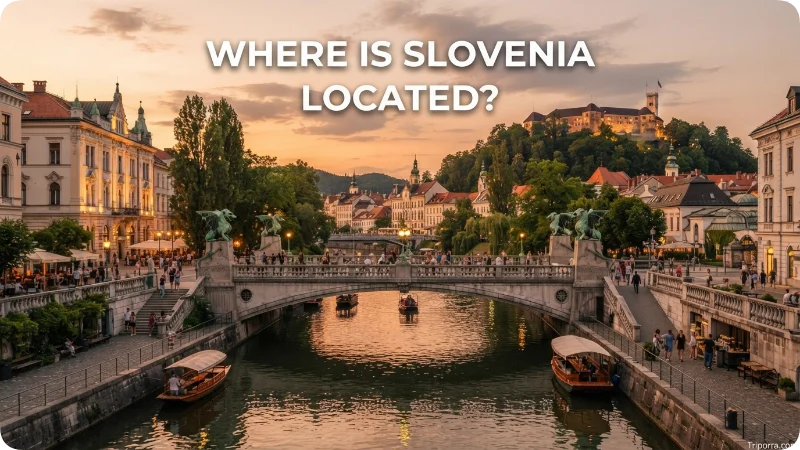
It is located in Central Europe, just south of Austria and east of Italy. The country occupies a strategic position where several major European geographic regions meet.
Slovenia’s Neighboring Countries
It shares borders with four countries:
- Austria to the north
- Italy to the west
- Hungary to the northeast
- Croatia to the south and southeast
The country also has a short coastline along the Adriatic Sea in the southwest.
Geographic Coordinates
It is situated approximately at:
46.1512° North Latitude 14.9955° East Longitude
These coordinates place it near the center of Europe.
Where Is Slovenia on the World Map?
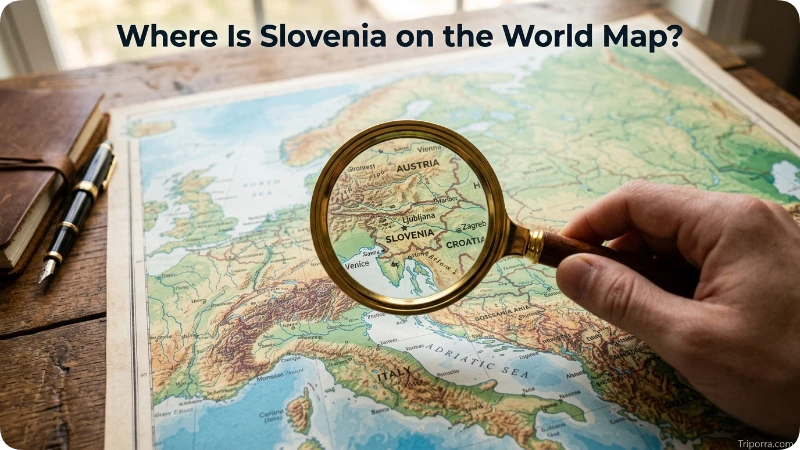
On a world map, it can be found in the southeastern part of Europe.
Directional References
- East of France
- Northeast of Italy
- South of Austria
- West of Hungary
- Northwest of Croatia
- North of the Adriatic Sea
Because of its location, it serves as an important connection between Western Europe and the Balkans.
Slovenia’s Position in Europe
Slovenia sits at the intersection of four major European regions:
- Central Europe
- Southern Europe
- The Balkans
- Alpine Europe
This unique position contributes to the country’s diverse culture, architecture, cuisine, and landscapes.
Map of Slovenia: Understanding Its Regional Location
When viewing a map of Europe:
- Germany lies northwest of Slovenia.
- Switzerland lies west of Austria.
- Slovenia appears directly south of Austria.
- Croatia surrounds much of Slovenia’s southern border.
Despite its small size, Slovenia occupies an important transportation corridor linking major European economies.
Geography of Slovenia
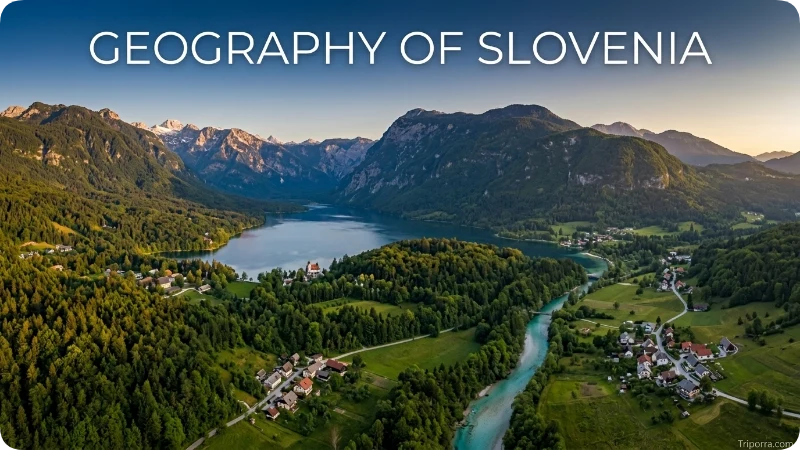
One of Slovenia’s most remarkable features is its geographic diversity.
Within a relatively small area, visitors can experience:
- Alpine mountains
- Mediterranean coastline
- Karst caves
- Forests
- Rivers
- Lakes
- Rolling hills
- Fertile plains
Major Geographic Regions
The Alps
Northern Slovenia is dominated by the Alps, particularly the:
- Julian Alps
- Kamnik-Savinja Alps
- Karawanks
The Julian Alps contain the country’s highest peak, Mount Triglav.
Karst Region
The Karst Plateau gave the world the geological term “karst.”
This region is known for:
- Limestone formations
- Underground rivers
- Sinkholes
- Extensive cave systems
Pannonian Plain
Eastern Slovenia transitions into the Pannonian Basin.
This area contains:
- Agricultural lands
- Vineyards
- Rolling hills
Mediterranean Region
Southwestern Slovenia enjoys Mediterranean influences from the Adriatic Sea.
Slovenia’s Landscape and Natural Features
It is one of Europe’s greenest countries.
More than half of the nation is covered by forests.
Major Rivers
Important rivers include:
- Sava River
- Drava River
- Soča River
- Mura River
The Soča River is particularly famous for its emerald-green water.
Lakes
Notable lakes include:
- Lake Bled
- Lake Bohinj
- Cerknica Lake
Lake Bled is one of the most photographed locations in Europe.
Mountains
Important mountain ranges include:
- Julian Alps
- Karawanks
- Kamnik-Savinja Alps
Mount Triglav serves as a national symbol and appears on Slovenia’s flag.
Climate of Slovenia
It experiences several climate zones because of its varied geography.
Alpine Climate
Northern mountain regions have:
- Cold winters
- Heavy snowfall
- Cool summers
Continental Climate
Central and eastern regions experience:
- Warm summers
- Cold winters
Mediterranean Climate
Coastal areas enjoy:
- Mild winters
- Warm summers
- Plenty of sunshine
This diversity allows visitors to ski in the mountains and visit the coast within a few hours.
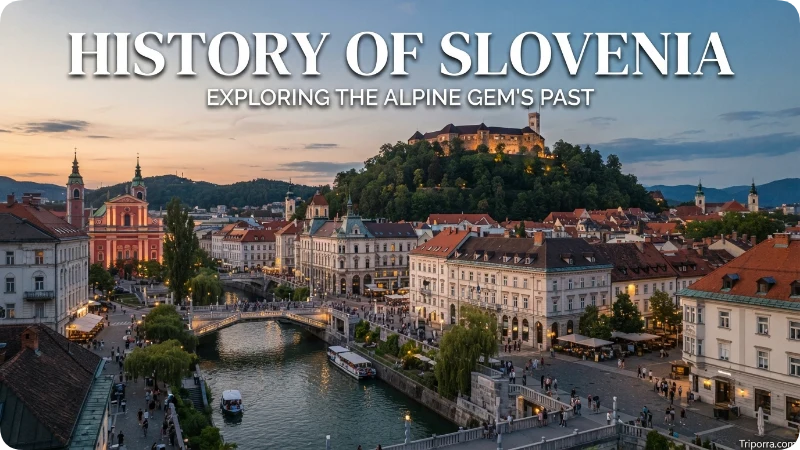
History of Slovenia
Early Settlements
Human settlement in it dates back thousands of years.
Archaeological discoveries show evidence of:
- Stone Age communities
- Bronze Age cultures
- Celtic Groups
Roman Period
The Romans established several settlements in present-day it .
Important Roman cities included:
- Emona (modern Ljubljana)
- Poetovio (Ptuj)
Middle Ages
During the medieval era, it became part of the Holy Roman Empire and later the Habsburg territories.
Austro-Hungarian Rule
For centuries, Slovenian lands belonged to the Austrian Empire and Austro-Hungarian Empire.
This period heavily influenced architecture and culture.
Yugoslavia Era
Following World War I, it became part of Yugoslavia.
After World War II, it remained one of Yugoslavia’s republics.
Independence
It declared independence on:
June 25, 1991
A brief Ten-Day War followed before independence was secured.
Modern Slovenia
Today it is:
- A democratic republic
- Member of the European Union
- Member of NATO
- Member of the Schengen Area
- Member of the Eurozone
Why Is Slovenia Famous?
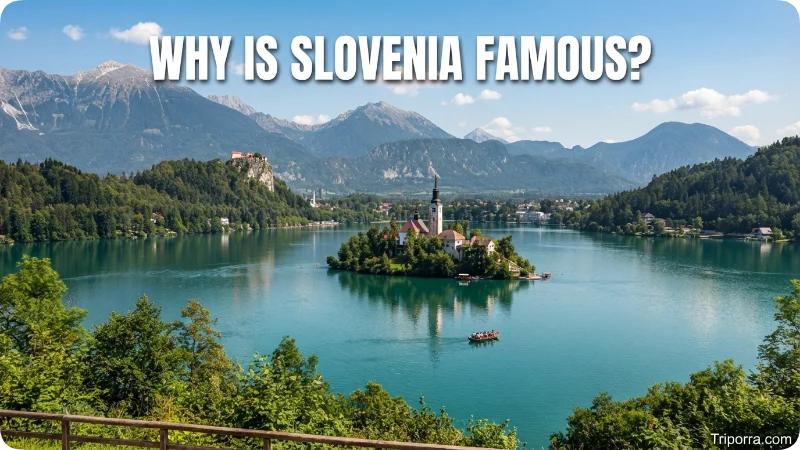
It has gained international recognition for many reasons.
Natural Beauty
The country is known for:
- Alpine scenery
- Crystal-clear lakes
- National parks
- Rivers and waterfalls
Sustainable Tourism
It consistently ranks among the world’s most sustainable travel destinations.
Lake Bled
Lake Bled is arguably Slovenia’s most iconic attraction.
Caves
Slovenia contains some of the world’s most impressive cave systems.
Outdoor Adventures
Popular activities include:
- Hiking
- Skiing
- Cycling
- Rafting
- Kayaking
Wine Production
The country has a long winemaking tradition dating back centuries.
Major Cities in Slovenia
Ljubljana
Capital and Largest City
Ljubljana is the political, cultural, and economic center of Slovenia.
Highlights include:
- Ljubljana Castle
- Dragon Bridge
- Triple Bridge
- Old Town
Maribor
Located in northeastern Slovenia.
Known for:
- Wine culture
- Historic architecture
- Ski resorts
Koper
A major Adriatic port city.
Features:
- Venetian architecture
- Coastal tourism
- Maritime economy
Celje
One of Slovenia’s oldest cities.
Known for:
- Medieval history
- Celje Castle
Ptuj
The oldest documented town in Slovenia.
Famous for:
- Roman heritage
- Traditional festivals
Top Tourist Attractions in Slovenia
Lake Bled
Perhaps Slovenia’s most famous attraction.
Features include:
- Bled Island Church
- Bled Castle
- Scenic mountain views
Triglav National Park
The country’s only national park.
Offers:
- Hiking trails
- Alpine lakes
- Wildlife viewing
Postojna Cave
One of the world’s largest cave tourism sites.
Visitors can ride an underground railway through the cave.
Škocjan Caves
A UNESCO World Heritage Site.
Known for:
- Massive underground chambers
- Deep canyons
Piran
A charming coastal town on the Adriatic Sea.
Features:
- Venetian architecture
- Historic squares
- Beautiful sunsets
Predjama Castle
A unique medieval castle built into a cliff face.
It is one of Europe’s most dramatic castles.
Soča Valley
Known for:
- Emerald river waters
- Adventure tourism
- World War I history
Transportation in Slovenia
Slovenia has a modern and efficient transportation network.
Airports
Ljubljana Jože Pučnik Airport
The country’s main international airport.
Other airports include:
- Maribor Airport
- Portorož Airport
Road Network
Slovenia possesses excellent highways connecting:
- Austria
- Italy
- Croatia
- Hungary
Railways
Rail connections link Slovenia with:
- Vienna
- Zagreb
- Budapest
- Munich
Public Transport
Cities offer:
- Buses
- Local transit systems
- Regional transport services
How to Get to Slovenia
By Air
Direct flights arrive from major European cities.
By Train
International rail services connect Slovenia with neighboring countries.
By Car
Many visitors drive from:
- Austria
- Italy
- Croatia
- Hungary
By Bus
Long-distance bus routes connect Slovenia with numerous European destinations.
Best Time to Visit Slovenia
Spring (March–May)
Ideal for:
- Sightseeing
- Nature walks
- Mild weather
Summer (June–August)
Perfect for:
- Lakes
- Mountains
- Outdoor festivals
Autumn (September–November)
Excellent for:
- Wine tourism
- Hiking
- Fall scenery
Winter (December–February)
Best for:
- Skiing
- Christmas markets
- Winter sports
Interesting Facts About Slovenia
- Slovenia declared independence in 1991.
- More than half of the country is forested.
- Ljubljana is one of Europe’s greenest capitals.
- Mount Triglav appears on the national flag.
- Slovenia has over 10,000 caves.
- The country has a coastline of about 47 kilometers.
- Lake Bled is one of Europe’s most photographed lakes.
- Slovenia adopted the Euro in 2007.
- The world’s oldest grapevine grows in Maribor.
- Bees play an important role in Slovenian culture.
- Triglav National Park covers a significant portion of the Julian Alps.
- Slovenia ranks highly for environmental sustainability.
Slovenia Compared With Nearby Countries
CountryArea (sq km)PopulationSlovenia20,2712.1 millionAustria83,8799+ millionCroatia56,5943.8+ millionHungary93,0309.5+ millionItaly301,34058+ million
Although smaller than its neighbors, Slovenia offers exceptional geographic diversity.
FAQs
Is Slovenia a country?
Yes. Slovenia is an independent sovereign country located in Central Europe.
Which continent is Slovenia in?
Slovenia is located in Europe.
What countries border Slovenia?
Austria, Italy, Hungary, and Croatia.
What is the capital of Slovenia?
Ljubljana.
Is Slovenia part of the European Union?
Yes. Slovenia joined the European Union in 2004.
Does Slovenia have a coastline?
Yes. Slovenia has a short coastline on the Adriatic Sea.
What language is spoken in Slovenia?
The official language is Slovene.
Is Slovenia part of the Balkans?
Slovenia is often considered part of the Balkans, although it is primarily classified as a Central European country.
What is Slovenia famous for?
Lake Bled, mountains, caves, green landscapes, and sustainable tourism.
What is the highest mountain in Slovenia?
Mount Triglav, standing at 2,864 meters (9,396 feet).
Is Slovenia safe for tourists?
Yes. Slovenia is considered one of the safest countries in Europe.
When did Slovenia become independent?
Slovenia became independent from Yugoslavia on June 25, 1991.
Conclusion
So, where is Slovenia? Slovenia is a Central European country located between Italy, Austria, Hungary, and Croatia, with a small but beautiful coastline along the Adriatic Sea. Positioned at the meeting point of the Alps, Mediterranean region, Balkans, and Pannonian Plain, Slovenia offers remarkable geographic diversity within a compact area.
From the stunning beauty of Lake Bled and Mount Triglav to the historic streets of Ljubljana, world-famous caves, and sustainable tourism initiatives, Slovenia has become one of Europe’s most attractive travel destinations. Its strategic location, rich history, vibrant culture, and breathtaking landscapes make it a fascinating country for visitors, students, and geography enthusiasts alike.
Silas Vance is a geography enthusiast, travel researcher, and location-focused content writer dedicated to helping readers better understand the world around them on triporra.com. He specializes in creating informative guides about cities, countries, islands, landmarks, universities, and other notable destinations. His work combines geographic accuracy, historical context, and practical insights to answer location-based questions in a simple and engaging way.