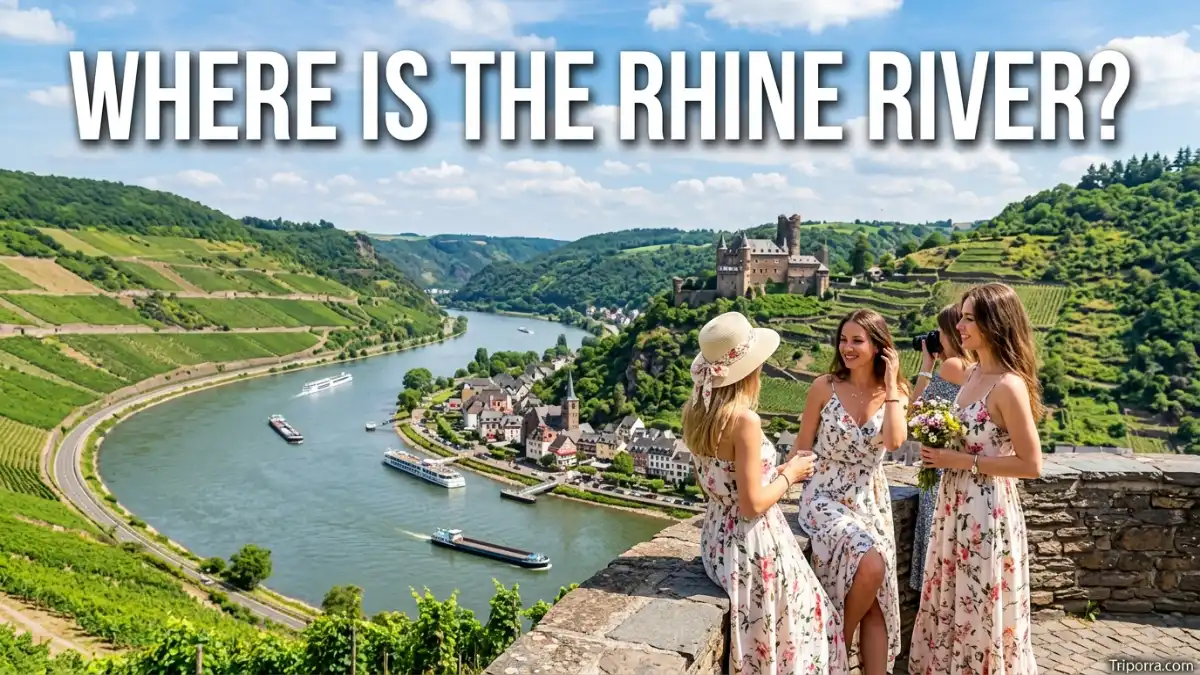
The Rhine River is in western Europe, where it flows through or along six countries: Switzerland, Liechtenstein, Austria, Germany, France, and the Netherlands. It begins in the Swiss Alps, travels north through Central Europe, and eventually reaches the North Sea through the Netherlands. Major cities along its route include Basel, Strasbourg, Mainz, Cologne, and Rotterdam.
Featured Snippet Answer
The Rhine River is a major waterway in western Europe. It starts in the Swiss Alps, flows along parts of the borders of Liechtenstein, Austria, Germany, and France, and continues through Germany and the Netherlands. The river reaches the North Sea through a network of waterways in the Netherlands.
Quick Facts
| Fact | Information |
|---|---|
| Official Name | Rhine River (Rhein in German, Rhin in French) |
| Type | Major European river |
| Location | Western and Central Europe |
| Source | Swiss Alps, Switzerland |
| Mouth | North Sea, Netherlands |
| Countries Along Its Course | Switzerland, Liechtenstein, Austria, Germany, France, and the Netherlands |
| Approximate Length | 765 miles (1,230 km) |
| Continent | Europe |
| Major Tributaries | Aare, Neckar, Main, Moselle, and Ruhr |
| Major Cities Along the River | Basel, Strasbourg, Mainz, Koblenz, Cologne, Düsseldorf, and Rotterdam |
| Nearby Major City | Frankfurt, Germany |
| Important Geographic Features | Swiss Alps, Upper Rhine Valley, Middle Rhine Valley, and Rhine Delta |
| Direction of Flow | Generally north and northwest |
| Final Destination | North Sea |
| Major European Waterway | Rhine–Meuse–Scheldt delta system |
Where Does the Rhine River Start?

The Rhine River begins in the Swiss Alps, in southeastern Switzerland. Its source system lies in the canton of Graubünden, where two main headwater streams meet near Reichenau.
These two streams are:
- Vorderrhein (Anterior Rhine): The western branch, which begins near Lake Toma (Tomasee) in the Swiss Alps.
- Hinterrhein (Posterior Rhine): The eastern branch, which rises in the Alpine region near the San Bernardino area.
The two streams join near Reichenau, close to the city of Chur. From this point, the combined river continues as the Alpine Rhine.
The Alpine setting gives the river a steady supply of water from rainfall, snowmelt, and mountain streams. As it moves away from the mountains, the Rhine grows wider and carries water toward the lowlands of western Europe.
Which Countries Does the Rhine River Flow Through?
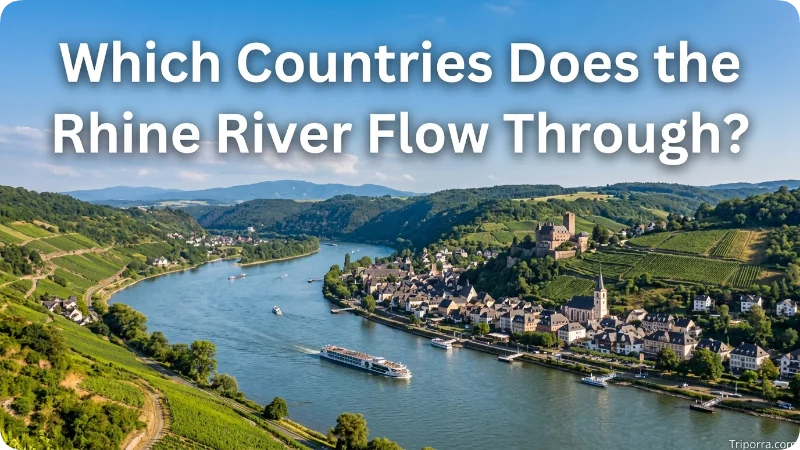
The Rhine connects six European countries along its main course. It flows through some countries and forms natural borders between others.
The countries associated with its route are:
Countries Connected to the Rhine River
| Country | How the Rhine Is Connected |
|---|---|
| Switzerland | Source country; the Rhine flows through several Swiss regions |
| Liechtenstein | The Rhine forms part of the border between Liechtenstein and Switzerland |
| Austria | The Rhine forms part of Austria’s border with Switzerland |
| Germany | The river flows through Germany and forms part of its border with France |
| France | Shares a long section of the Rhine boundary with Germany |
| Netherlands | The river flows into its delta before reaching the North Sea |
The river does not pass through the center of all six countries. Some sections follow international borders instead.
Switzerland contains the river’s source and its early course. Farther north, the Rhine becomes an important boundary between European countries. Germany contains a large part of its middle and lower course, while the Netherlands contains its final branches and outlets.
Where Is the Rhine River in Germany?
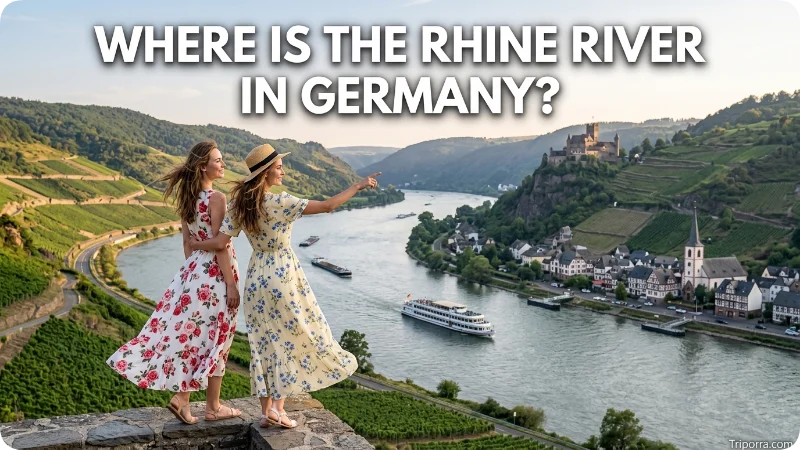
Germany contains one of the most recognizable sections of the Rhine. After entering the country from Switzerland, the river flows north through several German states.
It first runs along the Upper Rhine region, including parts of Baden-Württemberg and Rhineland-Palatinate. Farther north, it passes through important industrial and urban areas in western Germany.
Major German cities along the Rhine include:
- Mainz: Located on the western side of the river, near its meeting point with the Main River.
- Koblenz: Stands where the Moselle River joins the Rhine.
- Bonn: Lies along the Rhine south of Cologne.
- Cologne: One of the largest and best-known cities directly on the river.
- Düsseldorf: Located farther north in North Rhine-Westphalia.
- Duisburg: Sits near the Rhine’s connection with major industrial and inland shipping routes.
The German section is especially important because the Rhine connects inland cities with ports and international shipping networks.
Where Is the Rhine River in France?
The Rhine forms much of the natural boundary between eastern France and southwestern Germany.
On the French side, it runs beside the Alsace region. Strasbourg is one of the most important cities in this area and has a close geographic connection with the river.
The river also passes near other French communities, including Colmar’s wider regional area, although Colmar itself does not sit directly on the Rhine.
The Upper Rhine section is especially notable because the river runs through a broad valley between the Vosges Mountains in France and the Black Forest in Germany.
This location makes the Rhine an important geographic feature for both countries.
Where Does the Rhine River End?
The Rhine reaches its final destination in the North Sea, along the Dutch coast.
However, it does not enter the sea as one simple, uninterrupted channel. Instead, the river divides into several branches and waterways across the Netherlands.
The Rhine Delta is a large network of rivers, distributaries, and connected waterways. Its branches include:
- Waal River
- Nederrijn (Lower Rhine)
- IJssel River
- Lek River
These waterways connect the Rhine with other Dutch rivers and coastal outlets. The Waal, for example, carries a large share of the Rhine’s water toward the southwestern Netherlands.
One important outlet is near Hoek van Holland, west of Rotterdam, where the Nieuwe Waterweg provides a route to the North Sea.
The delta makes the Netherlands a key part of the Rhine’s geographic and drainage system.
What Major Cities Are Located Along the Rhine River?
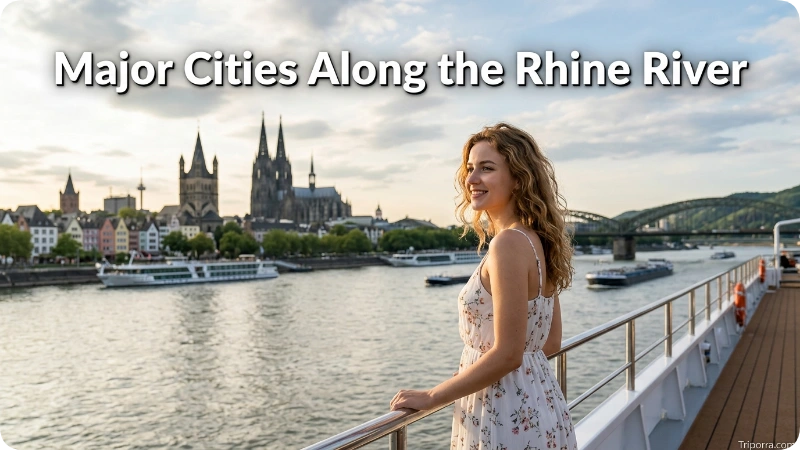
Several major European cities developed along the Rhine because of its access to water, transport routes, and trade connections.
Major Cities Along the Rhine River
| City | Country | Geographic Relationship |
|---|---|---|
| Basel | Switzerland | Located where the Rhine turns north |
| Strasbourg | France | Located beside the Rhine near the German border |
| Mainz | Germany | Located along the Upper Rhine region |
| Koblenz | Germany | Located at the confluence of the Rhine and Moselle rivers |
| Bonn | Germany | Located south of Cologne along the Rhine |
| Cologne | Germany | Major city directly on the Rhine |
| Düsseldorf | Germany | Located north of Cologne along the river |
| Duisburg | Germany | Important Rhine port city |
| Rotterdam | Netherlands | Located near the Rhine-Meuse delta |
Basel is an important point because the Rhine changes direction there and begins its northward journey through the Upper Rhine Valley.
Cologne is another major reference point. It lies in western Germany, roughly between Bonn and Düsseldorf.
Rotterdam provides a useful reference for the river’s lower course. The city is connected to the Rhine’s delta waterways and the North Sea.
How Long Is the Rhine River?
The Rhine River is approximately 1,233 kilometers (766 miles) long, according to the International Commission for the Hydrology of the Rhine Basin.
Its length makes it one of Europe’s major rivers, although it is shorter than the Danube and Volga.
The river’s course includes several distinct geographic sections:
- Alpine Rhine: Runs through the Alpine region toward Lake Constance.
- High Rhine: Continues westward from Lake Constance toward Basel.
- Upper Rhine: Flows north through the valley between France and Germany.
- Middle Rhine: Passes through the scenic and narrow valley between Bingen and Bonn.
- Lower Rhine: Continues through western Germany toward the Netherlands.
- Rhine Delta: Divides into multiple waterways before reaching the North Sea.
These sections show how the river changes as it moves from the mountains into the European lowlands.
What Rivers Flow Into the Rhine?
The Rhine receives water from many smaller rivers and major tributaries along its course. These tributaries help increase its flow and connect it with a much larger part of Europe.
Some of its most important tributaries include:
Major Rhine River Tributaries
| Tributary | Country or Region | Where It Joins the Rhine |
|---|---|---|
| Aare | Switzerland | Near Koblenz, Switzerland |
| Neckar | Germany | Near Mannheim |
| Main | Germany | Near Mainz |
| Moselle | France, Luxembourg, and Germany | At Koblenz |
| Ruhr | Germany | Near Duisburg |
| Lippe | Germany | Near Wesel |
The Aare is particularly important in Switzerland because it contributes a large amount of water to the Rhine.
The Main connects the Rhine with central and southern Germany, while the Moselle links the river to parts of France, Luxembourg, and Germany.
The Ruhr also has a strong geographic connection with western Germany’s industrial region.
Together, these tributaries form an extensive drainage network across several European countries.
What Is the Rhine Valley?
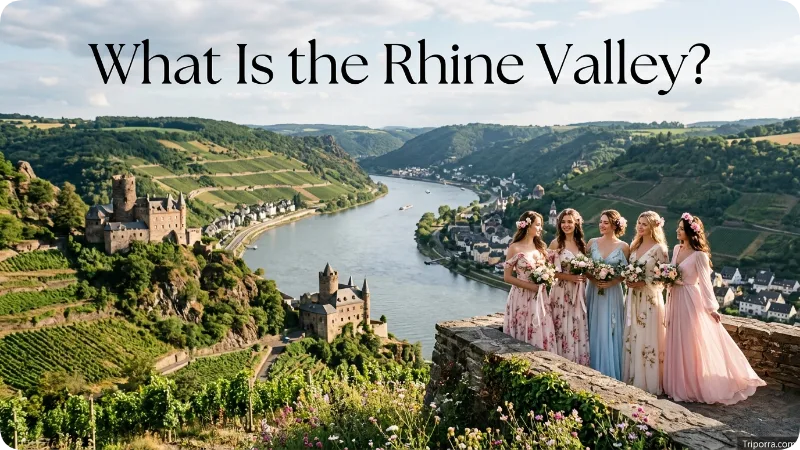
The Rhine Valley refers to the lowland and mountainous areas surrounding different sections of the river.
It is not one single valley with the same landscape from beginning to end. Instead, its physical features change along the river’s route.
The Upper Rhine Valley lies between the Vosges Mountains and the Black Forest. This broad valley contains fertile land, settlements, and important transport routes.
Farther north, the Middle Rhine Valley becomes narrower. Steep hills, rocky slopes, and winding river bends define this section.
The Middle Rhine Gorge, between Bingen and Koblenz, is particularly well known for its natural landscape.
Beyond this area, the river enters the wider plains of western Germany and continues toward the Netherlands.
The valley therefore provides a useful way to understand the changing landscape along the Rhine.
Is the Rhine River Near the North Sea?
Yes. The Rhine reaches the North Sea through its delta in the Netherlands.
The river travels north and northwest across western Europe before dividing into several waterways in the Dutch lowlands.
Rotterdam is one of the most recognizable cities near this final section. It lies close to the river’s delta and has a major connection to the North Sea.
The river’s outlet near Hoek van Holland provides a direct connection between inland European waterways and the sea.
This connection is one reason the Rhine plays such an important role in European transportation.
Why Is the Rhine River Important Geographically?
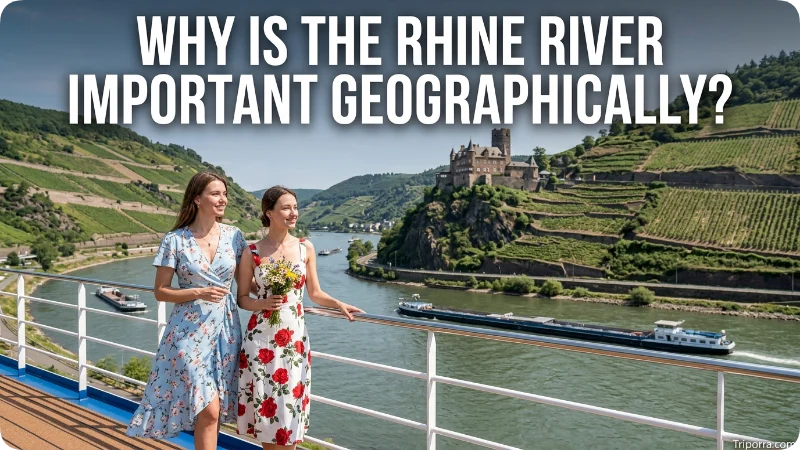
The Rhine is one of Europe’s most important natural waterways. Its geographic importance comes from its connection between the Alps, Central Europe, western Germany, the Netherlands, and the North Sea.
Several features explain its importance.
It connects multiple countries. The river links several European countries and forms parts of important international boundaries.
It supports inland transportation. Ships use the Rhine to move goods between inland ports and coastal shipping routes.
It connects major cities. Basel, Strasbourg, Mainz, Cologne, Düsseldorf, and Rotterdam all have important geographic relationships with the river.
It drains a large region. The Rhine basin collects water from extensive areas of western and Central Europe.
It connects inland Europe with the sea. Its delta provides access to the North Sea through Dutch waterways.
These features make the Rhine much more than a river running through Europe. It also serves as a major connection between different geographic and economic regions.
FAQs
Where is the Rhine River located?
The Rhine River is located in western Europe. It begins in the Swiss Alps, flows through or along Switzerland, Liechtenstein, Austria, Germany, and France, and reaches the North Sea through the Netherlands.
What country does the Rhine River start in?
The Rhine begins in Switzerland, in the Swiss Alps. Its headwater streams meet near Reichenau in the canton of Graubünden.
Does the Rhine River flow through Germany?
Yes. The Rhine flows through western Germany, passing major cities such as Mainz, Koblenz, Bonn, Cologne, Düsseldorf, and Duisburg.
Which countries share a border along the Rhine River?
The Rhine forms parts of several international boundaries, including the borders between Switzerland and Liechtenstein, Liechtenstein and Austria, and Germany and France.
Does the Rhine River flow into the North Sea?
Yes. The Rhine reaches the North Sea through its delta in the Netherlands. Several branches and connected waterways carry its water toward the Dutch coast.
Is the Rhine River in Switzerland?
Yes. The Rhine begins in the Swiss Alps and flows through Switzerland before continuing toward Germany and other parts of western Europe.
What is the largest city on the Rhine River?
Cologne is one of the largest major cities directly on the Rhine. It is located in western Germany in the state of North Rhine-Westphalia.
How long is the Rhine River?
The Rhine River is approximately 1,233 kilometers (766 miles) long. It stretches from the Swiss Alps to the North Sea through the Netherlands.
Conclusion
The Rhine River runs across western Europe, beginning in the Swiss Alps and ending at the North Sea in the Netherlands. Along its approximately 1,233-kilometer course, it passes through or borders six countries and connects major cities such as Basel, Strasbourg, Cologne, and Rotterdam. Its route through the Alps, European lowlands, and Dutch delta makes it one of the continent’s most important geographic waterways.

Elena Rostova bridges the gap between premium hospitality and authentic local experiences. Armed with a background in luxury hospitality management and a passion for fine architecture, she spent years evaluating elite resorts before transitioning into travel journalism. Elena heads the luxury and boutique travel vertical on Triporra.com. Her meticulous guides strip away the guesswork from high-end travel, showcasing unique five-star escapes, fine regional dining, and bespoke private tours that elevate a standard vacation into an unforgettable journey.