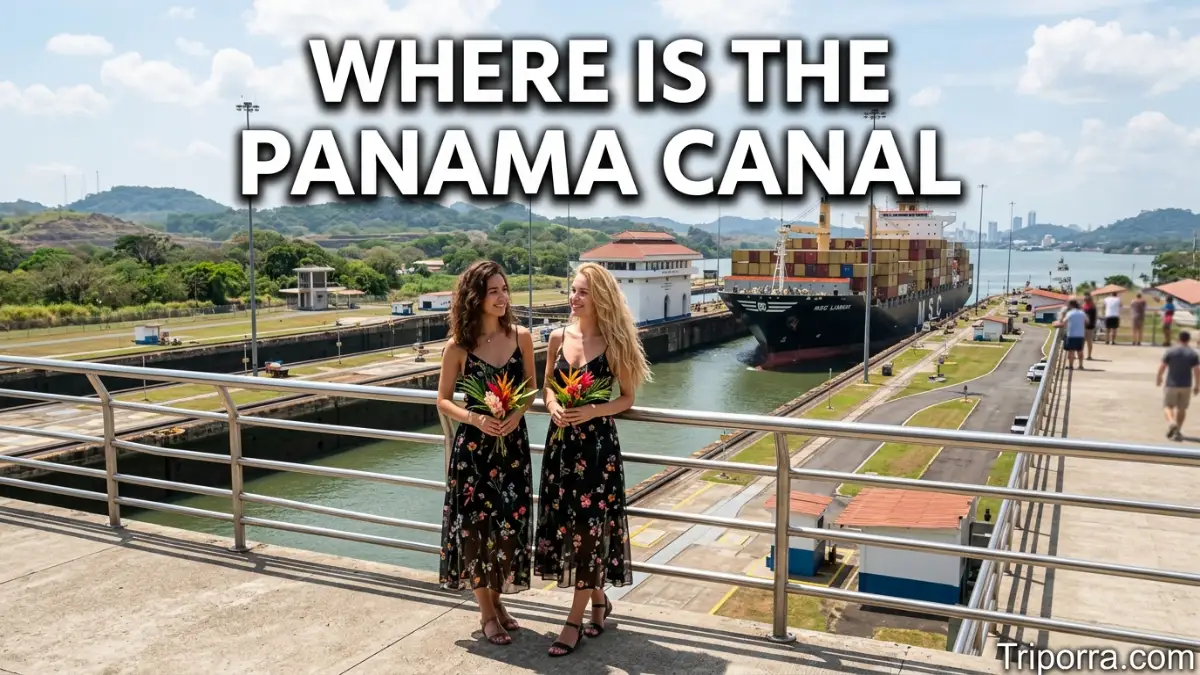
The Panama Canal is in the country of Panama in Central America. It crosses the Isthmus of Panama and connects the Atlantic Ocean and Pacific Ocean through a system of locks, artificial lakes, and channels. The canal runs between the Caribbean Sea on the Atlantic side and the Pacific coast, with its eastern and western entrances near Colón and Panama City.
Featured Snippet Answer
The Panama Canal is located in Panama, Central America, across the narrow Isthmus of Panama. It connects the Caribbean Sea, part of the Atlantic Ocean, with the Pacific Ocean. The canal extends between the Caribbean port area near Colón and the Pacific side near Panama City, crossing the country from northwest to southeast.
Quick Facts
| Fact | Information |
|---|---|
| Location | Panama, Central America |
| Country | Panama |
| Continent | North America |
| Geographic Region | Central America |
| Type | Artificial waterway and ship canal |
| Connects | Atlantic Ocean and Pacific Ocean |
| Atlantic Side | Caribbean Sea |
| Pacific Side | Gulf of Panama |
| Northern Entrance Area | Colón |
| Pacific Entrance Area | Near Panama City |
| Main Geographic Feature | Isthmus of Panama |
| Approximate Latitude | 9° N |
| Approximate Longitude | 79.6° W |
| Major Nearby City | Panama City |
| Other Major Nearby City | Colón |
| Country Crossed | Panama |
Where Is the Panama Canal Located?
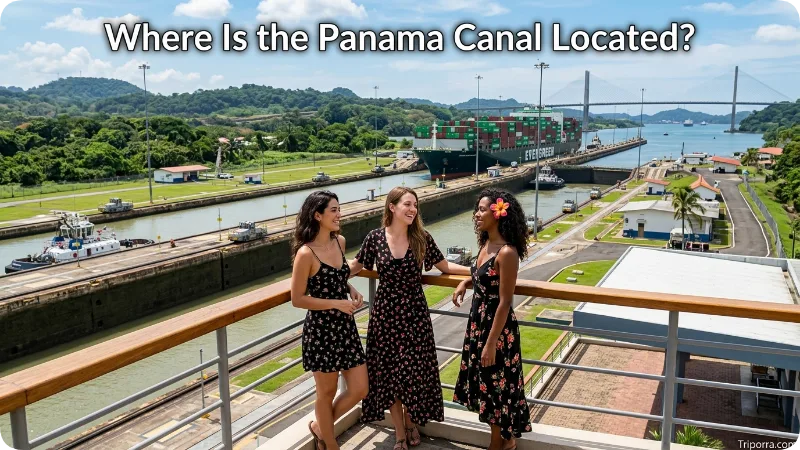
The Panama Canal is in central Panama, crossing the country’s narrow land bridge between North and South America. Panama itself forms the southern part of Central America and lies between Costa Rica to the west and Colombia to the southeast.
The canal crosses the Isthmus of Panama, the narrow strip of land separating the Caribbean Sea from the Pacific Ocean. Its location makes it possible for ships to travel between the two oceans without sailing around the southern tip of South America.
Geographically, the canal runs through a combination of natural and artificial waterways. It includes Gatun Lake, the Gaillard Cut, the canal locks, and approach channels.
Which Country Is the Panama Canal In?
The Panama Canal is entirely within Panama. It does not cross an international border.
Panama occupies a narrow position between the Caribbean Sea to the north and the Pacific Ocean to the south. The canal takes advantage of this narrow geography by providing a shorter water route between the two oceans.
The canal zone extends across several parts of central Panama, including areas near Colón Province and Panama Province.
Is the Panama Canal Between the Atlantic and Pacific Oceans?
Yes. The Panama Canal provides a navigable connection between the Atlantic and Pacific oceans.
More precisely, the canal’s northern entrance opens into the Caribbean Sea, which is part of the Atlantic Ocean. Its southern entrance opens into the Gulf of Panama, which forms part of the Pacific Ocean.
This means ships traveling through the canal move between two major ocean systems while crossing Panama.
The canal does not work like a simple sea-level channel. Ships use a series of locks to move between sea level and the higher elevation of Gatun Lake before descending again toward the opposite ocean.
Where Is the Panama Canal on a Map?
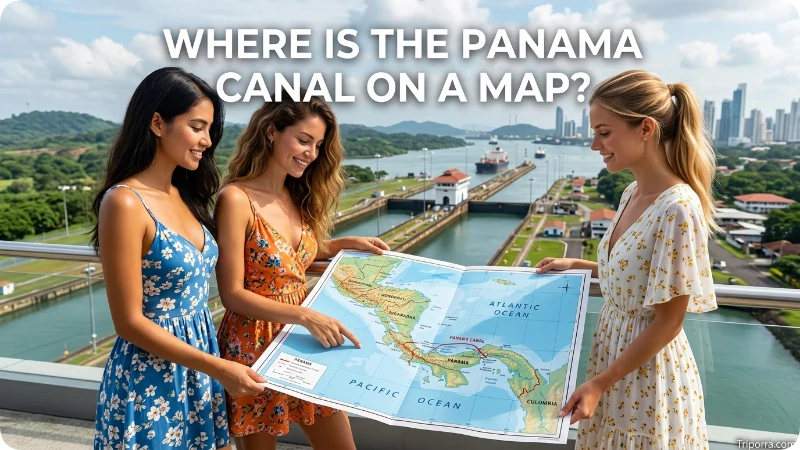
On a map of Central America, look for Panama between Costa Rica and Colombia. The canal crosses the narrowest part of the country near its center.
The Caribbean entrance is on the northwestern side of the canal system, near Colón. The Pacific entrance is on the southeastern side, near Panama City and the Gulf of Panama.
One unusual feature can confuse people looking at a map: the Pacific entrance is actually east of the Caribbean entrance. The shape of the Isthmus of Panama and the canal’s route make the waterway run generally from northwest to southeast rather than directly from west to east.
How Close Is the Panama Canal to Panama City?
The Panama Canal passes directly through the wider Panama City area on its Pacific side.
Panama City is located near the canal’s Pacific entrance. The canal also passes through the Miraflores and Pedro Miguel locks, which are close to the metropolitan area.
This makes Panama City one of the most recognizable geographic reference points for locating the canal.
The canal’s Pacific entrance lies near the Gulf of Panama, while the city extends along the Pacific coast to the east.
How Close Is the Panama Canal to Colón?
Colón is located near the canal’s Caribbean entrance on the northern side of the waterway.
The city sits on the Caribbean coast near the Atlantic approach to the canal. The canal’s Caribbean entrance connects with Limón Bay, close to Colón.
Because Colón and Panama City are positioned near opposite ends of the canal, they provide two useful reference points when understanding its location.
What Geographic Feature Does the Panama Canal Cross?
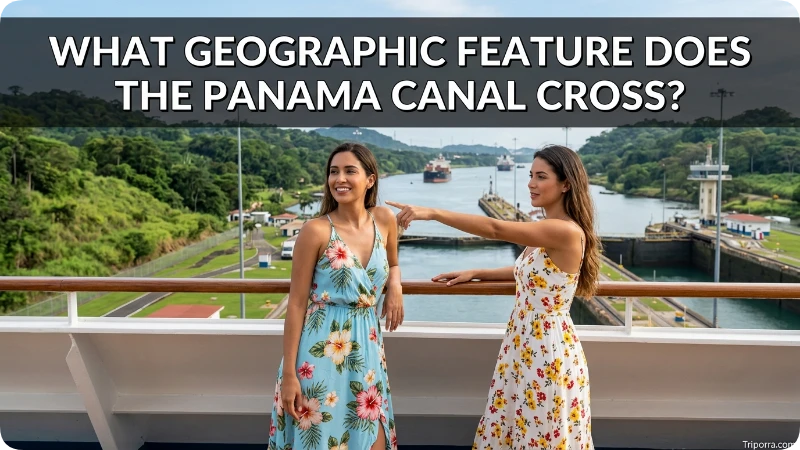
The Panama Canal crosses the Isthmus of Panama.
An isthmus is a narrow strip of land connecting larger land areas while separating two bodies of water. The Isthmus of Panama connects the landmass of North America with South America and separates the Caribbean Sea from the Pacific Ocean.
The canal takes advantage of this narrow land bridge. Instead of requiring ships to travel around South America, it creates a direct artificial route across the isthmus.
What Bodies of Water Does the Panama Canal Connect?
The canal connects the Caribbean Sea and the Pacific Ocean.
The main geographic sequence is:
Caribbean Sea → Panama Canal → Gulf of Panama → Pacific Ocean
The Caribbean Sea belongs to the Atlantic Ocean system. On the Pacific side, ships enter the Gulf of Panama before reaching the broader Pacific Ocean.
This connection is the key reason the canal has such an important geographic position.
What Is the Direction of the Panama Canal?
The canal generally runs from northwest to southeast.
This direction is important because the two ocean entrances are not directly opposite each other from west to east. The Caribbean entrance near Colón lies northwest of the Pacific entrance near Panama City.
The canal’s route follows the shape of the Isthmus of Panama rather than a straight line between the two oceans.
Where Are the Panama Canal Locks?
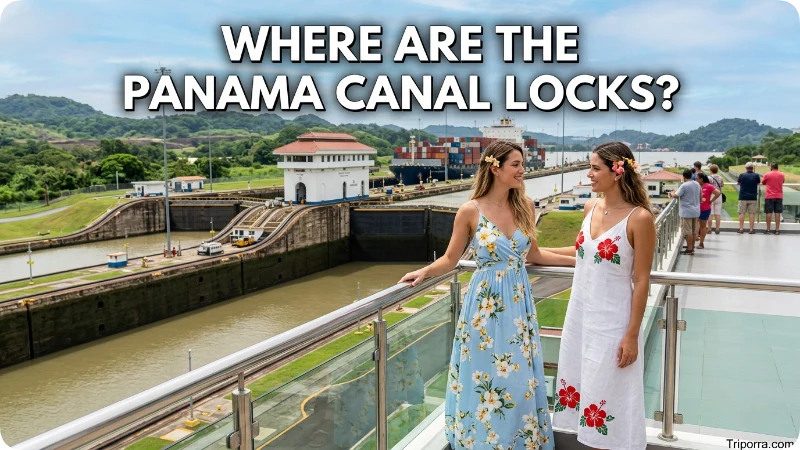
The canal uses several major lock complexes to raise and lower ships.
On the Atlantic side, the Gatun Locks form part of the original canal system. On the Pacific side, the original canal includes the Pedro Miguel Locks and Miraflores Locks.
The newer Cocolí and Agua Clara locks serve the canal’s expanded Neopanamax route.
The locks are necessary because much of the canal route lies above sea level. Ships are raised to the level of Gatun Lake and later lowered toward the opposite ocean.
Where Is Gatun Lake?
Gatun Lake lies in the central section of the Panama Canal.
It is an artificial lake created during the construction of the canal and forms a major part of the waterway. The lake occupies a large area between the Caribbean entrance and the Pacific-side locks.
Gatun Lake is also an important part of the canal’s operating system because its water supplies the freshwater needed to operate the locks.
Where Is the Panama Canal Relative to the United States?
The Panama Canal is far south of the continental United States, in Central America.
For a U.S. reader, the easiest mental map is:
United States → Mexico → Central America → Panama
Panama lies at the southern end of Central America, where the region approaches South America. The canal crosses the country between the Caribbean and Pacific coasts.
It is not located in a U.S. territory or in Mexico. The entire canal is within the sovereign territory of Panama.
Is the Panama Canal in North or South America?
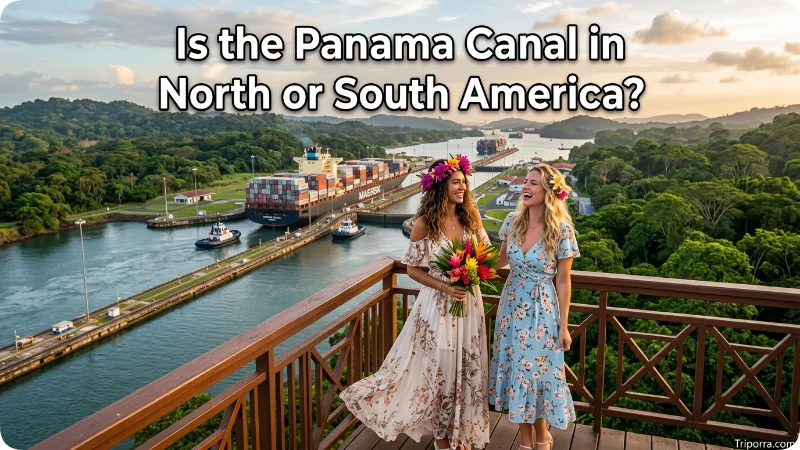
The Panama Canal is in Central America, which is generally considered part of North America geographically.
Panama forms part of the Central American land bridge connecting North and South America. Therefore, the canal is geographically in North America even though it is close to South America.
The country’s southeastern border with Colombia marks the connection between Central America and the South American continent.
How Far Is the Panama Canal From Colombia?
Panama borders Colombia to the southeast. The Panama Canal is located well northwest of the Panama-Colombia border.
The canal therefore sits closer to Panama’s Caribbean and Pacific coastal areas than to the country’s southeastern frontier.
The Darién Gap separates the established road networks of Panama and Colombia, while the canal itself lies much farther west and north.
How Far Is the Panama Canal From Costa Rica?
Costa Rica borders Panama on the west. The canal is located in central Panama, so it lies east of Costa Rica.
From a regional perspective, the easiest way to locate it is to find Panama’s western border with Costa Rica and then move east toward the center of the country.
The canal is much closer to Panama City and Colón than to the Costa Rican border.
Why Is the Panama Canal Located Here?
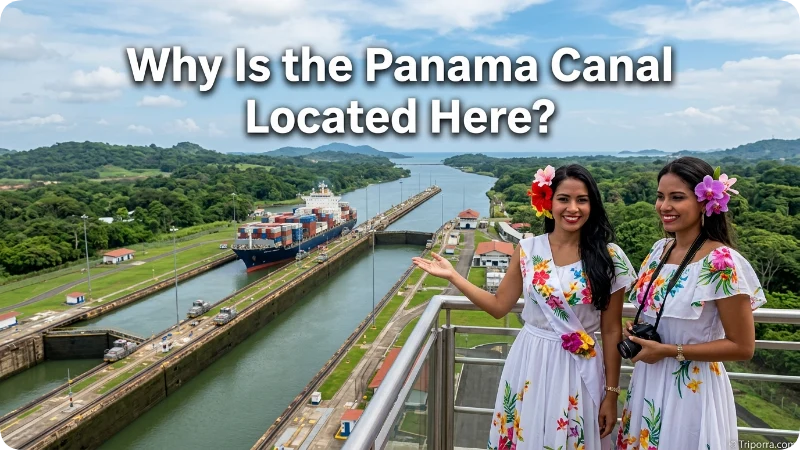
The canal’s location follows the natural geography of the Isthmus of Panama.
Panama provides one of the narrowest land routes between the Caribbean and Pacific sides of the Americas. Crossing this isthmus creates a much shorter maritime connection than traveling around Cape Horn at the southern tip of South America.
The landscape also provided a route where engineers could build a canal using a combination of excavated channels, artificial lakes, and locks.
Its geographic position continues to make the canal an important international shipping route.
Panama Canal Location and Time Zone
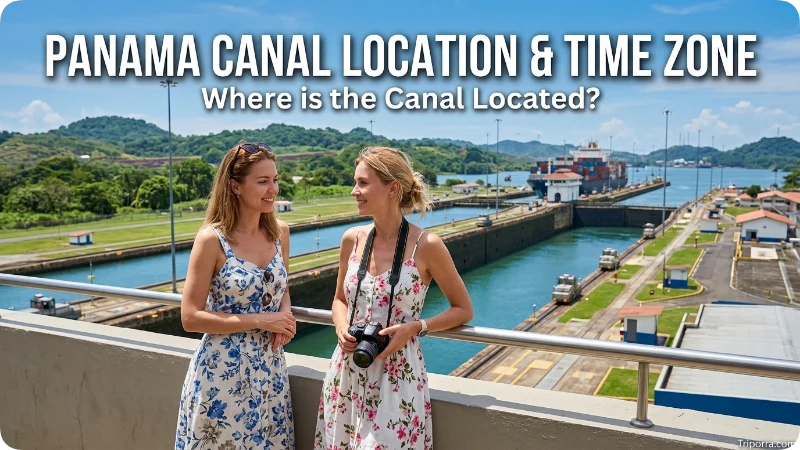
The Panama Canal follows the same time zone as the rest of Panama.
Panama uses Eastern Standard Time (EST), UTC−5, throughout the year and does not observe daylight saving time.
This means the canal has the same standard clock time as Panama City and Colón.
FAQs
What country is the Panama Canal in?
The Panama Canal is entirely in Panama, a country in Central America. It crosses the Isthmus of Panama between the Caribbean Sea and the Pacific Ocean.
What two oceans does the Panama Canal connect?
The Panama Canal connects the Atlantic and Pacific oceans. Its northern entrance is on the Caribbean Sea, which is part of the Atlantic Ocean, while its southern entrance opens toward the Gulf of Panama and the Pacific Ocean.
Is the Panama Canal near Panama City?
Yes. The canal’s Pacific entrance and several major canal facilities are located near Panama City. The Miraflores and Pedro Miguel locks are also in the Panama City area.
Is the Panama Canal near Colón?
Yes. Colón is near the canal’s Caribbean entrance on the northern side of Panama. The city sits beside the canal’s Atlantic approach.
Is the Panama Canal in North or South America?
The Panama Canal is in Central America, which forms part of North America geographically. Panama connects the North American and South American landmasses.
What is the Panama Canal’s main geographic feature?
The canal crosses the Isthmus of Panama, a narrow land bridge separating the Caribbean Sea from the Pacific Ocean and linking North and South America.
What lake is part of the Panama Canal?
Gatun Lake forms a major central section of the canal. The artificial lake also supplies water used to operate the canal’s locks.
Does the Panama Canal cross a country border?
No. The entire Panama Canal lies within Panama. It does not cross into Costa Rica or Colombia.
Conclusion
The Panama Canal is located in central Panama, in Central America, where it crosses the Isthmus of Panama. It connects the Caribbean Sea and the Pacific Ocean, with Colón near its Caribbean side and Panama City near its Pacific side. Its location provides a direct maritime route across one of the world’s most important geographic land bridges.

About Leo Sterling
Leo Sterling is a geography and travel writer at Triporra.com who believes understanding a place starts with knowing exactly where it is. He turns geographic details on countries, regions, islands, and cities into clear, engaging content for everyday readers.
For Leo, a good location article does more than mark a spot on a map. It shows what borders a place, which region it belongs to, and how it connects to the world around it—an approach reflected in guides like where is Anguilla, where solid research meets a simple, conversational style.
Whether readers are planning a trip, studying, or just curious, Leo’s goal is the same: deliver accurate, easy-to-understand information without unnecessary complexity.
Areas of Focus: Geography | Countries & Regions | Caribbean Islands | Travel Destinations | Location Research | “Where Is?” Content