The Ark of the Covenant is not a public landmark with a confirmed map location. The Hebrew Bible describes it as a sacred chest closely connected with Moses, the covenant tablets, the Tabernacle, and the First Temple in Jerusalem.
Featured Answer
No one knows the present location of the Ark of the Covenant. The biblical record last clearly places it in the Temple in Jerusalem during King Josiah’s reign, before Babylon destroyed the city in 586 BCE. Different claims place the Ark beneath Jerusalem, near Mount Nebo, or in Aksum, Ethiopia, but independent researchers have verified none of them.
Quick Facts
| Fact | Details |
|---|---|
| Official Name | Ark of the Covenant |
| Type | Sacred biblical chest and ritual object |
| Tradition | Ancient Israelite religion |
| Biblical Construction | Acacia wood overlaid with gold |
| Traditional Contents | Stone tablets of the covenant |
| Best-Known Ancient Setting | Holy of Holies, First Temple, Jerusalem |
| Last Clear Biblical Reference | Reign of King Josiah, late 7th century BCE |
| Confirmed Present Location | Unknown |
| Main Claimed Locations | Jerusalem, Mount Nebo area, and Aksum |
| Known For | Covenant symbolism, divine presence, and biblical history |
Where Is the Ark of the Covenant?
The most accurate answer is that no one has verified its location. The biblical record places the chest inside the inner sanctuary of Jerusalem’s First Temple, which people commonly call the Holy of Holies.
Second Chronicles 35:3 describes King Josiah ordering the Levites to put the sacred Ark in the temple that Solomon built. Scholars widely regard this passage as the Ark’s final clear appearance in the Hebrew Bible.
Jerusalem therefore provides the starting point for any serious investigation. However, archaeologists have not identified the object, its remains, or a chamber that definitely held it.
Many guides fail to explain the difference between a historically connected location and a confirmed present location. Jerusalem has the strongest connection with the Ark’s final recorded setting, but that connection does not prove that the Ark remains there.
What Exactly Was the Ark?
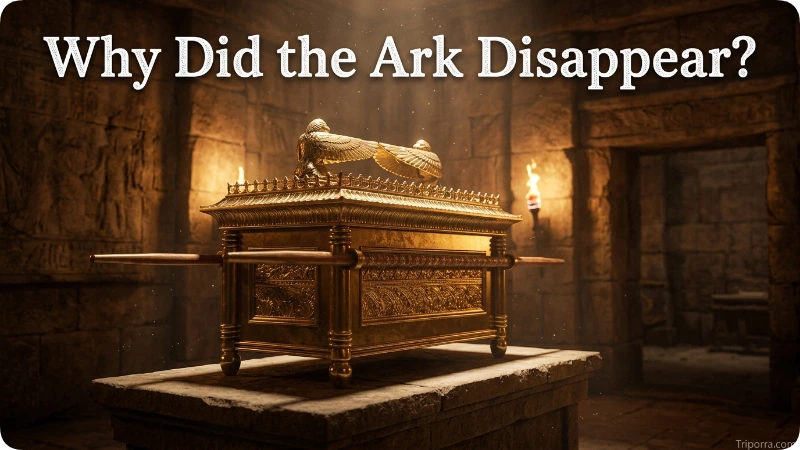
Exodus describes a rectangular chest made from acacia wood and covered with gold inside and outside. The chest had rings, carrying poles, and a cover with two golden cherubim facing one another.
According to the biblical measurements, the Ark measured two and a half cubits in length and one and a half cubits in width and height. The exact modern dimensions depend on which cubit measurement a researcher uses. Most reconstructions show a chest slightly longer than one metre.
Biblical writers do not present the Ark as an ordinary treasure box. It held the tablets connected with the covenant and became the central sacred object of Israel’s portable sanctuary.
Solomon later placed it inside the Temple in Jerusalem. Its importance came from the covenant and the divine presence associated with the space above its cover, not simply from the financial value of its gold.
The Ark’s Route Through the Biblical Story
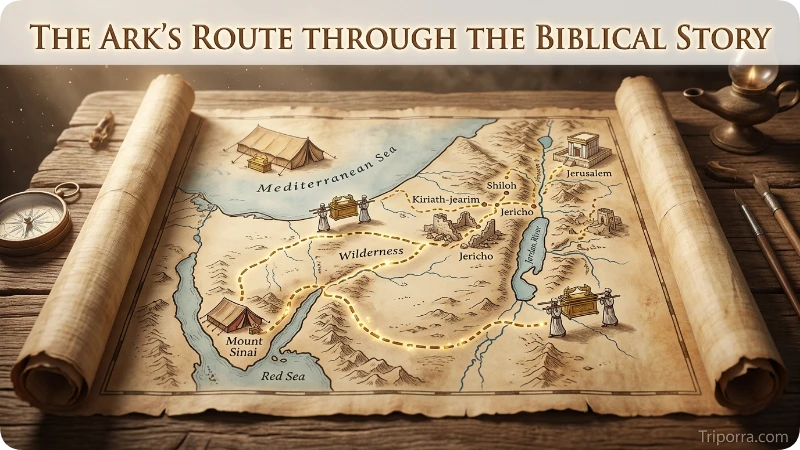
The Ark first appears in the wilderness tradition after the Israelites leave Egypt. It travels with the Tabernacle and becomes closely connected with worship, journeys, and battles.Timeline of the Ark of the Covenant
| Period | Event |
|---|---|
| Exodus | Constructed under Moses |
| Wilderness | Carried with the Israelites |
| Shiloh | Kept at the Tabernacle |
| Philistine Period | Captured and later returned |
| King David | Brought to Jerusalem |
| King Solomon | Placed inside the First Temple |
| King Josiah | Last clear biblical reference |
| 586 BCE | Jerusalem destroyed; fate becomes unknown |
The biblical narrative places it at Shiloh. It then explains how the Philistines captured it and later returned it. The story eventually follows the Ark to Jerusalem, where Solomon placed it in the Temple.
The account does not clearly explain what happened to it afterward. Josiah’s command suggests that the Ark either remained in the Temple or returned there during his reign.
Later descriptions of Jerusalem’s fall list many temple treasures that Babylonian forces carried away, but they do not clearly name the Ark.
People often claim that the Bible directly says Nebuchadnezzar took the Ark to Babylon. The Bible does not make that statement.
Where Was the Ark of the Covenant Last Seen?
The Bible’s final clear reference to the Ark appears in 2 Chronicles 35:3, where King Josiah instructs the Levites to return the Ark to the Temple built by Solomon. After this point, Scripture no longer records its location. When Babylon destroyed Jerusalem in 586 BCE, the Ark was never specifically mentioned among the captured temple treasures, leaving its fate unknown.
Why Did the Ark Disappear?
Babylonian forces destroyed Jerusalem and the First Temple in 586 BCE. They may have destroyed the Ark, taken it as loot, dismantled it for its gold, or forced priests to hide it before the attack.
No surviving text explains exactly what happened. The simplest historical explanation says the Ark disappeared during the destruction of Jerusalem. However, the word “lost” does not explain its physical fate.
Jeremiah 3:16 looks toward a time when people would no longer speak about the Ark, remember it, miss it, or create another one.
Some readers understand this passage as a theological message that the Ark would no longer occupy a central place in worship. Others see it as a possible hint that people expected the chest to disappear. The verse does not provide a geographical location.
Why Isn’t the Ark Mentioned After the Babylonian Conquest?
Unlike many other Temple treasures listed after Jerusalem’s fall, the Ark does not appear in surviving Babylonian records or biblical inventories. Historians have proposed several explanations, including destruction, concealment before the invasion, or removal without documentation. None of these theories has been confirmed.
Where Was the Ark of the Covenant Last Seen?
The Bible’s last clear reference to the Ark of the Covenant appears during the reign of King Josiah. In 2 Chronicles 35:3, Josiah instructs the Levites to return the sacred Ark to the Temple built by Solomon in Jerusalem. This is widely considered the Ark’s final confirmed appearance in the biblical record.
After this point, the Bible no longer mentions what happened to the Ark. When Babylon destroyed Jerusalem and the First Temple in 586 BCE, many temple treasures were taken or destroyed, but the Ark is never specifically listed. As a result, historians and archaeologists cannot confirm whether it was hidden, destroyed, captured, or moved before the invasion.
Leading Theories About the Ark’s Location
Hidden Beneath or Near the Temple Mount
One tradition claims that priests or King Josiah hid the Ark inside a chamber beneath the Temple area before the Babylonian attack.
Priests may reasonably have tried to conceal a sacred object during an invasion. However, researchers have not found a chamber that they can prove contained the Ark.
The Temple Mount, which Muslims call Haram al-Sharif, holds deep religious importance for both Judaism and Islam.
The site stands in East Jerusalem. The United Nations treats East Jerusalem as part of the Occupied Palestinian Territory. Israel claims Jerusalem as its capital, while Palestinians seek East Jerusalem as the capital of a future Palestinian state.
This political dispute, combined with the site’s religious importance, makes archaeological excavation extremely sensitive.
A Cave Near Mount Nebo
Second Maccabees records a tradition in which Jeremiah takes the tent, the Ark, and the altar of incense to the mountain associated with Moses.
According to the account, Jeremiah places the objects inside a cave and seals the entrance. The text says that people will not discover the location until a future time.
Scholars generally connect the mountain in this tradition with Mount Nebo in present-day Jordan.
This account represents an ancient religious tradition rather than an archaeological field report. Archaeologists have not confirmed a cave containing the Ark.
Travellers should also notice that the story does not identify a cave that members of the public can visit. Instead, it says Jeremiah’s followers could not mark or recover the route.
Aksum, Ethiopia
The Ethiopian Orthodox Tewahedo Church teaches that the Ark reached Ethiopia through Menelik I, whom tradition describes as the son of Solomon and the Queen of Sheba.
The church connects the claimed Ark with a guarded chapel beside the Church of Saint Mary of Zion in Aksum. UNESCO also records the long-standing belief that this church holds the Ark.
The church does not allow independent researchers to examine the claimed object. According to the tradition, only its appointed guardian may see it. Archaeologists and conservators therefore cannot test its age, materials, or method of construction.
A naming issue can also cause confusion. Ethiopian churches use sacred objects called tabots, which represent the tablets or the Ark. However, the presence of a tabot does not mean that every Ethiopian church claims to possess the original Ark.
Destroyed or Taken Apart
Many historians consider destruction or loss during the Babylonian conquest a practical explanation.
Fire may have destroyed the wooden chest. Soldiers may have removed its gold, broken it into pieces, or melted down its valuable materials.
This explanation does not require a secret journey or hidden chamber, but direct evidence does not confirm it. The Ark’s absence from surviving lists of Babylonian loot remains important, although that omission does not settle the question.
Can Archaeology Solve the Mystery?
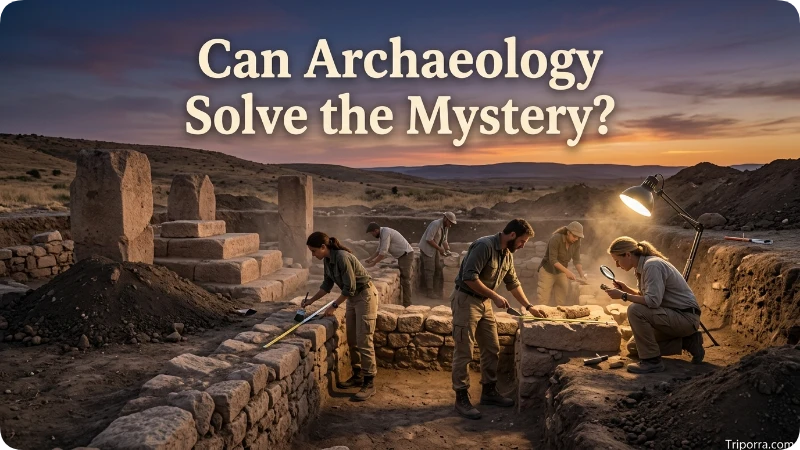
Archaeologists can study places connected with the Ark’s story, including Shiloh, ancient Jerusalem, and underground structures near the City of David.
They can uncover buildings, destruction layers, inscriptions, tunnels, and hidden spaces. However, a scanner cannot identify the Ark simply by detecting an empty chamber.
Researchers have used cosmic-ray muon imaging in Jerusalem to map underground density without carrying out large-scale excavation.
The published research demonstrates a method for detecting underground features. It does not claim that researchers found the Ark.
Sensational headlines sometimes turn genuine scientific research into dramatic claims that the evidence does not support.
Even if researchers located an ancient chest, they would still need to study its materials, construction, date, archaeological setting, and documented history before identifying it. Even with future discoveries, proving that an ancient gold-covered chest is the original Ark would require scientific dating, documented archaeological context, inscriptions, and evidence linking it directly to the First Temple. Without that evidence, no discovery could be accepted as definitive.
Has Anyone Ever Found the Ark of the Covenant?
No verified archaeological discovery has identified the original Ark of the Covenant. Over the years, explorers, researchers, and religious groups have claimed to know its location, but none of these claims have been independently authenticated. As of 2026, historians and archaeologists continue to regard the Ark as one of history’s greatest unsolved mysteries.
Why Is the Ark So Famous?
The Ark stands at the meeting point of faith, history, art, and mystery.
In Judaism, it connects with the covenant, the stone tablets, worship, and the Temple. Christians share the biblical accounts and have developed additional symbolic interpretations. Ethiopian Orthodox belief connects the Ark with Aksum and the historical identity of the Ethiopian Church.
Its disappearance also increased its influence in popular culture. Books, films, television programmes, and documentaries often present the missing object as an adventure prize.
Modern entertainment, rather than archaeology, largely created the popular image of the Ark as a weapon-like golden box with supernatural powers.
Many guides also fail to explain that the mystery rests on a relatively short gap in the historical and religious record.
The Ark appears as a major sacred object in earlier biblical narratives. The record mentions it again during Josiah’s reign and then stops explaining its fate. Later religious traditions attempt to fill that silence.
Common Misconceptions
The Ark of the Covenant is not Noah’s Ark. Noah’s Ark was the large vessel in the flood story. The Ark of the Covenant was a much smaller sacred chest.
Experts have never publicly authenticated the original Ark. Researchers have not photographed it during a controlled scientific investigation or placed it on display in a museum.
People should not describe the Aksum claim as either a proven fact or a proven fraud. It remains a living religious tradition that historians cannot independently verify.
People should apply the same caution to stories about hidden tunnels in Jerusalem and caves near Mount Nebo.
A long-standing tradition can carry deep religious importance without serving as archaeological proof.
Related Places
Temple Mount/Haram al-Sharif, Jerusalem: Jewish tradition connects this area with Solomon’s Temple and the Ark’s best-known permanent setting.
Shiloh: The biblical narrative connects Shiloh with the Tabernacle before the Ark moved to Jerusalem.
Mount Nebo, Jordan: Religious tradition connects this mountain region with Moses and the concealment account in Second Maccabees.
Aksum, Ethiopia: The Church of Saint Mary of Zion in this UNESCO-listed historic city stands at the centre of the Ethiopian claim.
Can You See the Ark of the Covenant on a Map?
No verified map can show the Ark’s current location because no one has confirmed where it is today. Maps can only identify important places connected with its history, including Jerusalem, Shiloh, Mount Nebo, and Aksum, Ethiopia.
Can People Visit the Ark?
No one currently offers an authenticated Ark for public viewing.
Travellers can visit places connected with the Ark’s traditions, depending on local security conditions, religious rules, opening hours, and entry restrictions.
Visitors may travel to Jerusalem, Mount Nebo, or Aksum for historical, cultural, or faith-based reasons. However, they should not expect a guaranteed opportunity to see the Ark itself.
Travellers should respect photography restrictions, clothing requirements, worshippers, security instructions, and areas that religious authorities keep closed.
Conditions may change quickly, particularly around politically or religiously sensitive sites. Travellers should consult official advice shortly before their journey.
FAQs
What happens when the Ark of the Covenant is found?
If the Ark is ever found, it would be a major archaeological and religious discovery, but its significance would depend on historical and religious interpretations.
Where is the Ark of the Covenant today according to the Bible?
The Bible does not reveal the current location of the Ark of the Covenant. Its whereabouts after its last mentions remain unknown.
Where is the Ark of the Covenant today in 2026?
As of 2026, no confirmed archaeological evidence has proven where the Ark of the Covenant is located.
Where was the Ark of the Covenant last seen?
The Ark was last clearly connected with Jerusalem and the Temple period, but its final historical location is unknown.
Where is the Ark of the Covenant last mentioned in the Bible?
The Ark is last mentioned in biblical accounts related to the Temple era, but Scripture does not explain what happened to it afterward.
Where is the Ark of the Covenant today according to Got Questions?
Got Questions states that the Bible does not reveal the Ark’s current location and that its fate remains uncertain.
Are there real pictures of the Ark of the Covenant?
No verified photographs of the original Ark exist. Images available today are artistic interpretations based on biblical descriptions.
Where is the Ark of the Covenant in Revelation?
Revelation 11:19 describes the Ark appearing in God’s heavenly temple, which many scholars interpret symbolically.
What did the Ark contain?
The main biblical answer identifies the stone tablets of the covenant. Biblical accounts differ when discussing other sacred objects associated with it.
Can modern scanners locate the Ark?
Modern scanners can identify cavities, tunnels, and changes in underground density. However, experts would still need physical access, scientific dating, archaeological context, and detailed examination to authenticate an object.
Final Answer
So, where is the Ark of the Covenant?
No one can currently prove its location. Jerusalem has the strongest documented connection with its final biblical setting. Mount Nebo and Aksum preserve two of the most important traditions about what may have happened afterward.
A careful answer respects these religious traditions without presenting them as established archaeological facts.

Elena Rostova bridges the gap between premium hospitality and authentic local experiences. Armed with a background in luxury hospitality management and a passion for fine architecture, she spent years evaluating elite resorts before transitioning into travel journalism. Elena heads the luxury and boutique travel vertical on Triporra.com. Her meticulous guides strip away the guesswork from high-end travel, showcasing unique five-star escapes, fine regional dining, and bespoke private tours that elevate a standard vacation into an unforgettable journey.