Nicaragua is the largest country in Central America. It sits between Honduras to the north and Costa Rica to the south, with the Pacific Ocean on one side and the Caribbean Sea on the other. Its location makes it an important link between North and South America and gives it two very different coastlines.
Featured Snippet
Where is Nicaragua? Nicaragua is a country in Central America. It lies between Honduras and Costa Rica, with the Pacific Ocean to the west and the Caribbean Sea to the east. It covers approximately 130,370 square kilometers and is known for its volcanoes, large freshwater lakes, colonial cities, and tropical rainforests.
Quick Facts
| Fact | Details |
| Official Name | Republic of Nicaragua |
| Country | Nicaragua |
| Region | Central America |
| Population | Approximately 7 million |
| Area | Approximately 130,370 sq km (50,336 sq mi) |
| Coordinates | Approximately 13° N, 85° W |
| Time Zone | Central Standard Time (UTC−6) |
| Nearest Major City | Managua (Capital) |
| Known For | Volcanoes, Lake Nicaragua, colonial cities, beaches, rainforests |
| Language | Spanish |
| Currency | Nicaraguan Córdoba (NIO) |
Where Is Nicaragua?
Nicaragua is located in the heart of Central America, the narrow land bridge connecting North America with South America. Honduras forms its northern border, while Costa Rica lies to the south. To the west is the Pacific Ocean, and to the east is the Caribbean Sea.
Because Nicaragua lies between two major bodies of water, it has one of the most geographically diverse landscapes in Central America. Volcanoes dominate much of the Pacific side, while the Caribbean region contains tropical rainforests, wetlands, and Indigenous territories that differ greatly in culture and environment.
The country stretches about 540 kilometers (335 miles) from north to south. Its position gives it an impressive variety of landscapes, from active volcanoes and freshwater lakes to tropical forests and coral reefs.
The capital city, Managua, sits on the western side of the country near the Pacific coast. Most of the population lives in the western half, where the land is more developed and major cities are connected by highways.
Travellers often overlook how much Nicaragua changes from west to east. The Pacific side has dry forests, volcanoes, and colonial towns, while the Caribbean side feels much more tropical and culturally different, with rainforests and Afro-Caribbean communities.
Administrative Status
Nicaragua is an independent republic divided into 15 departments and 2 autonomous regions on its Caribbean coast. These autonomous regions have local governments that recognize the area’s unique Indigenous and Afro-descendant communities.
The country follows Central Standard Time (UTC−6) throughout the year and does not observe daylight saving time.
Most international visitors arrive through Augusto C. Sandino International Airport in Managua. Entry requirements depend on nationality, so visitors should always check the latest visa rules before traveling.
What most guides miss is that the Caribbean autonomous regions operate a little differently from the rest of the country because of their cultural and administrative history. This gives visitors a different experience compared with western Nicaragua.
Which Continent Is Nicaragua In?
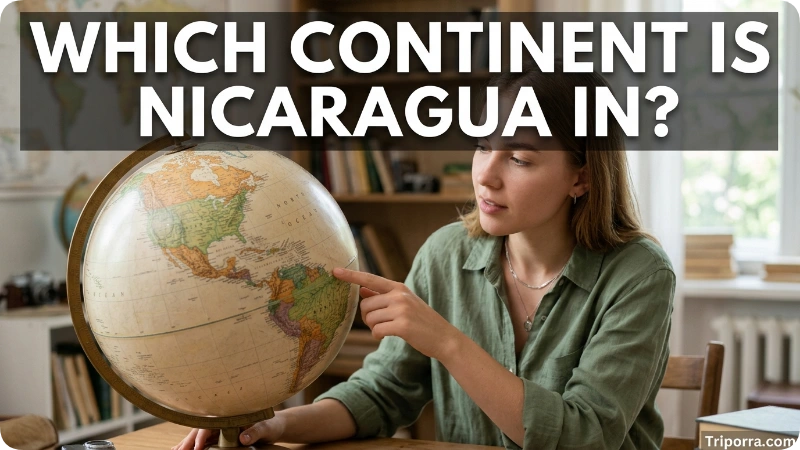
Nicaragua is part of North America, specifically within the region known as Central America. Although Central America is often referred to separately, it is geographically a subregion of the North American continent.
Many people mistakenly think Nicaragua is in South America because it lies close to that continent. In reality, it is north of Panama and remains part of North America.
It is the largest country in this region by land area, making it an important part of Central America’s geography.
Nicaragua on the Map
It occupies the largest land area in Central America. It is south of Honduras and north of Costa Rica.
Looking west, the country meets the Pacific Ocean with a coastline of sandy beaches, fishing villages, and surfing spots. Looking east, it reaches the Caribbean Sea, where the coastline is greener, wetter, and less developed.
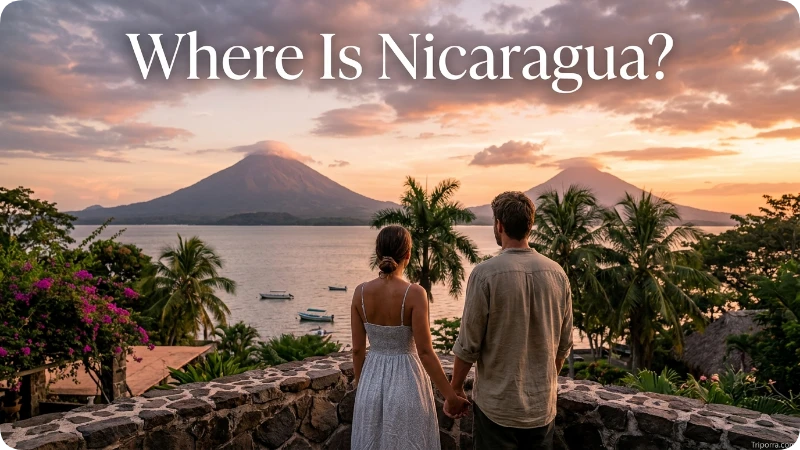
Lake Nicaragua, one of the largest freshwater lakes in the Americas, dominates the southwestern part of the country. Near the lake stands Ometepe Island, formed by two volcanoes.
From Mexico, Nicaragua lies roughly 1,500 kilometers to the southeast. From Panama, it is about 700 kilometers to the northwest. These distances help place Nicaragua within the wider Central American region.
Another useful way to identify Nicaragua on a map is by locating Lake Nicaragua, one of the largest freshwater lakes in the Americas. The lake occupies much of the country’s southwest and is one of Nicaragua’s most recognizable geographic features.
Where Is Nicaragua Located on the World Map?
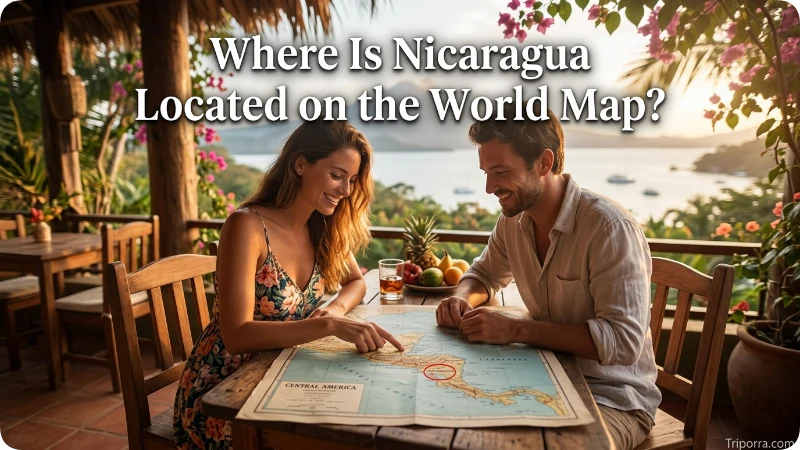
Nicaragua is located in the southern part of North America, within the region known as Central America. On a world map, it sits between North and South America, forming part of the narrow land bridge that connects the two continents.
The country lies south of Honduras and north of Costa Rica, with the Pacific Ocean to the west and the Caribbean Sea to the east. Because of this location, Nicaragua serves as an important geographic link between the Americas.
When viewed on a global map, Nicaragua is west of the Caribbean islands, southeast of Mexico, and northwest of Panama. Its central position makes it easy to combine with visits to other Central American countries.
Why Is Nicaragua Famous?
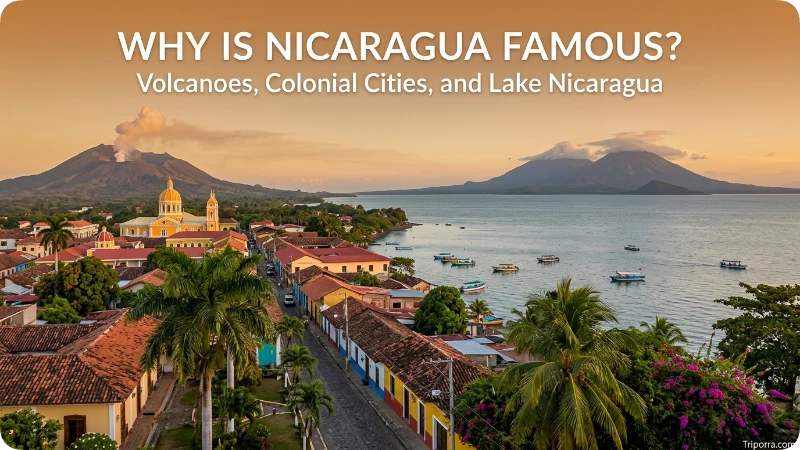
Nicaragua is best known for its dramatic natural scenery. More than a dozen volcanoes stretch across the country’s western side, creating one of Central America’s most impressive volcanic landscapes. Some volcanoes are active, while others are surrounded by forests, hiking trails, and crater lakes.
Lake Nicaragua is another major attraction. It is so large that early European explorers believed it was an inland sea. The lake contains hundreds of islands and the famous Ometepe Island, where two volcanoes rise from the water.
The colonial cities of Granada and León attract visitors interested in history, architecture, and local culture. Their colorful streets, old churches, and lively markets provide a different experience from the country’s natural attractions.
Surfing has also become popular along the Pacific coast. Beaches such as San Juan del Sur welcome surfers from around the world, while quieter beaches remain less crowded than those in neighboring Costa Rica.
Nature lovers visit Nicaragua for wildlife reserves, cloud forests, and tropical rainforests. Jaguars, monkeys, sea turtles, colorful birds, and sloths can all be found in protected areas.
One commonly misunderstood fact is that Nicaragua is not just about volcanoes. Nearly half of the country is covered by forests, making it one of Central America’s most important areas for biodiversity.
Travellers often overlook the country’s freshwater islands. The Islets of Granada, created by an ancient volcanic eruption, offer peaceful boat trips that many visitors enjoy more than crowded tourist attractions elsewhere.
Besides its volcanoes and lakes, Nicaragua is also known for producing coffee, tobacco, and rum. The country has a growing eco-tourism industry, attracting visitors interested in wildlife, hiking, birdwatching, surfing, and sustainable travel experiences.
History of Nicaragua
Long before European arrival, Indigenous peoples lived throughout what is now Nicaragua. Several cultures developed farming communities and trade routes across the region.
Christopher Columbus reached Nicaragua’s Caribbean coast during his fourth voyage in 1502. Spanish settlers later established colonial cities, including Granada and León, which became important political and economic centers.
During the colonial period, Nicaragua formed part of the Spanish Empire. After gaining independence from Spain in 1821, it briefly joined the Mexican Empire before becoming part of the Federal Republic of Central America.
Nicaragua became fully independent in 1838. Over the following decades, the country experienced political struggles, foreign intervention, and periods of economic change.
The twentieth century brought revolutions, civil conflict, and political reforms that shaped modern Nicaragua. Today, many historical buildings, museums, and monuments tell the story of these events while preserving the country’s cultural heritage.
Is Nicaragua a Country?
Yes. Nicaragua is an independent sovereign country in Central America. It gained full independence in 1838 after the dissolution of the Federal Republic of Central America.
Today, Nicaragua has its own government, national flag, currency, constitution, and international borders. Its capital and largest city is Managua.
Climate & Weather
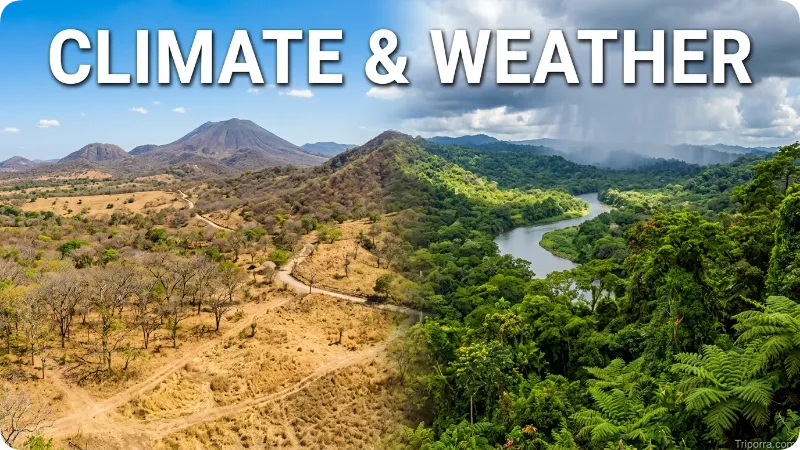
Nicaragua has a tropical climate, but weather conditions vary depending on elevation and location.
The Pacific side has a distinct dry season from approximately November through April. These months usually bring warm, sunny weather and lower humidity.
The Caribbean coast receives much more rainfall throughout the year. Even during the drier months, brief tropical showers are common.
Temperatures in lower areas generally range between 24°C and 32°C (75°F–90°F). Mountain regions are cooler, especially during the evenings.
A seasonal trap many first-time visitors encounter is assuming both coasts share the same weather. It may be sunny on the Pacific coast while heavy rain falls on the Caribbean side during the same week.
Is Nicaragua Safe to Visit?
Safety in Nicaragua depends on where you travel and current local conditions. Popular destinations such as Granada, León, Ometepe Island, and San Juan del Sur receive many visitors each year, but travelers should stay aware of local advice and avoid isolated areas after dark.
Before planning a trip, check the latest government travel advisories, use licensed transportation, protect your belongings, and monitor weather or political developments that could affect travel.
Is Nicaragua Safe to Visit?
Safety in Nicaragua depends on where you travel and the current local situation. Many tourists visit popular destinations such as Granada, León, Ometepe Island, and San Juan del Sur without major problems, but it is always wise to stay alert and follow local advice.
Before traveling, check the latest government travel advisories, avoid isolated areas after dark, protect your valuables, and use licensed transportation. Weather events, road conditions, and political demonstrations can also affect travel plans.
Things to See & Do
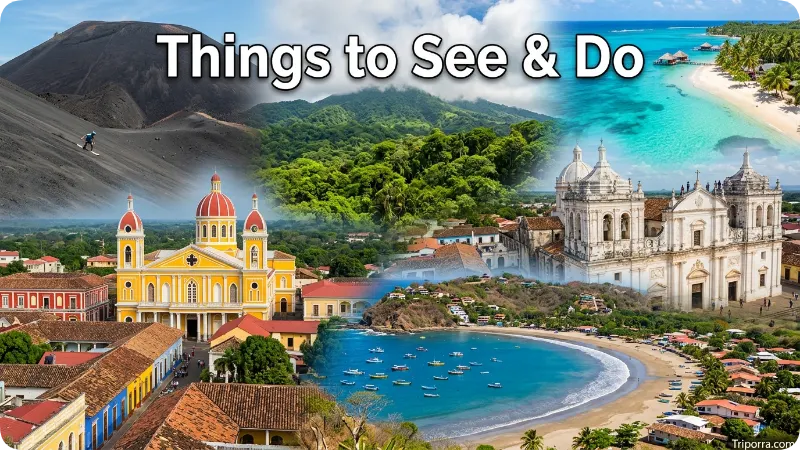
Volcanoes and Nature
- Masaya Volcano National Park – See an active volcanic crater and visit after sunset for glowing lava when conditions allow.
- Mombacho Volcano Nature Reserve – Walk cloud forest trails filled with orchids and wildlife.
- Cerro Negro – Try volcano boarding on one of Central America’s youngest volcanoes.
- Ometepe Island – Hike volcanoes, visit waterfalls, and explore small villages around Lake Nicaragua.
Cities and Culture
- Granada – Explore colorful colonial streets, churches, museums, and waterfront parks.
- León – Visit historic cathedrals, art galleries, and museums celebrating Nicaragua’s history.
Beaches and Wildlife
- San Juan del Sur – Surf, relax on nearby beaches, and enjoy coastal viewpoints.
- Corn Islands – Swim, snorkel, dive, and experience Caribbean culture.
- Indio Maíz Biological Reserve – Discover tropical rainforest filled with rare wildlife and bird species.
How to Get to Nicaragua
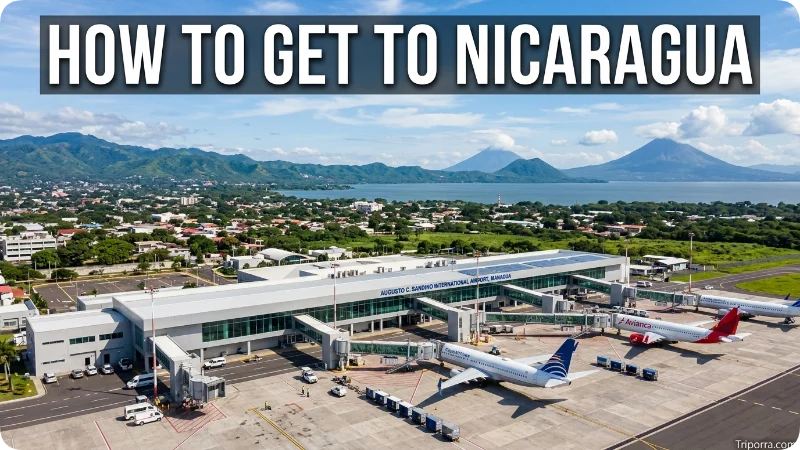
Most international visitors arrive through Augusto C. Sandino International Airport in Managua, which has flights connecting Nicaragua with major cities across North America, Central America, and parts of Latin America.
Travelers can also enter Nicaragua by land from Honduras and Costa Rica through official border crossings. Long-distance buses operate between several Central American countries, making regional travel relatively convenient.
Best Time to Visit
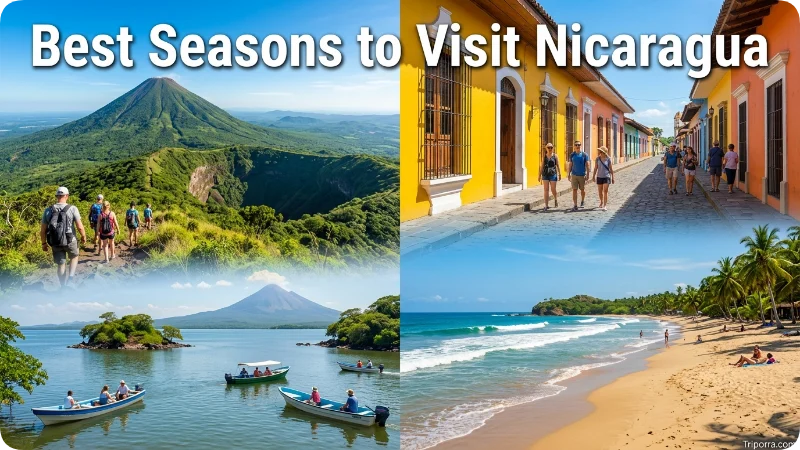
The best time to visit is generally between November and April, when the Pacific region experiences its dry season. Roads are easier to travel, hiking trails stay accessible, and beach weather is excellent.
Visitors interested in surfing often find consistent Pacific waves throughout much of the year, while wildlife enthusiasts may prefer the rainy season when forests become greener and animals are easier to observe in protected reserves.
December through February brings pleasant temperatures and attracts more international visitors. Expect higher hotel prices during holiday periods.
The shoulder months of May and November often offer a good balance. You may experience occasional rain while enjoying greener landscapes and fewer crowds.
The rainy season from approximately May to October has its own advantages. Forests become lush, waterfalls are stronger, and prices often fall. However, heavy rain can affect travel plans, especially in remote regions.
What most guides miss is that the Caribbean coast follows a different rainfall pattern. Checking local forecasts for your exact destination can make a significant difference when planning your trip.
Common Misconceptions
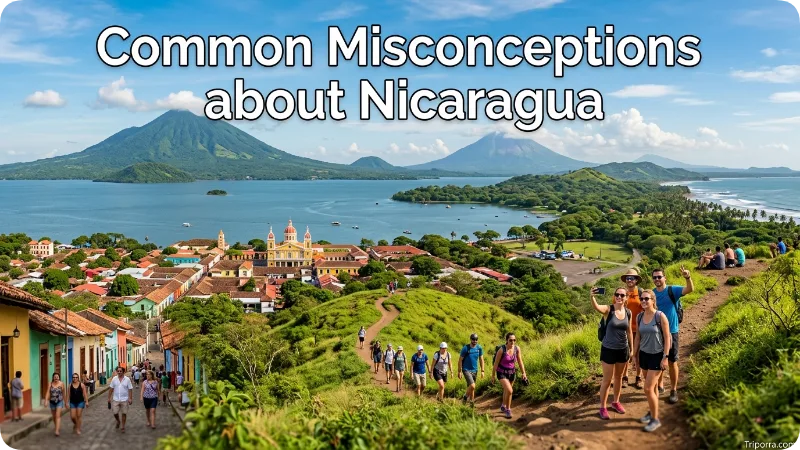
Many people think Nicaragua is a small island because of its large lakes. In reality, it is the largest country in Central America.
Another common misunderstanding is that the country has only volcanoes. Nicaragua also contains rainforests, wetlands, beaches, cloud forests, islands, and one of the largest freshwater lakes in the Americas.
Some travelers also assume Nicaragua and Costa Rica have similar landscapes everywhere. Although they share some natural features, Nicaragua generally has larger lakes, more active volcanoes, and broader open landscapes.
Related Places
Honduras
Located directly north of Nicaragua, Honduras shares mountains, forests, and parts of Central America’s cultural heritage.
Costa Rica
South of Nicaragua, Costa Rica is known for national parks and eco-tourism. Many travelers visit both countries on the same trip.
Lake Nicaragua
One of the largest freshwater lakes in the Americas, it supports fishing communities, wildlife, and the famous Ometepe Island.
Ometepe Island
This remarkable island sits within Lake Nicaragua and was formed by two connected volcanoes. It is one of the country’s most recognizable natural landmarks.
Corn Islands
Off Nicaragua’s Caribbean coast, these islands offer white-sand beaches, coral reefs, and a relaxed Caribbean atmosphere.
Managua
Managua is Nicaragua’s capital and largest city. Located near the southwestern shore of Lake Managua, it serves as the country’s political, economic, and transportation center.
What Else Do People Want to Know?
Many travelers ask whether Nicaragua is affordable. Compared with several neighboring destinations, daily travel costs are often lower, especially for accommodation, local transport, and food.
Safety depends on the area and current conditions. Visitors should stay informed, follow local advice, and check official travel guidance before planning a trip.
Spanish is the official language, although English and Indigenous languages are spoken in some Caribbean communities.
Most visitors find getting around straightforward between major cities using buses, shuttle services, or rental vehicles. Remote areas may require extra travel time because road conditions vary.
Local customs are friendly and welcoming. Learning a few basic Spanish phrases and respecting community traditions often leads to better travel experiences.
FAQs
Is Nicaragua in which country?
Nicaragua is an independent country in Central America, located between Honduras and Costa Rica.
Where is Nicaragua currency?
The official currency of Nicaragua is the Nicaraguan córdoba (NIO).
Where is Nicaragua on a map?
Nicaragua is located in Central America, between the Pacific Ocean and the Caribbean Sea.
What continent is Nicaragua in?
Nicaragua is part of North America, specifically the Central American region.
Is Nicaragua safe?
Nicaragua can be safe for visitors, but travellers should follow local advice and take normal safety precautions.
What is Nicaragua’s population?
Nicaragua has a population of approximately 7 million people.
Is Nicaragua in South America?
No, Nicaragua is not in South America. It is located in Central America, which is part of North America.
Is Nicaragua in Mexico?
No, Nicaragua is not part of Mexico. It is a separate country located south of Mexico in Central America.
Is Nicaragua in South America?
No. Nicaragua is located in North America and is one of the seven countries that make up Central America.
Is Nicaragua in Mexico?
No. Nicaragua is an independent country in Central America, located southeast of Mexico between Honduras and Costa Rica.
Can you visit active volcanoes?
Yes. Several volcanoes are open to visitors through national parks and guided tours, depending on current volcanic activity.
Is Nicaragua good for nature lovers?
Yes. Visitors can enjoy volcanoes, rainforests, lakes, islands, wildlife reserves, and beaches across the country.
Closing
Nicaragua offers far more than many people expect. Located in Central America between Honduras and Costa Rica, the country has a unique position between the Pacific Ocean and the Caribbean Sea. This location has influenced its geography, climate, culture, and history, creating a country with remarkable diversity.
From towering volcanoes and the massive Lake Nicaragua to colonial cities, tropical rainforests, and coastal landscapes, Nicaragua has many different environments within a relatively small area. Its cities, traditional festivals, local food, and historic sites reflect a mix of Indigenous, Spanish, and Caribbean influences.
Understanding where Nicaragua is located helps explain why it has such varied landscapes and traditions. Whether you are exploring Central American geography, learning about its history, or planning a future trip, Nicaragua provides an interesting example of how location shapes a country’s identity. Its natural beauty, cultural heritage, and strategic position make it an important and fascinating country in the Americas.

Elena Rostova bridges the gap between premium hospitality and authentic local experiences. Armed with a background in luxury hospitality management and a passion for fine architecture, she spent years evaluating elite resorts before transitioning into travel journalism. Elena heads the luxury and boutique travel vertical on Triporra.com. Her meticulous guides strip away the guesswork from high-end travel, showcasing unique five-star escapes, fine regional dining, and bespoke private tours that elevate a standard vacation into an unforgettable journey.