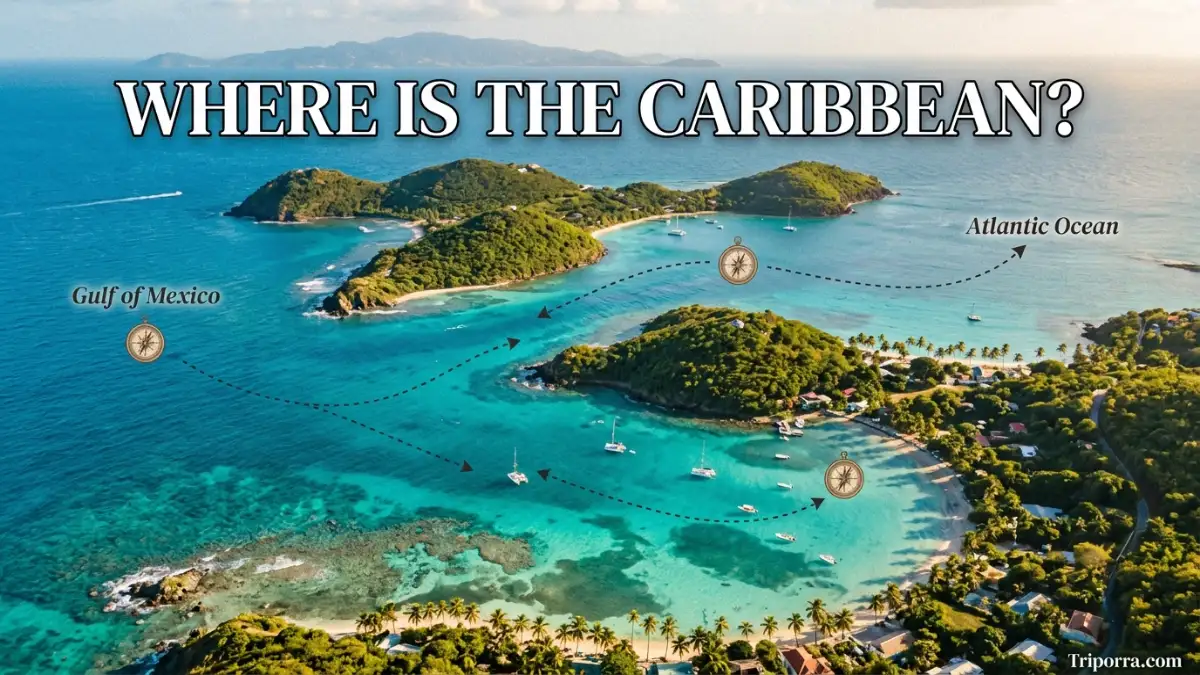
The Caribbean is one of the most famous tropical regions in the world. Many people know it for its beautiful beaches, warm weather, and clear blue water. However, one question people often ask is: Where is the Caribbean?
The Caribbean is not a country. It is a large geographic region made up of many islands, island nations, and territories. It also includes the Caribbean Sea and some nearby mainland coastlines. Knowing where the Caribbean is makes it easier to understand its history, culture, and why it is such a popular place to visit.
Featured Snippet
Where is the Caribbean? The Caribbean is a geographic region in the western Atlantic Ocean. It includes the Caribbean Sea and more than 7,000 islands, reefs, and cays. The region lies east of Central America, southeast of the Gulf of Mexico, and north of South America. It is home to many independent countries and overseas territories.
Quick Facts
| Fact | Information |
|---|---|
| Official Name | The Caribbean (Geographic Region) |
| Country | Not a country (a geographic region) |
| Location | Western Atlantic Ocean |
| Region | Between North America and South America |
| Population | Approximately 44 million people |
| Area | Approximately 2.75 million square kilometres |
| Elevation | From sea level to mountains over 3,000 metres |
| Coordinates | Approximately 15°N, 75°W |
| Time Zone | Mostly UTC−4 to UTC−5 |
| Nearest Major Cities | Miami (USA), Cartagena (Colombia), Panama City (Panama) |
| Main Island Groups | Greater Antilles, Lesser Antilles, Lucayan Archipelago |
| Number of Islands | More than 7,000 islands, reefs, and cays |
| Known For | Tropical islands, beaches, coral reefs, music, festivals, food, and tourism |
| Languages Spoken | English, Spanish, French, Dutch, Haitian Creole, and other local languages |
| Currency | Different currencies are used across Caribbean countries and territories |
| Largest Country | Cuba (by land area and population) |
| Major Sea | Caribbean Sea |
| Climate | Tropical climate with warm temperatures year-round |
| Hurricane Season | June to November |
| Major Economic Activities | Tourism, fishing, agriculture, shipping, and services |
Where Is the Caribbean?
The Caribbean is located in the western Atlantic Ocean. It surrounds the Caribbean Sea, one of the largest seas in the world. The region sits east of Central America, north of South America, and south-east of the Gulf of Mexico.
The Caribbean is made up of more than 7,000 islands, islets, reefs, and cays. These islands are spread across a large area of the ocean. Some are large and home to millions of people, while others are small and have very few residents.
Many people think the Caribbean is one country, but that is not true. It is a collection of many different countries and territories. Some islands are fully independent, while others are linked to countries such as the United Kingdom, France, the Netherlands, and the United States.
The islands are usually grouped into three main areas:
- Greater Antilles
- Lesser Antilles
- Lucayan Archipelago
These groups help people understand where different islands are located.
Travellers often overlook just how large the Caribbean is. A flight between two islands can sometimes take several hours. On a map, they may look close together, but the distances are often much greater than people expect.
Where Is the Caribbean on the World Map?
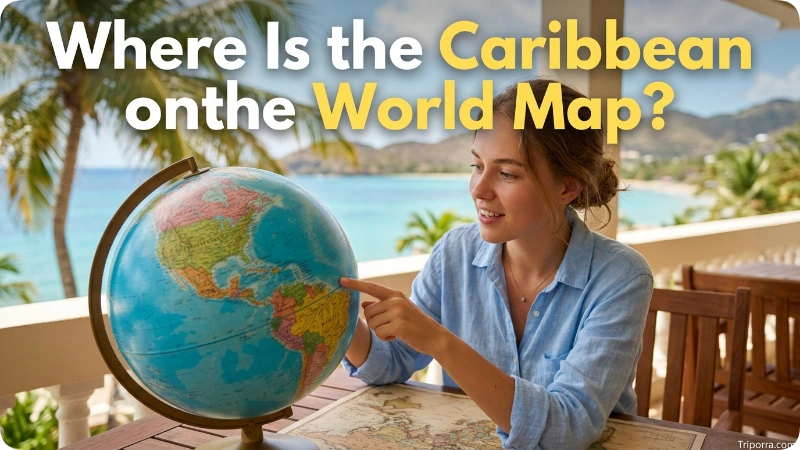
On a world map, the Caribbean is located in the western Atlantic Ocean between North America and South America.
The region sits:
- East of Central America
- Southeast of the Gulf of Mexico
- North of South America
- West of the Atlantic Ocean
The Caribbean Sea is located at the centre of the region, surrounded by thousands of islands, reefs, and coastal areas.
The largest islands, including Cuba, Hispaniola (Haiti and the Dominican Republic), Jamaica, and Puerto Rico, are located in the northern Caribbean. Smaller islands extend east and south through the Lesser Antilles.
Although the Caribbean islands may appear close together on a map, the region covers a large area and stretches across thousands of kilometres.
Administrative Status
The Caribbean does not have one government because it is a region, not a country.
Instead, it includes more than 30 different countries and territories. Each one has its own government, laws, currency, and official language.
Some Caribbean countries are fully independent. These include:
- Jamaica
- Barbados
- Saint Lucia
- Grenada
- Trinidad and Tobago
- The Dominican Republic
Other islands are overseas territories. For example:
- Puerto Rico is linked to the United States.
- Aruba is part of the Kingdom of the Netherlands.
- Martinique is an overseas department of France.
- The Cayman Islands are a British Overseas Territory.
What Are the 13 Caribbean Countries?
Because every island is different, visitors should always check entry rules before travelling. One island may allow visa-free travel, while another may require a visa. Time zones, currencies, and driving rules can also change from island to island.
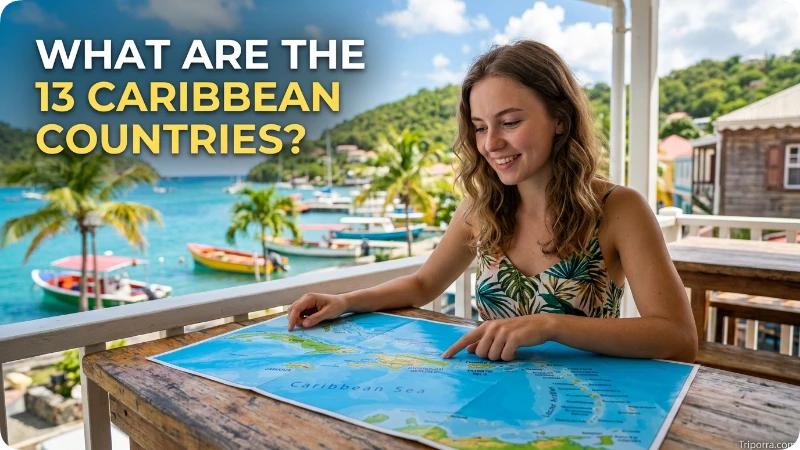
The Caribbean has 13 independent countries that have their own governments, borders, and international recognition.
The 13 Caribbean countries are:
- Antigua and Barbuda
- The Bahamas
- Barbados
- Cuba
- Dominica
- Dominican Republic
- Grenada
- Haiti
- Jamaica
- Saint Kitts and Nevis
- Saint Lucia
- Saint Vincent and the Grenadines
- Trinidad and Tobago
The Caribbean also includes several territories and dependencies that are connected to other countries. For example, Puerto Rico is a U.S. territory, Aruba is part of the Kingdom of the Netherlands, and Martinique is an overseas department of France.
Although these countries share the Caribbean region, each one has its own culture, language, traditions, and government system.
The Caribbean on the Map
The Caribbean is easy to find when you look at a world map.
It lies:
- East of Central America
- North of South America
- South-east of the Gulf of Mexico
- West of the Atlantic Ocean
The Caribbean Sea is in the centre of the region. Many islands are found around this sea.
Where Is the Caribbean Sea Located?
The Caribbean Sea is not part of one single country. It is a large sea surrounded by several Caribbean islands and mainland countries.
The Caribbean Sea is bordered by:
- Mexico and Central America to the west
- The Greater Antilles islands to the north
- The Lesser Antilles islands to the east
- Colombia and Venezuela in South America to the south
Countries with coastlines along the Caribbean Sea include Mexico, Belize, Guatemala, Honduras, Nicaragua, Costa Rica, Panama, Colombia, and Venezuela.
The sea plays an important role in Caribbean tourism, fishing, marine life, and transportation.
If you are travelling from the United States, many Caribbean islands are only a few hours away by plane. Miami is one of the main gateways to the region.
If you look south, countries such as Colombia and Venezuela are close to the southern Caribbean.
What most guides miss is that the Caribbean covers a much larger area than many people imagine. Although the islands are connected by the sea, they are spread over thousands of kilometres.
Why Is the Caribbean Famous?
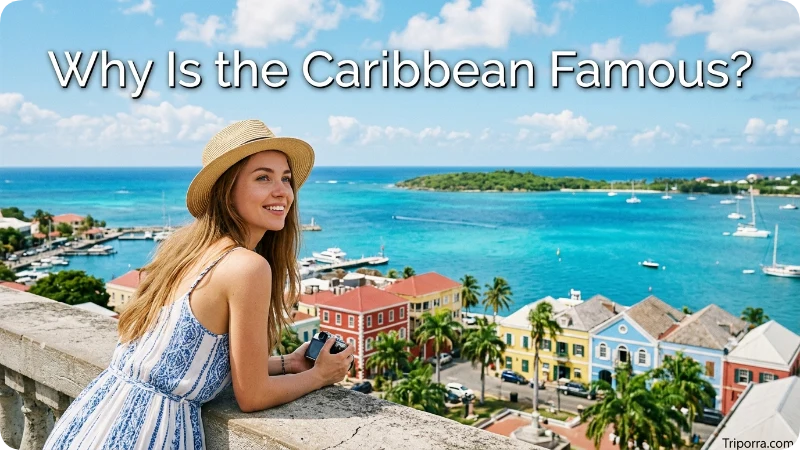
The Caribbean is famous for many reasons. People from all over the world visit the region every year to enjoy its warm weather, sandy beaches, and clear water.
Many islands are surrounded by coral reefs. These reefs are home to colourful fish, sea turtles, and many other marine animals. Snorkelling and scuba diving are popular activities because of this underwater life.
The Caribbean is also known for its music. Reggae began in Jamaica, while calypso and soca music are closely linked with Trinidad and Tobago. These music styles have become popular around the world.
Food is another reason people love the Caribbean. Fresh seafood, tropical fruits, spicy chicken, rice dishes, and local desserts are found across the islands. Every country has its own recipes and cooking traditions.
The region is also famous for festivals. Carnival celebrations bring together colourful costumes, music, dancing, and street parades. Each island celebrates in its own way.
History is another attraction. Visitors can explore old forts, colonial towns, museums, and historic churches. These places tell the story of the people who have lived in the Caribbean for hundreds of years.
Many people think every Caribbean island looks the same, but this is not true. Some islands have high mountains and rainforests. Others are flat with long white beaches. Some have active volcanoes, while others are made mostly from coral rock.
Travellers often overlook the natural beauty away from the beaches. Many islands have waterfalls, caves, hiking trails, wildlife parks, and protected forests that are just as impressive as the coastline.
History
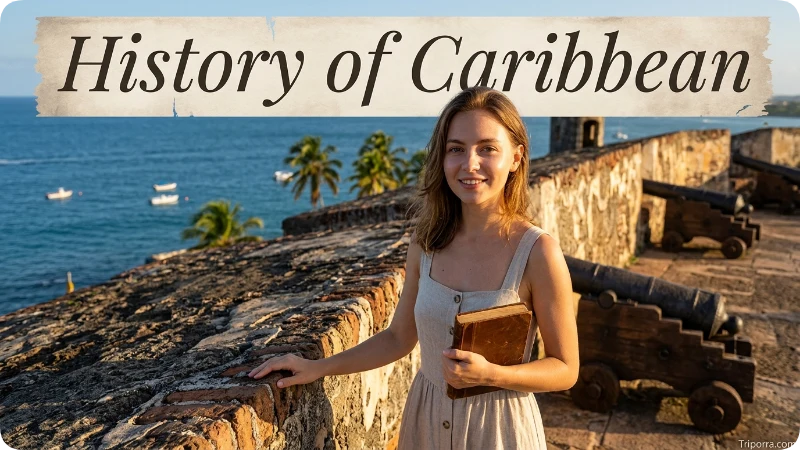
People have lived in the Caribbean for thousands of years. Long before Europeans arrived, the islands were home to Indigenous groups such as the Taíno, Kalinago, and Ciboney peoples.
In 1492, Christopher Columbus reached the Caribbean during his first voyage across the Atlantic Ocean. His arrival changed the region forever.
Over the next several centuries, European countries including Spain, Britain, France, and the Netherlands established colonies on many islands.
Sugar became one of the most important crops in the Caribbean. Large plantations were built, and millions of enslaved Africans were brought to the region to work on them. This painful period had a lasting impact on Caribbean history and culture.
During the 1800s and 1900s, many Caribbean countries gained independence. Others chose to remain territories connected to larger nations.
Today, the Caribbean is known for its cultural diversity. Its people have roots in Indigenous, African, European, Indian, Chinese, and Middle Eastern communities. This mix of cultures can be seen in the region’s food, music, festivals, languages, and traditions.
One fact that surprises many people is that the Caribbean has hundreds of years of shared history, but each island has developed its own unique identity.
Who Are the Caribbean People?
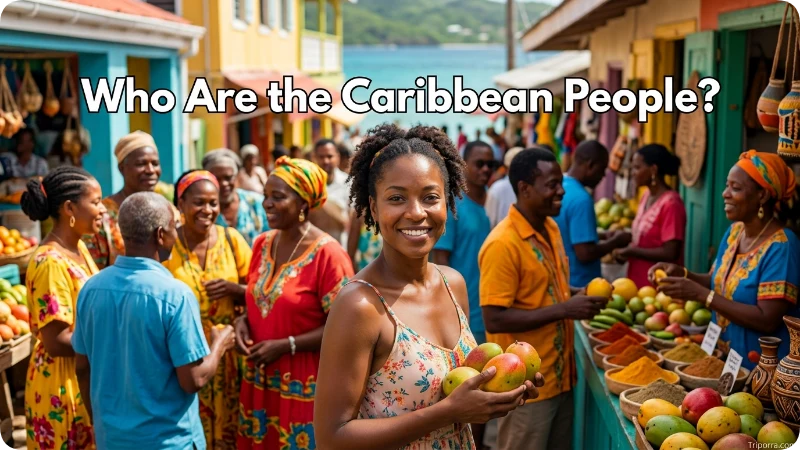
Caribbean people come from many different cultural backgrounds. The region’s population has been shaped by Indigenous communities, migration, trade, and centuries of historical events.
The original inhabitants of the Caribbean included Indigenous groups such as the Taíno, Kalinago, and Ciboney peoples. Over time, African, European, Indian, Chinese, and Middle Eastern communities also became part of Caribbean societies.
Today, Caribbean people are known for their diverse cultures, music, food, festivals, and traditions.
Although Caribbean countries share some common influences, each island has its own identity. Jamaica, Cuba, Barbados, Haiti, and Trinidad and Tobago all have different customs, languages, and cultural traditions.
Climate & Weather
The Caribbean has a tropical climate, which means it is warm for most of the year. Average daytime temperatures are usually between 24°C and 31°C, although this can change depending on the island and the time of year.
There are two main seasons:
- Dry season: Approximately December to April
- Wet season: Approximately May to November
The dry season is usually sunny with lower humidity. This is the busiest time for visitors because the weather is comfortable for beach holidays, sightseeing, and outdoor activities.
The wet season brings more rain and higher humidity. Rain showers are often short, but some days can have heavy rain.
The Atlantic hurricane season also falls between June and November. Not every island is affected each year, but storms are more likely during this period.
A seasonal trap that many first-time visitors miss is that cheaper hotel prices during late summer often come with a higher chance of tropical storms. If you plan to visit during this time, checking weather forecasts and buying travel insurance is a good idea.
Because the Caribbean covers a large area, the weather can be different from one island to another. One island may have sunshine while another experiences heavy rain on the same day.
Things to See & Do
The Caribbean offers much more than beautiful beaches. Every island has its own attractions, history, and local traditions. Whether you enjoy nature, history, food, or adventure, there is something for everyone.
Nature
- Visit the Pitons in Saint Lucia, two famous volcanic mountains.
- Explore El Yunque National Forest in Puerto Rico, the only tropical rainforest in the U.S. National Forest System.
- Walk through the Blue Mountains in Jamaica.
- See sea turtles, colourful fish, and coral reefs while snorkelling.
Beaches
- Relax at Grace Bay Beach in Turks and Caicos.
- Enjoy Eagle Beach in Aruba.
- Swim at Seven Mile Beach in the Cayman Islands.
- Visit Varadero Beach in Cuba.
History & Culture
- Walk through the old streets of Old Havana in Cuba.
- Visit the historic city of Bridgetown in Barbados.
- Explore San Juan in Puerto Rico, known for its old forts and colourful buildings.
- Learn about the region’s past in local museums and heritage sites.
Food
- Try jerk chicken in Jamaica.
- Taste flying fish in Barbados.
- Enjoy fresh seafood and tropical fruits.
- Visit local food markets and family-run restaurants for traditional dishes.
Travellers often overlook the smaller islands, but many offer quieter beaches, friendly communities, and beautiful natural scenery without large crowds.
Where Do Caribbean Cruises Go?
Caribbean cruises travel between different islands and coastal destinations across the Caribbean Sea.
Many cruises leave from major ports in the United States, including Miami, Fort Lauderdale, Port Canaveral, and Galveston.
Popular Caribbean cruise destinations include:
- Bahamas
- Jamaica
- Puerto Rico
- Dominican Republic
- Aruba
- Barbados
- St. Thomas
A Caribbean cruise allows travellers to visit multiple islands in one journey while experiencing beaches, local food, history, and cultural attractions.
Best Time to Visit
The best time to visit the Caribbean depends on what you want from your trip.
For most people, December to April is the best time to travel. The weather is usually warm, sunny, and less humid. This is also the busiest tourist season, so hotels and flights often cost more.
If you want good weather and lower prices, May and early June are often excellent choices. These months usually have fewer visitors, making beaches and attractions less crowded.
From July to November, prices are often lower because fewer people travel during this period. However, this is also the time when tropical storms and hurricanes are more likely.
What most guides miss is that there is no single “best month” for every island. Weather can vary across the region, so it is worth checking the forecast for your chosen destination before booking.
Common Misconceptions
Many people think the Caribbean is one country. In fact, it is a region made up of many countries and territories.
Another common mistake is believing that everyone in the Caribbean speaks English. While English is widely spoken on several islands, Spanish is the most widely spoken language across the region. French, Dutch, Haitian Creole, and other local languages are also common.
What Languages Are Spoken in the Caribbean?
The Caribbean does not have one single language because it includes many different countries and territories.
The main languages spoken in the Caribbean include:
- Spanish — widely spoken in Cuba, Dominican Republic, and Puerto Rico
- English — common in Jamaica, Barbados, and Trinidad and Tobago
- French — spoken in Haiti, Martinique, and Guadeloupe
- Dutch — spoken in Aruba, Curaçao, and Sint Maarten
- Haitian Creole — widely used in Haiti
Many islands also have local dialects and Creole languages that developed from different cultural influences.
Some people also think every Caribbean island has the same culture. This is not true. Each island has its own traditions, food, music, and history.
Another naming confusion is that people sometimes use “Caribbean” and “Caribbean Sea” as if they mean the same thing. The Caribbean Sea is only one part of the larger Caribbean region.
Related Places
The Bahamas
The Bahamas is often included in Caribbean holidays because of its similar culture and climate. However, it is located in the Atlantic Ocean rather than the Caribbean Sea.
Bermuda
Many people think Bermuda is in the Caribbean, but it is actually much farther north in the Atlantic Ocean.
Central America
Countries such as Belize, Honduras, and Panama have Caribbean coastlines. Their coastal areas share many traditions with nearby Caribbean islands.
Gulf of Mexico
The Gulf of Mexico lies northwest of the Caribbean and connects to the Caribbean Sea through the Yucatán Channel.
What Else Do People Want to Know?
Many travellers ask if the Caribbean is safe to visit. Most popular tourist areas are considered safe, but safety can vary from one island to another. It is always a good idea to follow local advice and take normal travel precautions.
People also ask about the cost of visiting. Some islands are known for luxury resorts, while others are much more affordable. Budget travellers can often save money by visiting outside the busiest season.
Getting around the Caribbean is easier than many people think. Regional airlines, ferries, and cruise ships connect many islands. Some smaller islands may require connecting flights.
Visitors should also remember that local customs can differ between islands. Respectful clothing is expected when visiting churches, government buildings, and some rural communities.
FAQs
1. Is the Caribbean a continent?
No. The Caribbean is a geographic region made up of islands, countries, territories, and the Caribbean Sea.
2. How many countries are in the Caribbean?
There are 13 independent countries, along with several overseas territories and dependencies.
3. What is the largest country in the Caribbean?
Cuba is the largest Caribbean country by both land area and population.
4. What languages are spoken in the Caribbean?
People speak English, Spanish, French, Dutch, Haitian Creole, and several local languages.
5. Why is the Caribbean Sea important?
The Caribbean Sea supports tourism, fishing, shipping, and marine life. It has also played an important role in world trade for centuries.
6. Can you travel between Caribbean islands?
Yes. Many islands are connected by ferries, regional airlines, and cruise ships.
7. Does the Caribbean get hurricanes?
Yes. Hurricanes are most likely between June and November, although not every island is affected each year.
8. What is the Caribbean known for besides beaches?
The region is also famous for music, food, history, rainforests, coral reefs, wildlife, and colourful festivals.
9. Which Caribbean island is closest to the United States?
The Bahamas and Cuba are among the closest Caribbean destinations to the United States.
10. Why do people visit the Caribbean?
People visit for its warm weather, natural beauty, outdoor activities, local culture, delicious food, and relaxing atmosphere.
11. Is the Caribbean part of the USA?
No. The Caribbean is not part of the United States. It is a geographic region made up of independent countries and territories.
However, some Caribbean locations are connected to the United States, including Puerto Rico and the U.S. Virgin Islands.
12. What countries are in the Caribbean?
The Caribbean includes 13 independent countries: Antigua and Barbuda, The Bahamas, Barbados, Cuba, Dominica, Dominican Republic, Grenada, Haiti, Jamaica, Saint Kitts and Nevis, Saint Lucia, Saint Vincent and the Grenadines, and Trinidad and Tobago.
The region also includes several overseas territories.
13. What is the safest Caribbean island to visit right now?
Safety can vary between islands and can change over time. Many popular Caribbean destinations are safe for tourists when visitors follow local advice and take normal travel precautions.
Travellers should check current travel guidance before choosing a destination.
14. Which country is part of the Caribbean?
Many countries are part of the Caribbean region, including Jamaica, Cuba, Barbados, Haiti, Dominican Republic, and Trinidad and Tobago.
The Caribbean also includes territories such as Puerto Rico, Aruba, and the Cayman Islands.
Conclusion
The Caribbean is a large geographic region, not a single country. It includes thousands of islands, many independent nations, and several overseas territories. Located between North and South America, it is surrounded by the Caribbean Sea and the Atlantic Ocean.
The region is famous for its beaches, coral reefs, music, food, and rich history. At the same time, every island has its own culture, traditions, and landscapes, making each destination unique.
Whether you are planning a holiday, studying geography, or simply satisfying your curiosity, understanding where the Caribbean is helps you appreciate why it is one of the world’s most interesting and diverse regions.

Silas Vance is a geography enthusiast, travel researcher, and location-focused content writer dedicated to helping readers better understand the world around them on triporra.com. He specializes in creating informative guides about cities, countries, islands, landmarks, universities, and other notable destinations. His work combines geographic accuracy, historical context, and practical insights to answer location-based questions in a simple and engaging way.