The Dominican Republic is a Caribbean country that shares the island of Hispaniola with Haiti. It is known for its tropical beaches, mountain landscapes, colonial history, and welcoming culture. Many people search for its location because they often confuse it with the Caribbean island nation of Dominica or assume it is part of another country.
Featured Snippet
Where is the Dominican Republic? The Dominican Republic is located in the Caribbean Sea on the island of Hispaniola. It occupies the eastern two-thirds of the island, while Haiti covers the western third. The country lies southeast of Florida, east of Cuba, and west of Puerto Rico. Santo Domingo is the capital and largest city.
Quick Facts
| Fact | Details |
|---|---|
| Official Name | Dominican Republic |
| Country Type | Independent country |
| Region | Caribbean, North America |
| Capital City | Santo Domingo |
| Population | Approximately 11.5 million |
| Area | Approximately 48,442 sq km (18,704 sq mi) |
| Highest Point | Pico Duarte – 3,101 m (10,174 ft) |
| Coordinates | Approximately 19° N, 70° W |
| Time Zone | Atlantic Standard Time (AST, UTC−4) |
| Official Language | Spanish |
| Currency | Dominican Peso (DOP) |
| Known For | White-sand beaches, all-inclusive resorts, baseball, colonial history, and mountain landscapes |
Where Is the Dominican Republic?
The Dominican Republic is located in the Caribbean, on the island of Hispaniola. It covers the eastern part of the island, while Haiti occupies the western side. The country sits between the Atlantic Ocean to the north and the Caribbean Sea to the south, giving it hundreds of miles of coastline.
From the United States, the Dominican Republic is about a two-hour flight from Miami and around four hours from New York City. Puerto Rico lies roughly 130 kilometers (80 miles) to the east across the Mona Passage, while Cuba is northwest across the Windward Passage.
Travellers often overlook how large the country actually is. Many expect it to be only a beach destination, but it also includes mountain ranges, rivers, forests, and farming regions that are very different from the resort areas.
Another point that many guides miss is that the Dominican Republic has the highest mountain in the Caribbean, Pico Duarte, showing that the country’s landscape is much more varied than many people realize.
Administrative Status
The Dominican Republic is an independent nation with a democratic government. It is divided into 31 provinces and the National District, where Santo Domingo is located.
As a sovereign country, it has its own immigration rules, passport requirements, and customs procedures. Visitors from many countries can enter with simple tourist requirements, although entry rules depend on nationality.
The country follows Atlantic Standard Time (UTC−4) throughout the year and does not observe daylight saving time. This means visitors from North America may notice seasonal time differences depending on the month they travel.
Dominican Republic on the Map
The Dominican Republic lies in the Greater Antilles, one of the main island groups in the Caribbean.
To the west, it shares a land border with Haiti. The Atlantic Ocean forms its northern coastline, while the Caribbean Sea borders the south. Puerto Rico lies to the east, separated by the Mona Passage, and Jamaica is farther southwest.
Looking from North America, the country is southeast of Florida and almost directly south of the Bahamas. Its central location makes it one of the easiest Caribbean destinations to reach by air from the United States, Canada, and much of Latin America.
One common mistake is thinking the country is surrounded only by the Caribbean Sea. In fact, its northern coast faces the Atlantic Ocean, giving different coastal weather and wave conditions compared with the southern beaches.
Why Is the Dominican Republic Famous?
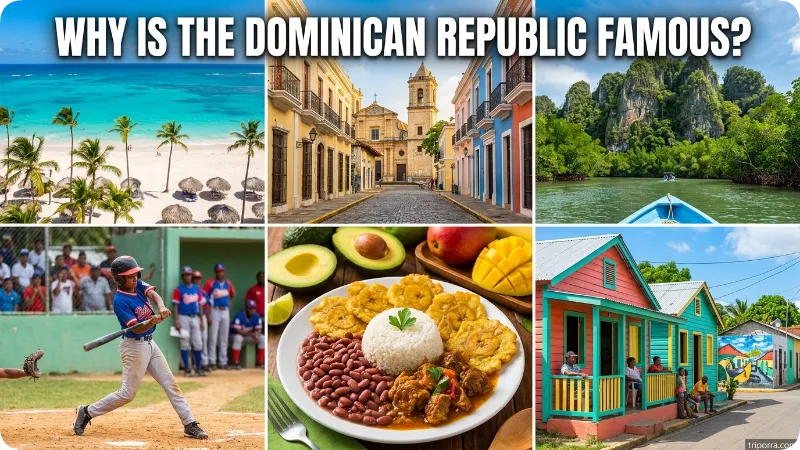
The Dominican Republic is famous for combining beautiful coastlines with a long and important history. It attracts millions of visitors every year because it offers much more than beach resorts.
Punta Cana is perhaps the country’s best-known destination, with long stretches of white sand and clear blue water. The area has many all-inclusive resorts that attract families, couples, and honeymooners.
Santo Domingo is equally important. Founded in 1498, it is the oldest continuously inhabited European settlement in the Americas. Its Colonial Zone still contains streets, churches, and buildings that date back hundreds of years.
Nature lovers enjoy places such as Pico Duarte, Los Haitises National Park, and the Damajagua Waterfalls. These locations show a completely different side of the country, filled with forests, caves, rivers, and mountain trails.
Baseball is another major part of daily life. The Dominican Republic has produced many professional players who have competed in Major League Baseball. Local games are popular throughout the country and reflect a strong sporting culture.
Food also plays an important role. Traditional meals often include rice, beans, chicken, beef, fried plantains, and tropical fruits. Fresh seafood is common along the coast, while mountain communities prepare dishes using local vegetables and coffee.
Travellers often overlook the country’s interior. While beach resorts receive most of the attention, central mountain towns provide cooler weather, hiking opportunities, and a different view of Dominican life.
What most guides miss is that regional traditions vary noticeably across the country. Music, food, and festivals in the north can feel quite different from those in the southern provinces, giving visitors many cultural experiences within one destination.
History
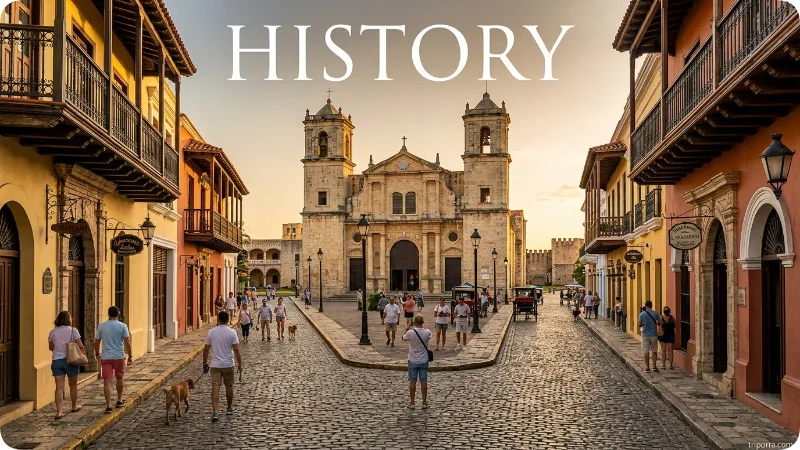
The island of Hispaniola was originally home to the Taíno people long before Europeans arrived.
Christopher Columbus reached the island in 1492 during his first voyage. Soon after, the Spanish established settlements, making Santo Domingo one of the earliest European cities in the Americas.
Over the following centuries, the eastern and western parts of Hispaniola developed differently under Spanish and French influence. Haiti gained independence from France in 1804 and later controlled the entire island for a period.
The Dominican Republic declared independence from Haiti on February 27, 1844. Since then, the country has experienced political changes, foreign occupations, and periods of economic growth.
Today, tourism, agriculture, manufacturing, and services play major roles in the economy. Historic landmarks remain well preserved and continue to tell the story of the country’s past.
Climate & Weather
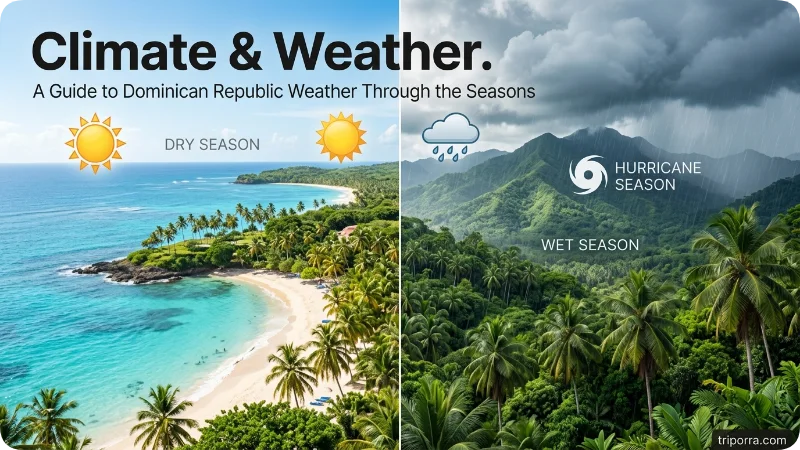
The Dominican Republic has a tropical climate with warm temperatures throughout the year.
Average daytime temperatures usually range from 25°C to 32°C (77°F to 90°F) depending on the season and location. Coastal areas stay warm most of the year, while mountain regions are much cooler.
The dry season generally runs from December through April and is the most popular time for visitors. Rainfall becomes more common from May to November.
One seasonal trap that many first-time visitors do not expect is hurricane season, which officially lasts from June through November. Although not every storm affects the country directly, checking weather forecasts before traveling is always a good idea.
Mountain regions such as Pico Duarte can become surprisingly cool, especially during the night.
Things to See & Do
Nature
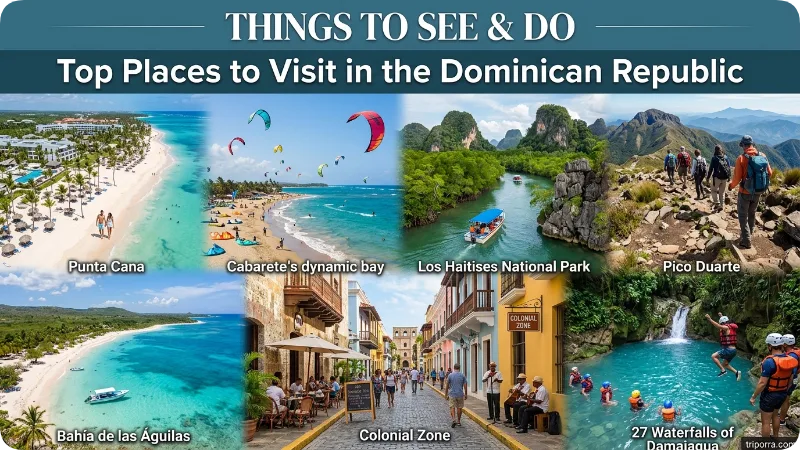
- Pico Duarte – Climb the highest mountain in the Caribbean.
- Los Haitises National Park – Explore mangrove forests, caves, and limestone islands.
- 27 Waterfalls of Damajagua – Swim, climb, and slide through natural waterfalls.
- Bahía de las Águilas – Relax on one of the country’s most beautiful remote beaches.
Culture & History
- Colonial Zone, Santo Domingo – Walk through centuries-old streets and historic buildings.
- Alcázar de Colón – Visit the former residence of Christopher Columbus’s family.
- Fortaleza Ozama – See one of the oldest European military forts in the Americas.
Beaches & Adventure
- Punta Cana – Enjoy beaches, golf courses, and water sports.
- Samaná Peninsula – Watch humpback whales during the migration season.
- Cabarete – Popular for kitesurfing and windsurfing because of steady coastal winds.
Best Time to Visit
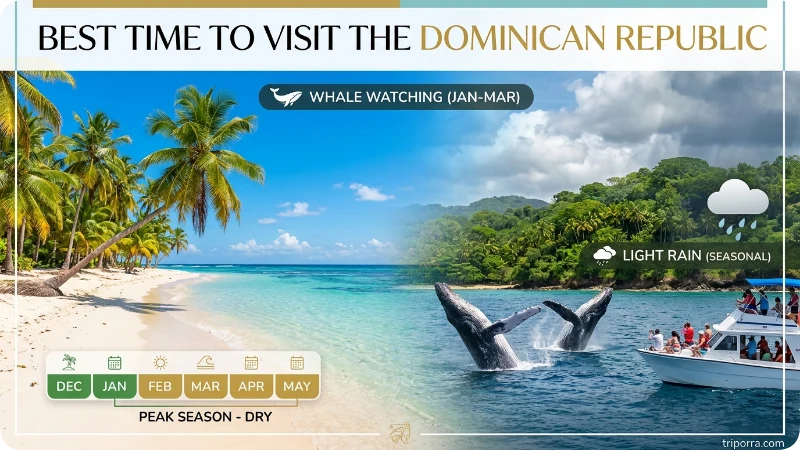
The most popular time to visit is from December through April. The weather is generally dry, sunny, and comfortable for beach holidays and sightseeing. This is also the busiest season, so hotel prices are usually higher.
The shoulder months of May and November often offer a good balance between pleasant weather and lower accommodation costs. Beaches are less crowded, and many attractions feel more relaxed.
June through October can provide lower travel prices, but visitors should remember that this period overlaps with the Atlantic hurricane season. Flexible travel plans are helpful if visiting during these months.
Travellers often overlook January in the Samaná Peninsula. This is one of the best times to see humpback whales, making it an excellent choice for wildlife lovers.
Common Misconceptions
One of the biggest misunderstandings is confusing the Dominican Republic with Dominica. They are completely different countries in the Caribbean.
Another common mistake is believing that the Dominican Republic is part of the United States. It is an independent nation with its own government, currency, and laws.
Many people also assume the entire country consists of beach resorts. In reality, mountains, forests, farming communities, and historic cities cover much of the landscape.
Another fact many people get wrong is believing all Caribbean islands are flat. The Dominican Republic includes the Caribbean’s highest peak, making it one of the region’s most geographically diverse countries.
Related Places
Haiti
Haiti shares the island of Hispaniola with the Dominican Republic. Although they occupy the same island, each country has its own language, culture, and government.
Puerto Rico
Located east of the Dominican Republic, Puerto Rico is a United States territory known for its beaches, historic districts, and rainforests.
Cuba
Cuba lies northwest across the Windward Passage. It is the largest island in the Caribbean and has a unique history and culture.
Jamaica
Jamaica is southwest of the Dominican Republic and is known for reggae music, waterfalls, and mountain scenery.
Turks and Caicos Islands
These islands lie north of the Dominican Republic and are popular for diving, snorkeling, and quiet beaches.
What Else Do People Want to Know?
Many visitors ask whether the Dominican Republic is safe. Like any destination, safety depends on where you travel and the precautions you take. Tourist areas generally have strong security, but it is wise to stay aware of your surroundings.
People also wonder whether the country is expensive. Compared with many Caribbean destinations, it offers options for different budgets. Luxury resorts, mid-range hotels, and affordable guesthouses are widely available.
Spanish is the official language, but English is spoken in many tourist areas, hotels, and airports.
Most international visitors arrive through airports in Punta Cana, Santo Domingo, or Santiago. Roads connect the country’s main cities, and domestic buses provide an affordable way to travel between regions.
FAQs
Where Is the Dominican Republic Located in the World?
The Dominican Republic is located in the Caribbean on the island of Hispaniola, between the Atlantic Ocean and the Caribbean Sea, southeast of the United States.
Where Is the Dominican Republic on a Map?
On a world map, the Dominican Republic is in the Caribbean, sharing the island of Hispaniola with Haiti.
Which Continent Is the Dominican Republic In?
The Dominican Republic is part of the Caribbean region, which belongs to North America.
Where Is the Dominican Republic on the World Map?
You can find the Dominican Republic in the Greater Antilles of the Caribbean, east of Cuba and west of Puerto Rico.
Where Is Punta Cana in the Dominican Republic?
Punta Cana is on the eastern tip of the Dominican Republic and is famous for its beaches, resorts, and international airport.
Where Is the Dominican Republic in Relation to the United States?
The Dominican Republic lies about 800 miles (1,300 km) southeast of Florida, across the Atlantic Ocean and Caribbean Sea.
What Is the Currency of the Dominican Republic?
The official currency of the Dominican Republic is the Dominican Peso (DOP).
What Is the Area of the Dominican Republic?
The Dominican Republic covers approximately 48,442 square kilometers (18,704 square miles), making it the second-largest country in the Caribbean.
What is the best time of year to visit?
The dry season from December to April is the most popular time because of sunny weather and lower rainfall. Shoulder months such as May and November often provide pleasant weather with fewer crowds.
Why is the Dominican Republic famous?
The country is famous for its tropical beaches, all-inclusive resorts, colonial history, mountain landscapes, baseball culture, and warm Caribbean hospitality.
Conclusion
The Dominican Republic is one of the most diverse destinations in the Caribbean. Beyond its famous beaches, it offers mountain landscapes, historic cities, national parks, and a culture shaped by centuries of history. Whether you are planning your first Caribbean holiday or simply learning about world geography, understanding where the Dominican Republic is located helps explain why it has become one of the region’s most popular countries.
If you visit, don’t limit yourself to the resorts. Explore the colonial streets of Santo Domingo, hike in the mountains, discover quiet beaches, and experience local food and music. These experiences reveal a side of the Dominican Republic that many visitors never see.

Elena Rostova bridges the gap between premium hospitality and authentic local experiences. Armed with a background in luxury hospitality management and a passion for fine architecture, she spent years evaluating elite resorts before transitioning into travel journalism. Elena heads the luxury and boutique travel vertical on Triporra.com. Her meticulous guides strip away the guesswork from high-end travel, showcasing unique five-star escapes, fine regional dining, and bespoke private tours that elevate a standard vacation into an unforgettable journey.