It is a country in western South America. It is one of the longest countries in the world from north to south. The Pacific Ocean lies to its west, while the Andes Mountains run along its eastern border. It is known for its deserts, mountains, glaciers, forests, and long coastline. If you are wondering where Chile is or what makes it special, this guide explains everything in simple words.
Featured Snippet
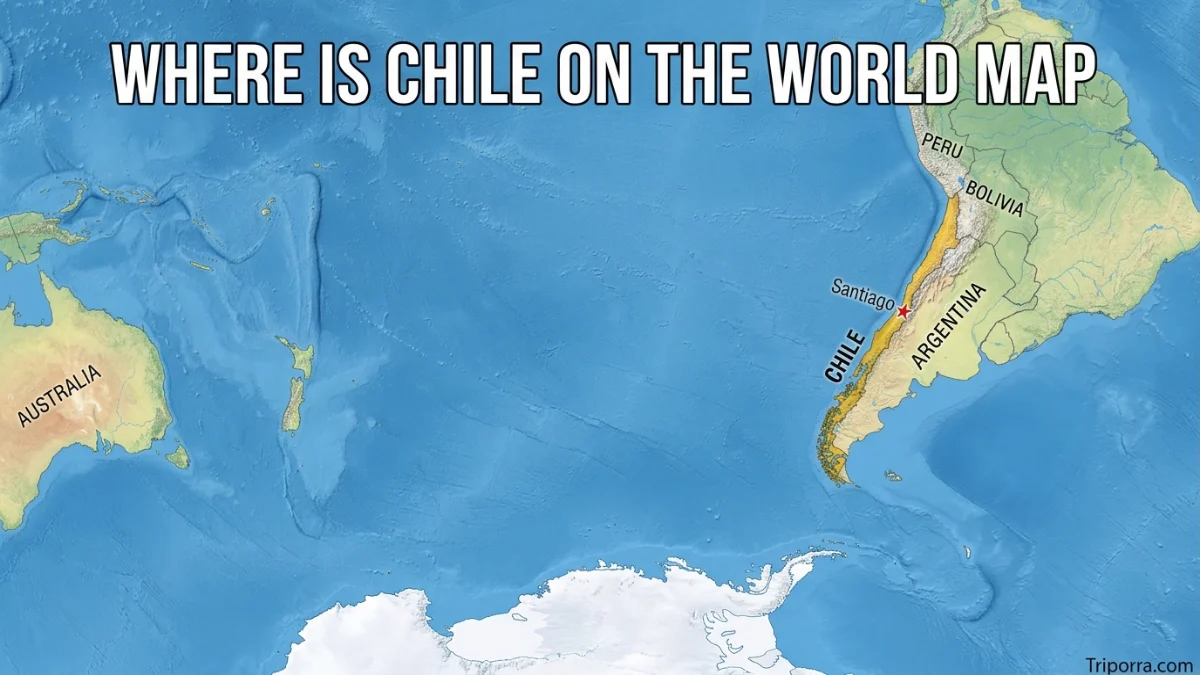
Where is Chile? Chile is a country on the west coast of South America. It borders Peru to the north, Bolivia to the northeast, and Argentina to the east. The Pacific Ocean lies along its western side. Chile is about 2,670 miles (4,300 km) long from north to south, making it one of the longest countries in the world.
Quick Facts
| Fact | Information |
|---|---|
| Official Name | Republic of Chile |
| Country | Chile |
| Continent | South America |
| Region | Southern South America |
| Population | Approximately 20 million people |
| Area | Approximately 756,102 sq km (291,933 sq mi) |
| Highest Point | Ojos del Salado – 6,893 metres (22,615 feet) |
| Coordinates | Approximately 35° S, 71° W |
| Time Zone | UTC−4 (mainland Chile) |
| Capital City | Santiago |
| Official Language | Spanish |
| Currency | Chilean Peso (CLP) |
| Government Type | Presidential Republic |
| Known For | Atacama Desert, Patagonia, Andes Mountains, Wine, Easter Island (Rapa Nui) |
| Major Landmarks | Torres del Paine, Valle de la Luna, Moai Statues of Easter Island |
| Neighboring Countries | Argentina, Bolivia, Peru |
Where Is Chile?
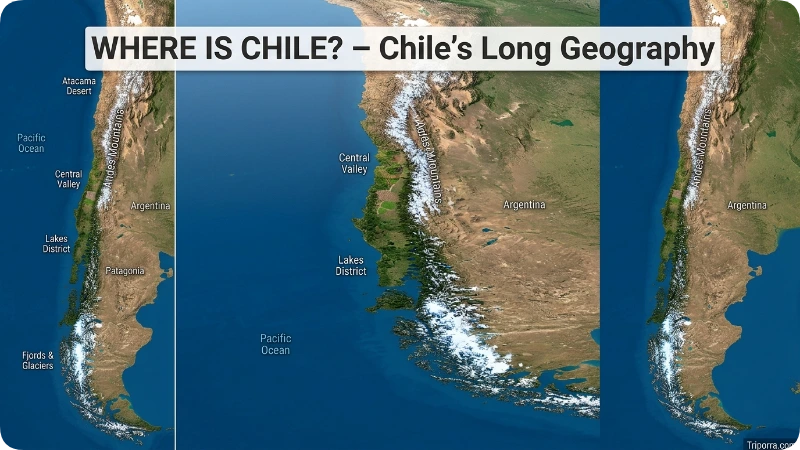
It is on the western side of South America. It lies between the Pacific Ocean and the Andes Mountains. Peru is to the north, Bolivia is to the northeast, and Argentina is to the east.
It has a very unusual shape. It is extremely long but very narrow. The country stretches for about 2,670 miles (4,300 km) from north to south. However, its average width is only about 110 miles (177 km).
The capital city is Santiago. It is located in central Chile and is the country’s largest city. Most international flights arrive here before travelers continue to other parts of the country.
Chile includes many different landscapes. In the north, you will find the Atacama Desert. Central Chile has valleys, farms, and vineyards. Southern Chile is famous for lakes, forests, glaciers, and Patagonia.
Why Is Chile So Long and Narrow?
It has one of the most unusual shapes of any country in the world. It stretches about 4,300 kilometers (2,670 miles) from north to south but has an average width of only about 177 kilometers (110 miles).
The country’s shape is influenced by two major geographic features: the Pacific Ocean to the west and the Andes Mountains to the east. These natural boundaries helped create Chile’s narrow coastal territory.
Because Chile covers such a large distance from north to south, the country has many different environments. Visitors can experience dry deserts, vineyards, forests, mountains, islands, and glaciers within one country.
Travellers often overlook how much the scenery changes across the country. A flight from northern Chile to southern Patagonia can feel like traveling between completely different countries.
Administrative Status
It is an independent country officially called the Republic of Chile. It has a democratic government and is divided into 16 regions. Each region has its own local administration.
What Country Does Chile Belong To?
It does not belong to another country. It is an independent nation officially known as the Republic of Chile.
Chile is located in South America and is part of the Latin American region. It has its own government, borders, currency, and national identity.
The country was once a Spanish colony but gained independence from Spain in 1818. Today, it is recognized as a sovereign country in the international community.
Santiago is the capital and the country’s political, financial, and cultural center.
Visitors from many countries can enter Chile without a visa for short stays, while others need one before traveling. Entry rules can change, so always check the latest requirements before your trip.
Most of mainland Chile uses the same time zone. Easter Island has a different time zone because it is located far out in the Pacific Ocean.
Chile on the Map
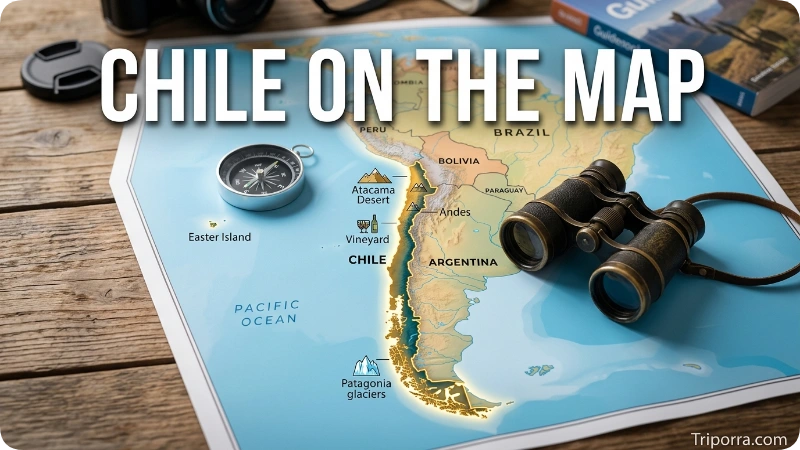
It is easy to find on a map of South America. It runs along the continent’s western edge beside the Pacific Ocean.
Peru borders Chile in the north. Bolivia touches its northeastern border, while Argentina stretches along almost the entire eastern side. The Andes Mountains separate Chile from Argentina for much of the border.
Chile faces the Pacific Ocean on the west. Across the ocean are countries such as Australia and New Zealand, but they are thousands of miles away.
Many people think Chile covers the entire west coast of South America. That is not true. Peru and Ecuador also have coastlines on the Pacific Ocean.
Where Is Chile Located in the World?
It is located in the southwestern part of South America along the Pacific Ocean. It is one of the southernmost countries in the world and stretches along the western edge of the continent.
On a world map, Chile appears as a long and narrow country between the Pacific Ocean and the Andes Mountains. Peru is located to the north, Bolivia lies to the northeast, and Argentina forms Chile’s long eastern border.
Chile’s location creates some of the most diverse landscapes on Earth, including the Atacama Desert in the north, fertile valleys in central Chile, and glaciers and fjords in Patagonia.
Why Is Chile Famous?
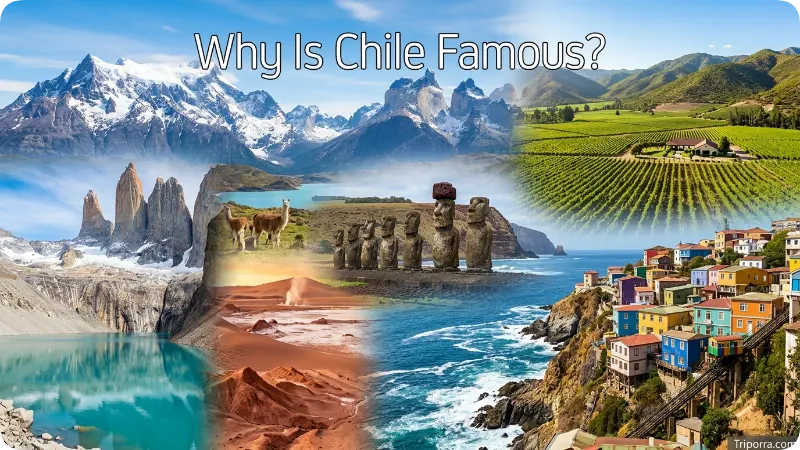
It is famous for its amazing natural landscapes. Few countries have such a wide variety of places to visit.
The Atacama Desert in northern Chile is one of the driest places on Earth. Some parts receive almost no rain. Clear skies also make it one of the best places in the world for stargazing.
The Andes Mountains run along the eastern side of the country. They offer hiking, skiing, mountain climbing, and beautiful views.
Southern Chile is home to Patagonia. This region has glaciers, lakes, forests, rivers, and snow-covered mountains. Torres del Paine National Park is one of the country’s most popular attractions.
Chile is also known for its vineyards. The central part of the country produces wines that are enjoyed around the world.
Another famous place is Easter Island. Although it is thousands of miles from mainland Chile, it is part of the country. The island is known for its giant stone Moai statues.
Fresh seafood is another reason people visit Chile. With such a long coastline, fish and shellfish are an important part of local food.
What most guides miss is that many visitors spend all their time in Patagonia and skip central Chile. The middle of the country has beautiful vineyards, beaches, colorful cities, and local markets that show everyday Chilean life.
Many people also think Patagonia belongs only to Chile. In fact, Patagonia is shared by both Chile and Argentina.
History
People lived in Chile thousands of years before Europeans arrived. Indigenous groups such as the Mapuche developed their own cultures and traditions.
Spanish explorers reached the area during the 1500s and established colonies. The Mapuche strongly resisted Spanish rule for many years.
Chile declared its independence from Spain in 1818. During the following years, mining, farming, and trade helped the country grow.
The country experienced political changes during the 20th century, including military rule from 1973 to 1990. Today, Chile is a democratic nation with a modern economy.
Its history is still reflected in its culture, traditions, food, and historic buildings.
Climate and Weather
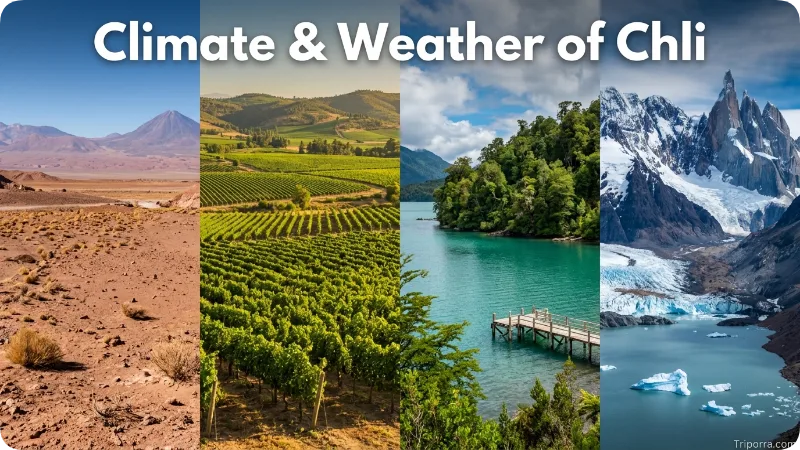
Chile has several climate zones because it stretches so far from north to south.
Northern Chile is hot and very dry. The Atacama Desert receives little or no rainfall in many places.
Central Chile has warm, dry summers and cool, rainy winters. This is where Santiago and many famous vineyards are located.
Southern Chile is cooler and wetter. Forests, lakes, and rivers are common in this part of the country.
Patagonia has cool temperatures, strong winds, and quickly changing weather. Even during summer, visitors should carry warm clothing.
A common mistake is thinking Chile has the same seasons as North America or Europe. Chile is in the Southern Hemisphere, so summer is from December to February, while winter is from June to August.
Things to See and Do
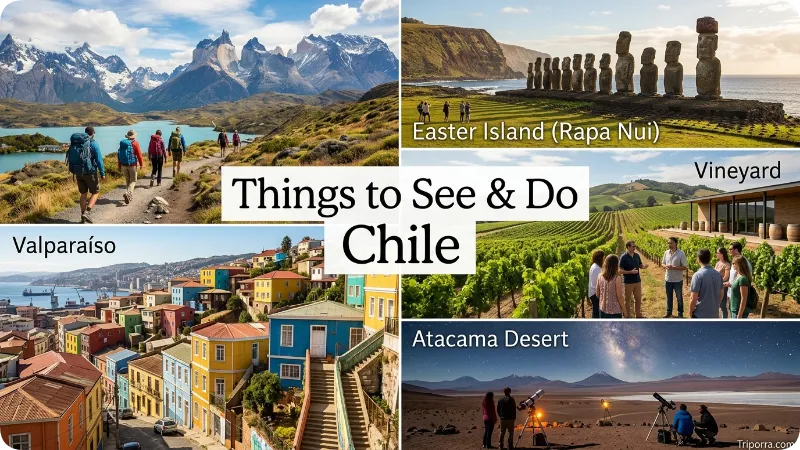
Chile offers a wide range of experiences because of its incredible geographic diversity. From one of the driest deserts on Earth to icy glaciers, ancient islands, and mountain landscapes, travelers can explore many different environments in one country.
Explore the Atacama Desert
Northern Chile is home to the Atacama Desert, one of the driest places on the planet. Visitors can explore salt flats, volcanic landscapes, geysers, and colorful valleys. The clear skies also make the Atacama one of the best destinations in the world for stargazing.
Visit Patagonia and Torres del Paine National Park
Southern Chile is famous for Patagonia, a region of dramatic mountains, glaciers, lakes, and forests. Torres del Paine National Park is one of Chile’s most popular destinations, offering hiking trails, wildlife viewing, and some of the country’s most impressive scenery.
Discover Easter Island and the Moai Statues
Easter Island (Rapa Nui) is one of Chile’s most unique destinations. Located far out in the Pacific Ocean, the island is famous for its giant Moai statues created by the Rapa Nui people. Visitors can learn about its history, culture, and archaeological sites.
Explore Santiago and Central Chile
Chile’s capital, Santiago, combines modern city life with views of the Andes Mountains. Travelers can visit museums, historic neighborhoods, markets, and restaurants. Nearby areas offer vineyards, coastal towns, and outdoor activities.
Taste Chilean Wine
Central Chile is known for its vineyards and wine regions. Areas such as the Maipo Valley, Colchagua Valley, and Casablanca Valley produce internationally recognized wines. Wine tours allow visitors to learn about local production and taste Chile’s famous varieties.
Experience Valparaíso’s Coastal Culture
Valparaíso is a colorful coastal city known for its hillside neighborhoods, street art, historic buildings, and port. Its unique architecture and ocean views make it one of Chile’s most interesting cities to explore.
Enjoy Outdoor Adventures
Chile is a great destination for outdoor activities. Visitors can hike in the Andes, ski near Santiago, kayak through Patagonia’s fjords, explore national parks, and enjoy beaches along the Pacific coastline.
Whether you prefer deserts, mountains, culture, food, or adventure, Chile offers experiences for every type of traveler.
Related Places
Argentina
Argentina shares Chile’s entire eastern border along the Andes Mountains. Many travelers combine both countries in one trip, especially when visiting Patagonia or crossing the Andes near Mendoza and Santiago.
Peru
Peru borders northern Chile and is home to attractions like Machu Picchu and Lake Titicaca. Flights and road connections make it a common addition to South American itineraries.
Bolivia
Bolivia meets Chile in the northeast. Many visitors travel between the Uyuni Salt Flats and Chile’s Atacama Desert, one of the continent’s most popular overland routes.
Easter Island (Rapa Nui)
Although it belongs to Chile, Easter Island lies approximately 2,300 miles (3,700 km) west of the mainland in the Pacific Ocean. It is famous for its giant Moai statues and unique Polynesian heritage.
Patagonia
Patagonia is a natural region shared by Chile and Argentina. Chile’s side features glaciers, fjords, and Torres del Paine National Park, while Argentina is known for places like El Calafate and Mount Fitz Roy.
What Is Chile’s Currency?
The official currency of Chile is the Chilean Peso (CLP). It is used for everyday purchases such as food, transportation, hotels, and shopping.
The Chilean Peso uses the symbol “$”, although prices in Chile are usually understood as pesos because several countries use the same symbol.
Credit and debit cards are widely accepted in major cities and tourist areas, but travelers may find local currency useful when visiting smaller towns or remote destinations.
What Else Do People Want to Know?
Many travelers ask whether Chile is safe to visit. Overall, it is considered one of the safer countries in South America for tourists, though visitors should still watch for pickpocketing in busy cities and follow local advice in remote areas.
Travel costs vary by region. Santiago and Patagonia are generally more expensive than many neighboring South American destinations, while smaller towns often provide better value.
Visa requirements depend on your nationality. Citizens of many countries can enter for short tourist stays without a visa, but checking official government guidance before traveling is always recommended.
Getting around Chile usually involves domestic flights because of the country’s length. Long-distance buses are comfortable and connect most cities, although journeys between regions can take many hours.
Spanish is the official language, but English is spoken in some hotels, airports, and major tourist attractions. Learning a few Spanish phrases can make everyday interactions easier and more enjoyable.
Local customs are friendly but polite. A simple greeting before asking for help and respecting meal times are appreciated throughout the country.
FAQs
Is Chile in the USA?
No. Chile is not part of the United States. Chile is an independent country located on the western side of South America, between the Pacific Ocean and the Andes Mountains.
Is Chile a rich or poor country?
Chile is considered one of the more developed and economically stable countries in South America. It has a higher income level compared with many countries in the region, although economic inequality remains a challenge.
Is Chile Spanish or Mexican?
Chile is neither Spanish nor Mexican. It is a separate country located in South America. Spanish is the main language spoken in Chile, but Chilean Spanish has its own accent, words, and expressions.
What language do people speak in Chile?
Spanish is the official language of Chile and is spoken by most of the population. Some Indigenous communities also speak languages such as Mapudungun, Aymara, and Rapa Nui.
What is the population of Chile?
Chile has a population of approximately 20 million people. Most residents live in central Chile, especially around Santiago, the country’s largest city.
What is Chile’s capital city?
The capital of Chile is Santiago. It is located in central Chile and serves as the country’s political, economic, and cultural center.
Is Chile in South America?
Yes. Chile is located on the western side of South America, between the Andes Mountains and the Pacific Ocean.
What countries border Chile?
Chile shares borders with Peru, Bolivia, and Argentina.
What ocean is next to Chile?
Chile borders the Pacific Ocean along its entire western coastline.
What is the capital of Chile?
Santiago is the capital and largest city of Chile. It is also the country’s main business and transportation center.
Is Chile close to Brazil?
No. Brazil does not share a border with Chile. Argentina and Bolivia lie between much of the two countries.
Why is Chile so long and narrow?
Chile’s shape developed through historical borders and the natural barrier created by the Andes Mountains and the Pacific Ocean.
Does Chile include Easter Island?
Yes. Easter Island is a special territory of Chile located far into the Pacific Ocean.
What language do people speak in Chile?
Spanish is the official language. Indigenous languages are also spoken in some communities.
What currency does Chile use?
Chile uses the Chilean Peso (CLP) for everyday purchases.
What is Chile most famous for?
Chile is known for the Atacama Desert, Patagonia, the Andes Mountains, world-class wine regions, Easter Island, and its exceptionally long Pacific coastline.
Closing
Chile is one of the most geographically unique countries on Earth, stretching along South America’s Pacific coast from the Atacama Desert to the icy landscapes of Patagonia. Its remarkable shape creates an incredible variety of climates, wildlife, and travel experiences within a single nation. Whether you’re planning a visit, studying geography, or simply exploring the world on a map, understanding where Chile is helps explain why it stands apart from nearly every other country. From towering mountains and vineyards to glaciers and remote islands, Chile offers far more diversity than many first-time visitors expect.

Silas Vance is a geography enthusiast, travel researcher, and location-focused content writer dedicated to helping readers better understand the world around them on triporra.com. He specializes in creating informative guides about cities, countries, islands, landmarks, universities, and other notable destinations. His work combines geographic accuracy, historical context, and practical insights to answer location-based questions in a simple and engaging way.