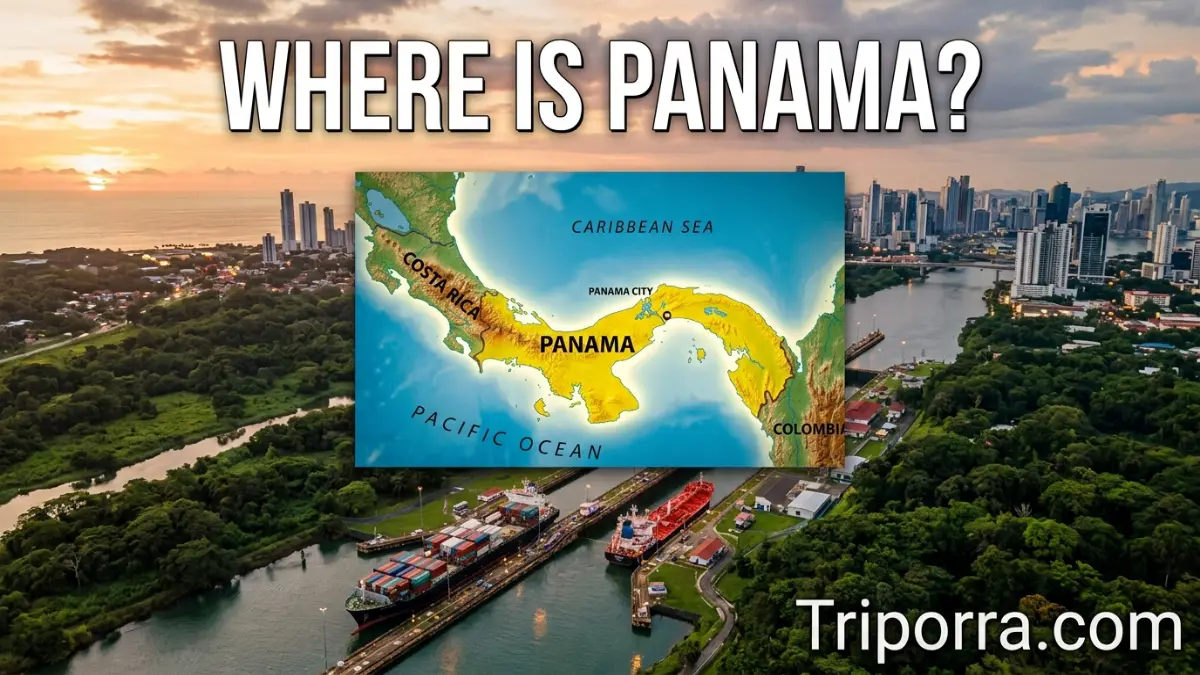
It is a country in Central America, located on the narrow land bridge that connects North America and South America. It borders Costa Rica to the west and Colombia to the southeast, with coastlines along both the Caribbean Sea and the Pacific Ocean.
The country is globally important because it is home to the Panama Canal, one of the world’s most significant shipping routes. It serves as a gateway between continents and oceans, making it a major center for trade, transportation, and tourism.
Featured Snippet Answer
Situated between Costa Rica and Colombia, it occupies a strategic position on the isthmus that links North and South America. With access to both the Pacific Ocean and the Caribbean Sea, the country plays a key role in global transportation thanks to the Panama Canal.
Where Is Panama Located?
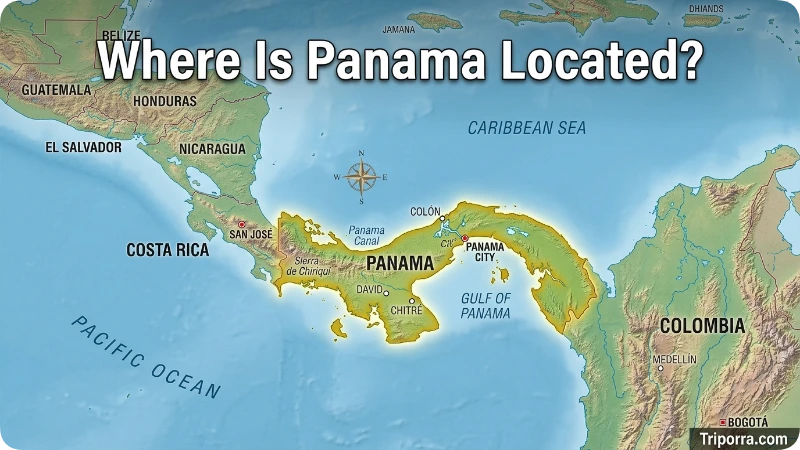
It occupies the southernmost part of Central America. It forms a natural bridge between two continents and serves as a crossroads for cultures, commerce, and biodiversity.
Geographically, it is located:
- Continent: North America (Central America region)
- Subregion: Central America
- Borders: Costa Rica and Colombia
- Northern Coast: Caribbean Sea
- Southern Coast: Pacific Ocean
- Hemisphere: Northern and Western Hemispheres
The country’s strategic location has influenced global shipping and international commerce for more than a century.
Quick Facts
| Fact | Details |
|---|---|
| Official Name | Republic of Panama |
| Country | Panama |
| Region | Central America |
| Capital City | Panama City |
| Population | Approximately 4.5 million |
| Time Zone | UTC−5 |
| Coordinates | Around 8.5° N, 80° W |
| Nearby Major Cities | Panama City, Colón, David |
| Known For | Panama Canal, biodiversity, banking sector, and beaches |
| Official Language | Spanish |
| Currency | Panamanian Balboa (PAB) and U.S. Dollar (USD) |
Panama on the Map
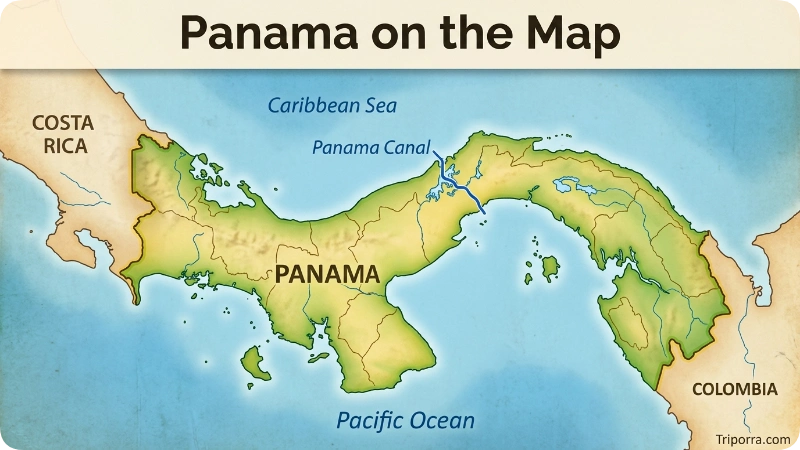
If you look at a map of the Americas, it appears as a narrow strip of land between Costa Rica and Colombia.
To visualize its position:
- Mexico lies far to the northwest.
- Costa Rica borders Panama on the west.
- Colombia sits on the southeastern side.
- The Caribbean Sea lies to the north.
- The Pacific Ocean stretches along the southern coast.
One of Panama’s most interesting geographic features is that, in some areas, the Pacific Ocean lies east of the Caribbean Sea due to the country’s curved shape. This surprises many visitors.
The Panama Canal cuts across the country, creating a shortcut for ships traveling between the Atlantic and Pacific Oceans.
Which Region Does It Belong To?
It belongs to the Central American region, which forms part of the North American continent.
Administratively, the country is divided into:
- 10 provinces
- Several indigenous regions known as comarcas
Major provinces include:
- Panamá
- Chiriquí
- Veraguas
- Colón
- Coclé
- Herrera
- Los Santos
Panama City, located in Panamá Province, serves as the national capital and largest urban center.
How Does Panama Compare to Nearby Places?
Compared with neighboring countries, Panama has a unique geographic and economic position.
How Panama Compares to Costa Rica
- Panama is slightly larger.
- Both countries attract eco-tourists.
- Panama has the famous canal and a major international banking sector.
Panama and Colombia: Key Differences
- Colombia is significantly larger in size and population.
- Panama acts as a transit hub connecting Central and South America.
How Panama Differs from Other Central American Countries
- Panama enjoys one of the region’s strongest economies.
- It has modern infrastructure and a major international airport.
- The country’s shipping and logistics sectors play a major role in its economy.
Travelers often find Panama easier to access internationally than some neighboring destinations because of its extensive flight connections.
How to Reach Panama
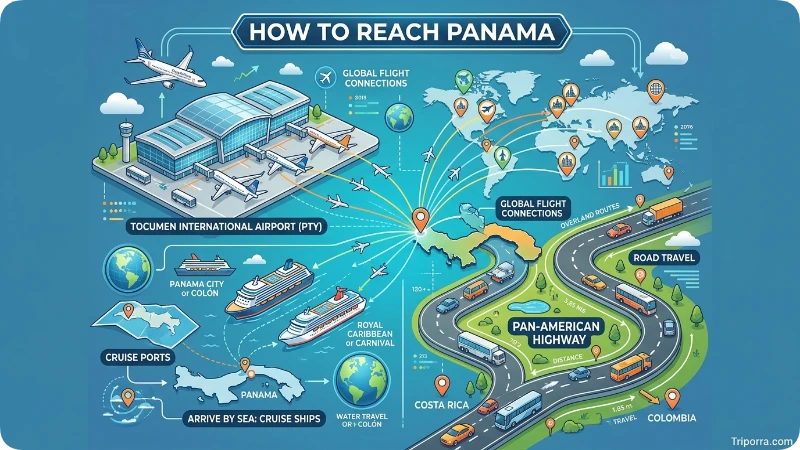
Getting to it is relatively simple due to its position as an international transportation hub.
By Air
The main gateway is:
Tocumen International Airport (PTY)
Located near Panama City, it is one of Latin America’s busiest airports and offers direct flights to:
- North America
- South America
- Europe
- The Caribbean
By Road
The Pan-American Highway connects it with Costa Rica and extends through much of the Americas.
By Sea
Cruise ships regularly visit:
- Colón
- Panama City
- Caribbean ports
Many travelers also arrive via private yachts exploring the Caribbean and Pacific coasts.
By Canal Transit
Some tourists experience Panama by traveling through the Panama Canal aboard cruise ships, which provides a unique perspective on the country’s engineering achievement.
Why Is Panama Famous?
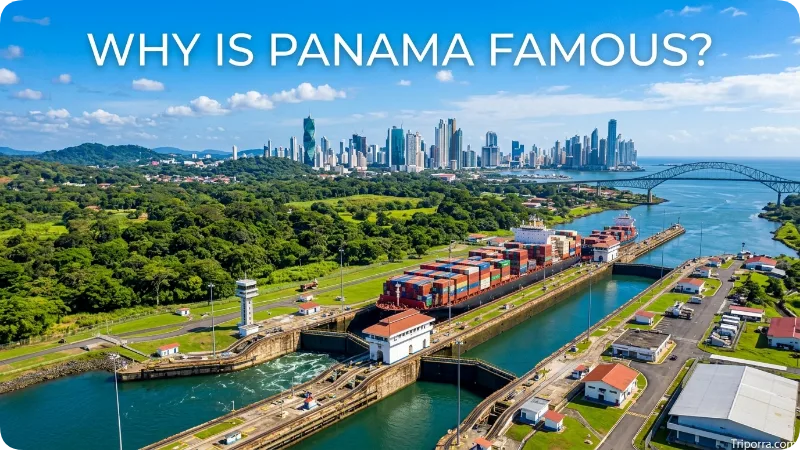
Several factors have made Panama internationally recognized.
The Panama Canal
The canal is the country’s most famous landmark. Completed in 1914, it transformed global shipping by eliminating the need for vessels to sail around South America.
Biodiversity
Panama hosts:
- Tropical rainforests
- Cloud forests
- Mangrove ecosystems
- Coral reefs
Scientists consider it one of the world’s biodiversity hotspots.
Panama City
The capital combines modern skyscrapers with historic colonial districts, creating a striking urban landscape.
Banking and Finance
Panama serves as a major financial center in Latin America.
Beaches and Islands
Popular destinations include:
- Bocas del Toro
- San Blas Islands
- Pearl Islands
These locations attract visitors seeking tropical scenery and water activities.
History of Panama
Human settlement in it dates back thousands of years before European arrival.
Indigenous Peoples
Various indigenous communities lived in the region long before colonization and continue to contribute to Panama’s cultural identity.
Spanish Colonization
Spanish explorers arrived in the early 16th century. Panama soon became an important route for transporting wealth between the Pacific and the Caribbean.
Independence
It was part of Spain’s colonial empire before joining Gran Colombia after independence from Spain.
Separation from Colombia
In 1903, Panama became an independent nation with support from the United States.
Canal Construction
Construction of the Panama Canal became one of the largest engineering projects of its era. The canal opened in 1914 and remains crucial to global trade.
Modern Panama
Today, it is a democratic republic with a service-oriented economy centered on logistics, finance, tourism, and international commerce.
Climate and Weather
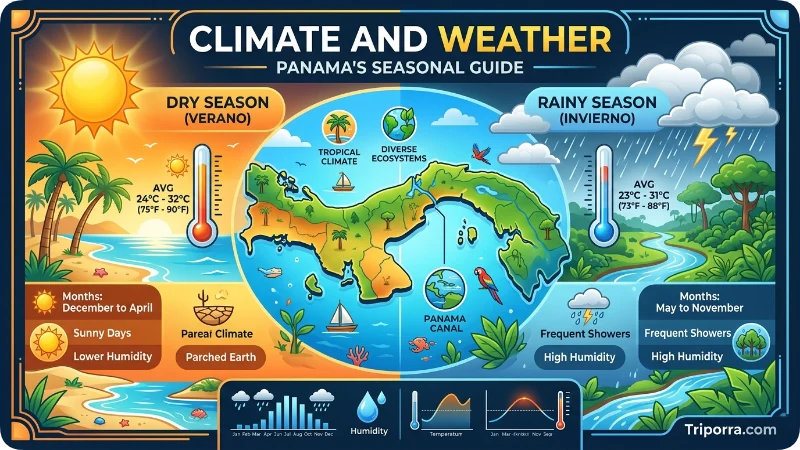
Panama experiences a tropical climate throughout the year.
Dry Season
Typically runs from:
December to April
Characteristics:
- Sunny weather
- Lower humidity
- Popular travel season
Rainy Season
Generally extends from:
May to November
Characteristics:
- Frequent afternoon showers
- Lush green landscapes
- Fewer tourists
Temperatures
Average temperatures commonly range from:
- 24°C to 32°C (75°F to 90°F)
Mountain regions are often cooler than coastal areas.
Things to See and Do Nearby
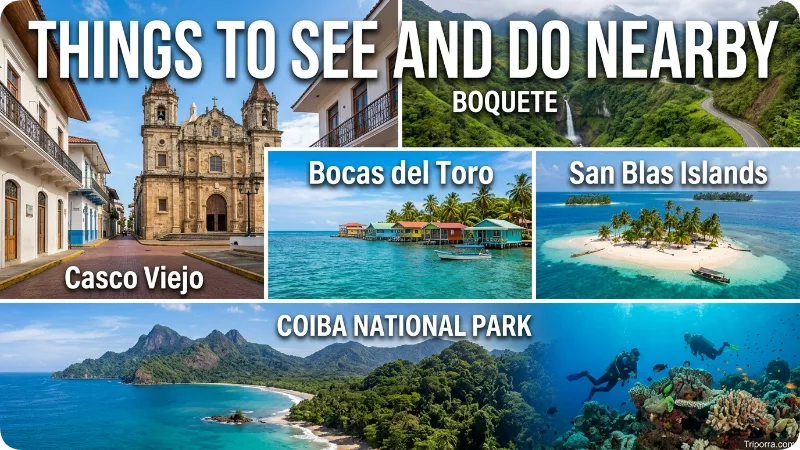
Visitors can enjoy a wide variety of attractions across Panama.
Panama Canal
Watching ships pass through the locks remains one of the country’s top experiences.
Casco Viejo
This historic district of Panama City features:
- Colonial architecture
- Museums
- Restaurants
- Churches
Bocas del Toro
Known for:
- Beaches
- Diving
- Island hopping
Boquete
A mountain town famous for:
- Coffee farms
- Hiking trails
- Cooler temperatures
San Blas Islands
An archipelago with white-sand beaches and crystal-clear waters.
Coiba National Park
A protected marine area popular for snorkeling, diving, and wildlife viewing.
Best Time to Visit Panama
The ideal time depends on travel preferences.
Peak Season
December to April
Best for:
- Beach vacations
- Outdoor activities
- Sightseeing
Shoulder Season
May and November
Advantages:
- Moderate visitor numbers
- Pleasant scenery
- Better hotel availability
Off-Season
June to October
Benefits:
- Lower prices
- Fewer crowds
- Vibrant green landscapes
Travelers interested in nature often enjoy visiting during the wetter months despite occasional rainfall.
Common Misconceptions
Several misunderstandings exist about it .
Panama Is Not in South America
Although it borders Colombia, Panama belongs to Central America.
The Panama Canal Is Not a Natural River
The canal is an engineered waterway built to connect two oceans.
Panama Uses More Than One Currency
The country uses the Panamanian Balboa and the U.S. Dollar in everyday transactions.
Panama Is More Than the Canal
While the canal receives global attention, the country also offers rich cultural experiences, rainforests, islands, and mountain destinations.
Places Related to Panama
People researching it often look for these connected destinations:
Costa Rica
Known for national parks, wildlife, and eco-tourism.
Colombia
Panama’s South American neighbor with diverse landscapes and cities.
Panama City
The country’s capital and largest metropolitan area.
Colón
A major Caribbean port city near the canal.
Bocas del Toro
One of Panama’s most visited island regions.
Boquete
A favorite destination for hiking and coffee tourism.
What Else Do People Want to Know?
Is it Safe for Tourists?
Many tourist areas are considered safe when travelers follow standard precautions and stay aware of their surroundings.
Is it Expensive?
Costs vary by location. Panama City can be relatively expensive, while rural areas are often more affordable.
Do People Speak English?
Spanish is the official language, but English is widely spoken in tourist and business districts.
Is It Good for Nature Lovers?
Yes. The country contains rainforests, mountains, beaches, islands, and abundant wildlife.
How Long Should You Stay?
Many travelers spend 7–14 days exploring the capital, canal, beaches, and mountain regions.
FAQs
Where is Panama located exactly?
It is located in Central America between Costa Rica and Colombia, with coastlines on the Caribbean Sea and Pacific Ocean.
Which continent is Panama in?
It is part of North America’s Central American region.
What country borders Panama?
Costa Rica borders Panama to the west, and Colombia borders it to the southeast.
Why is Panama important?
It is important because of the Panama Canal, one of the world’s most significant shipping routes.
What is the capital of Panama?
It is city is the capital and largest city.
Is It a good tourist destination?
Yes. Visitors enjoy beaches, islands, rainforests, mountains, and historic sites.
What language is spoken in Panama?
Spanish is the official language, although English is commonly used in many tourist areas.
How big is Panama?
Panama covers approximately 75,000 square kilometers, making it one of the smaller countries in the Americas.
Can you visit the Panama Canal?
Yes. Visitors can tour canal facilities and watch ships pass through the locks.
When is the best time to visit Panama?
The dry season from December to April is generally considered the best time for travel.
Does Panama use the U.S. Dollar?
Yes. The U.S. Dollar circulates alongside the Panamanian Balboa.
Is Panama in the Caribbean?
Partly. Panama has a Caribbean coastline, but the country itself is located in Central America.
Conclusion
It is a strategically located country in Central America, positioned between Costa Rica and Colombia and bordered by both the Caribbean Sea and the Pacific Ocean.
Its location has made it one of the most important transportation and trade centers in the world, thanks to the Panama Canal. Beyond the canal, it offers tropical islands, rainforests, mountain towns, diverse wildlife, and a vibrant culture.
Whether you’re researching geography, planning a trip, or learning about global trade routes, it is a country whose location has shaped both regional history and international commerce.

About Leo Sterling
Leo Sterling is a geography and travel writer at Triporra.com who believes understanding a place starts with knowing exactly where it is. He turns geographic details on countries, regions, islands, and cities into clear, engaging content for everyday readers.
For Leo, a good location article does more than mark a spot on a map. It shows what borders a place, which region it belongs to, and how it connects to the world around it—an approach reflected in guides like where is Anguilla, where solid research meets a simple, conversational style.
Whether readers are planning a trip, studying, or just curious, Leo’s goal is the same: deliver accurate, easy-to-understand information without unnecessary complexity.
Areas of Focus: Geography | Countries & Regions | Caribbean Islands | Travel Destinations | Location Research | “Where Is?” Content