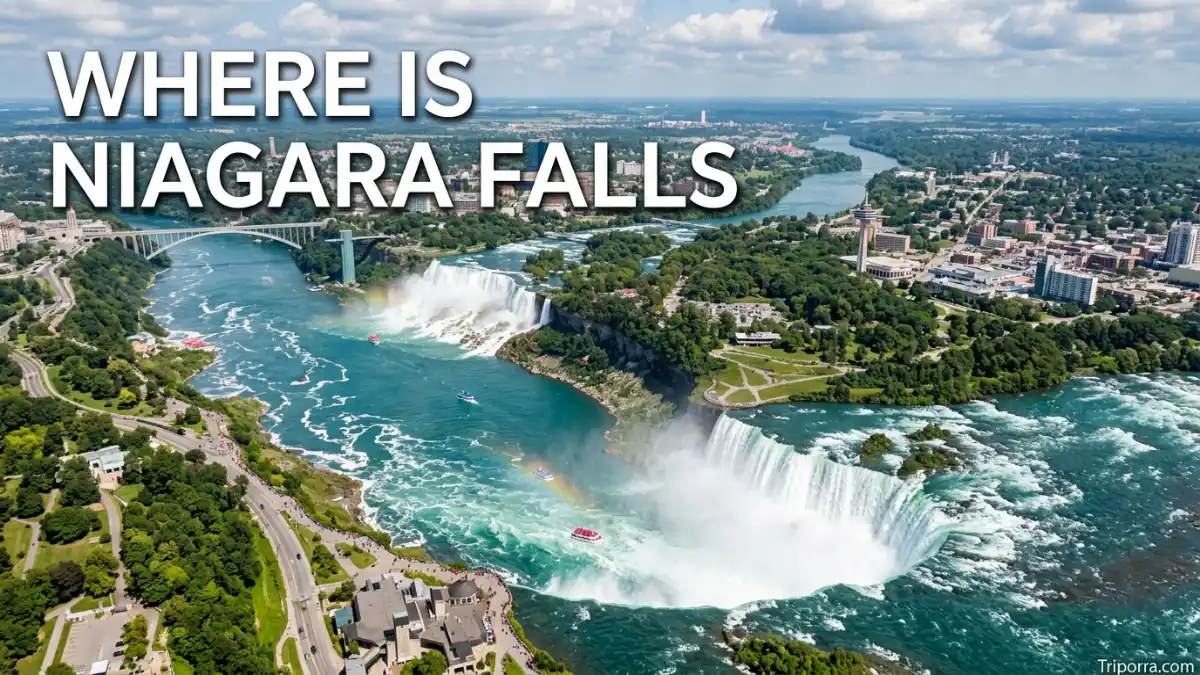
Niagara Falls is located on the border between the United States and Canada, connecting the state of New York and the province of Ontario. It sits on the Niagara River, which flows from Lake Erie to Lake Ontario. The falls are among the most famous natural attractions in the world, drawing millions of visitors each year because of their size, beauty, and powerful waterfalls.
Featured Snippet Answer
Niagara Falls is located on the Niagara River between Ontario, Canada, and New York, United States. It consists of three waterfalls—Horseshoe Falls, American Falls, and Bridal Veil Falls. The site is famous for its massive water flow, scenic views, hydroelectric power generation, and tourism attractions that attract visitors from around the world.
Where Is Niagara Falls Located?
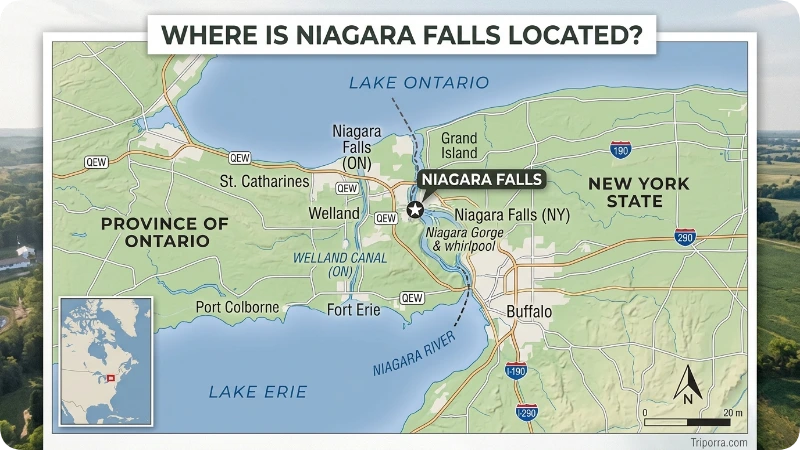
Niagara Falls lies in northeastern North America on the international border between Canada and the United States. The waterfalls are found on the Niagara River, which forms part of the border between Ontario province and New York state.
The falls are situated approximately:
- 27 km (17 miles) north of Buffalo, New York
- 130 km (81 miles) south of Toronto, Ontario
- Between Lake Erie and Lake Ontario
- Within the Great Lakes region of North America
Niagara Falls is not a single waterfall. Instead, it is a group of three waterfalls:
- Horseshoe Falls (mostly in Canada)
- American Falls (United States)
- Bridal Veil Falls (United States)
Together, these waterfalls create one of the most recognizable natural landmarks on Earth.
Quick Facts About Niagara Falls
| Fact | Details |
|---|---|
| Official Name | Niagara Falls |
| Countries | Canada and United States |
| Province/State | Ontario and New York |
| River | Niagara River |
| Continent | North America |
| Time Zone | Eastern Time Zone (ET) |
| Coordinates | Approximately 43.08° N, 79.07° W |
| Nearby Major Cities | Toronto, Buffalo, Hamilton, Rochester |
| Known For | Waterfalls, tourism, hydroelectric power |
| Primary Language | English |
| Currency | Canadian Dollar (Canada), U.S. Dollar (USA) |
Niagara Falls on the Map
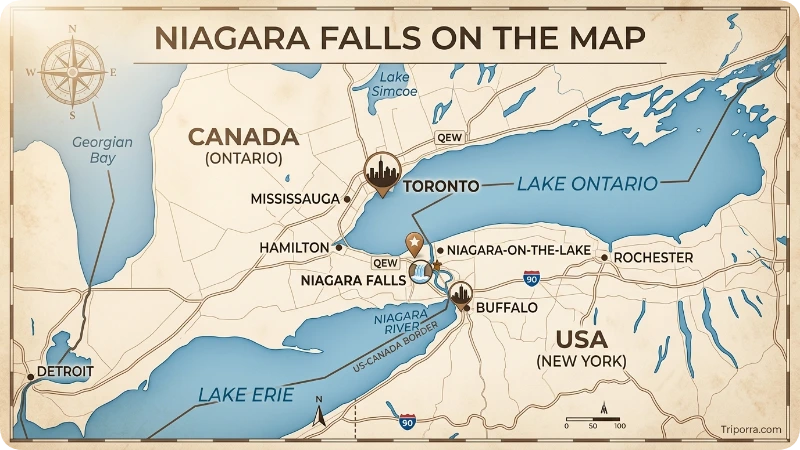
Picture the Great Lakes of North America. Lake Erie sits to the south, while Lake Ontario is farther north. The Niagara River carries water from Lake Erie toward Lake Ontario.
About halfway along that route, the river suddenly drops over steep cliffs. This drop creates Niagara Falls.
If you stand on the Canadian side in Ontario, the falls are directly across from New York State. Toronto is roughly a 90-minute drive away, while Buffalo can be reached in about 30 minutes by car.
The Canadian city of Niagara Falls and the American city of Niagara Falls face each other across the river, connected by several international bridges nearby.
Which Region Does Niagara Falls Belong To?
Niagara Falls belongs to the Great Lakes region of North America.
Administratively, the falls are divided between two countries:
Canadian Side
- Province: Ontario
- Municipality: City of Niagara Falls
- Regional Municipality: Niagara Region
American Side
- State: New York
- County: Niagara County
- City: Niagara Falls
Because the waterfalls sit on an international boundary, both countries manage and protect their respective sections while working together on environmental and tourism matters.
How Does Niagara Falls Compare to Nearby Places?
Niagara Falls is often compared with other famous waterfalls around the world.
Compared to Victoria Falls
Victoria Falls in Africa is wider and larger in some measurements, but Niagara Falls receives more visitors annually.
Compared to Iguazu Falls
Iguazu Falls between Argentina and Brazil consists of many waterfalls spread over a larger area, while Niagara Falls is more compact and easier to access.
Compared to Other Great Lakes Attractions
Niagara Falls is the most famous natural attraction in the Great Lakes region. It attracts significantly more tourists than most nearby lakeside parks and landmarks.
Accessibility
One reason for its popularity is convenience. Major highways, airports, hotels, and public transportation make it easy for visitors from both countries and international destinations.
How to Reach Niagara Falls

Traveling to Niagara Falls is straightforward thanks to its location near major cities and transportation networks.
By Air
Nearest airports include:
- Buffalo Niagara International Airport (USA)
- Toronto Pearson International Airport (Canada)
- Billy Bishop Toronto City Airport (Canada)
Toronto Pearson is the busiest airport serving international visitors.
By Car
Major highways connect the falls to surrounding regions:
Canada
- Queen Elizabeth Way (QEW)
United States
- Interstate 190
- Interstate 90
By Train
Rail services connect Niagara Falls with:
- Toronto
- New York State cities
- Some long-distance routes in the northeastern United States
By Bus
Several regional and international bus companies operate routes between Niagara Falls, Toronto, Buffalo, and other nearby destinations.
Border Crossing
Visitors can cross between Canada and the United States through bridges such as:
- Rainbow Bridge
- Whirlpool Rapids Bridge
- Lewiston-Queenston Bridge
Travelers need appropriate travel documents when crossing the international border.
Why Is Niagara Falls Famous?
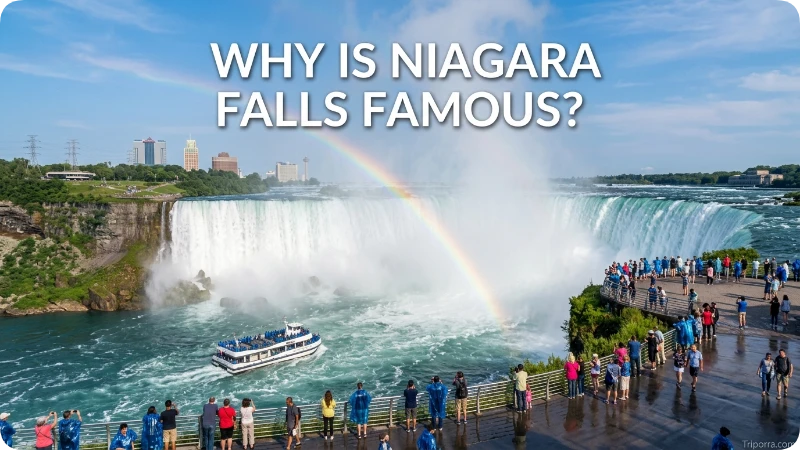
Several factors have made Niagara Falls one of the world’s most recognized destinations.
Spectacular Water Flow
Millions of gallons of water pass over the falls every minute, creating a powerful and unforgettable sight.
Natural Beauty
The combination of rushing water, mist, rainbows, and surrounding parks creates impressive scenery throughout the year.
Hydroelectric Power
The falls play a major role in renewable energy production. Hydroelectric stations on both sides of the border generate electricity for millions of people.
Tourism
Millions of visitors come annually to:
- View the waterfalls
- Take boat tours
- Visit observation decks
- Explore nearby parks
- Experience nighttime illumination shows
Cultural Importance
For generations, Niagara Falls has appeared in books, films, postcards, and travel campaigns, making it a global symbol of natural beauty.
History of Niagara Falls
The story of Niagara Falls stretches back thousands of years.
Geological Formation
The falls formed during the last Ice Age. As glaciers retreated, enormous volumes of water carved channels through the landscape.
Over time, erosion shaped the cliffs and waterfalls seen today.
Indigenous Peoples
Long before European explorers arrived, Indigenous peoples lived throughout the region and considered the area culturally and spiritually significant.
European Exploration
French explorers documented the falls during the 17th century. Reports of the waterfalls quickly spread throughout Europe.
Tourism Growth
During the 1800s, improved transportation made travel easier. Railways brought increasing numbers of visitors.
Modern Era
Today, Niagara Falls is a major tourism destination and a significant source of hydroelectric power shared by Canada and the United States.
Climate and Weather
Niagara Falls experiences a humid continental climate with four distinct seasons.
Spring (March–May)
- Mild temperatures
- Blooming flowers
- Increasing visitor numbers
Summer (June–August)
- Warm weather
- Peak tourism season
- Long daylight hours
Autumn (September–November)
- Cooler temperatures
- Colorful fall foliage
- Comfortable sightseeing conditions
Winter (December–February)
- Snow and ice
- Fewer crowds
- Dramatic frozen landscapes around the falls
Weather conditions can change quickly because of the large volume of water and nearby Great Lakes.
Best Things to Do in Niagara Falls

The Niagara region offers much more than the waterfalls themselves.
Horseshoe Falls
The largest and most powerful section of Niagara Falls.
American Falls
Located entirely within the United States and known for its rugged appearance.
Bridal Veil Falls
A smaller waterfall separated from American Falls by Luna Island.
Boat Tours
Boat excursions take visitors close to the base of the falls for a dramatic experience.
Observation Towers
Viewing platforms provide panoramic perspectives of the waterfalls and surrounding region.
Niagara Parks
Well-maintained parks offer walking trails, gardens, and scenic overlooks.
Niagara-on-the-Lake
This historic Ontario town is known for charming streets, wineries, and cultural attractions.
Cave of the Winds
Visitors can walk near the base of Bridal Veil Falls on specially constructed platforms.
Clifton Hill
A popular entertainment district featuring attractions, restaurants, and family activities.
Best Time to Visit
The ideal time depends on travel preferences.
Peak Season: June to August
Best for:
- Warm weather
- Full attraction availability
- Outdoor activities
Drawback:
- Larger crowds
Shoulder Season: April to May and September to October
Best for:
- Pleasant weather
- Moderate visitor numbers
- Good photography conditions
Off-Season: November to March
Best for:
- Lower accommodation prices
- Winter scenery
- Fewer crowds
Drawback:
- Some attractions may operate with reduced schedules.
Common Misconceptions
Niagara Falls Is Not a Single Waterfall
Many people think there is only one waterfall. In reality, there are three distinct waterfalls.
It Is Not Entirely in Canada
Although many famous views come from the Canadian side, Niagara Falls is shared by both Canada and the United States.
It Is Not the World’s Tallest Waterfall
Niagara Falls is famous for water volume and accessibility rather than height.
The Water Does Not Flow From Lake Ontario
The Niagara River flows from Lake Erie into Lake Ontario, not the other way around.
Places Related to Niagara Falls
Visitors researching Niagara Falls often search for nearby destinations and landmarks.
Toronto
Canada’s largest city and a common starting point for day trips.
Buffalo
A major city in western New York located close to the falls.
Lake Erie
The upstream Great Lake feeding the Niagara River.
Lake Ontario
The downstream Great Lake receiving water from the river.
Niagara-on-the-Lake
Known for wineries, historic sites, and scenic landscapes.
Niagara Escarpment
A geological formation stretching across parts of North America.
What Else Do People Want to Know?
Is Niagara Falls Safe?
Yes. The area is generally safe for tourists. Visitors should follow posted safety rules around viewing platforms and waterways.
Is It Expensive?
Costs vary. Budget-friendly accommodations and luxury hotels are both available.
Can You Visit in One Day?
Yes. Many travelers visit from Toronto or Buffalo as a day trip, although staying overnight allows more time to explore.
Is the Area Family Friendly?
Yes. The region offers parks, attractions, museums, and activities suitable for all ages.
Do You Need a Passport?
A passport or appropriate travel document is generally required when crossing between Canada and the United States.
FAQs
What are the best things to do in Niagara Falls?
Some of the best things to do in it include taking a boat tour, visiting Cave of the Winds, exploring Clifton Hill, and enjoying panoramic views from observation decks. The surrounding parks, gardens, and trails also make it a great destination for sightseeing.
Where is Niagara Falls in Canada?
It is located in the province of Ontario, Canada, along the border with the United States. The Canadian side is known for its panoramic views of Horseshoe Falls.
Where is Niagara Falls in the USA?
It is located in western New York State, along the border with Ontario, Canada. The American side includes American Falls, Bridal Veil Falls, and Niagara Falls State Park.
What state is Niagara Falls in?
Niagara Falls is in the state of New York in the United States. The city of Niagara Falls is part of Niagara County in western New York.
Niagara Falls is located in which country?
it is located in both Canada and the United States. It spans the international border between Ontario, Canada, and New York, USA.
Is Niagara Falls in Toronto?
No. it is not in Toronto. It is about 130 km (81 miles) south of Toronto in Ontario, Canada, and is approximately a 90-minute drive from the city.
Where is Niagara Falls from Buffalo?
It is about 27 km (17 miles) north of Buffalo, New York. The drive usually takes around 30 minutes, making it a popular day trip from Buffalo.
What is Where Is Niagara Falls? book about?
Where Is Niagara Falls? is a children’s nonfiction book that explains the history, geography, and formation of Niagara Falls. It introduces young readers to one of North America’s most famous natural landmarks in an easy-to-understand way.
Does Niagara Falls freeze?
The waterfalls rarely freeze completely, but ice formations can become extensive during winter.
How many visitors does Niagara Falls receive?
Millions of tourists visit every year, making it one of North America’s most visited natural attractions.
Which side offers better views?
Many travelers prefer the Canadian side for panoramic views, though both sides offer unique experiences.
Is Niagara Falls a natural wonder?
Yes. It is widely regarded as one of the world’s most famous natural wonders.
Is Niagara Falls in Toronto?
No. Niagara Falls is not in Toronto. It is located about 130 km (81 miles) south of Toronto in Ontario, Canada, and is approximately a 90-minute drive from the city.
Conclusion
Niagara Falls is located on the international border between Ontario, Canada, and New York, United States. Formed by the Niagara River as it flows from Lake Erie to Lake Ontario, the falls consist of Horseshoe Falls, American Falls, and Bridal Veil Falls. Its powerful water flow, breathtaking scenery, historical importance, and easy accessibility have made it one of the world’s leading tourist destinations. Whether you visit from Toronto, Buffalo, or farther away, Niagara Falls offers an unforgettable experience that combines natural beauty, engineering achievement, and international significance.

About Leo Sterling
Leo Sterling is a geography and travel writer at Triporra.com who believes understanding a place starts with knowing exactly where it is. He turns geographic details on countries, regions, islands, and cities into clear, engaging content for everyday readers.
For Leo, a good location article does more than mark a spot on a map. It shows what borders a place, which region it belongs to, and how it connects to the world around it—an approach reflected in guides like where is Anguilla, where solid research meets a simple, conversational style.
Whether readers are planning a trip, studying, or just curious, Leo’s goal is the same: deliver accurate, easy-to-understand information without unnecessary complexity.
Areas of Focus: Geography | Countries & Regions | Caribbean Islands | Travel Destinations | Location Research | “Where Is?” Content