It is a region in central Italy, located along the western side of the Italian Peninsula. Its regional capital is Florence. It borders Liguria, Emilia-Romagna, Marche, Umbria, and Lazio, while the Tyrrhenian Sea lies along its western coast. The region also includes several islands, including Elba.
Where Is Tuscany Located?
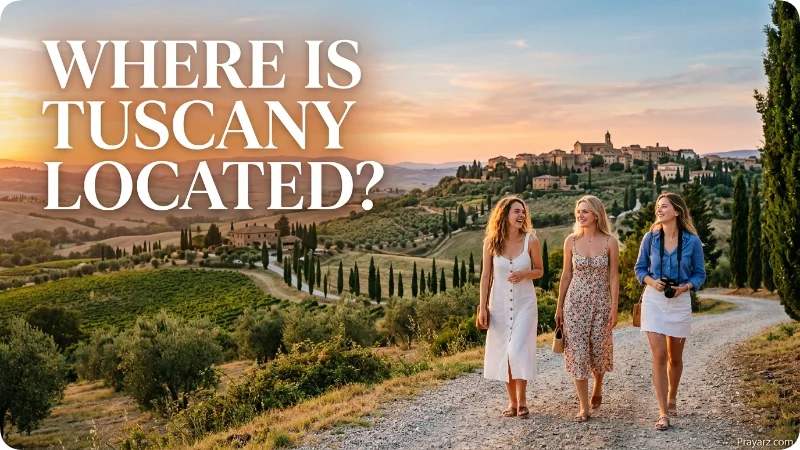
It is in central Italy, between northern and southern parts of the Italian Peninsula. It stretches from the Apennine Mountains in the north and east toward the Tyrrhenian coast in the west.
On a map of Italy, Tuscany sits roughly halfway down the peninsula. Florence is its capital and one of the main geographic reference points for understanding the region. Other major cities include Pisa, Livorno, Lucca, Siena, Arezzo, Pistoia, Prato, and Grosseto.
It covers about 22,994 square kilometers, making it one of Italy’s larger regions by area. The region contains 10 provincial-level areas, including the Metropolitan City of Florence and the provinces of Arezzo, Grosseto, Livorno, Lucca, Massa-Carrara, Pisa, Pistoia, Prato, and Siena.
Its location gives it both an inland and coastal character. Much of the region consists of hills and mountains, while its western side reaches the sea.
Quick Facts About Tuscany
Tuscany Quick Facts
| Fact | Information |
|---|---|
| Location | Central Italy |
| Country | Italy |
| Continent | Europe |
| Regional Capital | Florence |
| Region Type | Administrative region of Italy |
| Approximate Coordinates | 43.4° N, 11.0° E |
| Area | About 22,994 sq km |
| Western Coast | Tyrrhenian Sea |
| Northern Neighbors | Liguria and Emilia-Romagna |
| Eastern Neighbors | Marche and Umbria |
| Southern Neighbor | Lazio |
| Major Cities | Florence, Pisa, Livorno, Lucca, Siena, Arezzo |
| Time Zone | Central European Time (CET) / Central European Summer Time (CEST) |
The coordinates are approximate because Tuscany covers a large area rather than a single geographic point. A useful reference point is around 43.4° N, 11.0° E.
What Country Is Tuscany In?
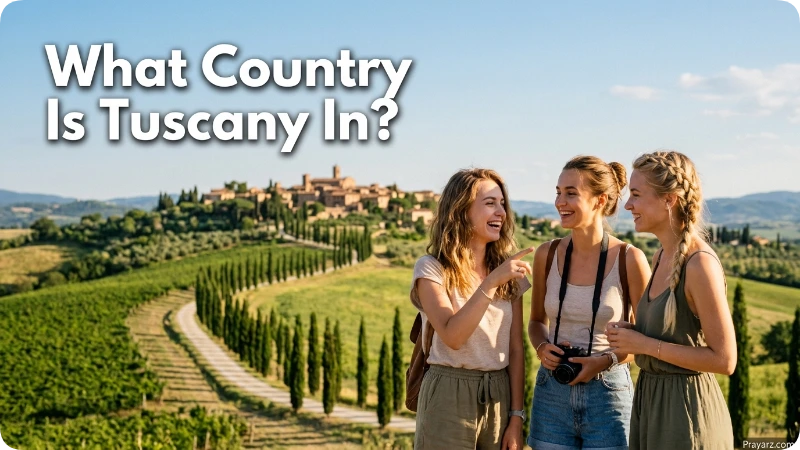
It is in Italy.
It is one of Italy’s 20 administrative regions and is officially known as Toscana in Italian. The regional government identifies Florence as the capital of Tuscany.
It is therefore not a city, state, or separate country. It is a region of Italy, similar in administrative level to other Italian regions such as Lazio, Umbria, Liguria, and Emilia-Romagna.
This distinction is useful because people sometimes search for it as though it were a single city. In reality, the name covers a broad area containing many cities, towns, rural areas, mountains, valleys, and coastal communities.
What Region Is Tuscany In?
It is itself a region of central Italy.
Unlike a city that belongs to a county or province, it is a first-level administrative region within Italy. It contains several provinces and the Metropolitan City of Florence.
Its central location places it between several important parts of Italy:
- Liguria is to the northwest.
- Emilia-Romagna lies to the north and northeast.
- Marche is to the east.
- Umbria is to the east and southeast.
- Lazio is to the southeast and south.
These neighboring regions help place it on a mental map of Italy. Florence sits in the northern-central part of it , while Siena is farther south. Pisa and Livorno are toward the western side, close to the coast. Arezzo lies toward the eastern side of the region.
Which Part of Italy Is Tuscany In?
It is in the central part of Italy, on the western side of the peninsula.
A simple way to picture its location is to start with Florence. From Florence, the region spreads west toward Pisa and the Tyrrhenian coast. It extends south toward Siena and Grosseto and east toward Arezzo. Farther north are cities such as Prato, Pistoia, Lucca, and Massa.
The region has a roughly triangular shape and covers a large section of the western side of central Italy. Its landscape includes the northern Apennines, inland hills, valleys, and a long coastal area.
What Is Tuscany Near?
It is close to several major Italian regions and cities.
Florence provides the best-known central reference point. Pisa and Lucca are west and northwest of Florence, while Siena is south of Florence. Arezzo is southeast of Florence. Livorno lies southwest of Florence near the coast.
Beyond Tuscany’s borders, Bologna is northeast, Perugia is southeast, Rome is farther south, and La Spezia is northwest.
These relationships make it easier to understand than simply looking at its position on an outline map. It is a central Italian region between the northern Apennines and the Tyrrhenian coast.
What Are the Borders of Tuscany?
It has land borders with five Italian regions.
Tuscany’s Northern and Northwestern Borders
Liguria borders it on the northwest. The boundary is relatively short compared with Tuscany’s other regional borders.
Emilia-Romagna borders Tuscany along the north and northeast. The Apennine mountain system forms an important part of the geographic setting in this direction.
Tuscany’s Eastern Borders
Marche touches it on the eastern side for a relatively short stretch.
Umbria borders it farther south and east. This makes Umbria one of the most important neighboring regions when looking at central Italy.
Tuscany’s Southern Border
Lazio lies south and southeast of it . Rome, the capital of Italy, is located in Lazio.
Together, these borders place Tuscany between northern-central Italy and the area surrounding Rome.
Does Tuscany Have a Coast?
Yes. It has a western coastline along the Tyrrhenian Sea.
The coast runs along the western side of the region, creating a strong geographic contrast between Tuscany’s inland hills and its coastal areas. Official regional information places Tuscany’s coast at about 633 kilometers when its islands are included.
Important coastal areas include parts of the provinces of Massa-Carrara, Lucca, Pisa, Livorno, and Grosseto.
The coastline also connects it with the wider Tyrrhenian Sea, which lies between the Italian mainland and several Mediterranean islands.
What Islands Are Part of Tuscany?
It includes the Tuscan Archipelago, a group of islands located off the western coast.
The main islands include:
- Elba
- Giglio
- Capraia
- Montecristo
- Pianosa
- Giannutri
- Gorgona
Elba is the largest island in the Tuscan Archipelago. The islands form an arc between the lower Ligurian Sea and the upper Tyrrhenian Sea.
This is an important part of Tuscany’s geographic identity because the region is not limited to mainland Italy.
What Cities Are Near Tuscany?
Because it is a large region, many cities are either inside it or close to its borders.
Major Cities Within Tuscany
Florence: The regional capital and a major city in northern-central it .
Pisa: Located in western it near the coast and the Arno River.
Livorno: A major coastal city southwest of Pisa.
Lucca: Located northwest of Florence and northeast of Pisa.
Siena: Located south of Florence in central it .
Arezzo: Located in eastern Tuscany, closer to the border with Umbria.
Grosseto: Located in southern it near the Tyrrhenian coast.
Prato: Located just northwest of Florence.
These cities show how broad Tuscany is. It is better to think of Tuscany as a large geographic region rather than as a place centered around one city.
How Far Is Tuscany From Rome?
It is north of Rome, and the two are relatively close compared with many other major Italian regions.
The exact distance depends on which part of Tuscany you use as the starting point. For example, travel from Florence, the regional capital, to Rome is about 143 miles in a straight line, while road travel is longer.
A broader it -to-Rome comparison gives a distance of roughly 162 miles between reference points, with the road distance varying by the exact locations used.
The key geographic relationship is simple: Rome is south of Tuscany, while Florence is north of Rome.
How Far Is Tuscany From Bologna?
Bologna is northeast of it , across the Apennines in Emilia-Romagna.
Using Florence as the main Tuscany reference point, Bologna is relatively close. Travel distances vary depending on the route and the exact starting point in Tuscany. A broader Tuscany-to-Bologna comparison is about 160–170 miles by road.
The Apennine Mountains between the two areas are an important part of the geographic relationship.
Where Is Tuscany on a Map?
On a map of Europe, find Italy in southern Europe. Then locate the Italian Peninsula extending south into the Mediterranean.
It is on the western side of central Italy.
For an easy mental map:
- North: Emilia-Romagna and Liguria
- Northeast: Emilia-Romagna
- East: Marche and Umbria
- South: Lazio
- West: Tyrrhenian Sea
- Northwest: Liguria
Florence is near the northern-central part of Tuscany. Pisa and Livorno are farther west, Siena is south of Florence, and Arezzo is farther east.
This layout explains why it can feel geographically diverse. The region reaches from the Apennines to the sea and includes both inland and island territory.
What Is Tuscany Known for Geographically?
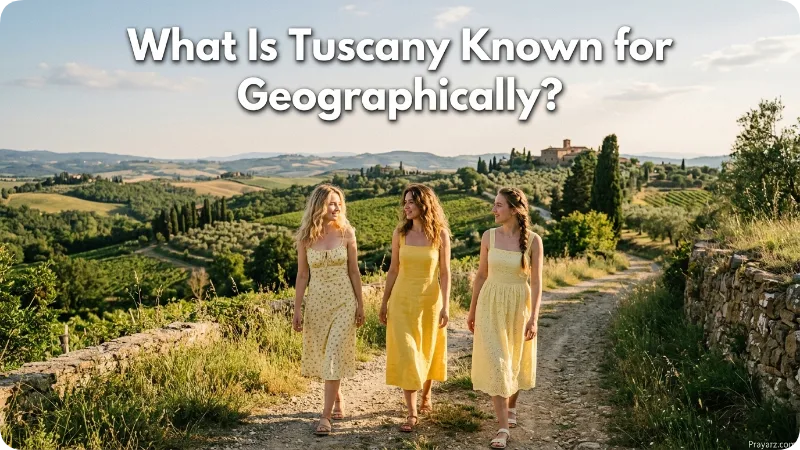
From a geographic point of view, it is known for its combination of mountains, hills, valleys, plains, coastline, and islands.
The region is not dominated by flat land. Official regional information describes roughly 67% of its territory as hills and about 25% as mountains, with only a smaller share classified as flat.
The Apennines shape much of northern and eastern it . Farther west, the land opens toward the Tyrrhenian coast.
The Arno River is another important geographic feature. It runs through Florence and continues west toward Pisa before reaching the sea.
This combination of inland terrain and coastal geography helps explain the position of many Tuscan cities.
How Do You Get to Tuscany?
Because it is a region rather than one city, there is no single entrance or transportation point.
For most visitors arriving from outside Italy, Florence and Pisa are useful geographic gateways. Florence is the regional capital, while Pisa is an important city in western it .
Road connections also link it with other parts of Italy. The A1 motorway runs north-south through the Italian Peninsula, while the A12 follows the Tyrrhenian side toward the Tuscan coast.
Rail connections are also important. Italy’s national rail network operates throughout Tuscany, connecting major cities and towns with other parts of the country.
For a location question, the main point is that access depends on which part of Tuscany you want to reach.
Is Tuscany a City or a Country?
No. It is neither a city nor a country.
It is a region of Italy.
Florence is the capital of it , but Florence and Tuscany are not the same geographic entity. Florence is a city within the region, while Tuscany covers a much larger area that includes cities such as Pisa, Siena, Lucca, Arezzo, and Grosseto.
This distinction is important when reading maps or planning routes because a destination listed as “Tuscany” could refer to many different locations within the region.
What Is the Capital of Tuscany?
The capital of Tuscany is Florence, known in Italian as Firenze.
The regional government identifies Florence as the capital and seat of the regional government.
Florence sits in the northern-central part of it along the Arno River. Its location makes it a useful reference point for understanding the region’s geography.
From Florence, the Tuscan landscape extends west toward Pisa and the coast, south toward Siena, and east toward Arezzo.
Is Tuscany in Northern or Southern Italy?
It is in Central Italy.
It is not usually classified as part of northern or southern Italy. Its position between the northern Italian regions and Lazio gives it a central geographic role.
The region also forms a transition between the northern Apennines and the central Italian landscape around Lazio and Umbria.
Is Tuscany Near the Mediterranean Sea?
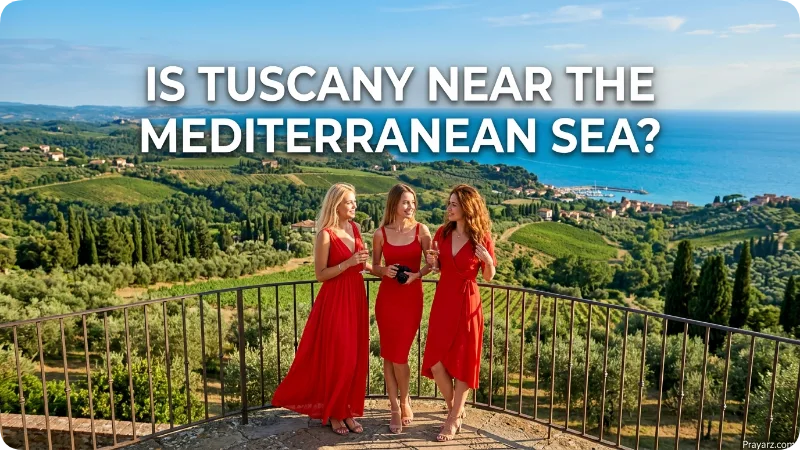
Yes. Tuscany is directly connected to the Mediterranean Sea through the Tyrrhenian Sea.
The Tyrrhenian Sea borders the western side of Tuscany. Several Tuscan islands also sit offshore in the surrounding waters.
This coastal position places Tuscany on the western side of the Italian Peninsula and gives the region a direct maritime connection to the central Mediterranean.
Frequently Asked Questions About Tuscany
Where is Tuscany located?
It is located in central Italy, on the western side of the Italian Peninsula. It borders Liguria, Emilia-Romagna, Marche, Umbria, and Lazio and reaches the Tyrrhenian Sea.
What country is Tuscany in?
It is in Italy. It is one of Italy’s 20 administrative regions.
What city is the capital of Tuscany?
Florence is the capital of Tuscany. It is located in the northern-central part of the region.
Is Tuscany in northern or southern Italy?
It is in Central Italy. It sits south of several northern Italian regions and north of Lazio.
What sea is Tuscany on?
Tuscany’s western coastline faces the Tyrrhenian Sea, part of the Mediterranean Sea system.
What regions border Tuscany?
It borders Liguria, Emilia-Romagna, Marche, Umbria, and Lazio.
Is Florence part of Tuscany?
Yes. Florence is a city within it and serves as the regional capital.
Is Pisa in Tuscany?
Yes. Pisa is in Tuscany, in the western part of the region near the Tyrrhenian coast.
Is Siena in Tuscany?
Yes. Siena is a city in it , located south of Florence in the central part of the region.
Is Tuscany close to Rome?
Yes. Tuscany is north of Rome, and Florence is about 143 miles from Rome in a straight line. Actual road distance varies by route.
Does Tuscany include islands?
Yes. The Tuscan Archipelago includes Elba, Giglio, Capraia, Montecristo, Pianosa, Giannutri, and Gorgona.
What continent is Tuscany in?
Tuscany is in Europe, as part of Italy.
Conclusion
It is a region of central Italy on the western side of the Italian Peninsula. Florence is its capital, while cities such as Pisa, Siena, Lucca, Livorno, Arezzo, and Grosseto lie within the region.
The clearest way to picture it is as a large central Italian region stretching from the Apennines toward the Tyrrhenian Sea. It borders five Italian regions and also includes islands such as Elba.
So, if you are asking where is Tuscany, the short answer is: Tuscany is in central Italy, west of the Apennines, north of Lazio, and along the Tyrrhenian coast.

Silas Vance is a geography enthusiast, travel researcher, and location-focused content writer dedicated to helping readers better understand the world around them on triporra.com. He specializes in creating informative guides about cities, countries, islands, landmarks, universities, and other notable destinations. His work combines geographic accuracy, historical context, and practical insights to answer location-based questions in a simple and engaging way.