It is a major coastal city in Morocco, located in the northwestern part of Africa along the Atlantic Ocean. It is the country’s largest city and an important center for business, trade, culture, and modern Moroccan life. Many travellers know it from the famous movie Casablanca, but the real city has a different identity shaped by its ports, architecture, and everyday local culture.
Featured Snippet
It is located on Morocco’s Atlantic coast in the northwestern region of the country. It is the largest city in Morocco and serves as the country’s main economic hub. The city sits west of the Atlas Mountains and faces the Atlantic Ocean, making it an important port city between Europe and Africa.
Quick Facts About Casablanca
| Fact | Details |
| Official Name | Casablanca (Arabic: الدار البيضاء, Ad-Dar Al-Bayda) |
| Country | Morocco |
| Region | Casablanca-Settat |
| City Type | Coastal metropolitan city |
| Population | Approximately 4 million people in the greater urban area |
| Area | Approximately 220 sq km (city area) |
| Elevation | Approximately 0–50 meters above sea level |
| Coordinates | Approximately 33.57° N, 7.59° W |
| Time Zone | Western European Time (UTC+0, with seasonal changes) |
| Nearest Major City | Rabat, approximately 90 km northeast |
| Known For | Hassan II Mosque, Atlantic coastline, business center, port |
| Language | Arabic and Amazigh are official; French is widely used |
| Currency | Moroccan dirham (MAD) |
Where Is Casablanca Located?
It is in Morocco, a country in the northwest corner of Africa. The city lies on the Atlantic coast, about 90 kilometers southwest of Morocco’s capital, Rabat. It is part of the Casablanca-Settat region, which is one of the country’s most important economic areas.
Geographically, the city sits between the Atlantic Ocean and the inland plains of western Morocco. Its coastal location helped it grow into a major trading center. The Port of Casablanca connects Morocco with markets in Europe, Africa, and other parts of the world.
Travellers often overlook that Casablanca is not Morocco’s historic capital or its main tourist city. Rabat is the capital, while cities such as Marrakech and Fez usually receive more attention for traditional attractions. Casablanca’s importance comes from its modern role as Morocco’s commercial heart.
Casablanca’s Location in Africa and the World
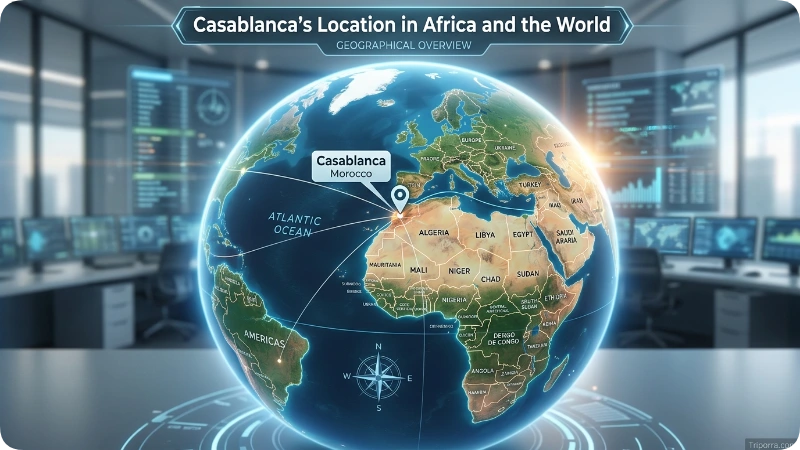
It is located in Morocco, a country in northwestern Africa. The city sits on the Atlantic Ocean coastline, making it one of the most important coastal cities in Africa.
On a world map, Casablanca appears in the northwest corner of the African continent. It is west of Morocco’s inland regions and faces the Atlantic Ocean, which connects Morocco with Europe, West Africa, and other international destinations.
Although Morocco is part of Africa, it is geographically close to Europe. Spain lies north of Morocco across the Strait of Gibraltar, but Casablanca itself is located farther south along Morocco’s Atlantic coast.
The city is also easy to reach from other major Moroccan destinations. It is connected by trains, highways, and flights, making it a common arrival point for international visitors.
Administrative Status of Casablanca
It is the capital of the Casablanca-Settat administrative region in Morocco. It is governed as a major urban municipality and is divided into several districts that manage local services.
As Morocco’s largest city, Casablanca plays a central role in the country’s economy. Many national companies, banks, and international businesses have offices here. The city’s modern infrastructure reflects its importance as a financial and commercial center.
For visitors, it follows Morocco’s national laws, visa rules, and time zone system. Most travellers enter through Mohammed V International Airport, the country’s busiest airport, which connects the city with Europe, Africa, and the Middle East.
What most guides miss is that Casablanca is not designed mainly as a traditional sightseeing city. It is better understood as a place where modern Morocco, business life, and coastal traditions meet.
Where Is Casablanca on the Map?
It is located on Morocco’s western coastline, facing the Atlantic Ocean. The ocean lies directly west of the city, while inland plains extend toward the east and southeast.
From Rabat, the Moroccan capital, it is located approximately 90 kilometers to the southwest. From Marrakech, another famous Moroccan city, it is about 240 kilometers northwest by road.
Morocco shares borders with Algeria to the east and southeast, while the Atlantic Ocean borders the country to the west. Spain is located north of Morocco across the Strait of Gibraltar.
A common geography mistake is thinking Casablanca is near the desert because Morocco is often associated with the Sahara. The Sahara region is much farther south and east. Casablanca has a coastal Mediterranean-influenced climate rather than a desert climate.
Why Is Casablanca Famous?
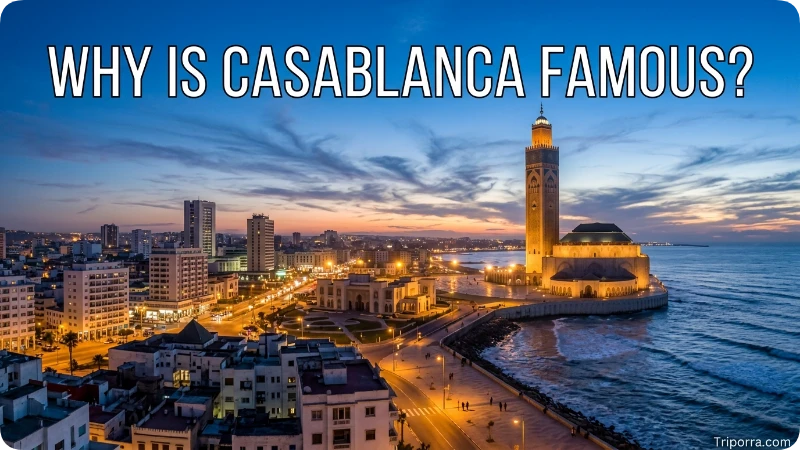
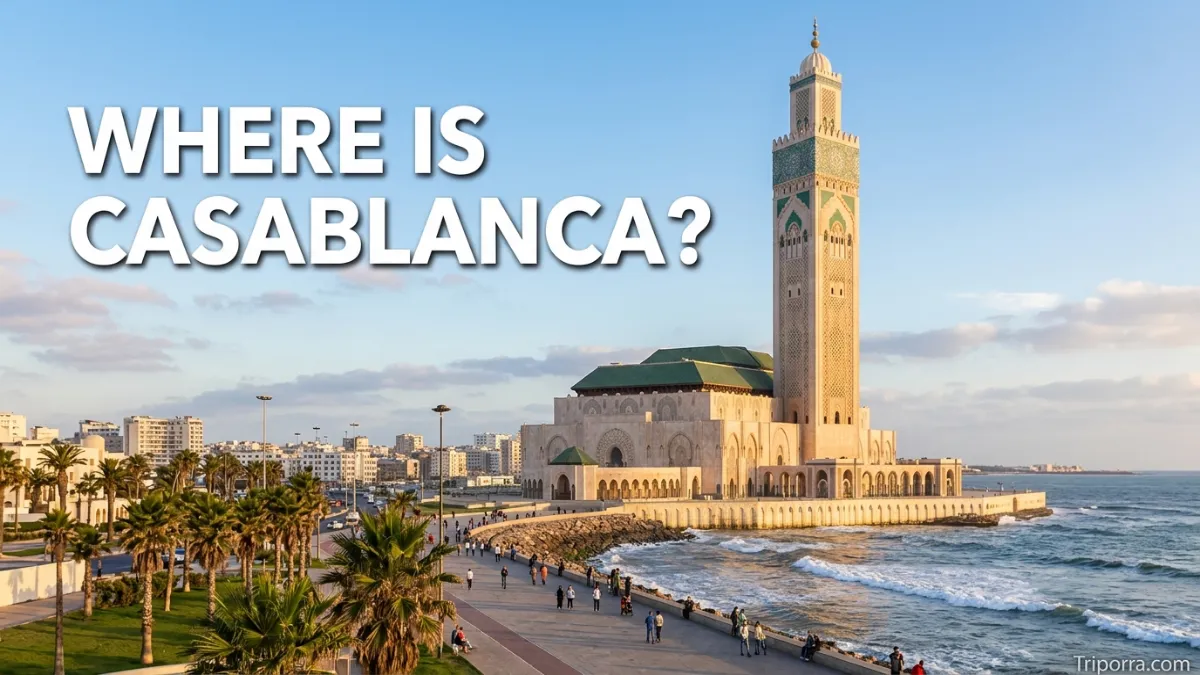
The strongest symbol of it is the Hassan II Mosque, one of the city’s most recognized landmarks. Located beside the Atlantic Ocean, the mosque is famous for its large prayer hall, detailed craftsmanship, and location partly built over the water. It represents modern Moroccan architecture combined with traditional Islamic design.
It is also famous because of the 1942 Hollywood film Casablanca. However, travellers often expect the city to look exactly like the movie. The film was mostly created in Hollywood studios, and the modern city has a completely different atmosphere.
The city is Morocco’s economic engine. Its port, financial district, and industrial areas make it a key center for trade and business. Many visitors see Casablanca as the place where Morocco’s modern side is most visible.
The old city area, known as the Medina, offers narrow streets, local markets, and traditional shops. It provides a contrast to the city’s modern neighborhoods, wide roads, and colonial-era buildings.
Another important feature is Casablanca’s Art Deco architecture. During the French protectorate period in the early 20th century, many buildings were designed with European influences. These structures give parts of the city a unique appearance compared with Morocco’s older imperial cities.
Travellers often overlook Casablanca’s food scene. The city has excellent seafood because of its Atlantic location. Local restaurants serve dishes influenced by Moroccan, Mediterranean, and French cooking traditions.
Casablanca vs Marrakech: What Is the Difference?
It is a modern coastal city known for business, international connections, the Hassan II Mosque, Art Deco architecture, and Atlantic seafood. It represents Morocco’s economic and urban lifestyle.
Marrakech is known for traditional markets, historic buildings, colorful streets, and cultural experiences. Many visitors choose Marrakech for a classic Moroccan atmosphere, while it is often used as the main arrival point because of its airport and transport connections.
For travellers with limited time, Casablanca is ideal for experiencing modern Morocco, while Marrakech offers a stronger traditional sightseeing experience.
History of Casablanca
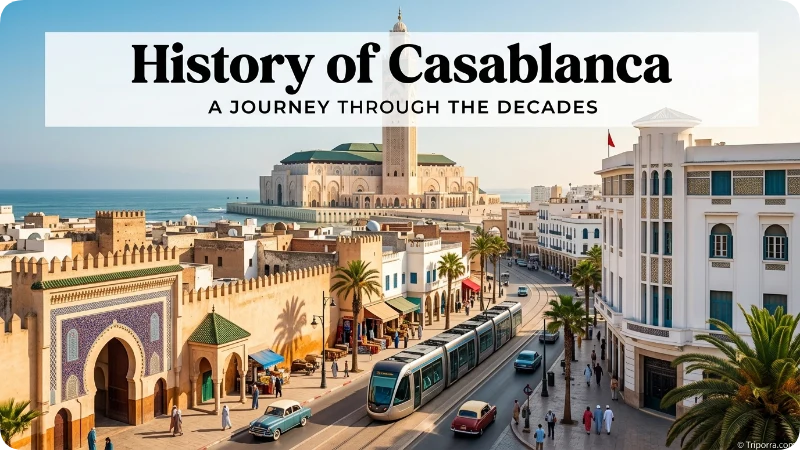
Casablanca’s history goes back many centuries. The area was originally a small settlement known as Anfa, which became an important trading location along the Atlantic coast.
During the medieval period, Anfa developed connections with other coastal communities. However, attacks and conflicts caused periods of decline. In the 18th century, Sultan Mohammed III rebuilt the settlement and renamed it Casablanca, meaning “white house” in Spanish.
The city grew rapidly during the 20th century when Morocco was under French influence. The development of the port, railways, and modern neighborhoods transformed Casablanca into a major commercial center.
During World War II, the city gained international attention because of the famous Casablanca Conference in 1943, where Allied leaders met to discuss military strategy.
After Morocco gained independence in 1956, it continued expanding. Its population increased as people moved from rural areas to seek work and opportunities.
Today, the city’s identity combines many periods of history. Ancient Moroccan traditions, French colonial architecture, modern business districts, and Atlantic coastal culture all exist together.
Climate and Weather in Casablanca
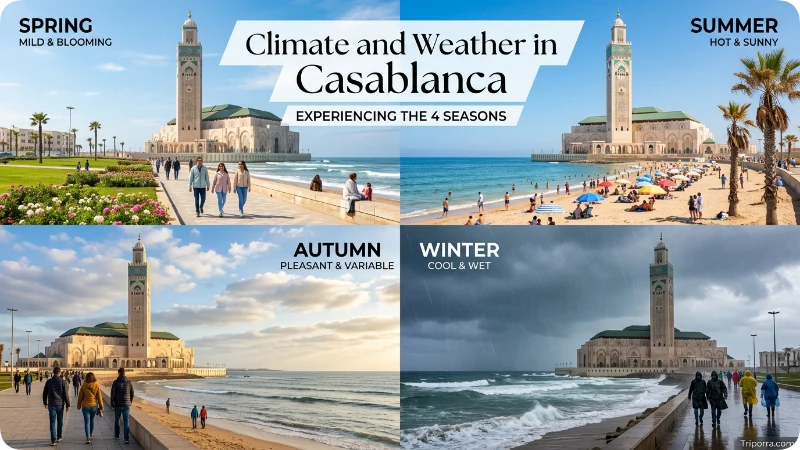
It has a mild Mediterranean climate influenced by the Atlantic Ocean. Summers are usually warm but not extremely hot, while winters are cooler and wetter compared with inland Moroccan cities.
During summer, average daytime temperatures are often around 24°C to 28°C. Ocean breezes can make evenings comfortable, although coastal humidity may be noticeable.
Winter temperatures usually range from around 10°C to 20°C. Rain is more common between November and March.
The biggest seasonal surprise for visitors is that it can feel cooler than expected, especially near the ocean. People arriving from desert areas of Morocco often notice the difference immediately.
Spring and autumn usually offer pleasant weather for exploring the city. Summer is popular, but visitors should remember that coastal winds and occasional cloudy days are common.
How to Get to Casablanca
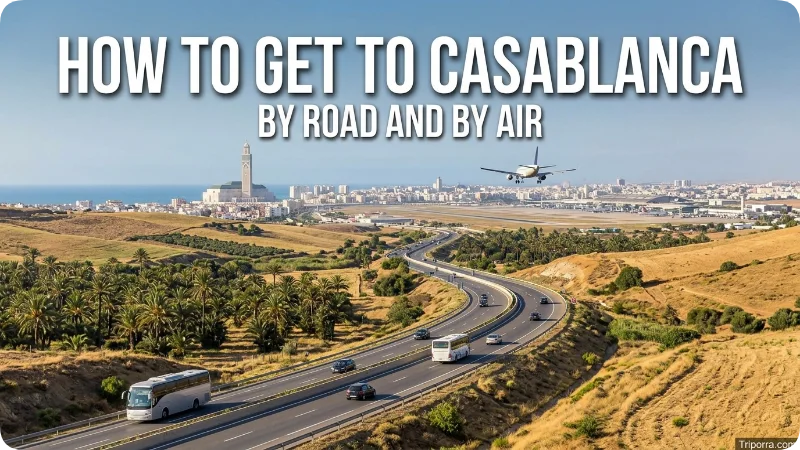
Casablanca is one of the easiest cities to reach in Morocco because it has the country’s largest international airport and strong transport connections.
Most international visitors arrive through Mohammed V International Airport, located south of the city center. The airport connects Casablanca with many European, African, and Middle Eastern destinations.
The city is also connected by Morocco’s railway network, making travel to places like Rabat, Marrakech, and Fez convenient. Highways and local transport services also make Casablanca an important travel hub.
Things to See and Do in Casablanca
Famous Landmarks and Architecture
Hassan II Mosque
The Hassan II Mosque is Casablanca’s most famous attraction. Visitors can admire its oceanfront location, detailed interior design, and impressive craftsmanship through guided tours.
Old Medina of Casablanca
The Old Medina offers a look at traditional city life. Visitors can walk through markets, small shops, and historic streets away from the modern city areas.
Mohammed V Square
Mohammed V Square is surrounded by important government buildings and examples of Casablanca’s early 20th-century architecture.
Is Casablanca Worth Visiting?
Casablanca is worth visiting for travellers who want to see modern Morocco beyond the traditional tourist cities.
The city offers famous landmarks such as Hassan II Mosque, Atlantic Ocean views, historic neighborhoods, Art Deco buildings, seafood restaurants, and everyday Moroccan city life.
Although Casablanca does not have the same old-world atmosphere as Marrakech or Fez, it provides a different experience by showing Morocco’s modern economy, culture, and coastal lifestyle.
A stay of two or three days is usually enough to explore the city’s main attractions.
Coastal Experiences
Ain Diab Beach
Ain Diab is Casablanca’s popular seaside area. It has restaurants, cafes, and walking areas along the Atlantic coast.
La Corniche
The Corniche is a coastal road with ocean views, cafes, and entertainment spots. It is especially popular during sunset.
Culture and Food
Museum of Moroccan Judaism
This museum highlights the history of Jewish communities in Morocco and provides insight into the country’s multicultural past.
Central Market of Casablanca
The Central Market is a good place to experience local food culture, especially seafood and Moroccan ingredients.
Casablanca Art Deco District
Walking through the city center reveals buildings influenced by European Art Deco design from the early 1900s.
Best Time to Visit Casablanca
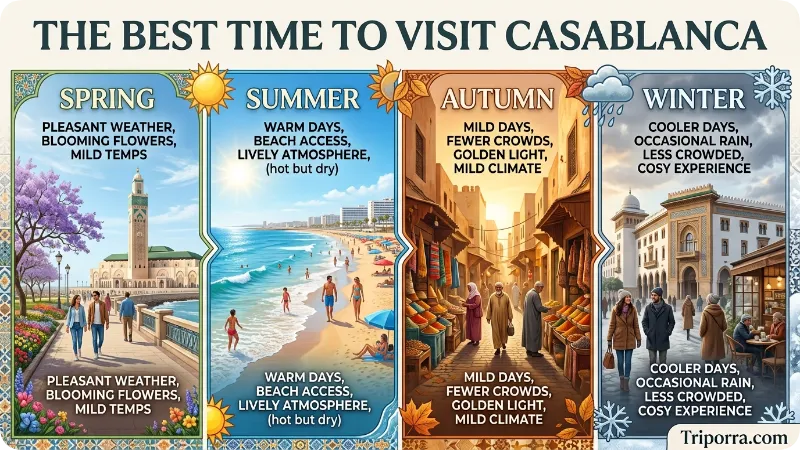
The best time to visit it is usually during spring (March to May) and autumn (September to November). These months offer comfortable temperatures and fewer crowds compared with peak summer.
Summer can be enjoyable because of the Atlantic breeze, but coastal weather may surprise visitors expecting constant sunshine. Some mornings can be cloudy, especially near the ocean.
Winter is the quietest period for tourism. Rain is more likely, but accommodation prices may be lower, and popular attractions are less crowded.
For travellers planning a wider Morocco trip, Casablanca is often used as an entry point rather than the main destination. Spending two or three days allows visitors to explore the city before moving to places such as Marrakech, Fez, or Rabat.
Common Misconceptions About Casablanca
One common misconception is that it is Morocco’s capital. The capital city is Rabat, not Casablanca.
Another misunderstanding comes from the famous movie. Many people imagine Casablanca as an old desert city, but the real place is a modern Atlantic metropolis.
Some visitors also think Casablanca is located close to the Sahara Desert. In reality, the Sahara is hundreds of kilometers away.
How Far Is Casablanca From the Sahara Desert?
Casablanca is not located near the Sahara Desert. The city is on Morocco’s Atlantic coast, while the Sahara Desert is located much farther south and southeast.
The travel distance depends on the desert destination, but reaching famous Sahara areas usually requires a long journey by road. Many travellers travel through cities such as Ouarzazate or reach desert gateway towns like Merzouga when planning a Sahara experience.
Casablanca has a mild Atlantic climate, which is very different from the dry and extreme conditions found in Morocco’s desert regions.
The city’s name can also cause confusion because “Casablanca” means “white house” in Spanish. The name refers to the historic settlement rather than a single white building that visitors can easily find.
Related Places Near Casablanca
Rabat
Rabat is Morocco’s capital and is located northeast of it . It offers royal landmarks, historic sites, and a calmer atmosphere.
Marrakech
Marrakech is famous for its markets, traditional architecture, and nearby mountain landscapes. It provides a very different experience from Casablanca’s modern coastal setting.
Fez
Fez is known for its ancient Medina, traditional crafts, and historic Islamic institutions.
El Jadida
El Jadida is a coastal city south of Casablanca with Portuguese heritage and ocean views.
What Else Do People Want to Know About Casablanca?
It is generally considered a safe city for visitors who follow normal travel precautions. Like many large cities, travellers should watch their belongings in crowded markets and transport areas.
The cost of visiting Casablanca depends on travel style. Budget travellers can find affordable local food and transport, while luxury hotels and restaurants are also available.
How Many People Live in Casablanca?
Casablanca is Morocco’s largest city, with approximately 4 million people living in its greater metropolitan area.
The city has grown into Morocco’s main economic center because of its port, businesses, industries, and employment opportunities. People from different regions of Morocco move to Casablanca for work, education, and better access to services.
Most visitors from many countries need a passport and may require a visa depending on nationality. Morocco’s visa rules change, so travellers should check current requirements before planning a trip.
It is easy to reach because of its international airport and railway connections. The city also has modern tram services that help visitors move between major areas.
Local customs are influenced by Moroccan traditions. Dressing respectfully, especially near religious sites, helps visitors have a smoother experience.
FAQs
1. Is Casablanca in Morocco or Spain?
Casablanca is in Morocco, a country in northwest Africa. The city’s name comes from Spanish words meaning “white house,” which sometimes causes confusion.
2. Is Casablanca the capital of Morocco?
No, Casablanca is not the capital of Morocco. Rabat is the official capital, while Casablanca is the country’s largest city and main economic center.
3. How far is Casablanca from Marrakech?
Casablanca is approximately 240 kilometers northwest of Marrakech by road. Travel time usually depends on traffic and transport type.
4. Is Casablanca worth visiting?
Yes, Casablanca is worth visiting for travellers interested in modern Moroccan culture, architecture, seafood, coastal views, and famous landmarks like Hassan II Mosque.
5. How many days are enough for Casablanca?
Most visitors spend around two to three days exploring the city. This allows enough time for major attractions, local food experiences, and coastal areas.
6. What language is spoken in Casablanca?
Arabic and Amazigh are Morocco’s official languages. French is widely used in business, education, and daily communication, while English is increasingly common in tourist areas.
7. Does Casablanca have beaches?
Yes, Casablanca has several coastal areas, including Ain Diab Beach and the Corniche area. The Atlantic coastline is an important part of the city’s lifestyle.
8. Is Casablanca expensive for tourists?
Casablanca can fit different budgets. Local restaurants, public transport, and markets can be affordable, while luxury hotels and international restaurants cost more.
9. What airport serves Casablanca?
Mohammed V International Airport is the main airport serving Casablanca. It is the largest airport in Morocco and a major international connection point.
10. What is Casablanca famous for besides the movie?
The city is famous for Hassan II Mosque, Atlantic coastal views, Art Deco buildings, its port, seafood, and its role as Morocco’s business center.
11. Is Casablanca a city or a country?
Casablanca is a city, not a country. It is located in Morocco, a country in northwest Africa. Casablanca is Morocco’s largest city and main economic center.
12. Is Casablanca in Africa?
Yes, Casablanca is located in Africa. It is one of Morocco’s largest cities and sits on the Atlantic coast in the northwest part of the African continent.
13. What country is Casablanca located in?
Casablanca is located in Morocco. Morocco is a country in northwestern Africa known for its Atlantic coastline, mountains, deserts, and historic cities.
14. Is Casablanca near Spain?
Casablanca is in Morocco, which is close to Spain geographically. However, Casablanca is located farther south along Morocco’s Atlantic coast, while northern Morocco is closest to Spain near the Strait of Gibraltar.
15. What continent is Casablanca in?
Casablanca is located in Africa. It is part of Morocco, which occupies the northwestern region of the African continent.
Closing
It is a coastal Moroccan city that represents the modern side of the country. Located on the Atlantic Ocean, it combines business, history, architecture, and local traditions in a way that feels different from Morocco’s famous historic cities.
While many travellers first think of the Hollywood movie, the real Casablanca offers its own experiences through landmarks like Hassan II Mosque, oceanfront neighborhoods, and traditional markets.
If you are planning a Morocco trip, it is often the perfect starting point because of its airport connections and location. Spend time exploring beyond the famous name, and you will discover a city that shows how Morocco has changed while keeping its cultural roots.

Elena Rostova bridges the gap between premium hospitality and authentic local experiences. Armed with a background in luxury hospitality management and a passion for fine architecture, she spent years evaluating elite resorts before transitioning into travel journalism. Elena heads the luxury and boutique travel vertical on Triporra.com. Her meticulous guides strip away the guesswork from high-end travel, showcasing unique five-star escapes, fine regional dining, and bespoke private tours that elevate a standard vacation into an unforgettable journey.