England is one of the four countries that make up the United Kingdom (UK). It occupies the southern and central part of the island of Great Britain and shares land borders with Scotland to the north and Wales to the west. England is known around the world for its long history, famous cities, royal traditions, and global influence.
Featured Snippet
Where is England? England is located in northwestern Europe on the island of Great Britain. It is the largest and most populated country in the United Kingdom. England borders Scotland to the north, Wales to the west, and is surrounded by the North Sea, the Irish Sea, the Celtic Sea, and the English Channel.
Quick Facts
| Fact | Details |
| Official Name | England |
| Country | United Kingdom |
| Region | Northwestern Europe |
| Population | Approximately 57 million |
| Area | Approximately 130,279 sq km (50,301 sq mi) |
| Highest Elevation | Scafell Pike (978 m / 3,209 ft) |
| Coordinates | Approximately 52.35° N, 1.17° W |
| Time Zone | Greenwich Mean Time (GMT) / British Summer Time (BST) |
| Nearest Major City | London |
| Known For | Royal Family, London, football, castles, universities |
| Language | English |
| Currency | Pound Sterling (£) |
Where Is England?
England is found in northwestern Europe on the island of Great Britain. It covers the southern and central parts of the island and forms the largest country within the United Kingdom. Scotland lies directly to the north, while Wales borders England to the west. The rest of the country is surrounded by water.
Across the English Channel, England is only about 34 kilometers (21 miles) from France at its closest point. This short distance has shaped trade, travel, and history for centuries. The Channel Tunnel now connects England and France by rail beneath the sea.
London, the capital city, sits in southeastern England along the River Thames. Other major cities include Manchester, Birmingham, Liverpool, Leeds, Bristol, and Newcastle.
Travellers often overlook how varied England is. Many visitors expect only large cities, but much of the country consists of rolling hills, farmland, forests, coastlines, and national parks. What most guides miss is that you can travel from busy London streets to quiet countryside villages within a couple of hours.
Administrative Status
England is one of the four constituent countries of the United Kingdom, alongside Scotland, Wales, and Northern Ireland. Unlike Scotland and Wales, England does not have its own separate parliament. Most national laws affecting England are made by the UK Parliament in London.
England is divided into nine official regions, including the South East, North West, East Midlands, and South West. These regions are further divided into counties, districts, and local councils.
Visitors entering England follow the same immigration and visa rules that apply to the United Kingdom. The country also follows the UK’s time zones, using Greenwich Mean Time during winter and British Summer Time during the warmer months.
England on the Map
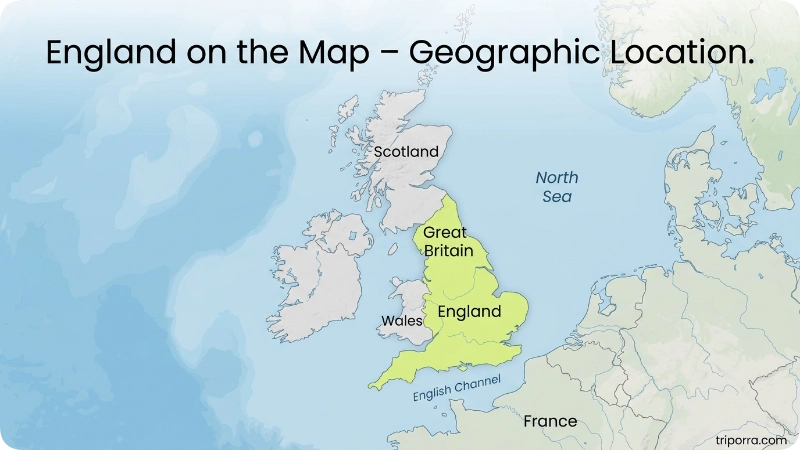
England occupies the southern two-thirds of Great Britain. Scotland stretches across its northern border, while Wales sits to the west.
The North Sea lies along the eastern coastline, providing access to northern Europe. The Irish Sea separates England from Ireland to the northwest, while the Celtic Sea touches the southwest coast. The English Channel forms the southern boundary and separates England from mainland Europe.
From London, Paris is only a short train journey through the Channel Tunnel. Manchester lies about 330 kilometers northwest of London, while Birmingham sits near the center of England, making it an important transport hub.
One commonly misunderstood fact is that England is not the same as the United Kingdom. The UK includes England, Scotland, Wales, and Northern Ireland.
Why Is England Famous?
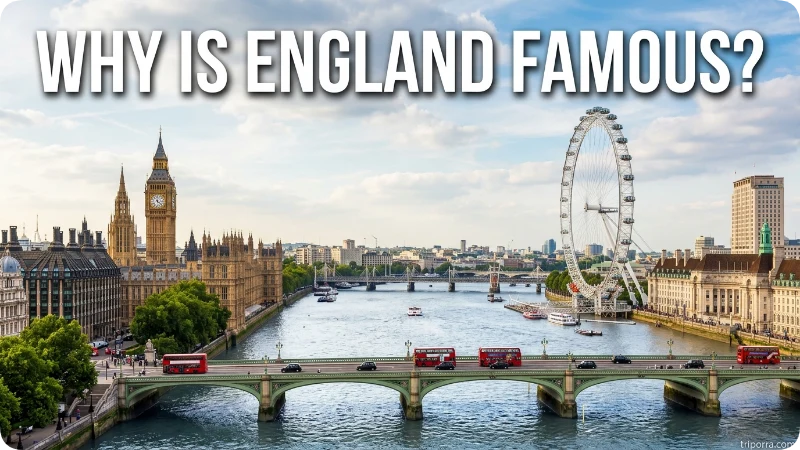
England has influenced world history more than many countries of its size. It is known for its monarchy, historic landmarks, literature, education, sports, and scientific achievements.
London attracts millions of visitors every year with landmarks such as Buckingham Palace, the Tower of London, Big Ben, and the London Eye. The city is also one of the world’s leading financial and cultural centers.
England is home to famous universities like Oxford and Cambridge, both of which have educated world leaders, scientists, and Nobel Prize winners for centuries.
Football plays a major role in English culture. The Premier League is watched around the globe, and historic clubs such as Manchester United, Liverpool, Arsenal, and Chelsea have supporters in nearly every country.
History lovers visit castles, Roman ruins, medieval cathedrals, and ancient sites including Stonehenge, one of the world’s most famous prehistoric monuments.
English literature has also shaped global culture. Writers including William Shakespeare, Jane Austen, Charles Dickens, and J.R.R. Tolkien created works that continue to influence readers today.
Travellers often overlook England’s national parks. Places such as the Lake District, Peak District, and Yorkshire Dales offer hiking, lakes, mountains, and peaceful villages that are very different from London’s busy streets.
What most guides miss is that weather can change several times in a single day. Carrying a light waterproof jacket is often a smart choice, even during summer.
History
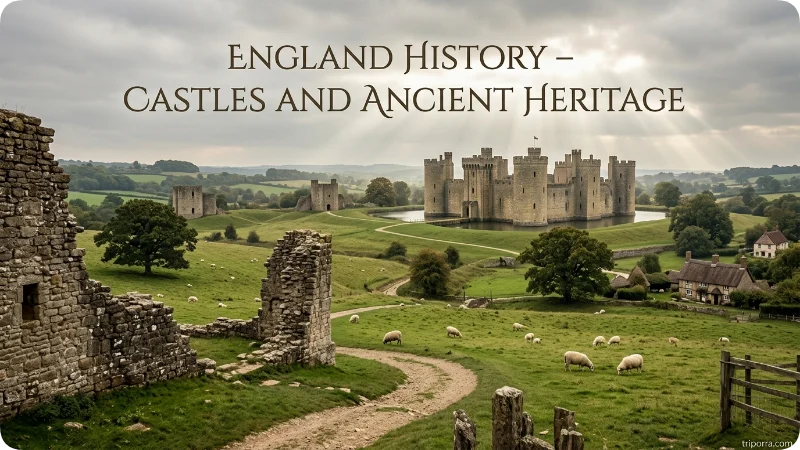
England’s history stretches back thousands of years. People lived here during prehistoric times, leaving behind monuments such as Stonehenge.
The Romans invaded in AD 43 and built roads, towns, forts, and walls that influenced the country’s development. After the Romans left, Anglo-Saxon kingdoms emerged across much of England.
The Norman Conquest in 1066 changed England forever. William the Conqueror introduced new systems of government, law, and architecture that still shape the country today.
During the Middle Ages, England experienced political struggles, the signing of the Magna Carta in 1215, and conflicts such as the Wars of the Roses.
The Tudor period saw major religious changes under King Henry VIII and the reign of Queen Elizabeth I, when England became an important naval power.
The Industrial Revolution began largely in England during the late 18th century. New factories, railways, and inventions transformed not only Britain but also much of the modern world.
Today, England combines ancient traditions with modern cities, advanced technology, and diverse communities.
Climate & Weather
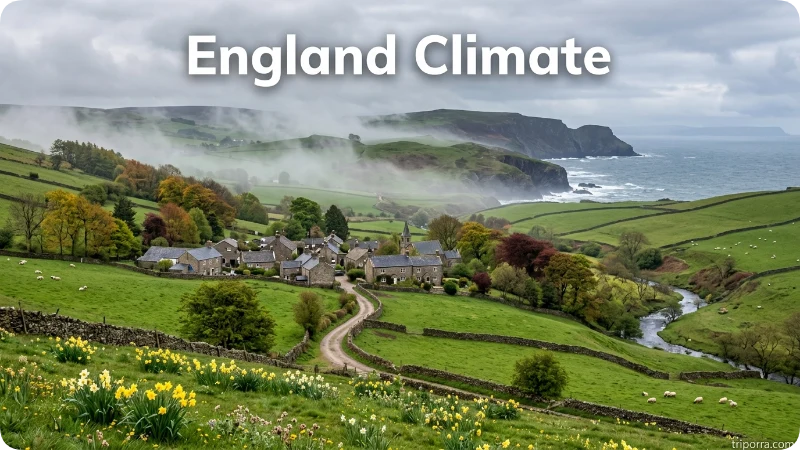
England has a temperate maritime climate with mild temperatures throughout the year.
Spring, from March to May, brings blooming flowers and temperatures generally between 8°C and 16°C.
Summer runs from June through August. Average daytime temperatures range from 18°C to 25°C, although occasional heatwaves can push temperatures higher.
Autumn offers colorful forests and cooler weather, usually between 10°C and 18°C.
Winter is generally cool rather than severe. Temperatures often stay between 1°C and 8°C, though northern and higher areas may receive snow.
Rain can fall in any season. Western regions usually receive more rainfall than eastern England because of Atlantic weather systems.
Things to See & Do
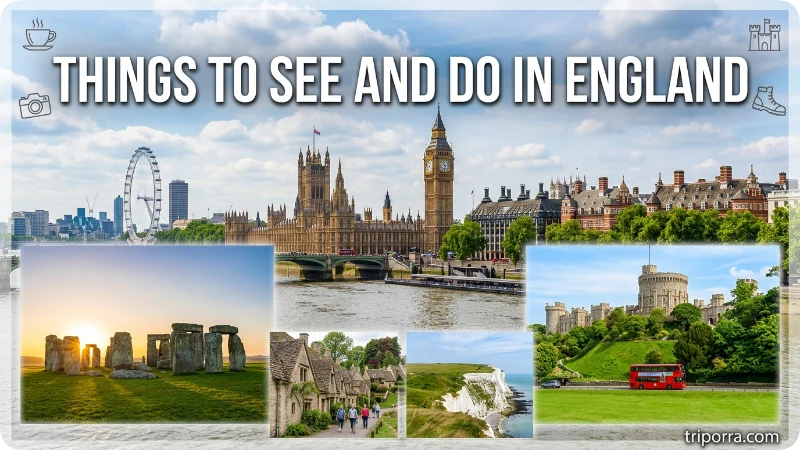
Historic Landmarks
- Buckingham Palace
- Tower of London
- Stonehenge
- Windsor Castle
Cities & Culture
- British Museum
- Westminster Abbey
- Oxford
- Cambridge
Nature
- Lake District National Park
- Peak District National Park
- Yorkshire Dales National Park
- Jurassic Coast
Food Experiences
- Enjoy traditional fish and chips.
- Try afternoon tea.
- Visit local pubs serving Sunday roast.
- Explore food markets such as Borough Market in London.
Best Time to Visit

Late spring and early autumn are usually the most comfortable times to visit England. From May to June and September to early October, temperatures are pleasant, gardens are colorful, and tourist crowds are smaller than during peak summer.
July and August offer the warmest weather and many festivals, but accommodation prices are generally higher. Popular attractions may also become crowded, especially in London and major tourist towns.
Winter brings festive Christmas markets, seasonal lights, and fewer visitors at many attractions. Days are shorter, however, and some rural sites operate on reduced schedules.
A seasonal trap that surprises many first-time visitors is the long queues during school holidays. Booking trains, hotels, and major attractions in advance can save both time and money.
Common Misconceptions
Many people use England, Great Britain, and the United Kingdom as though they mean the same thing. They do not.
England is only one country within the United Kingdom. Great Britain refers to the island containing England, Scotland, and Wales. The United Kingdom includes those three countries plus Northern Ireland.
Another common misunderstanding is that London is the capital of the United Kingdom, not just England. It serves as both.
Related Places
Scotland
Located directly north of England, Scotland is famous for its Highlands, castles, and distinctive cultural traditions.
Wales
West of England, Wales offers dramatic coastlines, mountain scenery, and one of Europe’s highest concentrations of castles.
Northern Ireland
Across the Irish Sea, Northern Ireland is known for the Giant’s Causeway and vibrant cities like Belfast.
France
Only a short distance across the English Channel, France can be reached quickly by train through the Channel Tunnel.
Isle of Wight
Just off England’s southern coast, this island is popular for beaches, coastal walks, and sailing events.
What Else Do People Want to Know?
England is generally considered a safe destination for tourists. Standard travel precautions are recommended in busy city centers, especially around transport hubs and popular attractions.
Travel costs vary widely. London is usually the most expensive area, while smaller cities and rural regions often provide better value.
Most visitors need to meet the United Kingdom’s immigration requirements before arrival, so checking current visa rules before traveling is important.
Public transportation is extensive. Trains, buses, underground rail, and domestic flights connect nearly every part of the country.
Local customs are generally relaxed. People often form orderly queues, value polite conversation, and appreciate simple words such as “please” and “thank you.”
Frequently Asked Questions
Is England a country?
Yes. England is one of the four countries that make up the United Kingdom.
What continent is England in?
England is located in Europe, specifically in the northwestern part of the continent.
What is the capital of England?
London is the capital city of England and also the capital of the United Kingdom.
Does England share borders with other countries?
Yes. England borders Scotland to the north and Wales to the west.
What currency does England use?
England uses the Pound Sterling (£), the official currency of the United Kingdom.
What language is spoken in England?
English is the official and most widely spoken language.
Is England part of Europe?
Geographically, yes. Politically, England is part of the United Kingdom, which is located in Europe but is no longer a member of the European Union.
How far is England from France?
At its closest point, England is about 34 kilometers (21 miles) from France across the English Channel.
What is England best known for?
England is known for London, the Royal Family, football, historic castles, famous universities, literature, and centuries of history.
Can you travel around England without a car?
Yes. England has an extensive rail and bus network, making it easy to visit most cities and many towns using public transport.
Closing
England combines centuries of history with modern cities, peaceful countryside, and well-known cultural traditions. Whether you are interested in royal landmarks, ancient monuments, national parks, or world-famous universities, there is plenty to explore. Understanding where England is also helps explain its important role in European history and global culture. Careful planning, especially during busy travel seasons, will help you make the most of your visit.

Silas Vance is a geography enthusiast, travel researcher, and location-focused content writer dedicated to helping readers better understand the world around them on triporra.com. He specializes in creating informative guides about cities, countries, islands, landmarks, universities, and other notable destinations. His work combines geographic accuracy, historical context, and practical insights to answer location-based questions in a simple and engaging way.