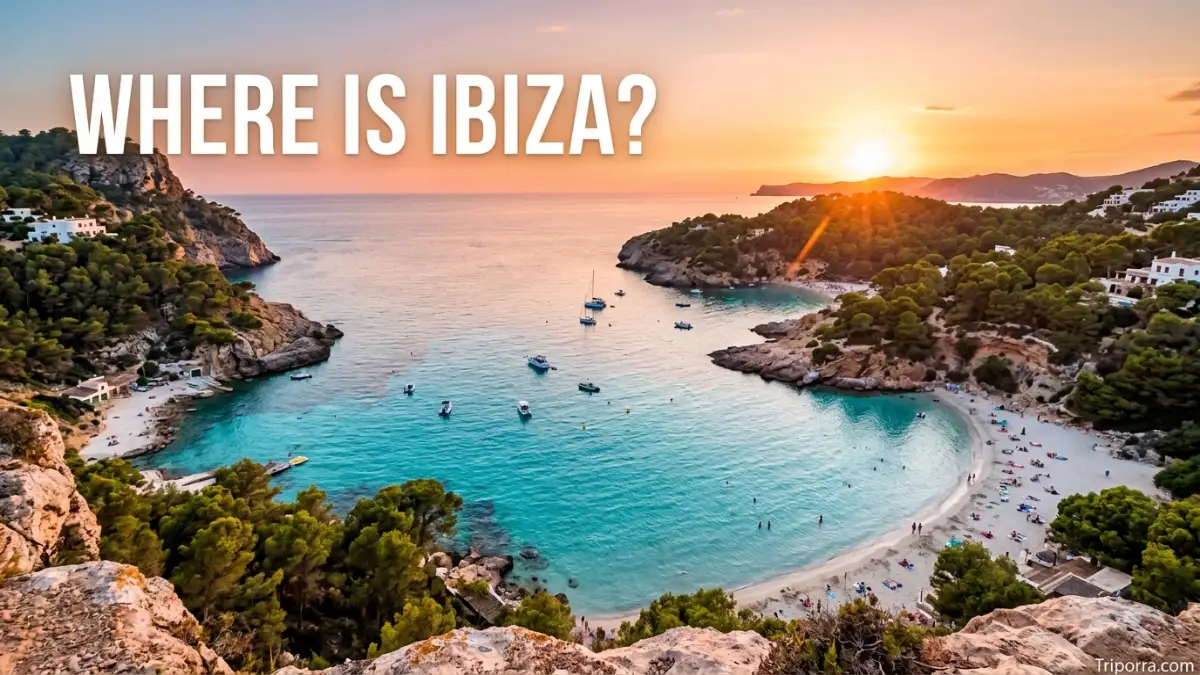
It is a Spanish island located in the Mediterranean Sea, off the eastern coast of mainland Spain. It forms part of the Balearic Islands autonomous community and lies southeast of the city of Valencia.
Known worldwide for its beaches, nightlife, and beautiful coastline, Ibiza is one of Europe’s most popular tourist destinations. The island combines historic towns, natural scenery, cultural heritage, and entertainment, making it attractive to travelers from around the world.
Featured Snippet Answer
Part of Spain’s Balearic Islands, Ibiza sits in the western Mediterranean Sea approximately 150 kilometers from mainland Spain. Positioned south of Mallorca, the island has gained international recognition for its coastal scenery, entertainment venues, cultural heritage sites, and strong tourism economy.
Where Is Ibiza Located?
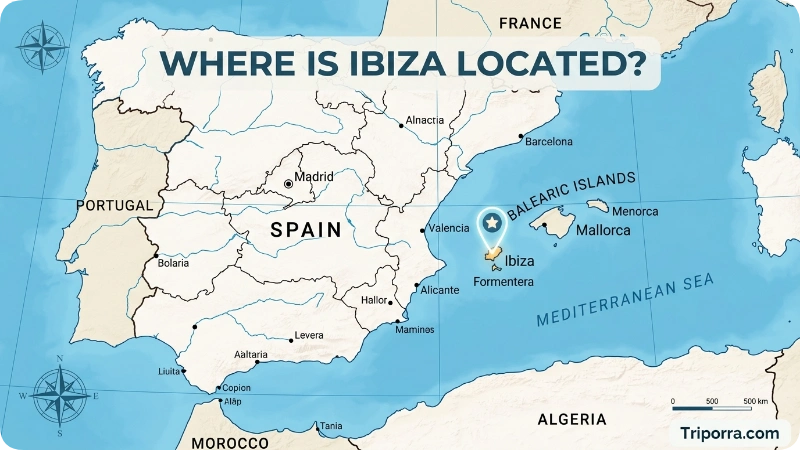
It is situated in the western Mediterranean Sea and is one of the four major Balearic Islands of Spain. Administratively, it belongs to the Autonomous Community of the Balearic Islands.
The island is positioned:
- East of mainland Spain
- South of Mallorca
- North of the North African coastline
- West of the island of Mallorca’s neighboring Mediterranean waters
It forms part of Europe because it belongs to Spain, a member of the European Union.
Quick Facts
| Fact | Details |
|---|---|
| Official Name | Ibiza (Eivissa in Catalan) |
| Country | Spain |
| Autonomous Community | Balearic Islands |
| Province | Balearic Islands |
| Island Group | Balearic Islands |
| Approximate Population | About 160,000 residents |
| Time Zone | Central European Time (CET) |
| Coordinates | Approximately 38.9° N, 1.4° E |
| Nearby Major Cities | Valencia, Barcelona, Palma de Mallorca |
| Known For | Beaches, nightlife, UNESCO World Heritage sites, and tourism |
| Official Languages | Spanish and Catalan |
| Currency | Euro (€) |
Ibiza on the Map
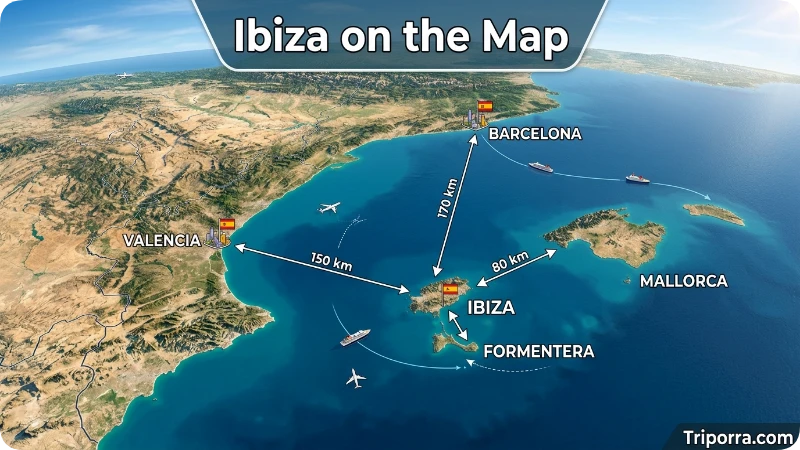
Picture Spain’s eastern coastline facing the Mediterranean Sea. If you travel east from Valencia by air or ferry, you reach the Balearic Islands.
Among these islands:
- Mallorca lies to the north
- Menorca sits farther northeast
- It is located to the southwest of Mallorca
- Formentera lies immediately south of Ibiza
The island covers roughly 571 square kilometers (220 square miles). Although relatively small, it has a varied landscape of beaches, cliffs, hills, pine forests, and charming villages.
Someone flying from mainland Spain can usually reach Ibiza in under an hour from many major Spanish cities.
Which Region Does Ibiza Belong To?
It belongs to Spain’s Balearic Islands Autonomous Community.
Spain’s administrative hierarchy places Ibiza within:
- Country: Spain
- Autonomous Community: Balearic Islands
- Island Council: Consell Insular d’Eivissa
- Municipalities including Ibiza Town, Sant Antoni de Portmany, Santa Eulària des Riu, Sant Josep de sa Talaia, and Sant Joan de Labritja
The island’s main city is Ibiza Town (Eivissa), which serves as an administrative, cultural, and transportation center.
How Does Ibiza Compare to Nearby Places?
It often receives attention because of its nightlife, but it differs significantly from neighboring islands.
How Ibiza Compares to Mallorca
- Mallorca is larger and more populous.
- Ibiza is smaller and easier to explore in a few days.
- Ibiza attracts many visitors seeking beaches and entertainment.
How Ibiza Differs from Menorca
- Menorca is generally quieter.
- Ibiza has more nightlife and international tourism.
- Menorca focuses more on tranquil nature experiences.
Ibiza and Formentera: Key Differences
- Formentera is much smaller.
- Ibiza offers more hotels, restaurants, and transport options.
- Formentera is known for exceptionally clear waters and relaxed beaches.
Ibiza Compared to Mainland Spain
Compared with cities such as Valencia or Barcelona, Ibiza provides a more island-focused experience with shorter travel distances and easier access to beaches.
How to Reach Ibiza
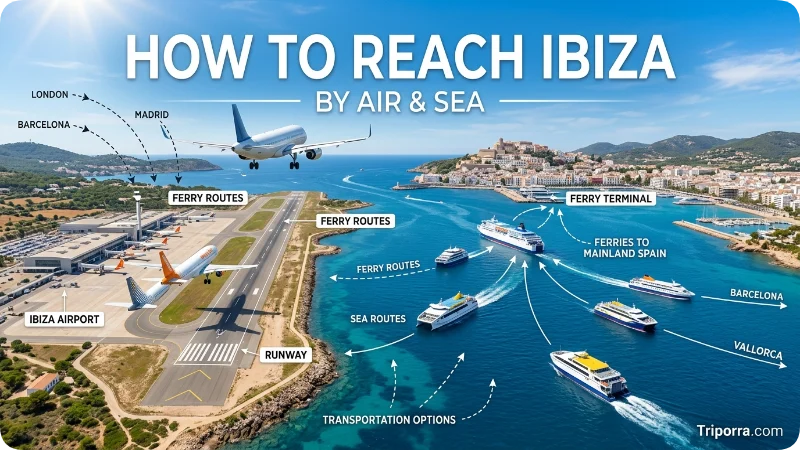
Reaching it is straightforward thanks to its strong transport connections.
By Air
Ibiza Airport (IBZ) is the island’s main gateway.
Direct flights connect Ibiza with:
- Madrid
- Barcelona
- Valencia
- London
- Paris
- Amsterdam
- Berlin
- Many seasonal European destinations
Flight times include:
- Madrid to Ibiza: about 1 hour
- Barcelona to Ibiza: about 1 hour
- London to Ibiza: approximately 2.5 hours
By Ferry
Regular ferries connect it with:
- Barcelona
- Valencia
- Denia
- Palma de Mallorca
- Formentera
Ferry journeys vary from around 30 minutes (Formentera) to several hours from mainland Spain.
Getting Around the Island
Transportation options include:
- Rental cars
- Scooters
- Taxis
- Public buses
- Bicycle routes in some areas
Most major attractions are within a one-hour drive of each other.
Why Is Ibiza Famous?
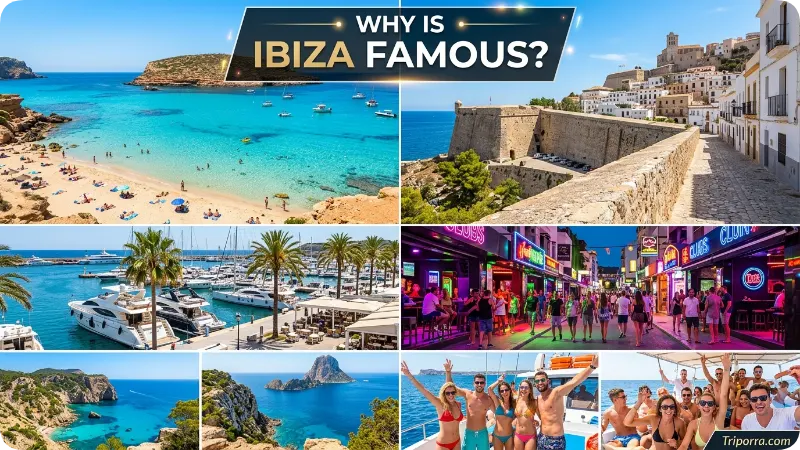
It enjoys global recognition for several reasons.
World-Famous Nightlife
The island hosts internationally known clubs and music venues. During summer, world-renowned DJs perform regularly, attracting visitors from across the globe.
Beautiful Beaches
Its features dozens of beaches and coves with:
- Clear turquoise water
- Sandy shores
- Rocky cliffs
- Scenic sunsets
UNESCO Heritage
The fortified old town of Dalt Vila is a UNESCO World Heritage Site. It preserves centuries of Mediterranean history and architecture.
Natural Beauty
Away from nightlife districts, visitors discover:
- Pine forests
- Coastal trails
- Hidden coves
- Marine reserves
Cultural Importance
It maintains strong local traditions, festivals, cuisine, and artistic communities despite its international popularity.
History of Ibiza
Human settlement on Ibiza stretches back thousands of years.
Ancient Beginnings
The Phoenicians established a settlement on the island around the 7th century BCE. Its strategic Mediterranean location made it an important trading center.
Carthaginian Period
After the Phoenicians, Ibiza became linked to Carthage, one of the major powers of the ancient Mediterranean world.
Roman Era
Rome later incorporated the island into its expanding empire. Trade and agriculture continued to support local communities.
Islamic Rule
During the medieval period, Muslim rulers controlled Ibiza along with much of the Iberian Peninsula and nearby islands.
Spanish Control
In 1235, Christian forces incorporated Ibiza into territories that later became part of modern Spain.
Modern Tourism
Tourism began growing rapidly during the twentieth century, especially from the 1960s onward. Today, tourism remains a major economic driver.
Climate and Weather
It experiences a Mediterranean climate.
Summer
- June to September
- Hot and sunny
- Temperatures often reach 28–32°C (82–90°F)
Autumn
- Warm sea temperatures
- Fewer crowds
- Pleasant outdoor conditions
Winter
- Mild temperatures
- Cooler evenings
- Reduced tourist activity
Spring
- Comfortable weather
- Blooming vegetation
- Excellent sightseeing conditions
The island enjoys over 300 sunny days annually, making it attractive throughout much of the year.
Things to See and Do Nearby
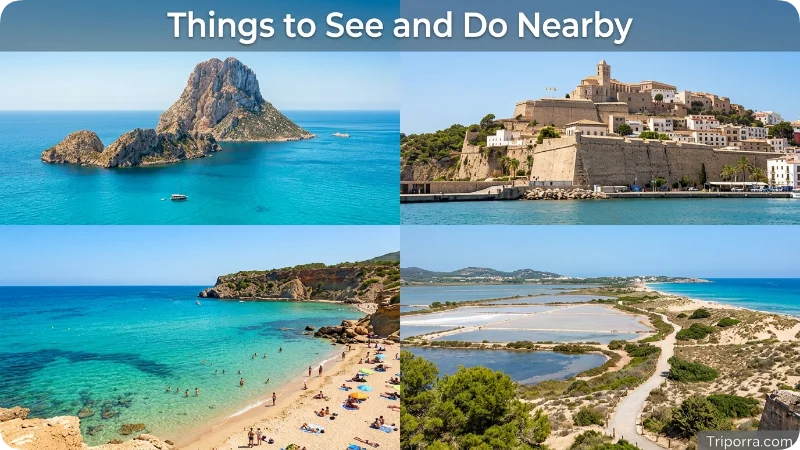
It offers far more than nightlife.
Dalt Vila
This historic fortified town overlooks Ibiza Harbor and contains:
- Ancient walls
- Stone streets
- Historic churches
- Museums
Es Vedrà
A dramatic rocky island rising from the sea southwest of Ibiza. It is among the most photographed landmarks in the Balearic Islands.
Cala Comte
Known for:
- Clear water
- Sunset views
- Swimming opportunities
Ses Salines Natural Park
This protected area includes:
- Salt flats
- Beaches
- Wildlife habitats
- Birdwatching opportunities
Formentera
A short ferry ride south brings visitors to:
- White-sand beaches
- Crystal-clear water
- Relaxed island atmosphere
Sant Antoni
Popular for waterfront promenades, restaurants, and famous sunset viewing locations.
Best Time to Visit
The ideal time depends on travel goals.
Peak Season (June–August)
Best for:
- Nightlife
- Beach vacations
- Festivals
Expect:
- Higher prices
- Larger crowds
Shoulder Season (April–May and September–October)
Best balance of:
- Pleasant weather
- Moderate prices
- Fewer tourists
Many travelers consider these months the most comfortable.
Off-Season (November–March)
Best for:
- Quiet exploration
- Lower accommodation costs
- Local culture
Some seasonal businesses may close during winter.
Common Misconceptions
Several misunderstandings surround Ibiza.
Ibiza Is Only About Nightlife
Many visitors are surprised to discover historic sites, nature reserves, hiking trails, and peaceful villages.
Ibiza Is a City
It is actually an island. Ibiza Town is the island’s principal city.
Everyone Visits for Parties
Families, couples, nature enthusiasts, and cultural travelers also make up a large portion of visitors.
Ibiza Is Independent
Ibiza is not an independent country. It is part of Spain.
Places Related to Ibiza
People searching for it often explore nearby destinations as well.
Mallorca
The largest Balearic Island and a major Mediterranean tourism destination.
Menorca
Known for quieter beaches and natural landscapes.
Formentera
A small neighboring island reachable by ferry.
Valencia
A major Spanish coastal city with ferry and flight connections to Ibiza.
Barcelona
One of Spain’s most visited cities and a common starting point for island travelers.
What Else Do People Want to Know?
Is It Safe?
Yes. Ibiza is generally considered safe for tourists. Standard travel precautions are recommended, especially in busy nightlife areas.
Is It Expensive?
Costs vary significantly. Peak summer months can be expensive, while shoulder seasons often provide better value.
Do People Speak English?
English is widely spoken in tourist areas. Spanish and Catalan remain the official languages.
Is Ibiza Suitable for Families?
Yes. Many family-friendly beaches, resorts, and attractions exist across the island.
How Many Days Are Enough?
A stay of 4–7 days allows visitors to explore major beaches, cultural sites, and nearby islands comfortably.
FAQs
Is It part of Spain?
Yes. It is one of Spain’s Balearic Islands in the Mediterranean Sea.
What country is Ibiza in?
Ibiza belongs to Spain.
Where is Ibiza relative to Barcelona?
It lies southeast of Barcelona across the Mediterranean Sea.
Is Ibiza a city or an island?
Ibiza is an island. Ibiza Town is its main city.
Which sea surrounds Ibiza?
The Mediterranean Sea surrounds Ibiza.
What is Ibiza most famous for?
It is famous for nightlife, beaches, electronic music, and UNESCO heritage sites.
How far is Ibiza from mainland Spain?
The island is approximately 150 kilometers (93 miles) from Spain’s eastern coast.
Can you drive to Ibiza?
No. Since it is an island, visitors must arrive by plane or ferry.
What language is spoken in Ibiza?
Spanish and Catalan are official languages. English is widely used in tourist areas.
Is Ibiza bigger than Mallorca?
No. Mallorca is significantly larger than Ibiza.
Does Ibiza have an international airport?
Yes. Ibiza Airport serves domestic and international flights.
Is Ibiza worth visiting outside summer?
Yes. Spring and autumn offer pleasant weather and fewer crowds.
__________________________________________________________________
Conclusion
Ibiza is a Spanish island located in the Mediterranean Sea within the Balearic Islands autonomous community. Positioned east of mainland Spain and south of Mallorca, it combines beautiful beaches, historic landmarks, vibrant nightlife, and natural scenery in a relatively compact area. Whether you’re interested in culture, relaxation, outdoor activities, or entertainment, Ibiza remains one of the Mediterranean’s most recognized and accessible island destinations.

About Leo Sterling
Leo Sterling is a geography and travel writer at Triporra.com who believes understanding a place starts with knowing exactly where it is. He turns geographic details on countries, regions, islands, and cities into clear, engaging content for everyday readers.
For Leo, a good location article does more than mark a spot on a map. It shows what borders a place, which region it belongs to, and how it connects to the world around it—an approach reflected in guides like where is Anguilla, where solid research meets a simple, conversational style.
Whether readers are planning a trip, studying, or just curious, Leo’s goal is the same: deliver accurate, easy-to-understand information without unnecessary complexity.
Areas of Focus: Geography | Countries & Regions | Caribbean Islands | Travel Destinations | Location Research | “Where Is?” Content