
The Leaning Tower of Pisa is one of the world’s best-known landmarks, located in the city of Pisa in the Tuscany region of central Italy. Millions of visitors come every year to see its famous tilt, climb its spiral staircase, and explore the historic square surrounding it.
Many travellers focus only on the tower itself, but what most guides miss is that it stands within a larger UNESCO World Heritage Site filled with remarkable medieval buildings. Knowing its exact location also helps visitors plan day trips from Florence, Lucca, or the Italian coast.
Featured Snippet
The Leaning Tower of Pisa is located in Piazza del Duomo (Cathedral Square) in the city of Pisa, Tuscany, Italy. It is the freestanding bell tower of Pisa Cathedral and is famous worldwide for its unintended lean, caused by soft ground beneath its foundation. Today, it is one of Italy’s most visited historical attractions and a UNESCO World Heritage Site.
Quick Facts
| Fact | Details |
| Official Name | Leaning Tower of Pisa (Torre Pendente di Pisa) |
| Country | Italy |
| Region | Tuscany |
| Population | Pisa: approximately 91,000 |
| Area | Pisa municipality: approximately 185 km² (71 sq mi) |
| Elevation | Approximately 2 meters (7 feet) above sea level |
| Coordinates | 43.7230° N, 10.3966° E |
| Time Zone | Central European Time (CET/CEST) |
| Nearest Major City | Florence (about 85 km or 53 miles east) |
| Known For | Historic leaning bell tower, UNESCO World Heritage Site |
| Language | Italian |
| Currency | Euro (€) |
Where Is the Leaning Tower of Pisa?

The Leaning Tower of Pisa stands in the city of Pisa, which lies in the Tuscany region of central Italy. It is located within Piazza del Duomo, also called the Square of Miracles, about 10 kilometers (6 miles) inland from the Ligurian Sea.
Pisa is around 85 kilometers (53 miles) west of Florence, making the tower an easy day trip from Tuscany’s capital. Visitors arriving by train usually walk about 20 to 25 minutes from Pisa Centrale railway station, while buses and taxis provide quicker access.
Although many people think the monument sits in Rome or Florence, it has always belonged to Pisa. This medieval city was once a powerful maritime republic, and the tower became one of its greatest symbols.
Travellers often overlook how compact Pisa is. Most of its famous landmarks—including the cathedral, baptistery, Camposanto Monumentale, and the leaning tower—can be explored comfortably on foot within a few hours.
Administrative Status
The Leaning Tower of Pisa is managed as part of the Piazza del Duomo monument complex in the municipality of Pisa, Tuscany. It is protected under Italian cultural heritage laws and recognized as part of a UNESCO World Heritage Site.
For international visitors, the tower falls under Italy’s national tourism and heritage regulations. Travelers entering Italy follow Italian visa requirements, including Schengen Area rules for eligible countries.
Pisa uses the Central European Time Zone (CET), switching to Central European Summer Time (CEST) during daylight saving time.
Since the monument is located within a protected historic area, visitor numbers inside the tower are carefully managed through timed entry tickets.
Is the Leaning Tower of Pisa a UNESCO World Heritage Site?

Yes. The Leaning Tower of Pisa is part of the Piazza del Duomo UNESCO World Heritage Site, which was added to the UNESCO World Heritage List in 1987.
UNESCO recognized the entire monument complex for its outstanding medieval architecture and artistic importance. Besides the tower, the protected site includes Pisa Cathedral, the Baptistery of St. John, Camposanto Monumentale, and several historic museums.
Although the Leaning Tower is the best-known structure, UNESCO considers the entire square to be one of the finest examples of Romanesque architecture in Europe.
The Leaning Tower of Pisa on the Map

The Leaning Tower of Pisa is in western Tuscany, close to Italy’s northwestern coastline. It stands just north of the Arno River, which flows through the city before reaching the Ligurian Sea.
Looking at a map of Italy, Pisa lies:
- West of Florence
- South of Genoa
- North of Rome
- Near the Ligurian Sea
Its location makes it convenient for travelers exploring Tuscany by train or car.
One detail many visitors miss is that Pisa itself is relatively flat because it developed on an ancient river plain. This soft ground later became one of the main reasons the tower began leaning.
How to Get to the Leaning Tower of Pisa
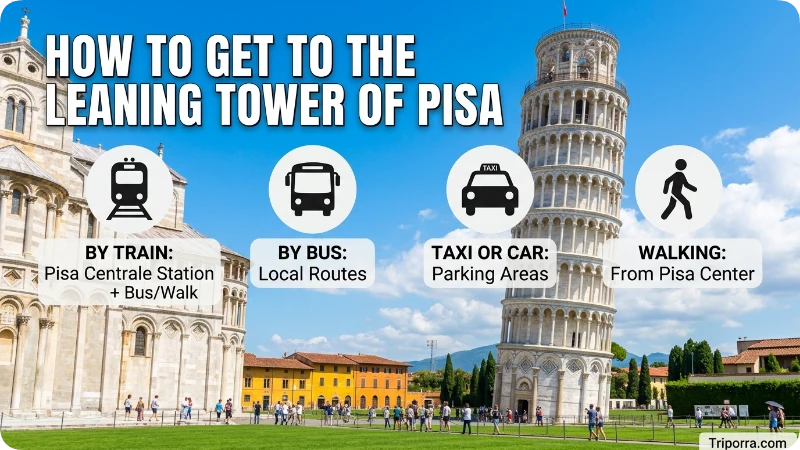
The Leaning Tower of Pisa is easy to reach by train, car, bus, or plane, making it one of the most accessible attractions in Tuscany.
By Train
Most visitors arrive at Pisa Centrale Station, which has direct rail connections from Florence, Rome, Milan, La Spezia, and other Italian cities. From the station, the tower is about a 20 to 25-minute walk. Local buses and taxis are also available.
By Car
If you’re driving, Pisa is connected by major highways, including the A11 and A12. Several paid parking areas are located outside the historic center, from where visitors can walk to Piazza del Duomo.
By Air
The nearest airport is Pisa International Airport (Galileo Galilei Airport), located only about 3 kilometers (2 miles) from the tower. It takes around 10–15 minutes by taxi or public transport.
From Florence
The Leaning Tower of Pisa is approximately 85 kilometers (53 miles) from Florence. Direct trains usually take about one hour, making Pisa one of Tuscany’s most popular day trips.
Many first-time visitors are surprised by how compact Pisa is. Once you reach the historic center, nearly all of the city’s major attractions are within walking distance.
Why Is the Leaning Tower of Pisa Famous?

The Leaning Tower of Pisa is famous because it leans noticeably to one side while remaining standing after more than 800 years. It serves as the bell tower for Pisa Cathedral, but its unexpected tilt transformed it into one of the world’s most recognizable landmarks.
Construction began in 1173, and engineers soon noticed that the foundation was sinking unevenly into soft clay and sandy soil. Rather than collapsing, the tower continued leaning as additional floors were built over many decades.
Modern engineering projects completed between the 1990s and early 2000s stabilized the structure and reduced the angle of the lean enough to keep it safe for visitors.
Another reason for its popularity is its architecture. Built from white marble in the Romanesque style, the tower features elegant columns, decorative arches, and seven bell chambers near the top.
Many travelers come to recreate the classic “holding up the tower” photo. While these playful pictures have become a tradition, what most guides miss is that the surrounding square contains equally important monuments, including Pisa Cathedral, the Baptistery, and Camposanto Monumentale.
A commonly repeated myth is that the lean was intentional. In reality, builders planned a perfectly straight bell tower. The famous tilt happened because the ground beneath one side could not support the heavy stone structure.
Today, visitors can climb nearly 300 steps to the top for views across Pisa and the Tuscan countryside.
What Is the Leaning Tower of Pisa Used For?
Although it is now one of Italy’s most famous tourist attractions, the Leaning Tower of Pisa was originally built as the bell tower (campanile) for Pisa Cathedral. Its primary purpose was to hold the cathedral’s bells, which rang to announce religious services, special ceremonies, and important events in the city.
Today, the tower serves several purposes. It remains part of the historic cathedral complex, attracts millions of visitors each year, and is one of the world’s best-known examples of medieval engineering. Visitors can climb its spiral staircase to enjoy panoramic views of Pisa and see the historic bell chamber near the top.
The Leaning Tower is also an important cultural landmark and a UNESCO World Heritage Site. Engineers continue to monitor the structure carefully to preserve it for future generations while allowing public access.
Why Doesn’t the Leaning Tower of Pisa Fall Over?
One of the most common questions visitors ask is why the Leaning Tower of Pisa has remained standing despite its noticeable tilt.
The tower survives because engineers have carried out several stabilization projects over the centuries, with the most successful work completed between the 1990s and early 2000s. During this restoration, specialists carefully removed small amounts of soil from beneath the higher side of the foundation. This reduced the angle of the lean while preserving the tower’s famous appearance.
Today, the tower leans by about 4 degrees and is considered stable for visitors. Engineers continue to monitor the structure using modern instruments to ensure that any future movement can be detected early.
Its survival is often regarded as one of the world’s greatest engineering success stories, combining medieval architecture with modern conservation techniques.
History

Construction of the Leaning Tower of Pisa began in 1173 during a period when Pisa was one of the Mediterranean’s leading maritime powers. The city wanted a grand bell tower that reflected its wealth and influence.
The tower was designed to serve as the cathedral’s freestanding bell tower, also known as a campanile. Its bells called worshippers to religious services and marked important occasions throughout the city. At the same time, the impressive structure demonstrated Pisa’s wealth, architectural skill, and political importance during the Middle Ages.
Only a few years after work started, construction paused because the tower had already begun to lean due to unstable ground. Ironically, these long construction breaks helped prevent disaster because the soil settled over time before builders added more weight.
Over the next two centuries, several architects contributed to the project. They attempted to compensate for the lean by making one side of the upper floors slightly taller than the other. This created the gentle curve that can still be seen today.
The tower was finally completed around 1372.
During the twentieth century, engineers became increasingly concerned about the growing tilt. Large stabilization efforts eventually removed soil beneath the higher side of the foundation, allowing the structure to straighten slightly without losing its famous appearance.
Today, the tower remains both a historic monument and an engineering case study, showing how careful preservation can protect fragile structures for future generations.
Climate & Weather

Pisa has a Mediterranean climate with warm summers and mild winters.
Spring brings pleasant temperatures, blooming gardens, and comfortable walking conditions. Many visitors consider April and May among the most enjoyable months for sightseeing.
Summer is warm, with daytime temperatures often ranging between 82°F and 90°F (28°C–32°C). Popular attractions become crowded, especially during July and August.
Autumn usually offers cooler weather and fewer tourists. September and October combine mild temperatures with good conditions for photography.
Winter remains relatively mild compared with much of Europe. Daytime temperatures generally stay between 46°F and 57°F (8°C–14°C), although occasional rain is common.
Visitors should also remember that the white marble surfaces reflect sunlight, making the square feel hotter than the surrounding streets during summer afternoons. Bringing water, sunscreen, and a hat is recommended between June and August.
Winter visits offer a different experience, with quieter streets and shorter ticket lines. Although occasional rain is possible, the cooler temperatures make climbing the tower more comfortable than during the hottest months.
Things to See & Do
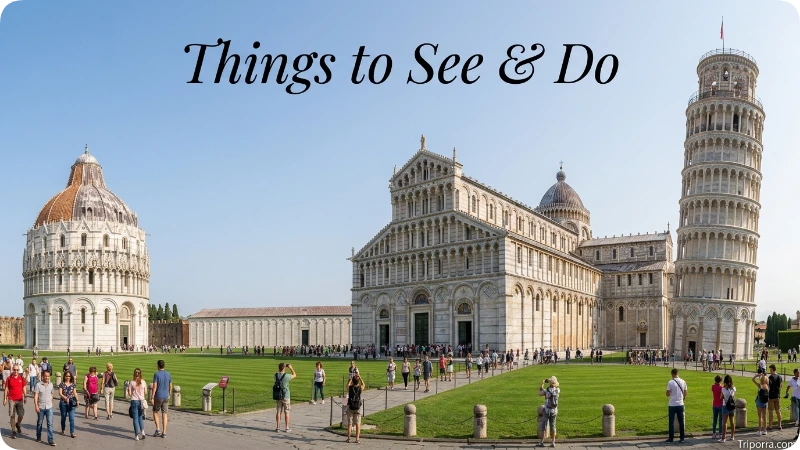
Historic Landmarks
Leaning Tower of Pisa
Climb the famous spiral staircase and enjoy panoramic views across Pisa.
Pisa Cathedral
Visit the impressive Romanesque cathedral that the tower was originally built to serve.
Baptistery of St. John
Explore Italy’s largest baptistery and experience its remarkable acoustics.
Camposanto Monumentale
Walk through this historic cemetery filled with medieval frescoes and marble tombs.
Museums & Culture
Opera del Duomo Museum
See sculptures, religious artwork, and original architectural pieces from the cathedral complex.
Sinopie Museum
Learn how medieval frescoes were created through preserved preparatory drawings.
Photography Spots
The Leaning Tower of Pisa is one of the world’s most photographed landmarks. Popular locations include the lawns of Piazza del Duomo, where visitors recreate the famous “holding up the tower” pose, and the nearby city walls, which provide elevated views of the entire UNESCO complex. Early morning and late afternoon usually offer the best lighting for photography while avoiding the largest crowds.
City Experiences
Walk Along the Arno River
Enjoy cafés, historic buildings, and bridges connecting both sides of Pisa.
Piazza dei Cavalieri
Visit one of Pisa’s most important public squares, known for Renaissance architecture and student life.
Local Food
Try regional specialties such as:
- Cecina (chickpea flatbread)
- Ribollita soup
- Tuscan cured meats
- Handmade pasta
- Gelato from local shops
Travellers often overlook Pisa’s local restaurants because they spend most of their time around the tower. Walking just a few streets away often leads to quieter cafés with more traditional Tuscan dishes.
Best Time to Visit
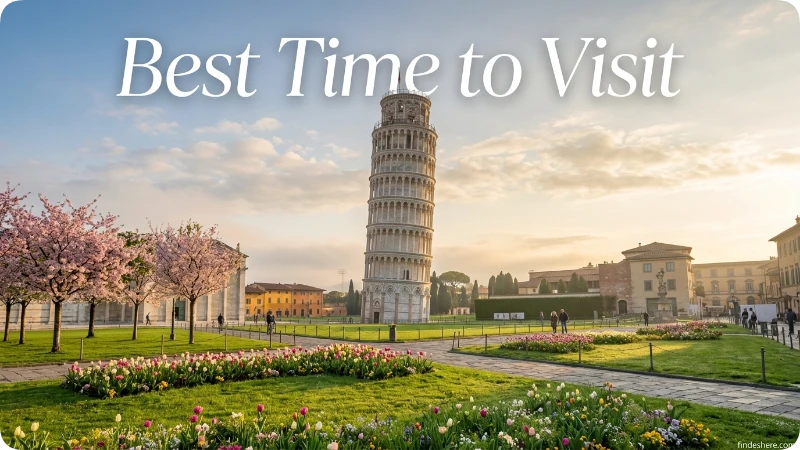
Spring (April to June) is generally the best time to visit. Mild temperatures, blooming gardens, and longer daylight hours create comfortable sightseeing conditions without the intense summer heat.
Autumn, especially September and October, offers another excellent option. Crowds begin to decrease while the weather stays pleasant enough for walking around the historic center.
Summer attracts the highest number of visitors. Longer opening hours are an advantage, but expect queues for climbing the tower and higher accommodation prices.
Winter brings fewer tourists and lower hotel rates. Although rain is more likely, shorter lines make it easier to enjoy the monument at a relaxed pace.
If you want to climb the tower, booking tickets several days in advance is recommended during spring and summer. Early morning visits usually offer cooler temperatures, better lighting for photos, and shorter queues than the busy midday period.
What many guides miss is that visiting shortly after opening or during the final admission period often provides a calmer experience than arriving around midday, regardless of the season.
Common Misconceptions

Many people believe the Leaning Tower of Pisa is a standalone monument. In reality, it is the bell tower of Pisa Cathedral and forms part of a larger UNESCO-listed complex.
Another common misunderstanding is that engineers built the tower with the lean on purpose. The tilt happened accidentally because the soft ground beneath one side of the foundation could not evenly support the heavy structure.
Some visitors also assume Pisa is a district of Florence. It is actually an independent city in Tuscany with its own long history.
Related Places
Florence
About 85 kilometers (53 miles) east of Pisa, Florence is Tuscany’s capital and home to Renaissance landmarks, museums, and famous art collections.
Lucca
Roughly 20 kilometers (12 miles) northeast, Lucca is known for its well-preserved Renaissance walls, historic churches, and bicycle-friendly streets.
Livorno
Located about 25 kilometers (16 miles) southwest, Livorno serves as an important port city with waterfront promenades and seafood restaurants.
Cinque Terre
North of Pisa, this stretch of colorful coastal villages offers scenic hiking trails and sea views, making it a popular extension to a Tuscany trip.
San Gimignano
Known for its medieval towers, this hill town provides a different view of Tuscany’s historic architecture and countryside.
How Far Is the Leaning Tower of Pisa From Other Major Italian Cities?
The Leaning Tower of Pisa is well connected to several famous destinations across Italy, making it easy to include in a wider travel itinerary.
| City | Approximate Distance |
|---|---|
| Florence | 85 km (53 mi) |
| Lucca | 20 km (12 mi) |
| Livorno | 25 km (16 mi) |
| Cinque Terre | 80 km (50 mi) |
| Rome | 355 km (221 mi) |
| Milan | 280 km (174 mi) |
| Venice | 325 km (202 mi) |
Florence is the most popular starting point for a visit because of its frequent train service. Travelers exploring northern Italy often combine Pisa with Lucca, Cinque Terre, or Florence during the same trip.
What Else Do People Want to Know?
Many visitors planning a trip to the Leaning Tower of Pisa ask practical questions before they arrive. The tower is generally considered safe to visit, and the area around Piazza del Duomo is well-patrolled and popular with tourists. Like any busy destination, keep an eye on your belongings, especially during peak travel months.
Climbing the tower requires purchasing a timed-entry ticket because only a limited number of people can enter at once. Children under a certain age are not permitted to climb due to safety rules, and visitors should wear comfortable shoes because the spiral staircase has nearly 300 marble steps.
Most travelers combine Pisa with Florence or Lucca as part of a day trip. However, spending a full day in Pisa gives you time to explore museums, riverside streets, and local restaurants that many day-trippers miss.
If you’re arriving by train, the walk from Pisa Centrale Station takes about 20 to 25 minutes. Local buses and taxis are also available for those who prefer not to walk.
FAQs
1. Where is the Leaning Tower of Pisa located?
The Leaning Tower of Pisa is in Pisa, Tuscany, Italy, in the Piazza del Duomo (Cathedral Square).
2. What country is the Leaning Tower of Pisa in?
The Leaning Tower of Pisa is in Italy, in the Tuscany region of central Italy.
3. Where is the Leaning Tower of Pisa from Rome?
Pisa is about 220 miles (355 km) northwest of Rome by road, taking roughly 4 hours by car.
4. Why was the Leaning Tower of Pisa built?
It was built as the freestanding bell tower, or campanile, for Pisa Cathedral. Construction began in 1173.
5. Where is the Leaning Tower of Pisa on a map?
It is located in western Tuscany, near the Arno River and about 12 miles (20 km) from Italy’s Mediterranean coast.
6. How old is the Leaning Tower of Pisa?
Construction began in 1173, so the tower is more than 850 years old as of 2026.
7. What is the Leaning Tower of Pisa used for?
It serves as the bell tower of Pisa Cathedral and is also one of Italy’s most famous historic landmarks and tourist attractions.
8. Why is the Leaning Tower of Pisa famous?
It is famous for its distinctive tilt, which developed because the tower was built on unstable, soft ground.
9. Where is the Leaning Tower of Pisa located exactly?
It stands in Piazza del Duomo, also known as Piazza dei Miracoli, in the city of Pisa, Tuscany, Italy.
10. Is Pisa in Florence?
No. Pisa and Florence are separate cities in Tuscany. Pisa is about 53 miles (85 km) west of Florence.
11.Is the Leaning Tower of Pisa in Rome?
No. The Leaning Tower of Pisa is located in the city of Pisa in the Tuscany region of central Italy. Although many international visitors associate famous Italian landmarks with Rome, the tower has always been part of Pisa.
Final Thoughts
The Leaning Tower of Pisa is much more than a famous photo stop. Its unusual lean, centuries of history, and remarkable engineering story make it one of Italy’s most fascinating landmarks. The surrounding cathedral complex adds even more depth, offering visitors a chance to experience medieval architecture in one place.
Whether you’re visiting Tuscany for a day or planning a longer Italian journey, taking time to explore beyond the tower itself often leads to a more rewarding experience. From quiet riverside streets to historic squares and local cafés, Pisa has far more to offer than many first-time visitors expect.

Elena Rostova bridges the gap between premium hospitality and authentic local experiences. Armed with a background in luxury hospitality management and a passion for fine architecture, she spent years evaluating elite resorts before transitioning into travel journalism. Elena heads the luxury and boutique travel vertical on Triporra.com. Her meticulous guides strip away the guesswork from high-end travel, showcasing unique five-star escapes, fine regional dining, and bespoke private tours that elevate a standard vacation into an unforgettable journey.