If you’re wondering where is Maine, it is the northeasternmost state in the contiguous United States. Located in the New England region, Maine borders New Hampshire to the west, the Canadian provinces of Quebec and New Brunswick to the north and northeast, and the Atlantic Ocean to the southeast. Known for its rugged coastline, forests, mountains, and fresh lobster, Maine is a popular destination for outdoor adventures and coastal scenery.
Whether you’re planning a trip, studying U.S. geography, or simply looking for Maine on a map, this guide has you covered. You’ll learn where Maine is located, what it borders, its major cities, climate, top attractions, and what makes the Pine Tree State one of the most unique places in the United States.
Featured Snippet
Maine is the north easternmost state in the contiguous United States, located in the New England region. It borders New Hampshire to the west, the Canadian provinces of Quebec and New Brunswick to the north and northeast, and the Atlantic Ocean to the southeast. Known for its rugged coastline, forests, Acadia National Park, and fresh lobster, Maine’s capital is Augusta, while Portland is its largest city.
Quick Facts Table
| Fact | Details |
|---|---|
| Official Name | State of Maine |
| Country | United States |
| Region | New England |
| Statehood | March 15, 1820 |
| Capital | Augusta |
| Largest City | Portland |
| Population | Approximately 1.41 million (2024 estimate) |
| Area | About 35,380 square miles (91,646 sq km) |
| Time Zone | Eastern Time (ET) |
| Highest Point | Mount Katahdin – 5,269 ft (1,606 m) |
| Coastline | About 3,500 miles (5,633 km), including islands and inlets |
| Nickname | The Pine Tree State |
| State Bird | Black-capped Chickadee |
| State Tree | Eastern White Pine |
| Bordering State | New Hampshire |
| International Borders | Quebec and New Brunswick, Canada |
Where Is Maine Located on the Map?
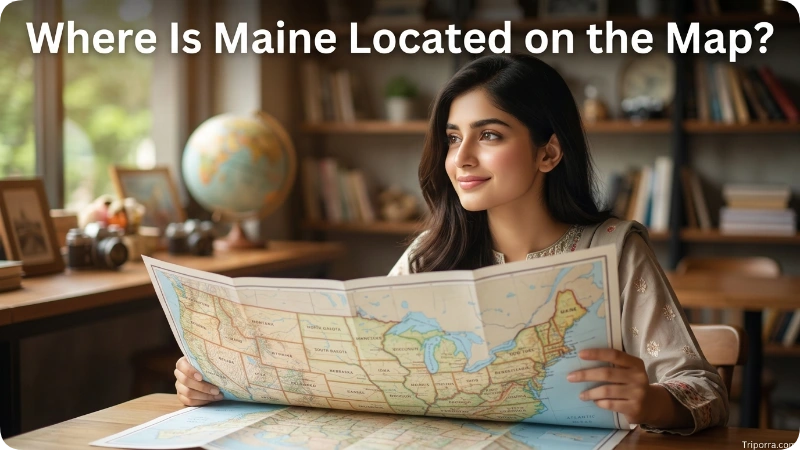
Maine is located in the far northeastern corner of the United States. On a map, it appears above New Hampshire and extends toward the Atlantic Ocean. It is the only U.S. state with just one neighboring state—New Hampshire.
Its eastern border meets the Canadian province of New Brunswick, while its northern border touches Quebec. The Atlantic Ocean forms most of Maine’s southeastern coastline.
Because of this location, Maine serves as an important link between the United States and eastern Canada.
How Can You Easily Find Maine on a U.S. Map?
If you are looking at a map of the United States, Maine is the state in the extreme upper-right corner of the country. It has a distinctive irregular coastline that stretches along the Atlantic Ocean and borders only one U.S. state—New Hampshire.
To quickly identify Maine:
- Look for New England in the northeastern United States.
- Find New Hampshire.
- Maine is directly east of New Hampshire.
- Canada borders Maine to the north and northeast.
- The Atlantic Ocean lies to the southeast.
Because of its unique shape and coastal location, Maine is one of the easiest U.S. states to recognize on a map.
What Region Is Maine In?
Maine is one of the six states that make up New England, a region in the northeastern United States.
The six New England states are:
- Maine
- New Hampshire
- Vermont
- Massachusetts
- Rhode Island
- Connecticut
New England is known for its colonial history, coastal towns, seafood, colorful autumn foliage, and prestigious universities. Maine occupies the northernmost and easternmost part of this region.
What States and Provinces Border Maine?
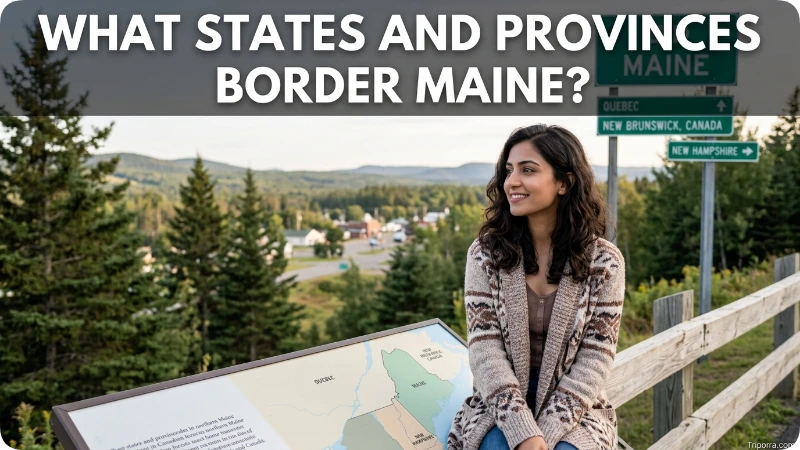
Maine has fewer neighbors than any other state except Alaska and Hawaii.
U.S. Border
- New Hampshire lies directly west of Maine.
Canadian Borders
Maine shares an international border with:
- Quebec
- New Brunswick
These borders make Maine one of the few U.S. states with significant cross-border trade and tourism with Canada.
The Atlantic Ocean borders Maine on the southeast, giving the state one of the country’s most famous coastlines.
How Far Is Maine From Major U.S. Cities?
Travel distances depend on your exact starting point and destination. The estimates below use Portland, Maine, as the reference city.
CityApproximate Driving DistanceTypical Drive TimeBoston, Massachusetts110 miles (177 km)About 2 hoursNew York City315 miles (507 km)5.5–6.5 hoursPhiladelphia410 miles (660 km)7–8 hoursWashington, D.C.530 miles (853 km)Around 9 hoursMontreal, Canada260 miles (418 km)Around 5 hours
Driving times vary depending on traffic, weather, road conditions, and your destination within Maine.
What Is Maine Known For?
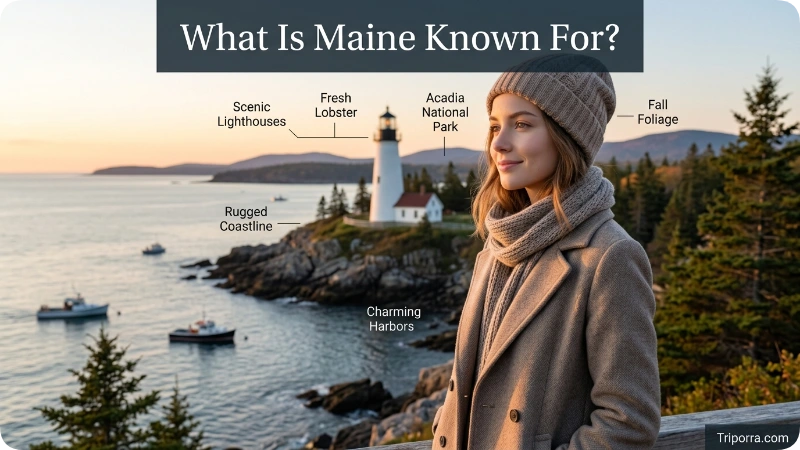
Maine is known for its natural beauty, seafood, outdoor recreation, and long Atlantic coastline.
Some of its best-known features include:
- Fresh Maine lobster
- Rocky coastal scenery
- Acadia National Park
- Historic lighthouses
- Dense forests
- Blueberry farms
- Moose population
- Outdoor hiking and camping
- Whale watching
- Fall foliage
Tourism plays a major role in Maine’s economy, especially during summer and autumn.
People also visit Maine for sailing, kayaking, fishing, skiing, and scenic drives.
Why Is Maine Called the Pine Tree State?
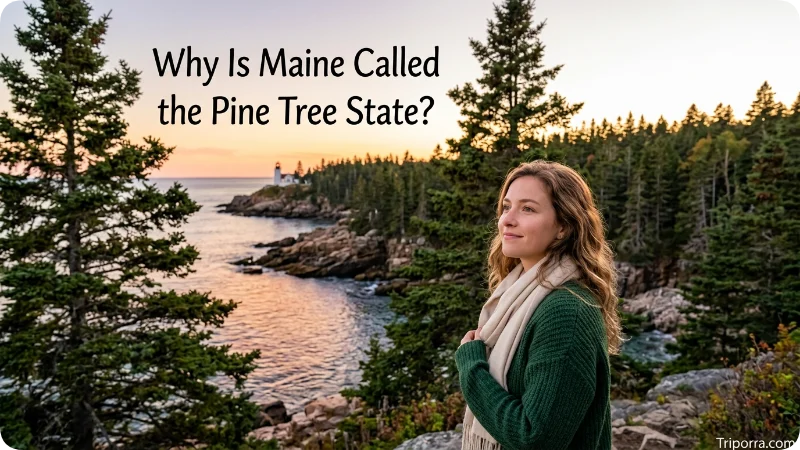
Maine is known as the Pine Tree State because forests cover most of its land, and the eastern white pine has played an important role in the state’s history and economy. During the colonial era, these trees were widely used for shipbuilding and construction.
Today, forests remain an important part of Maine’s identity, supporting the forestry industry, outdoor recreation, and wildlife habitats. The eastern white pine is also the official state tree.
What Are Maine’s Major Cities?
Although Augusta is the capital, Portland is the state’s largest and busiest city.
Some important cities include:
Portland
Portland is Maine’s largest city and its main economic center. It has a busy harbor, restaurants, museums, and ferry services.
Augusta
Augusta serves as the state capital and is home to Maine’s government offices.
Bangor
Bangor is known for its cultural attractions, nearby outdoor recreation, and connection to author Stephen King.
Lewiston
Lewiston is one of Maine’s largest inland cities and has a strong manufacturing and educational history.
Auburn
Located across the Androscoggin River from Lewiston, Auburn forms one of the state’s largest metropolitan areas.
Where Do Most People Live in Maine?
Although Maine is the largest state in New England by land area, most of its population lives in the southern part of the state. Cities and towns around Portland, South Portland, Biddeford, and nearby coastal communities are home to a large share of Maine’s residents.
Northern and western Maine are much more rural, with forests, mountains, lakes, and small towns spread across wide areas. The Greater Portland region serves as the state’s main economic and population center.
What Is the Climate Like in Maine?
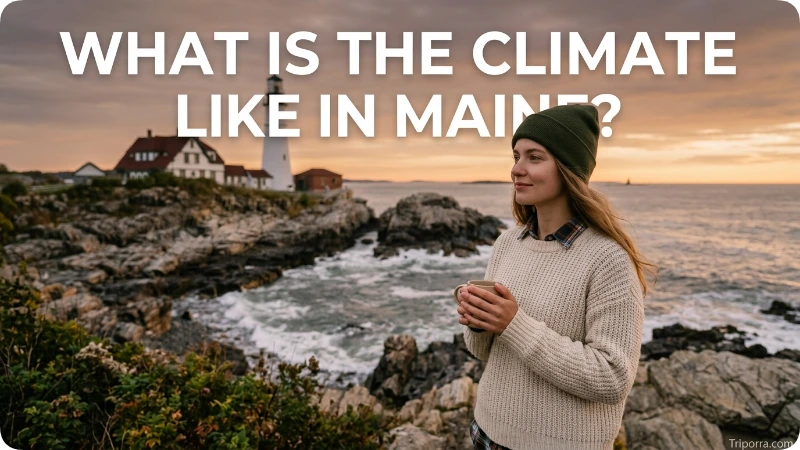
Maine has a humid continental climate, which means it experiences four distinct seasons. Weather can vary between the coast and inland areas, with coastal communities generally having milder winters and cooler summers than the interior.
Here’s what you can expect throughout the year:
Spring (March to May)
Spring starts slowly, especially in northern Maine. Snow may linger into April in some areas, while southern parts warm up earlier. Temperatures typically range from 35°F to 65°F (2°C to 18°C).
Summer (June to August)
Summer is warm but rarely extremely hot. Average daytime temperatures range from 70°F to 85°F (21°C to 29°C). Coastal areas often stay cooler thanks to ocean breezes, making summer one of the busiest travel seasons.
Fall (September to November)
Fall is famous for colorful foliage. Temperatures usually range from 40°F to 70°F (4°C to 21°C). Many visitors travel to Maine during September and October to see the changing leaves.
Winter (December to February)
Winters are cold and snowy, especially inland and in northern Maine. Temperatures often range from 5°F to 32°F (-15°C to 0°C). Snowfall supports popular winter activities such as skiing, snowmobiling, and snowshoeing.
⭐ Did You Know? Northern Maine usually receives much more snowfall than the southern coast because of its colder inland climate and higher elevations.
When Is the Best Time to Visit Maine?

The best time to visit depends on what you want to experience.
Summer (June–August)
Summer is ideal for:
- Beaches
- Whale watching
- Sailing
- Hiking
- National parks
- Coastal towns
- Fresh lobster
This is also the busiest tourist season, so hotels and attractions can book quickly.
Fall (September–October)
Many travelers consider fall the best season because of:
- Colorful autumn leaves
- Comfortable temperatures
- Scenic drives
- Apple orchards
- Harvest festivals
- Smaller crowds than midsummer
Winter (December–March)
Winter is perfect for:
- Skiing
- Snowboarding
- Ice fishing
- Snowmobiling
- Winter festivals
Spring (April–May)
Spring is quieter and often less expensive, although some seasonal attractions may not be fully open until late May.
How Can You Get to Maine?

Maine is accessible by air, road, rail, bus, and ferry.
By Air ✈️
The state’s largest airport is:
- Portland International Jetport (PWM)
Other airports include:
- Bangor International Airport (BGR)
- Augusta State Airport (AUG)
- Hancock County-Bar Harbor Airport (BHB)
- Presque Isle International Airport (PQI)
Travelers can also fly into Boston Logan International Airport and drive north to Maine.
By Car 🚗
Major highways include:
- Interstate 95
- Interstate 295
- U.S. Route 1, which follows much of the coastline
Driving remains the easiest way to explore Maine’s coast, mountains, and rural communities.
By Train 🚆
Amtrak’s Downeaster connects Boston with several southern Maine cities, including Portland, Freeport, and Brunswick.
By Bus 🚌
Regional and long-distance bus services connect Maine with Boston, New York, and other northeastern cities.
By Ferry ⛴️
Passenger ferries provide access to several islands, including destinations in Casco Bay and communities along the state’s coast.
What Are the Top Places to Visit in Maine?
Maine offers a mix of coastline, forests, mountains, and historic towns.
Acadia National Park
Acadia National Park is Maine’s best-known attraction. Visitors enjoy hiking, biking, wildlife viewing, and sunrise from Cadillac Mountain, one of the first places in the contiguous United States to see the morning sun during parts of the year.
Why Is Acadia National Park So Popular?
Acadia National Park attracts millions of visitors because it combines mountains, forests, lakes, and dramatic Atlantic coastline in one destination. Visitors enjoy hiking scenic trails, driving the Park Loop Road, watching the sunrise from Cadillac Mountain, kayaking, wildlife viewing, and exploring historic carriage roads.
Its easy access from Bar Harbor and wide range of outdoor activities make it one of the most popular national parks in the United States.
Portland
Portland combines a working waterfront with historic neighborhoods, seafood restaurants, museums, and shopping.
Bar Harbor
Bar Harbor serves as the main gateway to Acadia National Park. The town is known for its waterfront, boat tours, and local seafood.
Kennebunkport
This coastal town is famous for sandy beaches, historic homes, boutique shops, and summer visitors.
Baxter State Park
Home to Mount Katahdin, Baxter State Park offers excellent hiking, camping, and wildlife viewing.
Moosehead Lake
Moosehead Lake is the largest lake entirely within Maine. It is popular for boating, fishing, kayaking, and spotting moose.
Old Orchard Beach
Old Orchard Beach is one of Maine’s best-known beach destinations, featuring a long sandy shoreline, amusement rides, and a historic pier.
What Is Maine’s Geography Like?
Maine covers about 35,380 square miles (91,646 sq km), making it the largest state in New England by land area.
Its landscape includes:
- More than 3,000 miles (4,828 km) of tidal coastline, or roughly 3,500 miles (5,633 km) when islands and inlets are included
- Thousands of lakes and ponds
- More than 17 million acres of forest
- Mountain ranges in the west and north
- Rivers that flow into the Atlantic Ocean
- Hundreds of offshore islands
Does Maine Have Mountains, Beaches, and Forests?
Yes. Maine is one of the few U.S. states where you can experience mountains, forests, lakes, rivers, and the Atlantic coastline within a single trip.
Western and northern Maine are home to mountain ranges, including Mount Katahdin, the state’s highest peak. Central Maine contains thousands of lakes and rivers, while the southern and eastern parts feature sandy beaches, rocky shores, fishing villages, and scenic coastal parks.
With around 90% of its land covered by forests, Maine is often considered one of the most heavily forested states in the country.
What Is Maine’s History?
Maine has a long history that began thousands of years before European settlement. Indigenous peoples, including the Wabanaki Nations—the Penobscot, Passamaquoddy, Maliseet, Mi’kmaq, and Abenaki—have lived in this region for generations and continue to play an important role in the state’s culture today.
European explorers arrived along the coast in the early 1600s. The area was part of the Massachusetts Bay Colony for many years before becoming its own state.
Here are some key milestones:
- 1604: French explorers established one of the earliest European settlements on Saint Croix Island.
- 1620s–1700s: English settlements expanded along the coast.
- 1820: Maine became the 23rd U.S. state under the Missouri Compromise.
- 1800s: Shipbuilding, fishing, lumber, and farming became major industries.
- 1900s–Present: Tourism, healthcare, education, forest products, technology, and outdoor recreation have become important parts of the economy.
Today, Maine is known for preserving its natural landscapes while supporting modern industries and coastal communities.
⭐ Did You Know? Maine separated from Massachusetts in 1820 and officially joined the United States as the 23rd state.
What Is Maine’s Population and Culture?
As of 2024 estimates, Maine has a population of approximately 1.41 million people, making it one of the least densely populated states in the United States.
Although the population is relatively small, Maine covers a large area, so many communities are spread across rural regions.
Largest Cities by Population
- Portland
- Lewiston
- Bangor
- South Portland
- Auburn
Languages
English is the primary language spoken throughout the state. French is also common in parts of northern Maine because of the state’s close ties with neighboring Quebec and New Brunswick. Spanish and several other languages are spoken in growing communities across the state.
Local Traditions
Maine’s culture reflects its coastal location, forests, and small-town communities. Popular traditions include:
- Lobster festivals
- County fairs
- Maritime celebrations
- Blueberry harvest events
- Winter carnivals
- Arts and crafts festivals
Fresh seafood, especially lobster, clams, oysters, and scallops, plays an important role in local cuisine.
What Are Maine’s Economy and Major Industries?
Maine has a diverse economy that combines traditional industries with newer sectors.
Some of the state’s largest industries include:
Tourism
Millions of visitors travel to Maine each year for its coastline, national parks, mountains, lakes, and outdoor activities. Tourism supports hotels, restaurants, transportation, and local businesses.
Fishing and Seafood
Maine is famous for its lobster industry. Lobster fishing supports thousands of jobs and contributes significantly to the state’s economy. Commercial fisheries also harvest clams, scallops, oysters, shrimp (when seasons allow), and other seafood.
Forestry and Paper
With millions of acres of forest, timber production remains important. Forest products include lumber, wood pellets, paper, and furniture materials.
Agriculture
Farmers produce:
- Wild blueberries
- Potatoes
- Maple syrup
- Apples
- Dairy products
Maine is one of the leading producers of wild blueberries in the United States.
Manufacturing and Technology
Modern manufacturing includes precision equipment, marine technology, biotechnology, food processing, and renewable energy products.
Healthcare and education have also become major employers across the state.
What Food Is Maine Famous For?
Maine is best known for its fresh seafood, especially lobster. Lobster rolls are one of the state’s signature dishes and are enjoyed by both residents and visitors.
Other foods commonly associated with Maine include:
- Wild blueberries
- Clams
- Oysters
- Scallops
- New England clam chowder
- Maple syrup
- Potatoes
- Whoopie pies
Many local restaurants and annual food festivals celebrate Maine’s seafood and farming traditions throughout the year.
Is Maine Safe to Visit?
Yes. Maine is generally considered one of the safer states in the United States for residents and visitors. Many communities have low crime rates compared with national averages.
Still, travelers should follow common safety precautions.
Coastal Safety
- Watch tides and changing weather.
- Stay back from rocky cliff edges.
- Wear life jackets during boating or kayaking.
Wildlife Safety
Maine is home to:
- Moose
- Black bears
- White-tailed deer
Observe wildlife from a safe distance and never feed wild animals. Moose are especially active around dawn and dusk, so drivers should stay alert on rural roads.
Winter Safety
Winter weather can bring:
- Heavy snowfall
- Ice-covered roads
- Strong winds
Check weather forecasts and road conditions before traveling during winter months.
⭐ Travel Tip: Cell phone coverage may be limited in remote forests and mountain areas. Download maps before heading into less populated regions.
Is Maine a Good Place to Live?
Many people choose Maine because of its natural scenery, outdoor lifestyle, and slower pace of life. Residents enjoy easy access to forests, lakes, mountains, and the Atlantic coast, making it an attractive place for people who enjoy nature and recreation.
Some of the advantages of living in Maine include safe communities, beautiful landscapes, and a strong sense of local culture. However, winters can be long and snowy, and employment opportunities vary by region. Coastal areas also tend to have higher housing costs than inland communities.
How Does Maine Compare With Other New England States?
Maine is the largest state in New England by land area but has one of the region’s smallest populations. Compared with neighboring states, Maine has more forests, a longer coastline, and larger areas of undeveloped wilderness.
While states such as Massachusetts are known for large cities and universities, Maine is widely recognized for its outdoor recreation, fishing communities, national parks, and scenic coastal landscapes.
Fun Facts About Maine
Maine has many interesting features that surprise first-time visitors.
- 🦞 Maine supplies most of the United States’ lobster catch.
- 🌲 Around 90% of the state is forested.
- 🌊 Maine has more than 4,600 offshore islands.
- 🏔️ Mount Katahdin marks the northern end of the Appalachian Trail.
- 🫐 Maine is one of the nation’s leading producers of wild blueberries.
- 🚢 The state has thousands of miles of tidal coastline when all bays, coves, islands, and inlets are included.
- 🫎 Maine has one of the largest moose populations in the contiguous United States.
- 🌅 Parts of Maine are among the first places in the contiguous United States to see the sunrise during parts of the year.
- 🏖️ The state offers both sandy beaches and rugged rocky shores.
- ⚓ More than 60 historic lighthouses stand along Maine’s coastline, many of which remain popular visitor attractions.
Did You Mean a Different Place?
The term “Maine” almost always refers to the U.S. state. However, you may occasionally come across other uses of the name.
Some examples include:
- Province of Maine – A historical English colony that existed before Maine became part of Massachusetts.
- Maine Township – Several townships and local government areas in different U.S. states use the name “Maine.”
- University of Maine – A public university located in Orono, Maine.
If your search was about one of these places or institutions, look for the specific name to find the most relevant information.
FAQ
Is Maine a state or a city?
Maine is a state in the United States, not a city. It is one of the six New England states, with Augusta as its capital and Portland as its largest city.
Where is Maine in relation to New York?
Maine is northeast of New York. The driving distance from New York City to Portland, Maine, is about 315 miles (507 km), with a typical drive taking 5.5 to 6.5 hours, depending on traffic and road conditions.
Does Maine border Canada?
Yes. Maine shares an international border with the Canadian provinces of Quebec and New Brunswick. Several border crossings connect the state with Canada for travel and trade.
Is Maine on the East Coast?
Yes. Maine is located on the East Coast of the United States along the Atlantic Ocean. Its rocky shoreline, islands, beaches, and fishing harbors make it one of the country’s best-known coastal states.
What is the capital of Maine?
The capital of Maine is Augusta. Although Augusta serves as the state’s political center, Portland is the largest city and the main commercial hub.
What is Maine famous for?
Maine is best known for its lobster, rugged Atlantic coastline, Acadia National Park, historic lighthouses, forests, mountains, wild blueberries, and outdoor recreation. It is also a popular destination for hiking, boating, and fall foliage.
What is the closest state to Maine?
New Hampshire is the only U.S. state that borders Maine. To the north and east, Maine also borders the Canadian provinces of Quebec and New Brunswick.
What ocean is Maine on?
Maine borders the Atlantic Ocean. Its coastline includes numerous bays, coves, peninsulas, and thousands of islands that attract visitors from around the world.
What is the best time to visit Maine?
The best time to visit depends on your interests. Summer (June to August) is ideal for beaches and coastal activities, while fall (September to October) is popular for colorful foliage and scenic drives. Winter attracts visitors for skiing and other snow sports.
Is Maine a good place to live?
Many people consider Maine a good place to live because of its natural scenery, outdoor recreation, smaller communities, and relatively low population density. However, factors such as employment opportunities, housing costs, healthcare access, and winter weather vary by location and should be considered before moving.
Is Maine the northernmost state in the United States?
No. Alaska is the northernmost U.S. state. However, Maine is the northeasternmost state in the contiguous United States and the easternmost state among the lower 48 states.
Why is Maine called Vacationland?
Maine is often called “Vacationland” because millions of visitors travel there each year to enjoy its coastline, forests, mountains, lakes, charming towns, and outdoor recreation. The nickname has appeared on Maine license plates for decades.
What country is closest to Maine?
Canada is the closest country to Maine. The state shares international borders with the Canadian provinces of Quebec and New Brunswick, making cross-border travel and trade common.
Does Maine have beaches?
Yes. Maine has many beautiful beaches along its Atlantic coastline. Popular destinations include Old Orchard Beach, Ogunquit Beach, Popham Beach State Park, and Reid State Park. Visitors can also enjoy rocky shores and quiet coastal coves throughout the state.
Can you drive from Boston to Maine?
Yes. Interstate 95 connects Boston with southern Maine. Driving from Boston to Portland typically takes about two hours, depending on traffic and weather conditions.
Does Maine have a national park?
Yes. Acadia National Park is Maine’s only national park and one of the most visited national parks in the United States. It is famous for its hiking trails, coastal scenery, wildlife, and views from Cadillac Mountain.
Conclusion
Maine is the northeasternmost state in the contiguous United States, occupying a special place in the New England region. It borders New Hampshire, Quebec, New Brunswick, and the Atlantic Ocean, making it both a coastal destination and an important gateway between the United States and Canada.
Whether you’re searching for Maine on a map, planning a vacation, or learning about U.S. geography, you’ll find a state known for its rugged coastline, dense forests, mountain landscapes, fresh seafood, and welcoming small towns. From Acadia National Park and Mount Katahdin to Portland’s working waterfront and the state’s famous lobster industry, Maine offers a wide variety of natural and cultural attractions.
Understanding where Maine is also helps explain why its climate, economy, and traditions are so closely connected to the Atlantic Ocean and the surrounding wilderness. With its rich history, scenic beauty, and year-round outdoor activities, Maine continues to be one of the most distinctive and memorable states in the United States.

About Leo Sterling
Leo Sterling is a geography and travel writer at Triporra.com who believes understanding a place starts with knowing exactly where it is. He turns geographic details on countries, regions, islands, and cities into clear, engaging content for everyday readers.
For Leo, a good location article does more than mark a spot on a map. It shows what borders a place, which region it belongs to, and how it connects to the world around it—an approach reflected in guides like where is Anguilla, where solid research meets a simple, conversational style.
Whether readers are planning a trip, studying, or just curious, Leo’s goal is the same: deliver accurate, easy-to-understand information without unnecessary complexity.
Areas of Focus: Geography | Countries & Regions | Caribbean Islands | Travel Destinations | Location Research | “Where Is?” Content