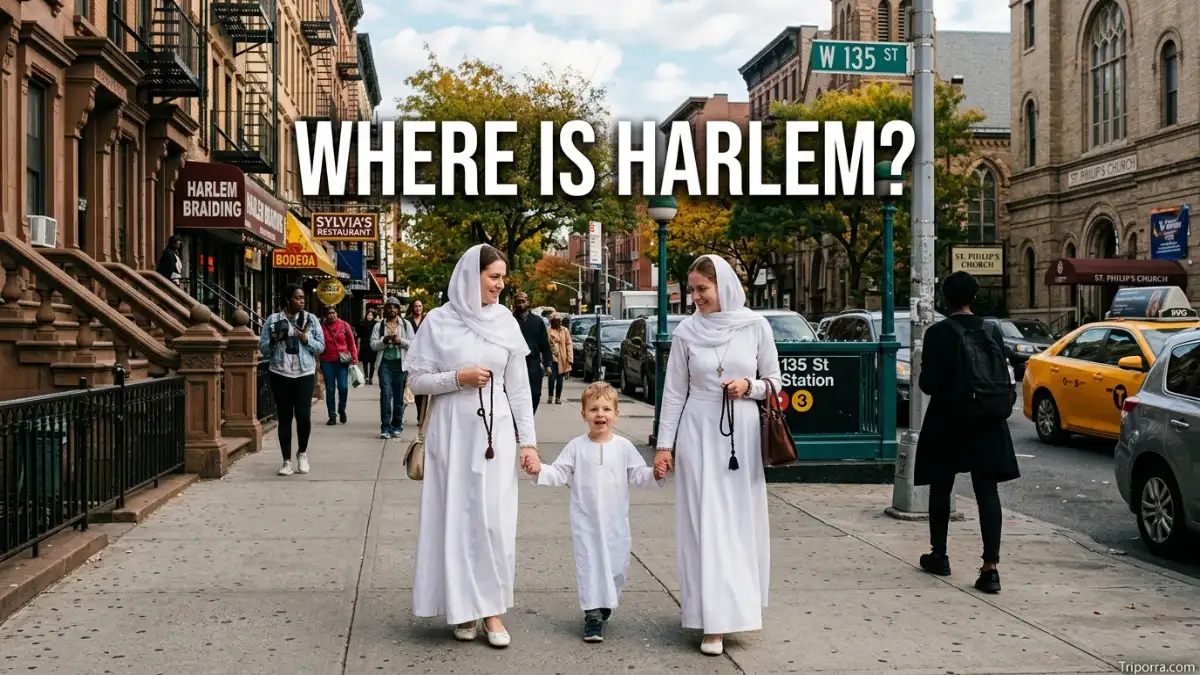
Harlem is a historic neighborhood in Upper Manhattan, New York City, New York. It lies north of Central Park and forms part of Manhattan, one of New York City’s five boroughs. The area is widely known for its African American cultural heritage, music, literature, art, food, and important place in American history.
The neighborhood is not a separate city or municipality. It is part of New York City and New York State. Its boundaries can vary depending on whether someone means historic Harlem, Central Harlem, East Harlem, or West Harlem.
Featured Snippet
Harlem is a neighborhood in Upper Manhattan, New York City, New York. It is north of Central Park and includes several communities in northern Manhattan. The area is famous for the Harlem Renaissance, the Apollo Theater, African American culture, music, literature, and historic landmarks.
Quick Facts About Harlem
| Fact | Information |
|---|---|
| Place type | Neighborhood |
| Country | United States |
| State | New York |
| City | New York City |
| Borough | Manhattan |
| Region | Upper Manhattan |
| Location | Northern Manhattan, north of Central Park |
| Approximate coordinates | 40.81° N, 73.95° W |
| Known for | Harlem Renaissance, music, arts, African American culture |
| Famous landmark | Apollo Theater |
| Major street | 125th Street |
| Time zone | Eastern Time |
| Nearest major airports | LaGuardia Airport and JFK International Airport |
| Name origin | Haarlem, Netherlands |
Where Is Harlem Located on the Map?
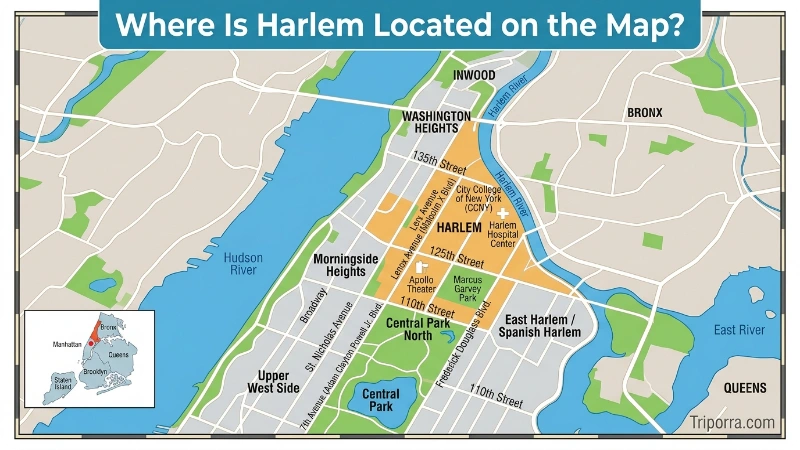
Harlem occupies a large section of northern Manhattan. It is positioned above Central Park and north of Midtown Manhattan. The Hudson River lies to the west, while the Harlem River and East River are found to the north and east.
The exact boundaries are not fixed because the name can describe several related areas. Central Harlem is generally associated with the historic core, while East Harlem and West Harlem have their own identities and histories.
A simple geographic picture is:
- South: Central Park and Morningside Heights
- North: Hamilton Heights and Washington Heights
- West: Hudson River
- East: East River and areas of East Harlem
- Center: Central Harlem
The neighborhood is part of the larger Upper Manhattan area and is well connected to other sections of New York City.
What City and State Is Harlem In?
Harlem is in New York City, New York State. It belongs to Manhattan Borough, which is one of the five boroughs of New York City.
The five boroughs are:
- Manhattan
- Brooklyn
- Queens
- The Bronx
- Staten Island
Because Harlem is a neighborhood, it does not have its own city government or state. City services such as transportation, police, schools, sanitation, and public facilities are provided through New York City’s government.
What Areas Make Up Harlem?
The name covers several communities in northern Manhattan. Each area has its own character and history.
Central Harlem
Central Harlem is the area most closely associated with the neighborhood’s historic identity. It developed into a major center of African American life during the early 20th century.
This part of Manhattan is strongly connected with:
- The Harlem Renaissance
- Jazz and other musical traditions
- Historic churches
- The Apollo Theater
- African American literature and arts
Many well-known cultural institutions are located in or near Central Harlem.
East Harlem
East Harlem lies east of Fifth Avenue and is commonly known as El Barrio. The community has a strong Puerto Rican and Latino heritage.
Its cultural identity can be seen through:
- Latin music
- Public art
- Community organizations
- Restaurants and markets
- Puerto Rican history
East Harlem also contains important cultural and historic sites.
West Harlem
West Harlem lies toward the Hudson River and includes communities such as Hamilton Heights and Sugar Hill.
The area is known for:
- Historic brownstone buildings
- Residential streets
- Cultural landmarks
- Riverside locations
- Connections to African American history
Sugar Hill became especially associated with Black professionals, artists, writers, and musicians during the early 20th century.
How Far Is Harlem From Major New York City Locations?
Distances depend on the exact point used within the neighborhood. Central Harlem is relatively close to many major Manhattan destinations.
| Location | Approximate distance from Central Harlem |
|---|---|
| Central Park | About 1–2 miles south |
| Times Square | About 5 miles south |
| Downtown Manhattan | About 7–8 miles south |
| Brooklyn Bridge | About 8 miles south |
| Statue of Liberty | About 10 miles south |
These figures are general estimates rather than fixed travel distances. Road routes, subway connections, and the exact starting point can change the total distance.
For example, a destination on the southern edge of the neighborhood will be closer to Central Park than a location near 155th Street. Public transportation can also make the journey much different from driving.
How to Get to Harlem?
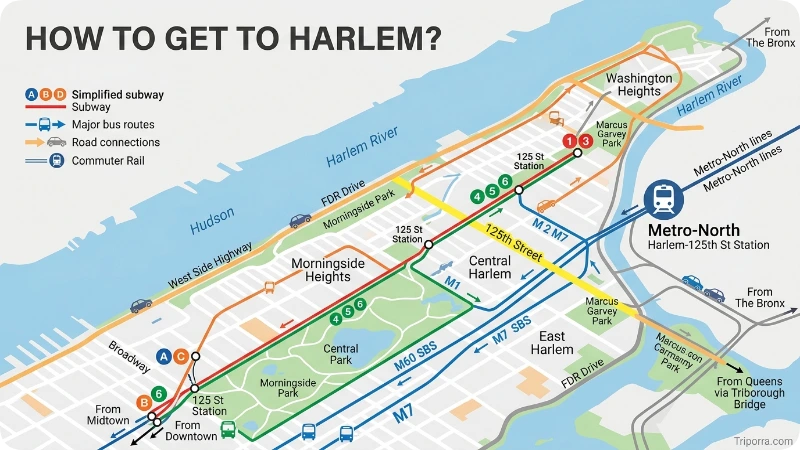
The area is well connected to the rest of New York City through subway lines, buses, roads, and commuter rail.
By Subway
Several subway services operate through northern Manhattan. Depending on the destination, travelers can use:
- A train
- B train
- C train
- D train
- 2 train
- 3 train
- 4 train
- 5 train
- 6 train
Major stations include 125th Street, 135th Street, and 145th Street.
Metro-North Railroad also serves the 125th Street area, providing connections toward destinations north of Manhattan.
By Car
Drivers can reach northern Manhattan through several major roads, including:
- Harlem River Drive
- FDR Drive
- Frederick Douglass Boulevard
- Adam Clayton Powell Jr. Boulevard
Traffic in New York City can be heavy, especially during weekday commuting periods. As a result, driving time can vary considerably.
From the Airports
Two major airports commonly used by visitors are LaGuardia Airport and John F. Kennedy International Airport.
LaGuardia Airport (LGA) is in Queens and is generally the closer of the two major airports to northern Manhattan. Depending on the route and destination, the distance is roughly 6–8 miles.
John F. Kennedy International Airport (JFK) is also in Queens. The distance to Harlem is commonly around 15–20 miles, depending on the route.
Actual travel time depends on traffic, public transportation, weather, and the time of day.
Why Is Harlem Famous?
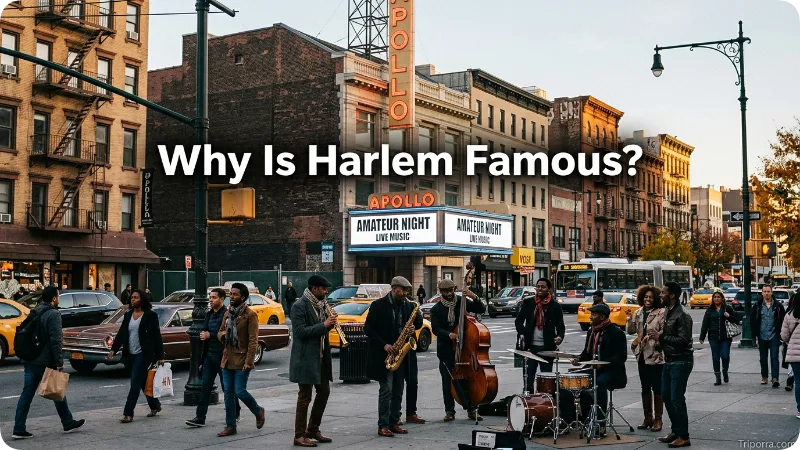
Harlem is internationally recognized for its influence on American music, literature, art, politics, and culture.
Its importance grew substantially during the early 20th century as the African American population expanded. The neighborhood became a center for writers, musicians, artists, intellectuals, religious leaders, and activists.
The area became particularly famous during the Harlem Renaissance, a cultural movement that reached its height during the 1920s and influenced American culture for decades.
Its cultural history includes:
- Jazz
- Blues
- Literature
- Poetry
- Theater
- Visual arts
- Political thought
- Civil rights activism
The Apollo Theater also helped establish the community as an important center for African American entertainment.
What Was the Harlem Renaissance?
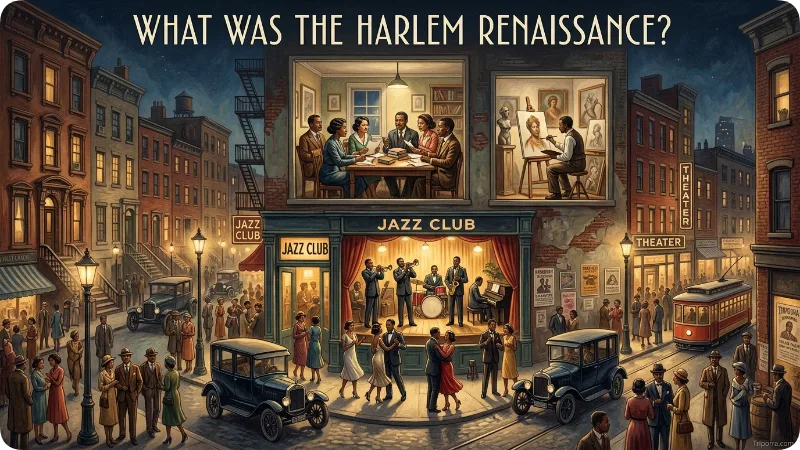
The Harlem Renaissance was an important African American cultural movement that developed during the early 20th century and reached its peak in the 1920s.
Writers, musicians, artists, and intellectuals used creative work to express Black identity, experiences, ideas, and social concerns.
Important figures associated with the movement include:
- Langston Hughes
- Zora Neale Hurston
- Duke Ellington
- Louis Armstrong
- Countee Cullen
- Claude McKay
The movement was not limited to one building or street. It involved publishers, newspapers, churches, theaters, clubs, literary organizations, and artists throughout the community.
Its influence spread beyond New York and helped shape American literature, music, and cultural life.
Did You Know? The Harlem Renaissance helped establish northern Manhattan as one of the most important centers of African American literature and music during the 1920s.
What Is Harlem Known For Today?
Modern Harlem combines historic landmarks with restaurants, businesses, cultural institutions, residential buildings, and entertainment venues.
The neighborhood continues to attract people interested in:
- African American history
- Music
- Art
- Architecture
- Food
- Theater
- Cultural events
Some of its best-known institutions include the Apollo Theater, Studio Museum in Harlem, and Schomburg Center for Research in Black Culture.
The community has also experienced significant residential and commercial changes over the years. Historic buildings now sit alongside newer businesses and developments.
What Are the Best Things to See and Do in Harlem?
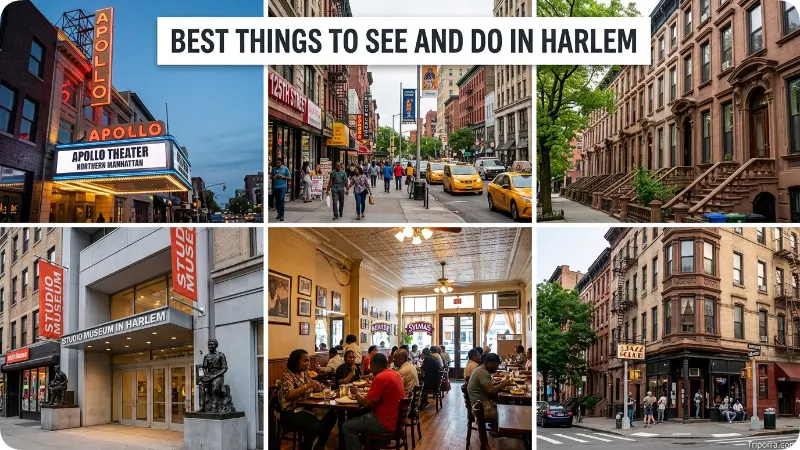
Visitors can explore cultural institutions, historic streets, theaters, museums, restaurants, and architectural landmarks.
Visit the Apollo Theater
The Apollo Theater on 125th Street is one of the area’s most recognizable landmarks.
It became famous as a major entertainment venue and helped launch or showcase numerous influential performers. Its history includes jazz, soul, gospel, rhythm and blues, and other forms of popular music.
The theater is particularly known for Amateur Night, which has provided a platform for emerging performers.
Explore the Studio Museum in Harlem
The Studio Museum in Harlem focuses on artists of African descent. Its programs and exhibitions explore modern and contemporary art and connections between artists, communities, and culture.
The institution has become an important part of New York City’s art scene and Harlem’s cultural landscape.
Visit the Schomburg Center
The Schomburg Center for Research in Black Culture, part of the New York Public Library, holds extensive collections relating to African American, African, and Caribbean history and culture.
Its resources include:
- Books
- Manuscripts
- Photographs
- Prints
- Archives
- Exhibitions
- Public programs
Researchers and visitors can use the center to learn about Black history and cultural development.
Walk Along 125th Street
125th Street is one of the best-known commercial corridors in northern Manhattan.
The street has shops, restaurants, theaters, offices, and cultural institutions. It has also played an important role in the economic and social life of the surrounding community.
Explore the Local Food Scene
Food in Harlem reflects the neighborhood’s diverse population and history.
Visitors can find:
- Soul food
- Caribbean dishes
- African cuisine
- Puerto Rican specialties
- Bakeries
- Cafés
- Contemporary restaurants
The food scene has changed over time while continuing to reflect the area’s African American, Caribbean, African, and Latino influences.
What Is the Weather Like in Harlem?
Harlem experiences the same general climate as New York City. The area has four distinct seasons, with warm summers, cool autumns, cold winters, and mild-to-cool springs.
Summer
Summer is usually warm and humid.
Typical daytime temperatures often reach the low to mid-80s Fahrenheit, although heat waves can push temperatures higher.
Winter
Winter is generally cold, and snowfall is possible.
Temperatures can fall below freezing, particularly overnight. Snow, ice, and occasional winter storms can affect travel.
Spring and Fall
Spring and fall usually bring milder conditions.
These seasons can be comfortable for walking around the neighborhood, visiting cultural attractions, and exploring outdoor areas.
Weather conditions can change quickly, so checking a current forecast is useful before planning outdoor activities.
What Is the Best Time to Visit Harlem?
The ideal time depends on the type of experience you want.
Spring
From April through June, temperatures are generally comfortable for walking and sightseeing. Parks, streets, and outdoor spaces become more active as the weather warms.
Summer
Summer brings longer daylight hours and outdoor events. However, high humidity and occasional heat can make walking less comfortable.
Fall
September through November often brings cooler temperatures and pleasant conditions. Fall can be a comfortable season for exploring the neighborhood on foot.
Winter
Winter is colder, but many attractions remain open. Museums, theaters, restaurants, and cultural institutions provide plenty of indoor options.
Is Harlem Safe to Visit?
Safety conditions can vary across New York City, including different parts of northern Manhattan. Visitors should use the same practical precautions they would use in other large urban areas.
Useful habits include:
- Stay aware of your surroundings.
- Keep phones and valuables secure.
- Use well-traveled streets when possible.
- Follow local transportation guidance.
- Take extra care late at night.
- Check current local safety information.
Crime patterns can change over time. Anyone planning a visit should use current information from official New York City sources rather than relying only on old travel advice.
What Is the History of Harlem?
The history of Harlem stretches back several centuries.
The name comes from Haarlem, a city in the Netherlands. Dutch settlers established the original settlement during the colonial period, and the name continued as the area developed.
For much of its early history, the area was more rural than the densely built neighborhood seen today. Residential development expanded during the 19th century as New York City grew.
By the early 20th century, Harlem had become a major center of African American life.
Important periods in its development include:
- Dutch colonial settlement
- 19th-century urban growth
- Residential expansion
- The Great Migration
- The Harlem Renaissance
- Civil rights activism
- Modern redevelopment and demographic change
How Did Harlem Become an African American Cultural Center?
The transformation was closely connected to migration and changes in New York City’s housing and population patterns.
During the Great Migration, millions of African Americans moved from the rural South to cities in the North, Midwest, and West. New York became an important destination.
Harlem developed into a major center of Black community life. Writers, musicians, business owners, religious leaders, activists, and artists established themselves in the area.
Community institutions helped support this growth, including:
- Churches
- Newspapers
- Clubs
- Theaters
- Literary organizations
- Businesses
- Political groups
These networks helped create the environment in which the Harlem Renaissance developed.
What Languages Are Spoken in Harlem?
English is the main language used throughout the community. Spanish is also widely spoken, particularly in East Harlem, which has a strong Puerto Rican and Latino heritage.
Because New York City is highly diverse, residents and visitors may hear many other languages as well.
The linguistic mix reflects the area’s long history of immigration and migration.
Is Harlem a City or a Neighborhood?
Harlem is a neighborhood, not a separate city.
Its basic geographic classification is:
- Country: United States
- State: New York
- City: New York City
- Borough: Manhattan
- Area: Upper Manhattan
- Place type: Neighborhood
This distinction is important because Harlem does not have its own municipal government. It is governed as part of New York City.
Did You Mean a Different Place?
The name can refer to more than one location.
The most widely recognized Harlem is the neighborhood in Manhattan, New York City. However, other places also use the name.
For example:
- Haarlem: A historic city in the Netherlands whose name influenced the New York neighborhood.
- Harlem, Montana: A small city in the U.S. state of Montana.
- Other communities in the United States also use Harlem as part of their names.
Therefore, the surrounding context matters when identifying the location.
FAQs
Where is Harlem located?
Harlem is in Upper Manhattan, New York City, New York. It lies north of Central Park and includes several communities in northern Manhattan.
Is Harlem part of New York City?
Yes. Harlem is part of New York City and is located within Manhattan Borough.
What state is Harlem in?
The neighborhood is in New York State. It is part of New York City rather than an independent municipality.
Why is Harlem famous?
It is especially known for the Harlem Renaissance, African American cultural history, jazz, literature, art, the Apollo Theater, and its continuing influence on American culture.
Is Harlem a good place to visit?
Harlem has many cultural attractions, historic landmarks, restaurants, theaters, museums, and architectural sites. The experience depends on the specific activities and areas you choose to explore.
How far is Harlem from Times Square?
Central Harlem is roughly five miles north of Times Square, although the actual distance varies according to the specific locations used for the measurement.
What subway goes to Harlem?
Several subway services reach different parts of Harlem, including the A, B, C, D, 2, 3, 4, 5, and 6 trains. Major stations include 125th Street, 135th Street, and 145th Street.
Why is Harlem called Harlem?
The name comes from Haarlem, a city in the Netherlands. Dutch settlers used the name during the colonial period, and it remained as the Manhattan community developed.
Is Harlem safe for tourists?
Safety varies by location and time. Visitors should follow normal large-city precautions, stay aware of their surroundings, and check current local information before traveling.
What food is Harlem famous for?
The neighborhood is known for soul food as well as Caribbean, African, Puerto Rican, and other cuisines. Restaurants and cafés reflect the area’s diverse cultural history.
Conclusion
Harlem is a historic neighborhood in Upper Manhattan, New York City. Its location north of Central Park places it within Manhattan, while its cultural history has given it international recognition.
The community played a central role in the Harlem Renaissance and has long been associated with African American music, literature, art, theater, and social movements. Landmarks such as the Apollo Theater and Schomburg Center continue to connect modern New York with that history.
Today, Harlem combines historic buildings and cultural institutions with restaurants, businesses, residential areas, and contemporary community life. Its location within northern Manhattan makes it an important part of New York City, while its cultural influence extends far beyond the neighborhood itself.

Elena Rostova bridges the gap between premium hospitality and authentic local experiences. Armed with a background in luxury hospitality management and a passion for fine architecture, she spent years evaluating elite resorts before transitioning into travel journalism. Elena heads the luxury and boutique travel vertical on Triporra.com. Her meticulous guides strip away the guesswork from high-end travel, showcasing unique five-star escapes, fine regional dining, and bespoke private tours that elevate a standard vacation into an unforgettable journey.