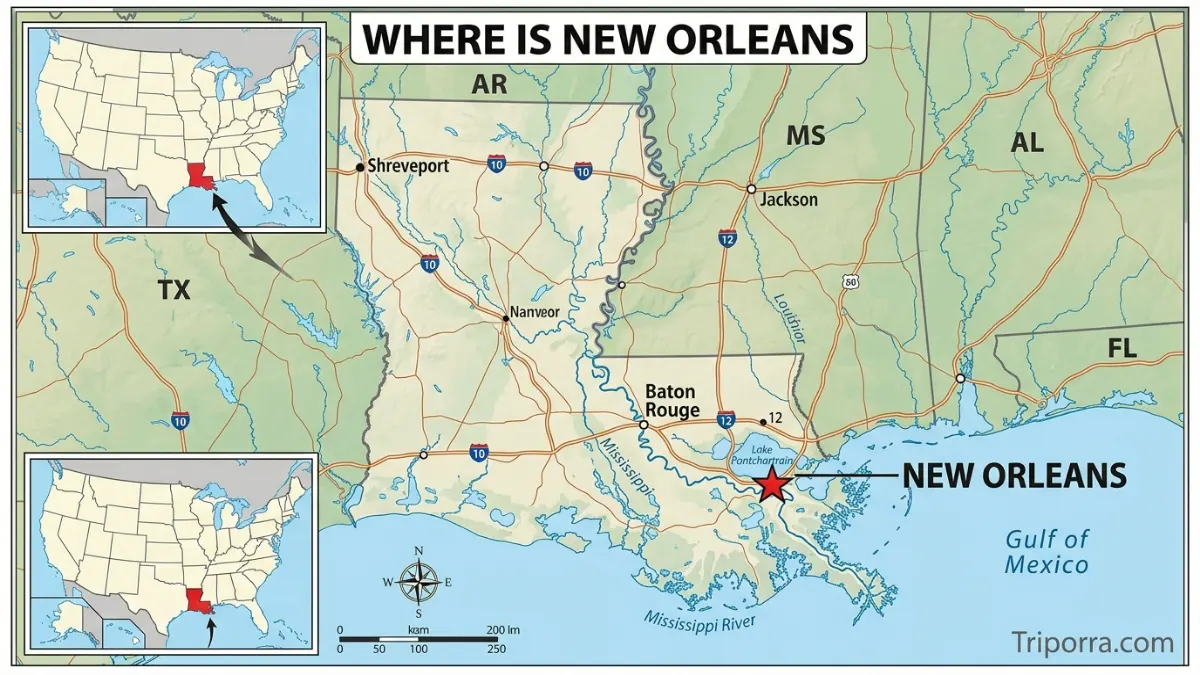
New Orleans is a major city in the state of Louisiana in the southern United States. It sits along the Mississippi River near the Gulf of Mexico and is one of America’s most famous cultural destinations.
Known worldwide for jazz music, Mardi Gras celebrations, Creole cuisine, and historic architecture, New Orleans plays an important role in the culture, tourism, and economy of the Gulf Coast region.
Featured Snippet Answer
New Orleans is located in southeastern Louisiana, United States, on the Mississippi River near the Gulf of Mexico. It is the largest city in Louisiana and is famous for its French and Spanish heritage, jazz music, Mardi Gras festival, unique cuisine, and historic neighborhoods such as the French Quarter.
Where Is New Orleans Located?
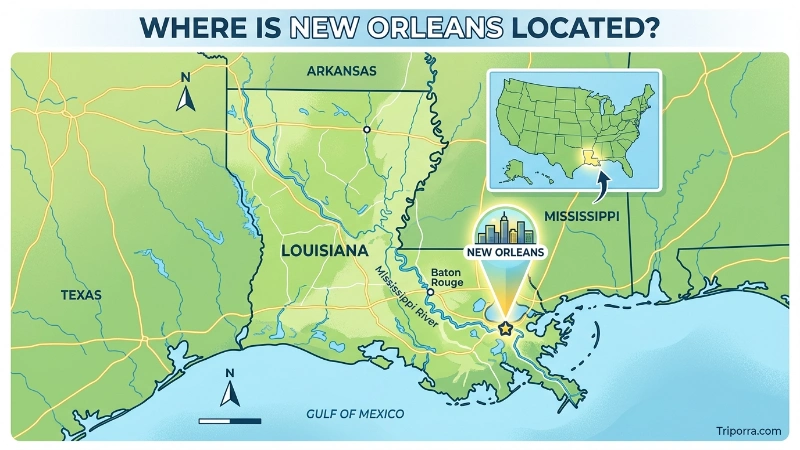
New Orleans is located in Louisiana, one of the southern states of the United States. The city lies in the southeastern part of the state, close to where the Mississippi River flows into the Gulf of Mexico.
From a geographical perspective, New Orleans is part of North America and belongs to the Gulf Coast region of the United States.
Administrative hierarchy:
- City: New Orleans
- Parish: Orleans Parish
- State: Louisiana
- Country: United States
- Continent: North America
Unlike many U.S. states that use counties, Louisiana uses parishes as its primary local government divisions. New Orleans and Orleans Parish largely cover the same area.
Quick Facts About New Orleans
| Fact | Details |
|---|---|
| Official Name | City of New Orleans |
| Country | United States |
| State | Louisiana |
| Parish | Orleans Parish |
| Population | Approximately 360,000+ residents |
| Time Zone | Central Time Zone (CT) |
| Coordinates | 29.95° N, 90.07° W |
| Nearby Major Cities | Baton Rouge, Gulfport, Mobile, Houston |
| Known For | Jazz Music, Mardi Gras, French Quarter, Creole Culture |
| Primary Language | English |
| Currency | United States Dollar (USD) |
| Founded | 1718 |
| Region | Southern United States / Gulf Coast |
| Major Waterway | Mississippi River |
| Nickname | The Big Easy |
| Famous Attractions | French Quarter, Bourbon Street, Jackson Square, St. Louis Cathedral |
| Climate | Humid Subtropical |
| Nearest Major Body of Water | Gulf of Mexico |
| Economy | Tourism, Shipping, Energy, Healthcare, Hospitality |
New Orleans on the Map
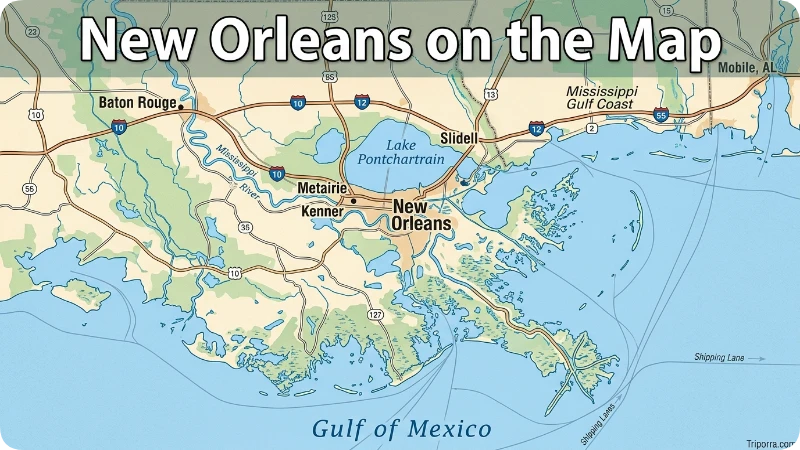
Picture the southeastern corner of Louisiana. The Mississippi River curves through the landscape before reaching the Gulf of Mexico. Along this river bend sits New Orleans.
The city is approximately:
- 80 miles (130 km) northwest of the Gulf of Mexico
- About 80 miles (130 km) southeast of Baton Rouge
- Around 150 miles (240 km) west of Mobile, Alabama
- Roughly 350 miles (560 km) east of Houston, Texas
Large areas around the city include wetlands, marshes, lakes, and waterways. Lake Pontchartrain lies directly north of New Orleans and is one of the largest inland bodies of water connected to the region.
Because much of the area is low-lying, levees and flood-protection systems are important parts of the city’s infrastructure.
Which Region Does New Orleans Belong To?
New Orleans belongs to several important geographic and cultural regions.
Gulf Coast Region
The city is part of the Gulf Coast, a region bordering the Gulf of Mexico that includes portions of Louisiana, Texas, Mississippi, Alabama, and Florida.
Deep South
Culturally and historically, New Orleans is often associated with the American South. However, its French, Spanish, African, Caribbean, and Native American influences make it distinct from many other Southern cities.
Louisiana Region
Within Louisiana, New Orleans serves as one of the state’s most important urban centers and cultural hubs.
The city is governed by local municipal authorities while remaining under the jurisdiction of Louisiana state government and the federal government of the United States.
How Does New Orleans Compare to Nearby Places?
New Orleans differs significantly from neighboring cities.
Compared With Baton Rouge
Baton Rouge is Louisiana’s capital city and serves as a government and industrial center. New Orleans attracts more international tourism and is more widely recognized for culture and entertainment.
Compared With Houston
Houston is much larger and has a stronger focus on energy, healthcare, and business. New Orleans is smaller but draws visitors seeking history, music, and unique cultural experiences.
Compared With Mobile
Mobile, Alabama, shares some Gulf Coast traditions and even Mardi Gras history. However, New Orleans hosts one of the world’s largest and most famous Mardi Gras celebrations.
Compared With Other U.S. Tourist Cities
Cities like Las Vegas, Orlando, and Nashville attract visitors for specific experiences. New Orleans stands out because of its combination of music, architecture, food, festivals, and centuries of multicultural history.
How to Reach New Orleans
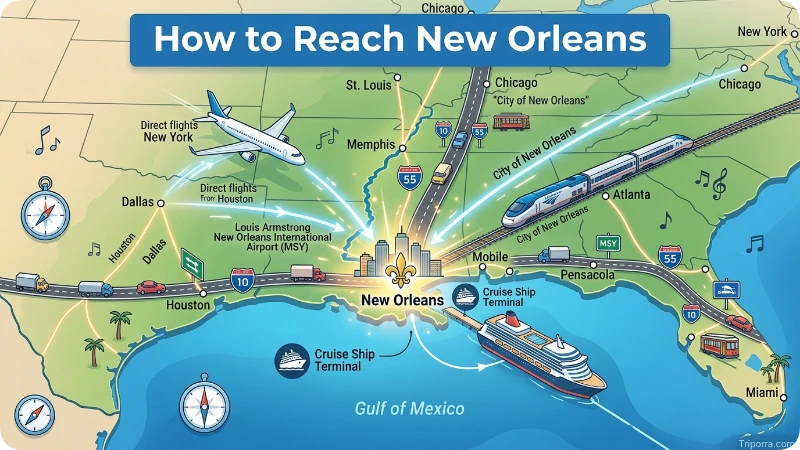
Travelers can access New Orleans through several transportation options.
By Air
The main airport is:
Louis Armstrong New Orleans International Airport (MSY)
Located west of downtown, it offers domestic and international connections.
Major routes connect New Orleans with:
- New York
- Los Angeles
- Chicago
- Atlanta
- Dallas
- Miami
- International destinations in the Caribbean and beyond
By Road
Interstate highways serving the city include:
- Interstate 10
- Interstate 55
- Interstate 59
Driving times:
- Baton Rouge: about 1.5 hours
- Mobile: around 2.5 hours
- Houston: approximately 5 to 6 hours
By Rail
Amtrak operates passenger train services linking New Orleans with cities across the United States.
By Cruise Ship
New Orleans is one of the country’s major cruise ports, with ships regularly departing for destinations in the Caribbean and Mexico.
Public Transportation
Visitors can use:
- Historic streetcars
- City buses
- Ferries
- Ride-sharing services
- Taxis
The iconic St. Charles Streetcar line remains one of the oldest continuously operating streetcar systems in the world.
Why Is New Orleans Famous?
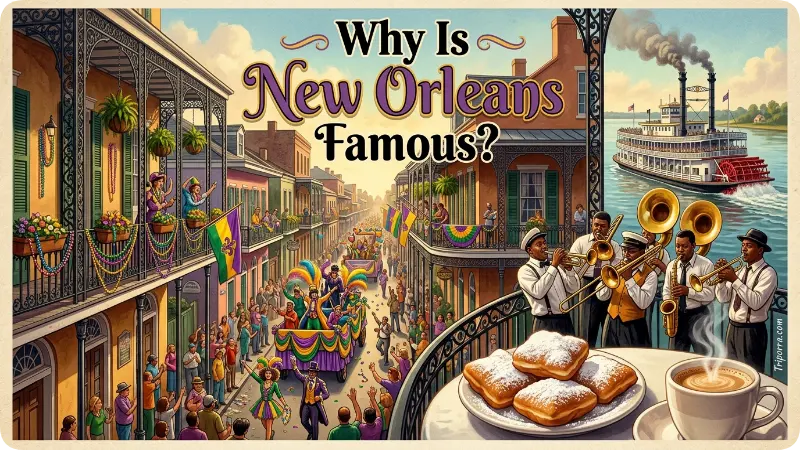
Several factors have made New Orleans internationally recognized.
Jazz Music
New Orleans is widely regarded as the birthplace of jazz. Legendary musicians such as Louis Armstrong helped shape the city’s musical reputation.
Mardi Gras
The annual Mardi Gras celebration attracts millions of visitors with parades, costumes, music, and public festivities.
Unique Cuisine
Popular local foods include:
- Gumbo
- Jambalaya
- Crawfish dishes
- Beignets
- Po’boys
- Red beans and rice
Historic Architecture
The French Quarter features historic buildings, balconies, courtyards, and narrow streets reflecting French and Spanish influences.
Cultural Diversity
Generations of French, Spanish, African, Caribbean, Native American, and American influences have contributed to a distinctive local identity.
History of New Orleans
The history of New Orleans stretches back more than three centuries.
Early Settlement
French colonists founded the city in 1718. Its location along the Mississippi River quickly made it strategically valuable.
French and Spanish Rule
Control of the city alternated between France and Spain during the colonial era. These influences remain visible in architecture, traditions, and local culture.
Louisiana Purchase
In 1803, the United States acquired New Orleans through the Louisiana Purchase, one of the most significant land acquisitions in American history.
Port Growth
During the nineteenth century, New Orleans became one of North America’s busiest ports because of its position on the Mississippi River.
Hurricane Katrina
In 2005, Hurricane Katrina caused catastrophic flooding and widespread damage. Recovery efforts transformed many parts of the city while highlighting the importance of flood protection infrastructure.
Modern New Orleans
Today, New Orleans remains a major center for tourism, shipping, education, healthcare, and culture.
Climate and Weather
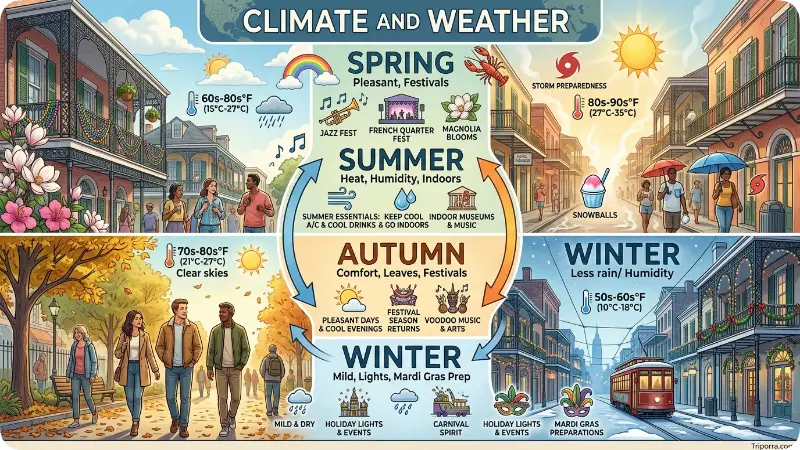
New Orleans experiences a humid subtropical climate.
Summer
- Hot and humid
- Temperatures often exceed 90°F (32°C)
- Frequent afternoon thunderstorms
Autumn
- Warm temperatures
- Lower humidity
- Pleasant outdoor conditions
Winter
- Mild compared with much of the United States
- Rare snowfall
- Comfortable sightseeing weather
Spring
- One of the most popular seasons
- Warm temperatures
- Festival season begins
Rainfall occurs throughout the year, and tropical storms or hurricanes may affect the region during the Atlantic hurricane season.
Things to See and Do Nearby
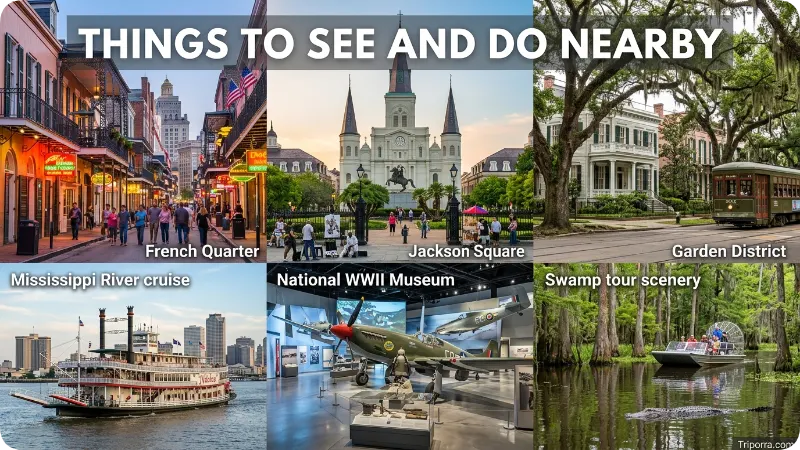
Visitors can enjoy a wide variety of attractions.
French Quarter
The city’s oldest neighborhood remains its most famous attraction.
Bourbon Street
Known for nightlife, entertainment, and historic surroundings.
Jackson Square
A popular gathering place featuring artists, musicians, and historic landmarks.
Garden District
Visitors come for elegant homes, tree-lined streets, and historic character.
National WWII Museum
One of the most respected military museums in the United States.
Mississippi River Cruises
Riverboat tours provide scenic views and historical insights.
Swamp Tours
Nearby wetlands offer opportunities to see alligators, birds, and Louisiana ecosystems.
Lake Pontchartrain
The lake offers fishing, boating, and waterfront recreation.
Best Time to Visit
Peak Season
February to May
This period includes Mardi Gras and many major festivals. Weather conditions are generally pleasant.
Shoulder Season
October and November
Comfortable temperatures and fewer crowds make autumn an attractive time to visit.
Off-Season
June through September
Hotel prices may be lower, but visitors should expect heat, humidity, and possible tropical weather.
Common Misconceptions
New Orleans Is Not a Country
Some international travelers mistakenly think New Orleans is an independent region or territory. It is a city in Louisiana, United States.
Not Located Directly on the Gulf Coast
Although close to the Gulf of Mexico, the city itself sits inland along the Mississippi River.
French Quarter Architecture Is Not Entirely French
Many of the buildings seen today were constructed during Spanish rule after earlier structures were destroyed by fires.
Louisiana Uses Parishes, Not Counties
New Orleans belongs to Orleans Parish, reflecting Louisiana’s unique administrative system.
Places Related to New Orleans
People researching New Orleans often search for these connected destinations:
Baton Rouge
Louisiana’s capital city.
Lafayette
Known for Cajun culture and food traditions.
Gulfport
A coastal city in neighboring Mississippi.
Mobile
A historic Gulf Coast city in Alabama.
Lake Pontchartrain
A major water body directly north of New Orleans.
Mississippi River
One of North America’s most important waterways.
French Quarter
The city’s best-known historic district.
Gulf of Mexico
The nearby body of water that influences the region’s climate and economy.
What Else Do People Want to Know?
Is New Orleans Safe?
Most tourist areas are generally safe when visitors follow common travel precautions. Awareness of surroundings is important, especially at night.
Is It Expensive?
Costs vary by season. Major festival periods often bring higher hotel and travel prices.
Is English Spoken?
Yes. English is the primary language, though French heritage remains an important cultural influence.
Is the City Walkable?
Many attractions in central districts are accessible on foot, especially within the French Quarter and surrounding neighborhoods.
Is New Orleans Family Friendly?
Yes. Museums, parks, river cruises, cultural attractions, and educational sites provide activities for families.
FAQs
Where is New Orleans located?
New Orleans is located in southeastern Louisiana, United States, along the Mississippi River near the Gulf of Mexico.
What state is New Orleans in?
New Orleans is in the state of Louisiana.
Is New Orleans on the Gulf of Mexico?
It is close to the Gulf of Mexico but sits slightly inland on the Mississippi River.
What is New Orleans known for?
The city is famous for jazz music, Mardi Gras, Creole cuisine, and historic architecture.
Is New Orleans the capital of Louisiana?
No. Baton Rouge is the capital of Louisiana.
What river runs through New Orleans?
The Mississippi River flows through the city.
How far is New Orleans from Houston?
The driving distance is approximately 350 miles (560 km), usually about 5 to 6 hours by car.
What airport serves New Orleans?
Louis Armstrong New Orleans International Airport (MSY) serves the city.
Why is New Orleans culturally unique?
Its blend of French, Spanish, African, Caribbean, Native American, and American influences creates a distinct culture unlike most U.S. cities.
Does New Orleans experience hurricanes?
Yes. The city can be affected by tropical storms and hurricanes during the Atlantic hurricane season.
What is the best month to visit New Orleans?
Many travelers prefer February, March, April, or October because of pleasant weather and major events.
Is New Orleans worth visiting?
Yes. The city offers unique music, food, history, festivals, architecture, and cultural experiences that attract visitors from around the world.
Conclusion
New Orleans is located in southeastern Louisiana along the Mississippi River near the Gulf of Mexico. As the largest city in Louisiana, it serves as a cultural, historical, and tourism center known for jazz music, Mardi Gras, distinctive cuisine, and centuries of multicultural heritage. Whether you are planning a trip, studying geography, or simply wondering where New Orleans is, understanding its location helps explain why it became one of the most unique and influential cities in the United States.

About Leo Sterling
Leo Sterling is a geography and travel writer at Triporra.com who believes understanding a place starts with knowing exactly where it is. He turns geographic details on countries, regions, islands, and cities into clear, engaging content for everyday readers.
For Leo, a good location article does more than mark a spot on a map. It shows what borders a place, which region it belongs to, and how it connects to the world around it—an approach reflected in guides like where is Anguilla, where solid research meets a simple, conversational style.
Whether readers are planning a trip, studying, or just curious, Leo’s goal is the same: deliver accurate, easy-to-understand information without unnecessary complexity.
Areas of Focus: Geography | Countries & Regions | Caribbean Islands | Travel Destinations | Location Research | “Where Is?” Content