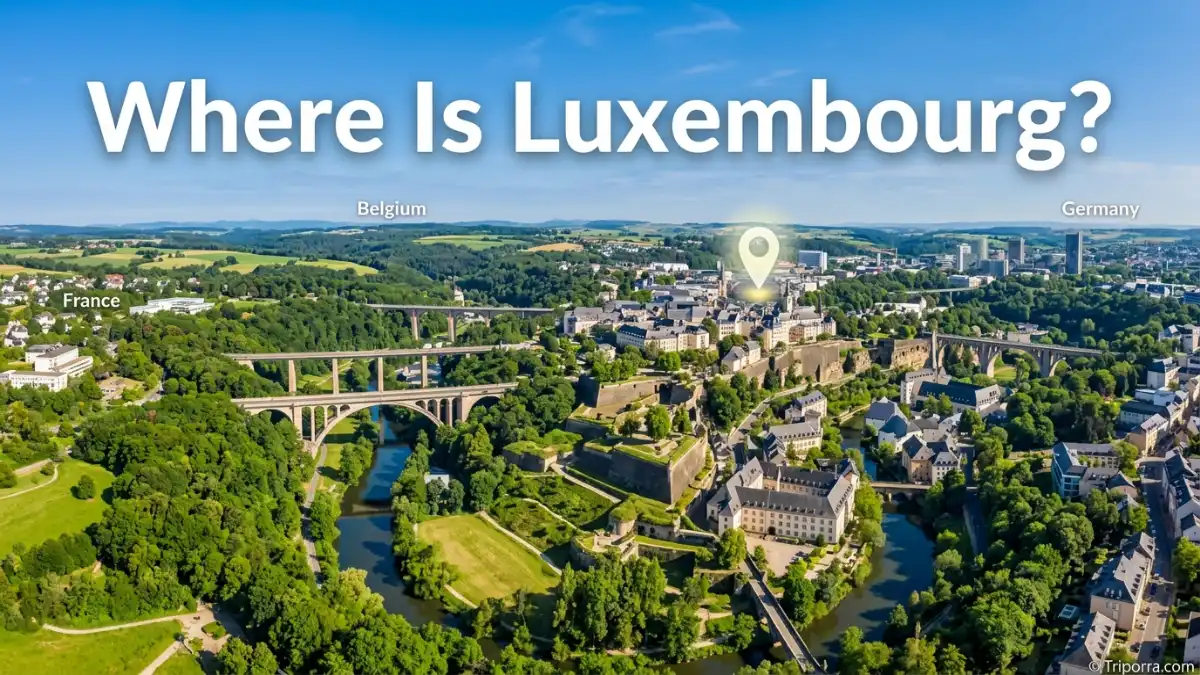
It is a small country in Western Europe. It sits between Belgium, Germany, and France. Even though it is one of the smallest countries in Europe, it plays a big role in business, banking, and European politics.
Many people know the name Luxembourg but are not sure where it is. Some even think it is part of another country. This guide explains exactly where Luxembourg is, why it is important, and what makes it worth visiting. Along the way, you’ll also learn a few interesting facts that many travellers miss.
Featured Snippet
It is an independent country in Western Europe. It is located between Belgium, Germany, and France. The country covers about 2,586 square kilometres and is the world’s only remaining Grand Duchy. Luxembourg is also one of the founding members of the European Union.
Quick Facts
| Fact | Details |
|---|---|
| Official Name | Grand Duchy of Luxembourg |
| Country Type | Independent country |
| Region | Western Europe |
| Population | About 680,000 people |
| Area | About 2,586 square kilometres (998 sq mi) |
| Elevation | Average of about 378 metres (1,240 ft) above sea level |
| Coordinates | About 49.8° N, 6.1° E |
| Time Zone | Central European Time (CET, UTC+1); Central European Summer Time (CEST, UTC+2) in summer |
| Nearest Major City | Metz, France |
| Known For | EU institutions, medieval castles, banking, and high quality of life |
| Official Languages | Luxembourgish, French, and German |
| Currency | Euro (€) |
Where Is Luxembourg?
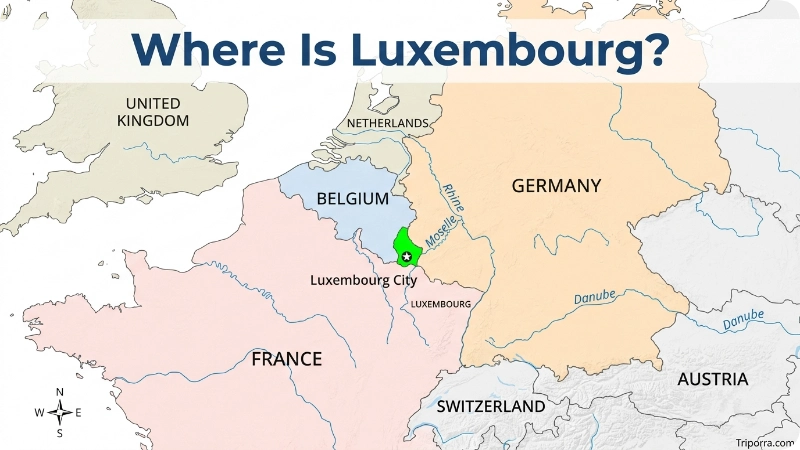
It is in Western Europe. It is a landlocked country, which means it has no coastline or beaches. Instead, it shares borders with Belgium in the west and north, Germany in the east, and France in the south.
The country is small enough that you can drive from one side to the other in about an hour. Even so, each part of Luxembourg has its own scenery and character.
It is close to many famous European cities. Paris is only a few hours away by train, while Brussels, Frankfurt, and Cologne are also easy to reach. This central location has made Luxembourg an important meeting point for trade and travel for hundreds of years.
Many travellers overlook Luxembourg because they spend more time in France, Germany, or Belgium. What most guides miss is that Luxembourg offers the same mix of history, nature, and culture, but with fewer crowds.
Administrative Status
It is officially called the Grand Duchy of Luxembourg. It is the only independent Grand Duchy left in the world.
The country is led by a Grand Duke, while the daily work of running the government is handled by the Prime Minister and Parliament.
Luxembourg City is the capital and the largest city. It is also where many European Union offices are located.
It is a member of the European Union, the Schengen Area, NATO, and several other international organisations. If you are travelling from another Schengen country, you can usually cross the border without passport checks.
Where Is Luxembourg in Europe?
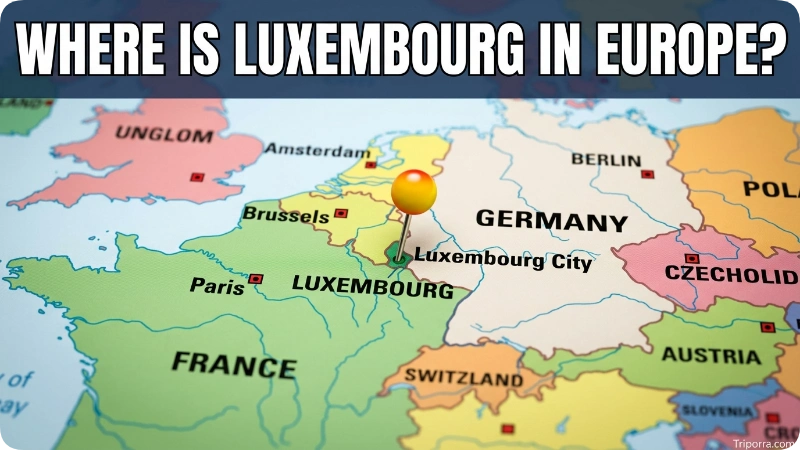
It is located in the heart of Western Europe, making it one of the continent’s most centrally positioned countries.
It lies about 200 kilometres (125 miles) from Brussels, around 290 kilometres (180 miles) from Paris, and roughly 240 kilometres (150 miles) from Frankfurt. This central location makes Luxembourg an easy destination to visit from several major European cities.
Its position has helped make Luxembourg an important centre for trade, finance, diplomacy, and international cooperation for centuries.
Luxembourg on the Map
It is almost in the middle of Western Europe. Belgium lies to the north and west, Germany is to the east, and France is to the south.
The Moselle River forms part of the border with Germany. This area is famous for its vineyards and beautiful river views.
The northern part of Luxembourg is called the Éislek or Luxembourg Ardennes. It is full of forests, hills, and small villages. The southern part is flatter and more developed, with larger towns and business centres.
One common mistake is thinking Luxembourg is in Eastern Europe because it is close to Germany. In fact, it is part of Western Europe and shares many cultural traditions with its neighbours.
Is Luxembourg a Country or Part of Another Country?
One of the most common questions people ask is whether Luxembourg belongs to another country. The answer is no. Luxembourg is a fully independent country in Western Europe.
Because it is small and located between Belgium, Germany, and France, many people mistakenly believe it is part of one of its neighbours. In reality, Luxembourg has its own government, laws, currency, flag, and national identity.
The country’s official name is the Grand Duchy of Luxembourg, and it is the world’s only remaining sovereign Grand Duchy. Although it works closely with other European countries through the European Union, it remains an independent nation.
Why Is Luxembourg Famous?
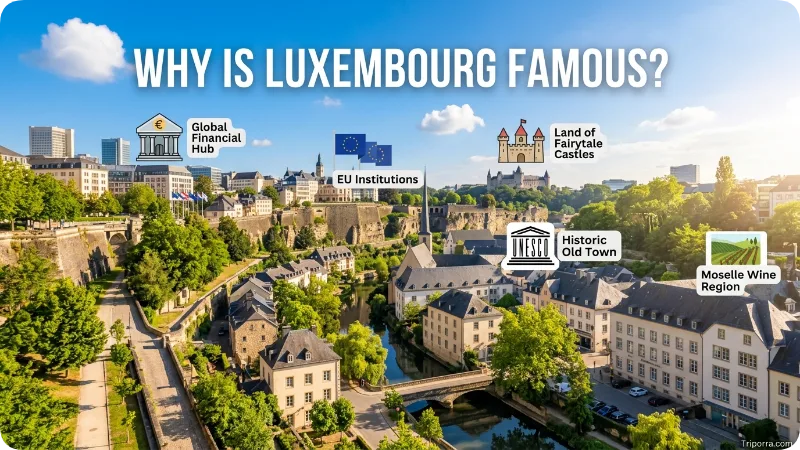
It is famous for several reasons.
First, it is one of the founding members of the European Union. Many important EU offices are based in Luxembourg City, including the European Court of Justice and the European Investment Bank.
Second, Luxembourg is one of the world’s leading financial centres. Many international banks and companies have offices here because of the country’s stable economy.
History lovers enjoy Luxembourg because of its impressive castles and old fortresses. The Old Quarter of Luxembourg City is a UNESCO World Heritage Site. Its underground tunnels, called the Bock Casemates, once helped protect the city from attack.
Nature is another reason people visit. The Müllerthal Region, often called Little Switzerland, has rocky cliffs, forests, waterfalls, and walking trails. The Moselle Valley is known for vineyards and local wines.
Many visitors only stay in Luxembourg City. What most guides miss is that the countryside is just as beautiful. Small villages, peaceful valleys, and medieval castles are only a short drive away.
Another fact people often get wrong is that Luxembourg is only about banking. While finance is important, the country is also known for hiking, history, food, and outdoor activities.
History
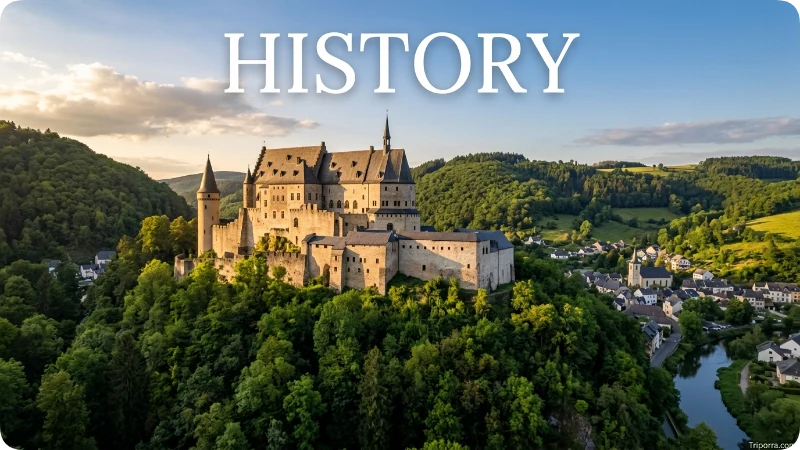
Luxembourg’s history goes back more than 1,000 years.
In 963, Count Siegfried bought a small fortress built on a rocky hill. Over time, a town grew around the fortress, and this became the start of modern Luxembourg.
Because of its location in Europe, Luxembourg was controlled by several different rulers over the centuries. The Burgundians, Spanish, Austrians, French, and Dutch all ruled the area at different times.
In 1815, Luxembourg became a Grand Duchy after the Congress of Vienna. It slowly gained more independence and became fully independent in the nineteenth century.
During both World Wars, Germany occupied Luxembourg. After the wars, the country worked closely with its neighbours to help build a peaceful Europe.
Today, Luxembourg is one of the safest and wealthiest countries in Europe. Its history can still be seen in its castles, old streets, and city walls.
Climate & Weather
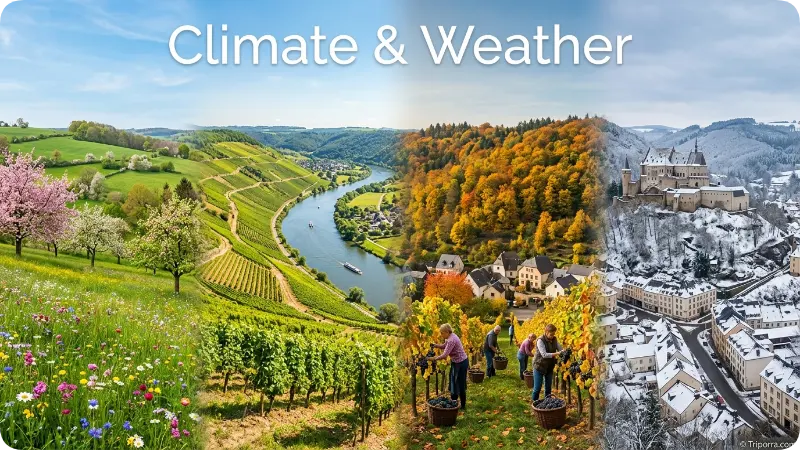
Luxembourg has four clear seasons.
Spring (March to May) is cool and fresh. Flowers bloom, and parks become colourful.
Summer (June to August) is warm but usually not too hot. Daytime temperatures often stay between 20°C and 28°C, making it a good time for sightseeing and outdoor activities.
Autumn (September to November) brings cooler weather and colourful forests. This is also the grape harvest season in the Moselle Valley.
Winter (December to February) is cold, with temperatures often close to freezing. Snow is more common in the northern hills than in Luxembourg City.
One seasonal tip many visitors do not know is that autumn mornings can be foggy, especially near rivers. If you want clear views, afternoons are usually a better time for sightseeing.
How to Get to Luxembourg
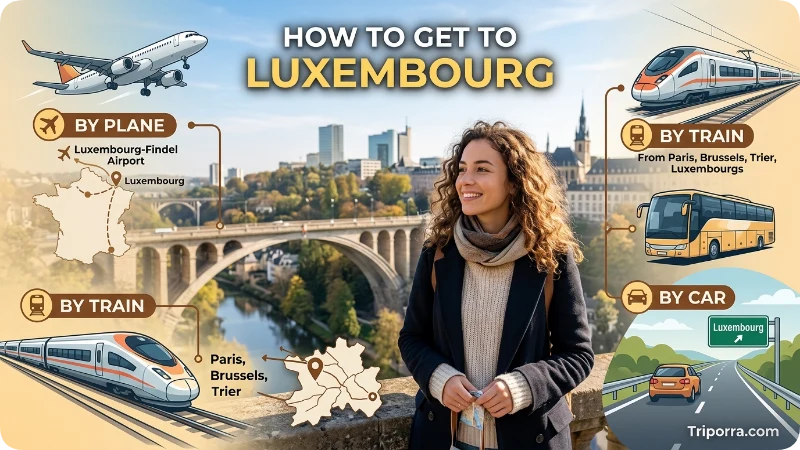
Despite its small size, Luxembourg is easy to reach from many parts of Europe.
By Air
Luxembourg Airport (LUX) is the country’s main international airport. It offers direct flights to many European cities.
By Train
High-speed and regional trains connect Luxembourg City with Paris, Brussels, Frankfurt, Trier, and other nearby destinations.
By Car
Driving to Luxembourg is simple because it shares open borders with Belgium, Germany, and France through the Schengen Area.
Public Transport
Luxembourg became the first country in the world to make public transport free nationwide for most local buses, trains, and trams, making it easy for visitors to explore without renting a car.
What Is Luxembourg Known For Besides Banking?
Although Luxembourg is famous as a global financial centre, there is much more to discover.
Visitors come to explore medieval castles, UNESCO World Heritage sites, scenic hiking trails, vineyards, and charming villages. The country is also known for its high quality of life, multilingual population, excellent public transport, and strong economy.
Luxembourg combines modern European business districts with centuries-old fortresses and peaceful countryside, making it one of Europe’s most unique destinations.
Things to See & Do
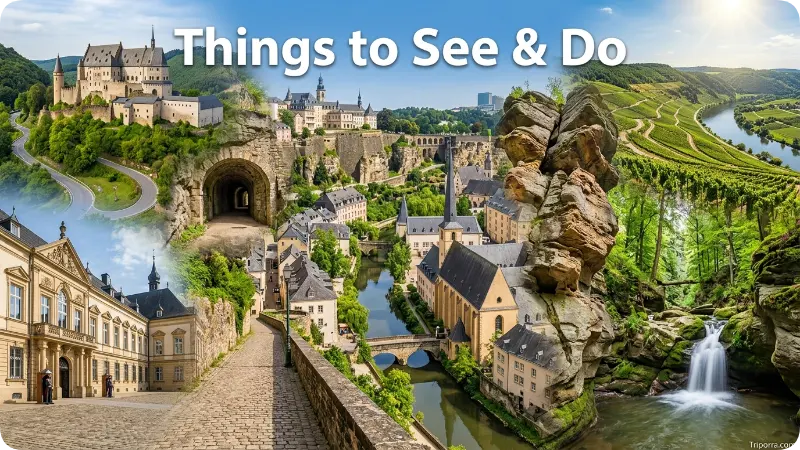
Historic Places
Luxembourg City Old Quarter
Walk through narrow streets, old bridges, and historic squares. The city has a mix of medieval buildings and modern architecture.
Bock Casemates
These underground tunnels were built to protect the city hundreds of years ago. They are one of Luxembourg’s most famous attractions.
Grand Ducal Palace
This beautiful building is the official home of the Grand Duke. Guided tours are available during part of the summer.
Castles
Vianden Castle
Vianden Castle is one of the best-preserved castles in Europe. It sits on a hill above the town of Vianden and offers amazing views.
Beaufort Castle
This castle includes both medieval ruins and a later Renaissance building.
Nature
Müllerthal Trail
Known as “Little Switzerland,” this area has forests, rock formations, waterfalls, and excellent hiking trails.
Upper Sûre Nature Park
This peaceful park is perfect for walking, cycling, kayaking, and enjoying nature.
Moselle Valley
Visit vineyards, enjoy river views, and taste local wines produced in this region.
Museums
- National Museum of History and Art
- Mudam Luxembourg (Museum of Modern Art)
- Luxembourg City History Museum
Best Time to Visit
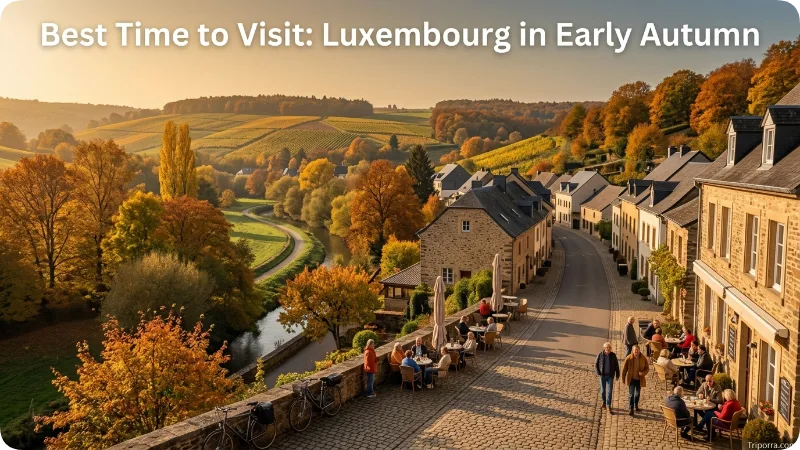
The best time to visit Luxembourg depends on what you want to do.
For most visitors, May, June, and September offer the best weather. The temperatures are comfortable, and there are fewer crowds than during the busiest summer weeks.
Summer is great for festivals, outdoor dining, and sightseeing. However, hotels can be more expensive, especially in Luxembourg City.
Autumn is a favourite season for many travellers because the forests change colour, and vineyards are busy with the grape harvest. The weather is still pleasant for walking.
Winter is quieter and colder, but Christmas markets bring a festive atmosphere to towns and cities. If you enjoy holiday lights and seasonal food, this can be a wonderful time to visit.
Many experienced travellers choose September because it offers warm weather, beautiful scenery, and fewer tourists than July or August.
Common Misconceptions
Many people think Luxembourg is part of Belgium, France, or Germany. It is not. It is its own independent country.
Another common mistake is believing that everyone speaks only French. In fact, Luxembourg has three official languages: Luxembourgish, French, and German.
Some people also think Luxembourg is only a banking centre. While banking is important, much of the country is covered with forests, farmland, castles, and small villages.
Finally, people sometimes confuse Luxembourg City with the country itself. Luxembourg City is simply the capital.
Related Places
Luxembourg is surrounded by three neighbouring countries, making it easy to combine with other European destinations.
Belgium
Belgium borders Luxembourg to the west and north. Cities such as Arlon are only a short drive away, while Brussels can be reached in around three hours by train.
Germany
Germany forms Luxembourg’s eastern border. The historic German city of Trier, famous for its Roman monuments, is less than an hour from Luxembourg City.
France
France borders Luxembourg to the south. Metz is the closest major French city and is a popular day trip.
The Ardennes
Northern Luxembourg is part of the Ardennes region, which extends into Belgium, France, and Germany. The area is known for forests, hiking trails, wildlife, and picturesque villages.
Nearby European Capitals
Luxembourg is well connected to Paris, Brussels, Amsterdam, and Frankfurt, making it an excellent base for exploring Western Europe.
What Else Do People Want to Know?
Many visitors ask if Luxembourg is safe. The answer is yes. It is considered one of the safest countries in Europe.
Another common question is whether Luxembourg is expensive. Hotels and restaurants can cost more than in nearby countries, but there are ways to save money. One of the biggest advantages is that public transport is free across the country for most local journeys.
English is widely spoken in tourist areas, hotels, and many restaurants, so most visitors have no trouble communicating.
People in Luxembourg value good manners and punctuality. A simple greeting and respectful behaviour are always appreciated.
Interesting Facts About Luxembourg
Luxembourg may be small, but it has several unique features that surprise visitors.
- It is the world’s only independent Grand Duchy.
- Public transport is free for most local journeys.
- Nearly half of the country’s residents were born outside Luxembourg.
- People commonly speak Luxembourgish, French, German, and English.
- Luxembourg has one of the world’s highest GDPs per person.
- More than 70 castles are scattered across the country.
- Luxembourg City is built on dramatic cliffs connected by large bridges.
This section increases engagement and helps capture informational search traffic.
FAQs
Is Luxembourg a country?
Yes. Luxembourg is an independent country in Western Europe.
Where is Luxembourg located?
It is located between Belgium, Germany, and France.
What is the capital of Luxembourg?
The capital is Luxembourg City.
Is Luxembourg part of the European Union?
Yes. It is one of the founding members of the European Union.
Does Luxembourg have beaches?
No. Luxembourg is a landlocked country.
What language do people speak?
The official languages are Luxembourgish, French, and German.
What currency does Luxembourg use?
Luxembourg uses the Euro (€).
Is Luxembourg good for tourists?
Yes. It offers castles, museums, forests, hiking trails, vineyards, and historic towns.
How many days should I spend in Luxembourg?
Two to four days are enough to explore the main attractions, although longer stays allow you to enjoy the countryside at a slower pace.
Is Luxembourg worth visiting?
Yes. Although it is small, Luxembourg offers beautiful scenery, fascinating history, and easy access to neighbouring countries.
Is Luxembourg in Germany or France?
No. Luxembourg is an independent country located between Belgium, Germany, and France. Although it borders both Germany and France, it is not part of either country.
Which Country Is Luxembourg Closest To?
Luxembourg directly borders Belgium, Germany, and France. Depending on where you are in the country, any of these neighbours can be only a few minutes away by car.
Is Luxembourg Expensive to Visit?
Luxembourg is generally more expensive than many European countries, especially for hotels and restaurants. However, free nationwide public transport helps visitors reduce travel costs.
What Continent Is Luxembourg In?
Luxembourg is located on the continent of Europe. More specifically, it is part of Western Europe.
Why Is Luxembourg So Wealthy?
Luxembourg has a strong economy supported by banking, finance, investment services, technology, and international businesses. It also has a stable political system and attracts companies from around the world.
Can You Visit Luxembourg in One Day?
Yes, many visitors explore Luxembourg City in one day. However, spending two to four days allows enough time to visit castles, hiking areas, vineyards, and smaller towns across the country.
Do People Speak English in Luxembourg?
Yes. English is widely spoken, especially in Luxembourg City, hotels, restaurants, tourist attractions, and international businesses. Many residents also speak Luxembourgish, French, and German.
Conclusion
Luxembourg may be one of Europe’s smallest countries, but it has plenty to offer. Its central location, long history, beautiful castles, and peaceful countryside make it much more than a stop between bigger destinations.
Many travellers discover that a few days here are not enough. What most guides miss is how easy it is to enjoy nature, history, and modern city life all in one trip.
Whether you are planning a holiday or simply want to learn more about Europe, Luxembourg is a country that deserves a place on your list.

About Leo Sterling
Leo Sterling is a geography and travel writer at Triporra.com who believes understanding a place starts with knowing exactly where it is. He turns geographic details on countries, regions, islands, and cities into clear, engaging content for everyday readers.
For Leo, a good location article does more than mark a spot on a map. It shows what borders a place, which region it belongs to, and how it connects to the world around it—an approach reflected in guides like where is Anguilla, where solid research meets a simple, conversational style.
Whether readers are planning a trip, studying, or just curious, Leo’s goal is the same: deliver accurate, easy-to-understand information without unnecessary complexity.
Areas of Focus: Geography | Countries & Regions | Caribbean Islands | Travel Destinations | Location Research | “Where Is?” Content