Israel is a country in the Middle East, located on the eastern shore of the Mediterranean Sea in Western Asia. The answer to “where is Israel located” is that it sits between Europe, Asia, and Africa, making it a geographically important country in the eastern Mediterranean region. It shares land borders with Lebanon to the north, Syria to the northeast, Jordan to the east, and Egypt to the southwest.
Israel also borders the Mediterranean Sea to the west and has a small coastline along the Red Sea near Eilat in the south. The country is known for its ancient history, religious significance, modern technology sector, diverse landscapes, and its important role in Middle Eastern geography and politics.
Featured Snippet: Israel is located in Western Asia, in the Middle East, along the eastern coast of the Mediterranean Sea. It borders Lebanon, Syria, Jordan, and Egypt, with the Mediterranean Sea to the west. Its approximate coordinates are 31.5° N latitude and 34.8° E longitude, placing it between Europe, Asia, and Africa.
Quick Facts About Israel
| Fact | Information |
|---|---|
| Official Name | State of Israel |
| Country | Israel |
| Region | Middle East, Western Asia |
| Continent | Asia |
| Capital | Jerusalem* |
| Largest City | Jerusalem |
| Coordinates | Approximately 31.5° N, 34.8° E |
| Total Area | About 8,630 sq mi (22,145 sq km)* |
| Population | Approximately 10 million (2025 estimate) |
| Official Languages | Hebrew and Arabic |
| Currency | Israeli New Shekel (ILS) |
| Neighboring Countries | Lebanon, Syria, Jordan, and Egypt |
| Coastlines | Mediterranean Sea and Red Sea (Gulf of Aqaba) |
| Time Zone | Israel Standard Time (UTC+2); observes daylight saving time |
| Independence | Established in 1948 |
| Known For | Jerusalem, Dead Sea, ancient sites, technology, and diverse landscapes |
* Note: Jerusalem’s status is internationally disputed. Area figures can also vary depending on which territories are included in the calculation.
Where Is Israel Located on the Map?
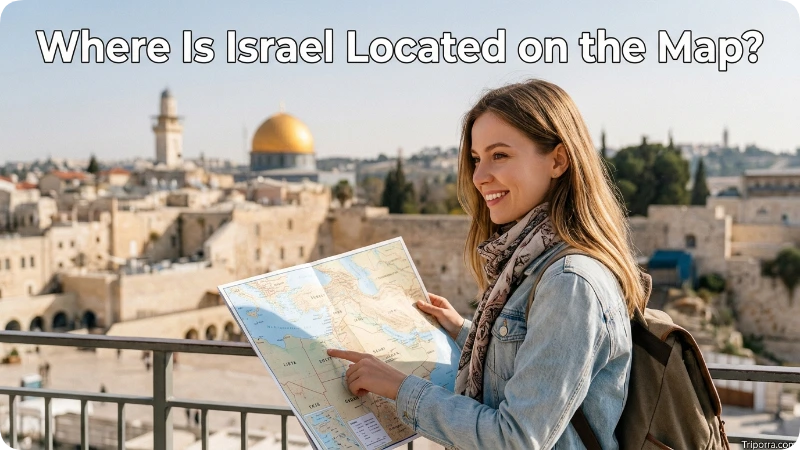
Israel is located in the southwestern part of Asia, within the geographic area commonly called the Middle East. It lies on the eastern side of the Mediterranean Sea, opposite the southern coast of Europe and north of Egypt.
On a world map, Israel appears as a small country shaped along the Mediterranean coastline. Its location connects three major regions:
- Europe to the northwest across the Mediterranean Sea
- Asia to the east and northeast
- Africa to the southwest through Egypt and the Sinai Peninsula
The country stretches from the northern mountains near Lebanon and Syria to the southern desert areas near the Red Sea. Despite its small size, Israel contains several different landscapes, including coastal plains, mountains, valleys, and deserts.
What Country or Region Is Israel In?
Israel is an independent country in the Middle East region of Western Asia. It is part of the Asian continent, although it has strong historical, economic, and cultural connections with Europe and other parts of the world.
The term “Middle East” is a regional name rather than a continent. Countries usually included in this region are located across Western Asia and parts of North Africa.
Israel is often grouped with countries such as:
- Jordan
- Lebanon
- Syria
- Egypt
- Saudi Arabia
- Turkey
- Iraq
Its position has made it an important meeting point between different civilizations for thousands of years.
Which Countries Border Israel?
Israel shares official land borders with four countries:
Lebanon
Lebanon is located north of Israel. The border area includes mountainous terrain and connects northern Israel with southern Lebanon.
Syria
Syria lies northeast of Israel. The Golan Heights area is located near this border. Israel captured the Golan Heights from Syria during the 1967 war and later applied its laws there in 1981. The international status of this area remains disputed, with many countries considering it occupied Syrian territory.
Jordan
Jordan is east of Israel. The two countries share a border that follows parts of the Jordan Valley and the Dead Sea region. Israel and Jordan signed a peace treaty in 1994.
Egypt
Egypt is southwest of Israel. The border runs near the Sinai Peninsula and connects Israel with northeastern Egypt. Israel and Egypt signed a peace treaty in 1979.
Israel also has maritime borders through the Mediterranean Sea and a small coastline on the Gulf of Aqaba, part of the Red Sea.
What Are the Nearby Major Cities and Places Around Israel?
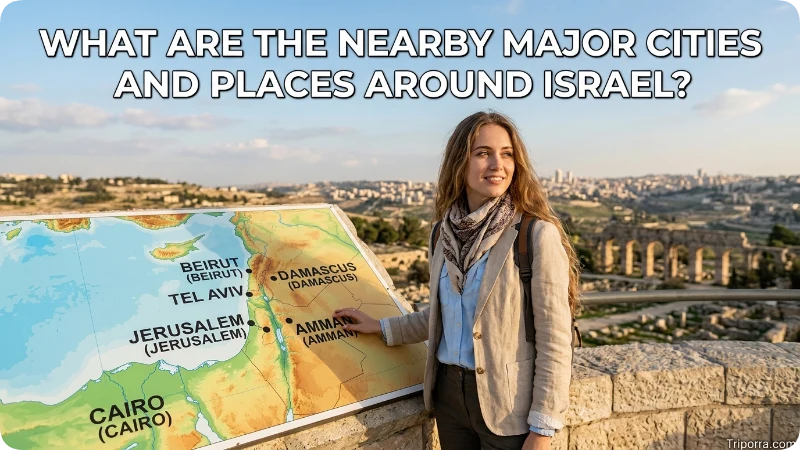
Israel is surrounded by several important cities and regions in the Middle East. Distances vary depending on whether they are measured by road, air, or straight line.
PlaceApproximate Distance from JerusalemType of DistanceTel AvivAbout 34 miles (55 km)Driving distance varies by routeHaifaAbout 95 miles (153 km)Driving distance varies by routeAmman, JordanAbout 50 miles (80 km)Straight-line distance approximatelyBeirut, LebanonAbout 150 miles (240 km)Straight-line distance approximatelyCairo, EgyptAbout 260 miles (420 km)Straight-line distance approximatelyAthens, GreeceAbout 700 miles (1,125 km)Approximate flight distance
Travel times can change because of border procedures, road conditions, traffic, weather, and transportation schedules.
What Is the Geography of Israel Like?
Israel has a surprisingly varied geography despite its relatively small area. The country includes coastal areas, mountains, fertile valleys, and desert regions.
The main geographic areas include:
Mediterranean Coastal Plain
The western coastal region runs along the Mediterranean Sea. It contains major cities such as Tel Aviv and Haifa and is one of the country’s most populated areas.
Central Mountain Region
The central part of Israel includes mountain ranges and historic areas around Jerusalem and the West Bank. The terrain is higher and cooler than the coastal areas.
Jordan Valley
The Jordan Valley forms part of the Great Rift Valley system. It includes the Sea of Galilee and the Dead Sea, one of the lowest points on Earth.
Negev Desert
The Negev covers much of southern Israel. It is a dry desert region with rocky landscapes, archaeological sites, and unique desert ecosystems.
Red Sea Coast
The southern city of Eilat sits along the Gulf of Aqaba, providing Israel with access to the Red Sea.
⭐ Did You Know? The Dead Sea, located between Israel and Jordan, is one of the lowest exposed land areas on Earth, sitting more than 1,300 feet (400 meters) below sea level.
What Is Israel’s Location in Relation to Europe, Asia, and Africa?
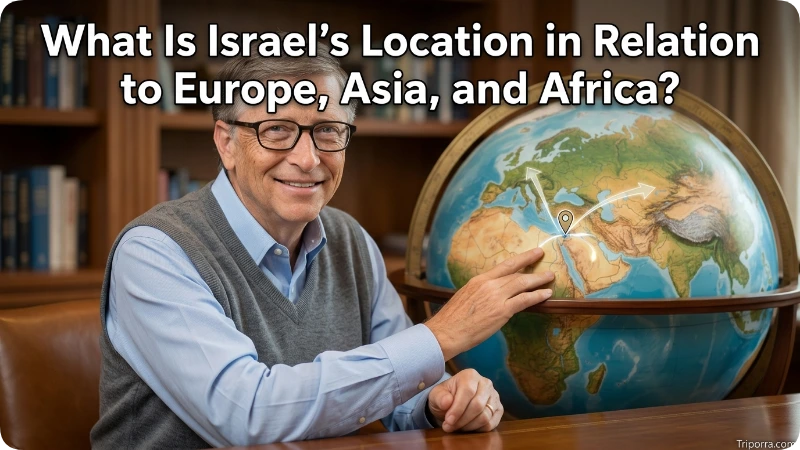
Israel’s location is often described as a bridge between three continents. Geographically, it belongs to Asia, but it is close to Europe and Africa.
The Mediterranean Sea separates Israel from southern Europe, while Egypt connects the region to Africa. Ancient trade routes passed through this area because it connected major civilizations.
This geographic position helped make the region historically important for:
- Trade routes
- Cultural exchange
- Religious movements
- Military campaigns
- Migration patterns
Today, Israel’s location continues to influence its economy, transportation links, and international relationships.
What Is the Capital City of Israel?
Jerusalem is Israel’s declared capital and the location of the country’s main government institutions, including the Knesset (parliament), Supreme Court, and government offices.
However, Jerusalem’s political status is internationally disputed. Both Israelis and Palestinians claim the city as a capital, and its final status remains a subject of negotiations.
Many countries maintain their embassies in Tel Aviv or nearby areas, while some countries have moved embassies to Jerusalem.
Jerusalem is also one of the world’s most historically significant cities and is important to Judaism, Christianity, and Islam.
What Are Israel’s Main Regions?
Israel is divided into several geographic and administrative areas.
The major regions include:
Northern Israel
Northern Israel contains mountains, forests, and agricultural areas. Major locations include:
- Galilee region
- Sea of Galilee
- Golan Heights area
- Haifa region
Central Israel
Central Israel includes the country’s largest urban and economic areas:
- Tel Aviv metropolitan area
- Jerusalem area
- Coastal plain
Southern Israel
Southern Israel contains much of the Negev Desert and the city of Eilat near the Red Sea.
Each region has different landscapes, climates, and cultural features.
What Is the History of Israel’s Location?
Israel’s location has been important for thousands of years because it sits along routes connecting Asia, Africa, and Europe. The region has been home to many ancient civilizations, kingdoms, and empires.
The area has historical importance in Judaism, Christianity, and Islam. Ancient cities such as Jerusalem, Jericho, and Nazareth have played major roles in religious and cultural history.
Over different periods, the region was controlled by several powers, including:
- Ancient Israelite and Judean kingdoms
- Assyrian and Babylonian empires
- Persian Empire
- Greek and Roman empires
- Byzantine Empire
- Islamic caliphates
- Ottoman Empire
- British administration after World War I
In the modern period, the State of Israel was established in 1948 after the end of the British Mandate for Palestine. Since then, the region has experienced several conflicts and ongoing political disputes involving Israelis and Palestinians.
Israel’s geographic location remains a major factor in its political importance because it sits at the crossroads of important regional connections.
What Is Israel Known For?
Israel is known for its historical sites, religious landmarks, scientific achievements, technology industry, and natural landscapes.
Some of the things Israel is widely recognized for include:
Ancient and Religious Sites
Israel contains many locations important to Judaism, Christianity, and Islam, including:
- Jerusalem’s Old City
- Western Wall
- Church of the Holy Sepulchre
- Dome of the Rock
- Nazareth
- Bethlehem (located in the Palestinian West Bank)
Technology and Innovation
Israel has developed a strong technology sector and is sometimes called the “Startup Nation” because of its large number of technology companies and research centers.
Major industries include:
- Cybersecurity
- Artificial intelligence
- Medical technology
- Agriculture technology
- Water management
Natural Landscapes
Despite its small size, Israel has many different environments:
- Mediterranean beaches
- Mountain regions
- Desert landscapes
- Coral reefs near Eilat
- The Dead Sea
What Is the Climate Like in Israel?
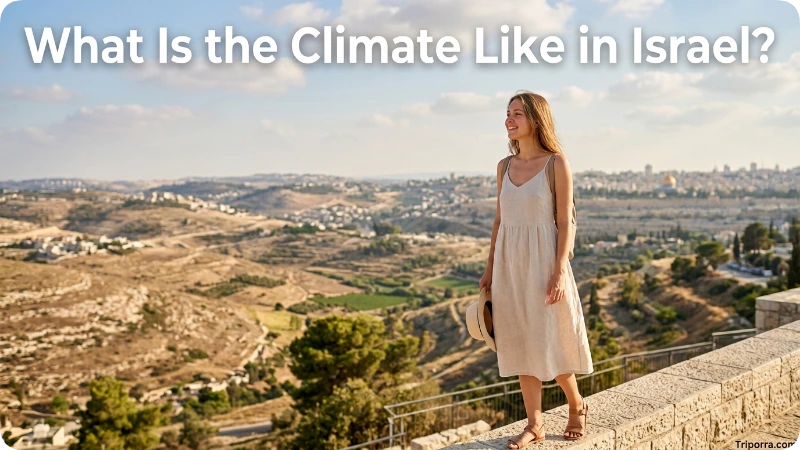
Israel has a Mediterranean climate in many areas, with hot, dry summers and mild, wetter winters. However, the climate changes significantly between coastal, mountain, and desert regions.
Coastal Areas
Cities such as Tel Aviv and Haifa have:
- Hot summers
- Humid conditions near the sea
- Mild winters
Mountain Areas
Jerusalem and higher regions usually experience:
- Cooler temperatures
- Dry summers
- Colder winters compared with coastal areas
Occasional snowfall can occur in Jerusalem and northern mountain areas.
Desert Areas
The Negev Desert has:
- Very hot summers
- Low rainfall
- Large temperature differences between day and night
The southern desert areas can become extremely hot during summer months.
What Is the Best Time to Visit Israel?
The best time to visit Israel depends on the activities travelers plan to do and the regions they want to explore.
Spring (March to May)
Spring is often considered one of the most comfortable seasons because temperatures are moderate. It is a good time for:
- City sightseeing
- Hiking
- Visiting historical sites
Autumn (September to November)
Autumn also offers pleasant weather, especially for exploring Jerusalem, Tel Aviv, and outdoor attractions.
Summer (June to August)
Summer is hot, especially in desert areas. Coastal cities remain popular because of beaches and sea activities.
Winter (December to February)
Winter brings cooler temperatures and rainfall. Northern areas may receive snow, while southern regions remain warmer.
How Many People Live in Israel?
Israel has a population of approximately 10 million people (2025 estimate). The population includes several ethnic, cultural, and religious communities.
Major population groups include:
- Jewish citizens
- Arab citizens of Israel
- Other minority communities
Most residents live in urban areas, especially around:
- Tel Aviv metropolitan area
- Jerusalem
- Haifa
Israel has a high level of urban development, with modern cities, universities, hospitals, and technology centers.
What Language Is Spoken in Israel?
The main language spoken in Israel is Hebrew, which is the country’s primary official language.
Arabic also has official status with special legal recognition, and many citizens speak Arabic as a first language.
English is widely understood, especially in:
- Tourism areas
- Universities
- Business environments
- Major cities
Other languages spoken by communities in Israel include Russian, French, Amharic, and others.
What Currency Does Israel Use?
Israel uses the Israeli New Shekel (ILS) as its official currency.
The currency is used throughout the country for:
- Shopping
- Transportation
- Hotels
- Restaurants
- Services
Credit cards are commonly accepted in cities and tourist areas, although travelers may still need cash for some small businesses and local markets.
How to Get to Israel? Nearest Airports and Travel Options
Israel can be reached by air from many international destinations. The main international airport is:
Ben Gurion International Airport
Ben Gurion International Airport is located near Tel Aviv and serves as Israel’s main international gateway.
It handles flights from many regions, including:
- Europe
- North America
- Asia
- Africa
Other airports include:
Ramon Airport
Located near Eilat in southern Israel, Ramon Airport serves domestic and some international flights.
Haifa Airport
A smaller airport mainly used for limited aviation services.
Travelers should check current entry requirements, flight availability, and border rules before planning a trip because regulations can change.
What Are the Most Famous Places to Visit in Israel?
Israel has many historical, religious, and natural attractions.
Jerusalem
Jerusalem is one of the world’s most significant historic cities. Popular sites include:
- Old City of Jerusalem
- Western Wall
- Mount of Olives
- Religious landmarks from multiple faiths
Tel Aviv
Tel Aviv is known for:
- Beaches
- Modern architecture
- Food culture
- Business districts
- Nightlife areas
Dead Sea
The Dead Sea attracts visitors because of its mineral-rich waters and extremely low elevation.
Visitors often experience:
- Floating in the salty water
- Desert landscapes
- Nearby natural attractions
Masada
Masada is an ancient fortress located above the Judean Desert. It is known for its archaeological remains and historical importance.
Haifa
Haifa is a northern coastal city known for:
- Mount Carmel
- Mediterranean views
- Baháʼí Gardens
Eilat
Eilat is Israel’s southern resort city on the Red Sea. It is known for:
- Coral reefs
- Water activities
- Desert surroundings
Is Israel Safe to Visit?
Safety conditions in Israel can change depending on political events, security situations, and specific locations.
Many areas of Israel have established tourism infrastructure, including hotels, transportation systems, and visitor services. However, travelers should check current travel advisories from their government before visiting.
Visitors should also:
- Follow local instructions
- Monitor regional news
- Respect restricted areas
- Carry required travel documents
Some areas, including border regions and disputed territories, may have different security conditions.
Common Misconceptions About Israel’s Location
Several common questions come from confusion about Israel’s geography.
Is Israel in Europe?
No. Israel is geographically part of Asia, specifically Western Asia. It has strong connections with Europe in areas such as trade, culture, and sports, but it is not located in Europe.
Is Israel an Arab Country?
No. Israel is not classified as an Arab country. It is a Middle Eastern country with a diverse population, including Jewish, Arab, and other communities.
Is Israel Part of Asia?
Yes. Israel is geographically located in Asia.
Is Israel Near Africa?
Yes. Israel is close to Africa. Egypt lies southwest of Israel and connects the Middle East with North Africa.
Why Is Israel’s Location Important?
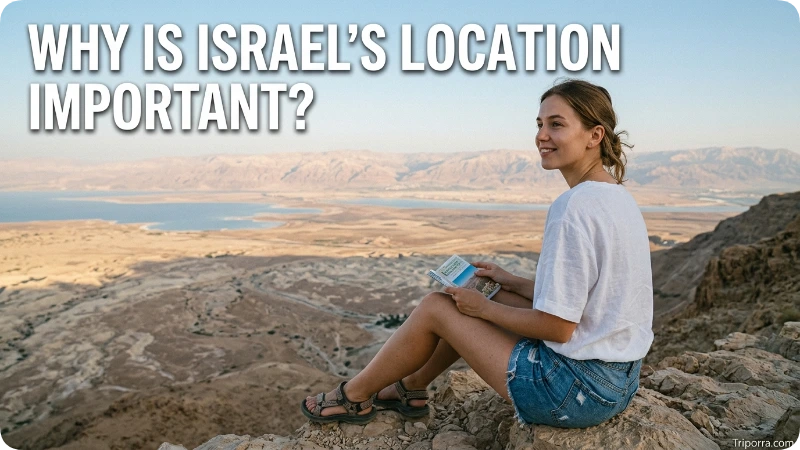
Israel’s location gives it importance beyond its size. It sits near major waterways, historic trade routes, and regions connecting three continents.
Its geography affects:
- Regional trade
- Transportation routes
- Security issues
- Cultural connections
- International relations
The country’s position on the eastern Mediterranean has made it an important place throughout history and in modern times.
Did You Mean a Different Place?
The keyword “where is Israel located” usually refers to the country of Israel in the Middle East. However, the name “Israel” can sometimes appear in other contexts, such as:
- Personal names
- Religious references
- Historical kingdoms
- Biblical references
For geographic searches, the modern country of Israel is the most common meaning.
FAQs
Is Israel in Asia or Europe?
Israel is located in Asia, specifically in the Western Asia region. Although Israel has strong cultural, economic, and political connections with Europe, its geographic location places it on the Asian continent along the eastern Mediterranean coast.
What continent is Israel located in?
Israel is located in the continent of Asia. It is part of the Middle East, a region that includes countries in Western Asia and parts of North Africa. Its position makes it a geographic link between Asia, Europe, and Africa.
Where is Israel located on the world map?
Israel is located in the eastern Mediterranean region of Western Asia. It lies south of Lebanon, west of Jordan, northwest of Egypt, and southwest of Syria. Its approximate coordinates are 31.5° N latitude and 34.8° E longitude.
Is Israel a country or a city?
Israel is a country. The official name is the State of Israel. It became an independent state in 1948 and has its own government, borders, currency, population, and international relations.
What countries are next to Israel?
Israel shares land borders with four countries: Lebanon to the north, Syria to the northeast, Jordan to the east, and Egypt to the southwest. It also has coastlines along the Mediterranean Sea and the Red Sea through the Gulf of Aqaba.
Is Israel part of the Middle East?
Yes, Israel is part of the Middle East. The Middle East is a geographic and cultural region that includes countries across Western Asia and parts of North Africa. Israel’s location along the Mediterranean makes it an important part of this region.
What is the capital of Israel?
Jerusalem is Israel’s declared capital and the location of major government institutions. However, the city’s political status is internationally disputed, and both Israelis and Palestinians have claims connected to Jerusalem.
What language is spoken in Israel?
Hebrew is the main official language of Israel, and Arabic has official status with special recognition. English is also widely understood, especially in tourism, education, and business settings.
Is Israel close to Egypt?
Yes, Israel is close to Egypt. The two countries share a land border in the southwest near the Sinai Peninsula. Cairo, Egypt’s capital, is approximately 260 miles (420 km) from Jerusalem by straight-line distance.
What sea is Israel next to?
Israel borders the Mediterranean Sea on its western side. It also has a short coastline along the Red Sea through the Gulf of Aqaba near the southern city of Eilat.
Conclusion
Israel is located in Western Asia, in the Middle East, along the eastern coast of the Mediterranean Sea. It shares borders with Lebanon, Syria, Jordan, and Egypt, while also having access to the Mediterranean Sea and the Red Sea. Its geographic position places it near the meeting point of Asia, Europe, and Africa.
The country covers a small area but contains diverse landscapes, including coastal plains, mountains, valleys, and deserts. Israel is known worldwide for historic cities such as Jerusalem, natural sites such as the Dead Sea, and its role in regional history and modern innovation.
Understanding where Israel is located helps explain its historical importance, cultural diversity, and strategic position in the Middle East. Whether viewed from a geographic, historical, or travel perspective, Israel’s location has shaped its identity for thousands of years.

Silas Vance is a geography enthusiast, travel researcher, and location-focused content writer dedicated to helping readers better understand the world around them on triporra.com. He specializes in creating informative guides about cities, countries, islands, landmarks, universities, and other notable destinations. His work combines geographic accuracy, historical context, and practical insights to answer location-based questions in a simple and engaging way.