It is a state in the Midwestern United States, located between the Great Plains and the central region of the country. The state is known for its wide prairies, agricultural lands, the Great Plains landscape, the Missouri River, and cities such as Omaha and Lincoln. If you search “where is Nebraska,” you are usually asking about the location of the U.S. state and its position on the map.
It is bordered by six states: South Dakota to the north, Iowa and Missouri to the east, Kansas to the south, and Colorado and Wyoming to the west. Its central location makes it an important transportation and agricultural state. The capital city is Lincoln, while Omaha is the largest city and a major economic center.
Featured Snippet:
Nebraska is a U.S. state located in the Midwestern United States, between the Great Plains and the central part of the country. It borders South Dakota, Iowa, Missouri, Kansas, Colorado, and Wyoming. The state capital is Lincoln, and its largest city is Omaha. Nebraska is known for farming, prairies, the Great Plains, and the Missouri River.
Quick Facts About Nebraska
| Fact | Information |
|---|---|
| Official Name | State of Nebraska |
| Country | United States |
| Region | Midwestern United States / Great Plains |
| State Capital | Lincoln |
| Largest City | Omaha |
| Statehood | March 1, 1867 (37th U.S. state) |
| Area | Approximately 77,348 square miles (200,329 km²) |
| Population | Approximately 2 million people (2025 estimate) |
| Coordinates | Approximately 41.5° N, 99.9° W |
| Nickname | The Cornhusker State |
| Highest Point | Panorama Point — approximately 5,424 feet (1,653 meters) |
| Major River | Missouri River |
| Time Zones | Central Time Zone; Mountain Time Zone in western areas |
| Known For | Agriculture, Great Plains, Sandhills, College World Series, pioneer history |
| Largest Airport | Eppley Airfield in Omaha |
Where Is Nebraska Located on the Map?
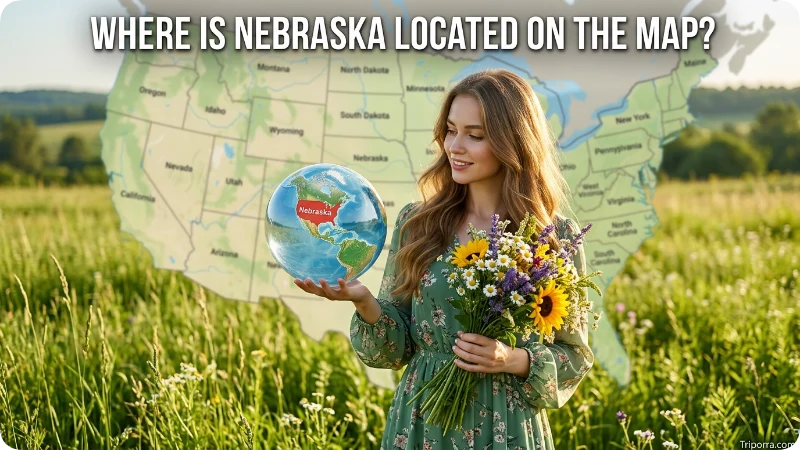
Nebraska is located in the central part of the United States, within the region commonly called the Midwest. It sits on the western side of the Great Plains and covers a large area between the Missouri River valley in the east and the high plains near the Rocky Mountains in the west.
On a U.S. map, Nebraska appears as a mostly rectangular-shaped state north of Kansas and south of South Dakota. Its position places it roughly halfway between the Atlantic and Pacific coasts.
The state’s geographic neighbors are:
- North: South Dakota
- East: Iowa and Missouri
- South: Kansas
- West: Colorado and Wyoming
Nebraska does not touch an international border or coastline. Its central location has made it an important route for highways, railroads, agriculture, and trade.
What State and Country Is Nebraska In?
Nebraska is a state within the United States of America. It is one of the 50 states that make up the country and is officially part of the Midwest region.
Nebraska became the 37th state of the United States on March 1, 1867, shortly after the American Civil War. Before statehood, the area was part of the Nebraska Territory, which was created in 1854.
The state government operates from Lincoln, where the Nebraska State Capitol is located. Unlike most U.S. states, Nebraska has a unicameral legislature, meaning it has only one legislative chamber instead of two.
Where Is Nebraska Compared With Other U.S. States?
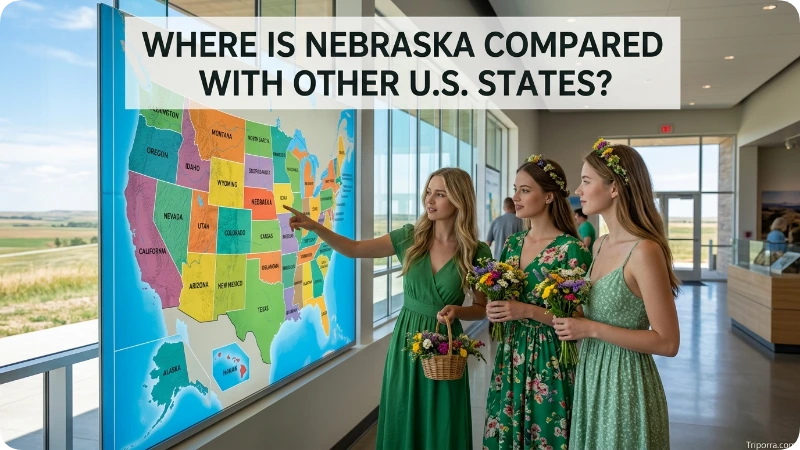
Nebraska is located near the geographic center of the continental United States. Its position connects the eastern United States with the western states.
Approximate straight-line distances from Nebraska’s capital, Lincoln, to major U.S. cities are:
CityApproximate Distance from LincolnDenver, ColoradoAbout 430 miles (690 km) westKansas City, MissouriAbout 150 miles (240 km) southeastChicago, IllinoisAbout 430 miles (690 km) eastMinneapolis, MinnesotaAbout 350 miles (560 km) northeastDallas, TexasAbout 500 miles (805 km) south
These are approximate straight-line distances. Driving distances and travel times vary depending on the route, traffic, weather, and stops.
Nebraska’s location gives it a mix of influences from both the Midwest and the Great Plains. The eastern part of the state is more connected with larger urban areas, while western Nebraska has a more open plains environment.
What Cities Are in Nebraska?
Nebraska has several important cities, each with different roles in the state’s economy, education, and culture.
Omaha
Omaha is the largest city in Nebraska and a major business center. It is located along the Missouri River near the Iowa border. The city is known for finance, healthcare, technology, entertainment, and the annual College World Series baseball tournament.
Important places in Omaha include:
- Henry Doorly Zoo and Aquarium
- Old Market historic district
- Bob Kerrey Pedestrian Bridge
- Joslyn Art Museum
Lincoln
Lincoln is the state capital and home of the University of Nebraska–Lincoln. It is located in the southeastern part of the state and serves as a center for government, education, and culture.
Major attractions include:
- Nebraska State Capitol
- University of Nebraska–Lincoln campus
- Sunken Gardens
- Sheldon Museum of Art
Other Major Nebraska Cities
Other notable cities include:
- Bellevue
- Grand Island
- Kearney
- Fremont
- Hastings
- North Platte
Each city contributes to Nebraska’s economy through agriculture, manufacturing, education, tourism, and local industries.
What Is Nebraska Known For?
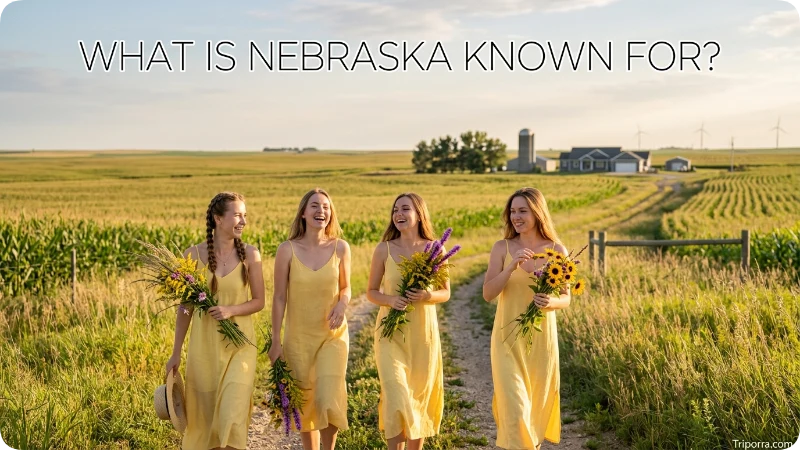
Nebraska is best known for its agriculture, open landscapes, and connection to American pioneer history. Farming and ranching have played a major role in the state’s identity and economy for more than a century.
The state is often associated with:
Agriculture
Nebraska is one of the leading agricultural states in the United States. It produces large amounts of:
- Corn
- Soybeans
- Beef cattle
- Wheat
- Ethanol from agricultural products
The state’s fertile soil and wide farming areas make agriculture one of its most important industries.
The Great Plains
Much of Nebraska is part of the Great Plains, a large region stretching across the central United States. The landscape includes grasslands, farms, rivers, and wide open spaces.
The Oregon Trail
Nebraska played an important role in westward migration during the 1800s. Thousands of settlers traveled through the area along routes such as the Oregon Trail and Mormon Trail.
Historical sites connected to this period include:
- Chimney Rock National Historic Site
- Scotts Bluff National Monument
- Fort Kearny State Historical Park
College Sports
Nebraska has a strong sports culture, especially college athletics. The University of Nebraska’s football program is one of the most recognized in the country.
What Is the Geography and Landscape of Nebraska?
Nebraska’s landscape changes from east to west. The eastern part of the state has more farmland, rivers, and rolling hills, while the western areas have larger stretches of grassland and high plains.
Major geographic regions include:
The Dissected Till Plains
Located mainly in eastern Nebraska, this region has fertile farmland and rolling hills shaped by glaciers thousands of years ago.
The Great Plains
Central and western Nebraska are part of the Great Plains, with wide grasslands and fewer large cities.
The Sandhills
The Nebraska Sandhills cover a large area in the central part of the state. This region contains one of the largest grass-covered sand dune areas in the world.
The Sandhills are important for:
- Cattle ranching
- Wildlife habitat
- Groundwater resources
Rivers
Major waterways include:
- Missouri River
- Platte River
- Republican River
- Niobrara River
The Platte River has been especially important for wildlife migration, including the annual spring migration of sandhill cranes.
What Are Nebraska’s Borders and Nearby States?
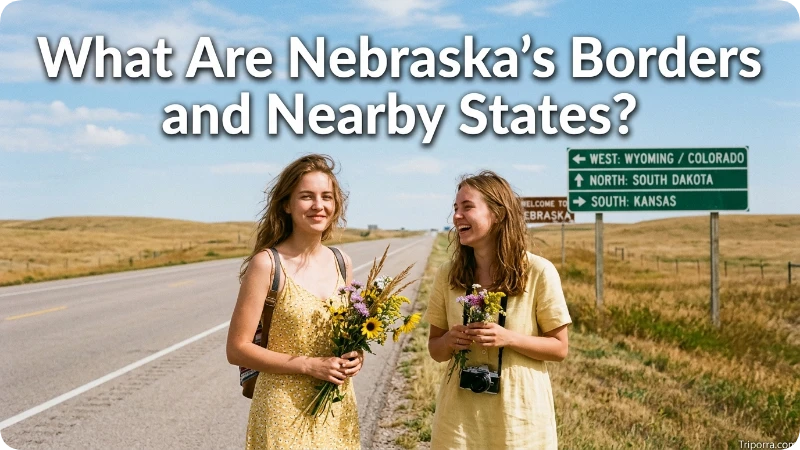
Nebraska shares borders with six U.S. states. Each neighboring state has different landscapes and cultural connections.
South Dakota
Located north of Nebraska, South Dakota is known for the Black Hills, Mount Rushmore, and prairie landscapes.
Iowa and Missouri
Located east of Nebraska, these states connect Nebraska to the Mississippi River region and larger Midwestern markets.
Kansas
Located south of Nebraska, Kansas shares many agricultural and Great Plains characteristics.
Colorado and Wyoming
Located west of Nebraska, these states provide connections to the Rocky Mountains and western landscapes.
Nebraska’s location between eastern cities and western mountain regions makes it a common travel route across the United States.
What Is the Climate Like in Nebraska?
Nebraska has a continental climate, which means it experiences four distinct seasons with hot summers, cold winters, and changing weather conditions throughout the year. The state’s climate varies from east to west, with western Nebraska generally being drier than the eastern part.
Summers in Nebraska are usually warm to hot. Average summer temperatures often reach around 85°F (29°C) during the day, although heat waves can bring higher temperatures.
Winters are cold, especially in northern and western areas. Average winter temperatures can fall below freezing, and snowfall is common in many parts of the state.
Nebraska also experiences severe weather because it sits in the Great Plains. Weather events may include:
- Thunderstorms
- Strong winds
- Tornadoes
- Winter storms
- Flooding near rivers
The best weather for outdoor activities is usually during late spring, summer, and early fall, when temperatures are more comfortable for exploring parks, trails, and historic sites.
What Is the Population of Nebraska?
Nebraska has a population of approximately 2 million people (2025 estimate). Most residents live in the eastern part of the state, especially around Omaha and Lincoln.
The population distribution is uneven because much of western Nebraska consists of rural farmland, ranches, and open prairie areas.
The largest population centers are:
CityApproximate PopulationOmahaApproximately 486,000 people (2024 estimate)LincolnApproximately 300,000 people (2024 estimate)BellevueApproximately 55,000 peopleGrand IslandApproximately 35,000 peopleKearneyApproximately 34,000 people
Nebraska’s population has grown slowly compared with some faster-growing U.S. states, but cities like Omaha and Lincoln continue to attract residents because of education, jobs, healthcare, and quality of life.
What Language and Currency Are Used in Nebraska?
The main language spoken in Nebraska is English. Spanish is also widely spoken, especially in communities with Hispanic and Latino populations.
The official currency used in Nebraska is the United States dollar (USD).
Visitors from other countries should know that:
- Credit and debit cards are widely accepted.
- ATMs are available in cities and towns.
- Cash may still be useful in smaller rural communities.
Nebraska does not have a separate state currency or language.
What Is Nebraska’s History?
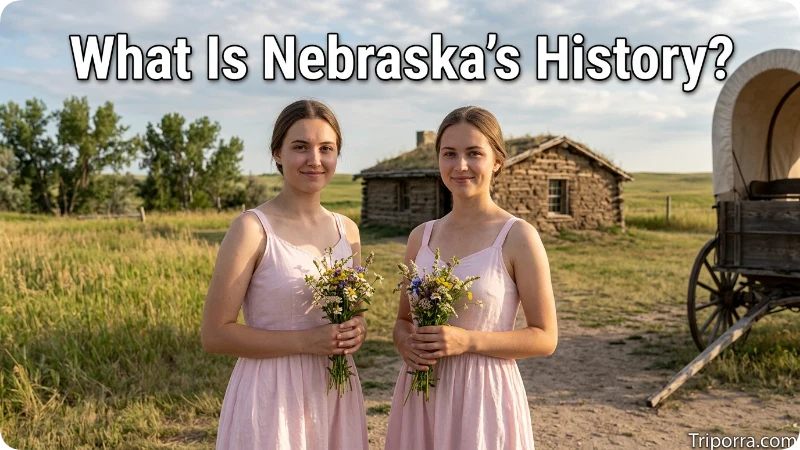
Nebraska has a long history connected to Native American cultures, exploration, migration, agriculture, and westward expansion.
Before European settlement, the region was home to Native American nations including:
- Omaha
- Ponca
- Pawnee
- Otoe-Missouria
- Lakota and other Indigenous groups
European exploration increased during the 1700s and 1800s. The area later became part of the routes used by settlers traveling west.
Nebraska Territory
The Nebraska Territory was created in 1854 as settlers moved west across North America. Towns and forts developed along important travel routes.
Statehood
Nebraska became the 37th U.S. state on March 1, 1867.
Agriculture and Growth
After statehood, farming and ranching became central to Nebraska’s economy. Railroads helped connect farms and communities to national markets.
Modern Nebraska
Today, Nebraska combines agriculture with industries such as:
- Manufacturing
- Healthcare
- Finance
- Education
- Technology
- Renewable energy
The state continues to maintain strong connections to its farming traditions while developing modern industries.
What Are the Best Places to Visit in Nebraska?
Nebraska offers historic locations, outdoor areas, museums, wildlife experiences, and cultural attractions. Many visitors come for its natural landscapes and connection to American history.
Omaha’s Henry Doorly Zoo and Aquarium
The Henry Doorly Zoo and Aquarium in Omaha is one of the most recognized zoos in the United States. It features large indoor exhibits, wildlife habitats, and conservation programs.
Chimney Rock National Historic Site
Chimney Rock is one of Nebraska’s most famous landmarks. The rock formation served as an important navigation point for travelers moving west along pioneer trails during the 1800s.
Scotts Bluff National Monument
Located near Gering, Scotts Bluff preserves a historic landscape connected with westward migration. Visitors can view the surrounding plains and learn about pioneer routes.
Nebraska Sandhills
The Sandhills region is ideal for travelers interested in nature, wildlife, and quiet landscapes. Activities include:
- Scenic drives
- Bird watching
- Fishing
- Wildlife viewing
Niobrara National Scenic River
The Niobrara River area offers opportunities for:
- Canoeing
- Kayaking
- Hiking
- Camping
Carhenge
Located near Alliance, Carhenge is an unusual outdoor art installation made from old vehicles arranged to resemble England’s Stonehenge.
How Do You Get to Nebraska?
Nebraska is accessible by air, road, and rail. Because of its central location in the United States, many travelers reach the state by highway or domestic flights.
By Air
The largest airport in Nebraska is:
Eppley Airfield (OMA) in Omaha.
Other airports include:
- Lincoln Airport (LNK)
- Central Nebraska Regional Airport in Grand Island (GRI)
- North Platte Regional Airport (LBF)
Major airlines connect Nebraska with larger U.S. cities.
By Road
Major highways crossing Nebraska include:
- Interstate 80 (I-80), an important east-west route
- Interstate 76 in the western part of the state
- U.S. highways connecting smaller communities
Driving is often the easiest way to explore rural areas and attractions outside major cities.
By Train
Amtrak provides passenger rail service through Nebraska, including routes connecting the Midwest with western states.
Travel times vary depending on the starting location, transportation method, weather, and traffic conditions.
What Are the Closest Major Airports to Nebraska?
The best airport depends on where you are traveling within the state.
AirportLocationBest ForEppley Airfield (OMA)OmahaLargest number of flights and servicesLincoln Airport (LNK)LincolnCapital city and southeastern NebraskaCentral Nebraska Regional Airport (GRI)Grand IslandCentral Nebraska accessNorth Platte Regional Airport (LBF)North PlatteWestern Nebraska travel
International travelers usually connect through larger U.S. airport hubs before reaching Nebraska.
Is Nebraska Safe to Visit?
Nebraska is generally considered a safe state for visitors. Like any location, safety conditions vary between cities, neighborhoods, and rural areas.
Common travel safety tips include:
- Check weather forecasts before outdoor activities.
- Be careful during severe storms and tornado warnings.
- Follow park and wildlife guidelines.
- Keep valuables secure in busy areas.
- Carry enough water when traveling through remote areas.
Rural parts of Nebraska can have long distances between services, so travelers should plan fuel stops and emergency supplies when exploring less populated regions.
What Is the Best Time to Visit Nebraska?
The best time to visit Nebraska depends on the activities you plan to do.
Spring (March–May)
Spring brings warmer temperatures and is a popular time for:
- Wildlife viewing
- Hiking
- River activities
The annual sandhill crane migration usually attracts visitors during late winter and early spring.
Summer (June–August)
Summer is a good season for:
- Road trips
- Outdoor attractions
- Camping
- Festivals
Temperatures can become hot, especially in July.
Fall (September–November)
Fall is often considered one of the most comfortable seasons because of cooler weather and changing landscapes.
Winter (December–February)
Winter visitors can enjoy:
- Museums
- Indoor attractions
- Snow-covered scenery
However, snow and cold temperatures may affect travel plans.
What Are Common Misconceptions About Nebraska?
Nebraska is sometimes misunderstood as only a flat farming state, but its geography is more diverse than many people expect.
Common misconceptions include:
“Nebraska is completely flat”
While Nebraska has many open plains, it also includes:
- Sand dunes
- River valleys
- Rolling hills
- Bluffs
- Grasslands
“There is nothing to do in Nebraska”
The state offers many attractions, including national monuments, museums, wildlife areas, and outdoor activities.
“Nebraska is only about farming”
Agriculture is important, but Nebraska also has growing industries in healthcare, finance, education, manufacturing, and technology.
Did You Mean a Different Place Called Nebraska?
The search term “where is Nebraska” almost always refers to the U.S. state of Nebraska. There are no other globally recognized places with the same name that commonly compete with the state in search results.
The name “Nebraska” comes from an Otoe-Missouria word often translated as “flat water,” referring to the Platte River.
FAQs
Where is Nebraska located in the United States?
Nebraska is located in the Midwestern United States, in the Great Plains region. It is bordered by South Dakota to the north, Iowa and Missouri to the east, Kansas to the south, and Colorado and Wyoming to the west. The state is centrally positioned between the eastern and western parts of the country.
Is Nebraska a state or a city?
Nebraska is a state, not a city. It became the 37th state of the United States on March 1, 1867. Its capital city is Lincoln, while Omaha is the largest city and the state’s main population and business center.
What is Nebraska famous for?
Nebraska is famous for agriculture, especially corn production and cattle ranching. It is also known for the Great Plains, Nebraska Sandhills, pioneer trails, the University of Nebraska, college sports, and landmarks such as Chimney Rock and Scotts Bluff.
What is the capital of Nebraska?
The capital of Nebraska is Lincoln. The city is located in the southeastern part of the state and serves as the center of state government. Lincoln is also home to the University of Nebraska–Lincoln, one of the state’s largest educational institutions.
What is the largest city in Nebraska?
The largest city in Nebraska is Omaha. Located along the Missouri River near the Iowa border, Omaha is the state’s biggest urban area and an important center for business, healthcare, transportation, and entertainment.
Is Nebraska in the Midwest or the West?
Nebraska is generally considered part of the Midwestern United States, although much of its landscape is also part of the Great Plains. Government agencies, including the U.S. Census Bureau, classify Nebraska as a Midwestern state.
How far is Nebraska from Colorado?
Nebraska shares a border with Colorado on its western side. The distance depends on the specific locations being compared. For example, Lincoln, Nebraska, is approximately 430 miles (690 km) east of Denver by straight-line distance. Driving distances are longer and vary by route.
Does Nebraska have mountains?
Nebraska does not have major mountain ranges like nearby Colorado or Wyoming, but it does have elevated areas. The state’s highest point is Panorama Point in western Nebraska, which reaches approximately 5,424 feet (1,653 meters) above sea level.
What is Nebraska’s weather like?
Nebraska has a continental climate with hot summers, cold winters, and changing weather throughout the year. The state experiences thunderstorms, strong winds, tornadoes, and winter storms because of its location in the Great Plains.
Is Nebraska a good place to visit?
Yes, Nebraska offers attractions for travelers interested in history, nature, wildlife, and road trips. Popular places include Omaha’s Henry Doorly Zoo and Aquarium, Nebraska Sandhills, Chimney Rock, Scotts Bluff, and Niobrara National Scenic River.
Conclusion
Nebraska is a state in the Midwestern United States, located in the Great Plains between South Dakota, Iowa, Missouri, Kansas, Colorado, and Wyoming. The state capital is Lincoln, while Omaha is the largest city and a major economic center.
Known as the Cornhusker State, Nebraska is recognized for agriculture, open landscapes, historic pioneer trails, the Missouri River, and natural areas such as the Sandhills and Niobrara River. Its central location makes it an important transportation link between the eastern and western United States.
Whether you are researching where is Nebraska, planning a road trip, or learning about U.S. geography, Nebraska offers a mix of rural landscapes, growing cities, historical sites, and outdoor experiences. Its location, climate, and cultural history make it an important part of the American Midwest.

Elena Rostova bridges the gap between premium hospitality and authentic local experiences. Armed with a background in luxury hospitality management and a passion for fine architecture, she spent years evaluating elite resorts before transitioning into travel journalism. Elena heads the luxury and boutique travel vertical on Triporra.com. Her meticulous guides strip away the guesswork from high-end travel, showcasing unique five-star escapes, fine regional dining, and bespoke private tours that elevate a standard vacation into an unforgettable journey.